
Dr Jaswant Singh Sachdev MBBS, MD, FAAN
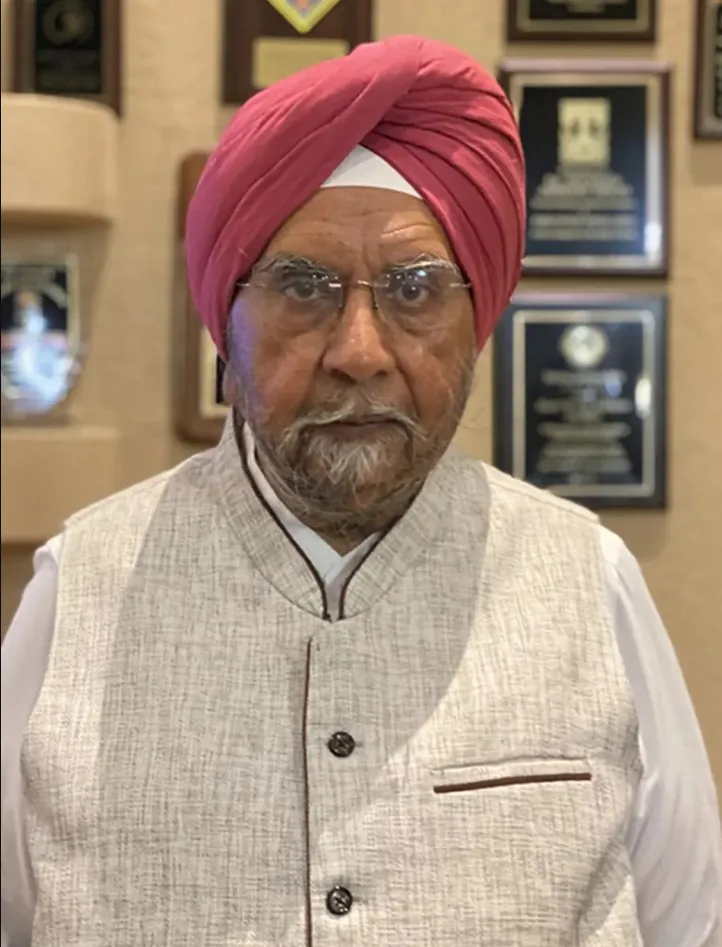
Neurologist
Hayden Veteran Medical Centre | Phoenix, AZ (USA)
Ancestry & Birthplace:
Peshawar (undivided British India)
Residence:
Phoenix, AZ (USA)
COMPASSION: TRUE FAITH OF HUMANITY
An altruistic physician and author, he is an embodiment of humility and selflessness.
The Founding Father of the United States of America, Benjamin Franklin, said that an investment in knowledge pays the best interest. People often tend to overlook the true value and importance of education. I was no different. I realised the power of education after I came to the US. Born and brought up in poverty, my circumstances could have gone against me, but the knowledge I had gained at school and college helped me become a better person and serve others.
I have an unfathomable love for Patiala
My birth on 27 March 1945 in Peshawar was obviously a moment of joy for my parents, Mann Kaur and Mehar Singh; I had four brothers and two sisters but the sisters died before we left the newly built Pakistan. The earth-shattering events of partition brought with it misery for all of us. My parents had to flee for their lives from Peshawar to a refugee camp in Sanaur near Patiala. Here my elder brother, Uttam, contracted some infectious spine disease and died in the camp. Without money and the uncertainty of everything else, Uttam’s death was a terrible blow; my family felt that life was at its lowest ebb.
To keep the stoves at home burning, Papa took to vending fruits and vegetables and at times plying a tonga, while Mummy ji tried to run the household to her best with the minimum resources. We had to spend a few months in a refugee camp before we were allotted a house in Patiala. I remember how Mummy ji would wake me up early morning to go to the gurudwara. Seeing how difficult it was for Papa to put food on the table, I resolved to be a topper at school.
I joined Dhudial Khalsa School, Patiala, and was a good debater; I won many awards at inter-school debate competitions. I even won the second prize in Religious Studies Exam conducted by Shiromani Gurdwara Parbandhak Committee. In 1959, when I was in grade 9, I lost my father to a stroke, the family’s sole breadwinner. Earlier, my two elder brothers, Pritam and Saran, had already married and moved out, leaving my brother Kartar and me with my mother.
Kartar, who had just completed his high school, dropped the idea of studying further and started working to support the family and I started taking tuitions. My fate seemed to be heading in the same direction as Kartar’s. It seemed imminent I’d have to give up studies after high school because of the family’s financial condition. But when the exams were over, my teacher, Narinder, urged my mother to let me continue with my studies. “I am ready to pay for Jaswant’s education,” he said, “but do not stifle his dreams.” His insistence convinced her. However, when the results were declared, I had secured third position in Punjab, much to my surprise and happiness. This made me eligible for free education for the next two years.
I joined pre-engineering in Mahendra College, Patiala, in 1960, but by the end of the first year my interest shifted to Botany and Zoology. I applied for pre-medical and completed a two-year programme in a year, topping the college. In those days, there were three medical colleges in Punjab. As a result of my academic credentials, I got admission in all three, but joined the Government Medical College, Patiala, because it was in my hometown at a walking distance from my house.
By now, Kartar too was married, but my scholarship amount of Rs 50 a month helped us pay my fees and run our household. I graduated from the college as the Best Graduate of the 1967 batch and joined the same college to study MD after my internship. I also took up my first job! I started working as an Assistant Registrar at Government Medical College, Patiala.
I had always wanted to be in academic medicine but when I joined Punjab Civil Medical Services in 1971, I received my first posting for Pathankot on 3 December, the first day of Indo-Pak War. This town was the centre of target of bombardment by Pakistan. Perhaps I was the only person moving there when others were leaving. But my duty demanded it, so I served the soldiers.
Once the war was over, I decided to look for other options of my interest. I had already cleared the qualifying ECFMG exam for residency in medicine in1970, so was offered an internship by a Booth Memorial Hospital, New York, where I arrived in July of 1972. In the initial days, I had wanted to move back to India because of the cultural difference, but this one year changed me, and I enrolled for a residency programme in neurology at New York Medical College.
Without her, I was long dead
As an Assistant Registrar in Patiala, I happened to take care of an elderly diabetic patient Maan Singh. During a visit back home in 1973, his family came with a marriage proposal for his granddaughter, Swinderjit Kaur. Brought up in Patiala, she had completed her masters in Political Science. We got married on 30 June 1973 and later moved to the USA.
When I came to the USA, all I wanted to do was go back after training in Neurology and establish Neurology specialty in Medical College Patiala. But during my residency years, I developed arthritis. Because of this, I often had to ask Swinderjit to accompany me on my night calls.
While completing my residency, New York’s cold and damp weather aggravated my arthritis and, I decided to move to Phoenix to join the faculty at Veteran Affair Medical Centre. Additionally, apart from teaching residents and practicing as a neurologist, I also invested my time in matters of clinical research. I retired partially in 2010 to devote more time to my social obligations.
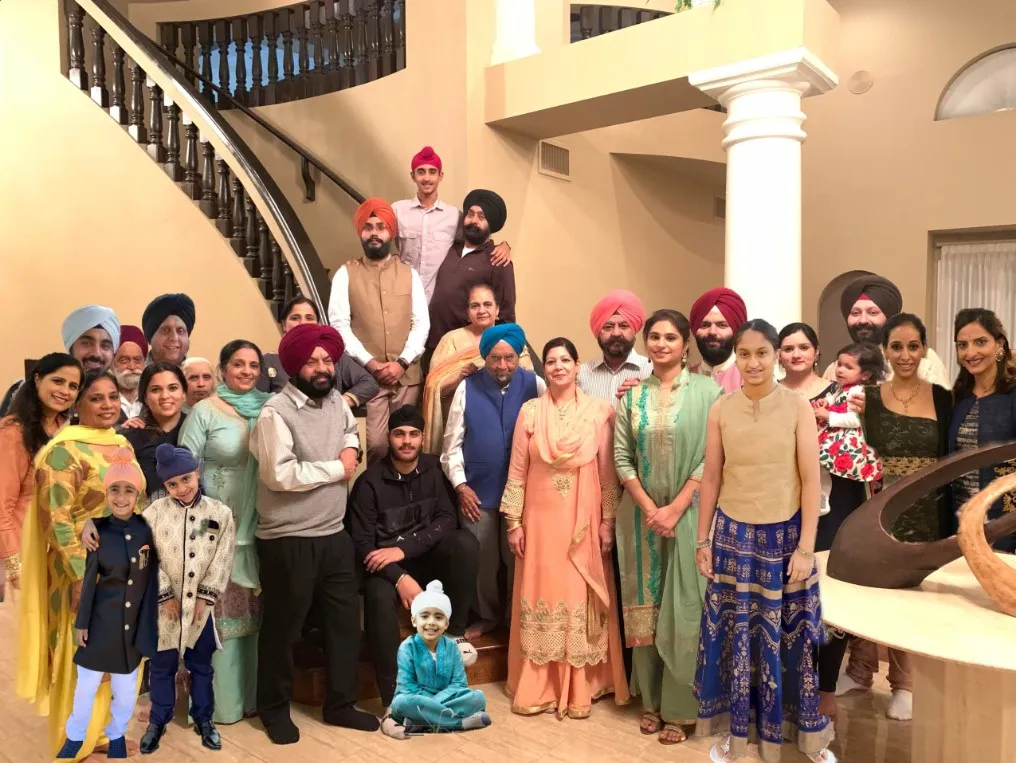
All this while, Swinderjit ran her part time real-estate business besides taking care of the household that she continued until 2017. As arthritis had affected my spine, hips, shoulders, a knee and an ankle, walking was always painful. Physically, it was impossible to do anything without Swinderjit. Not only did she take care of our sons, Mankanwal and Harkanwal, but she also took care of me as well, in everything I did. It is her care and nurturing that our sons are successful today. Completing his school from Phoenix, Mankanwal, a graduate of Dayanand Medical College, Ludhiana, is a gastroenterologist. He is married to Jasgit Kaur, an oncologist hematologist, and has two children, Pia and Nevaan. My younger son, Harkanwal, studied at UC Berkeley and is an anesthesiologist. He is married to an IT specialist Anjleen Kaur and has two children Anaik, and Jovin.
Work and faith go hand-in-hand
I haven’t forgotten Patiala all these years, the place that has made me who I am today. In memory of my parents, I have established Bhai Mehar Singh and Mata Mann Kaur Charitable Clinic in the locality where I grew up with the help of local Gurudwara Sahib. I have also established a computer lab at my high school.
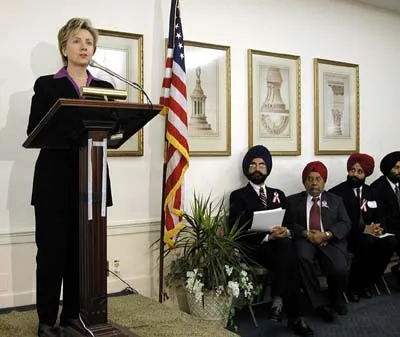
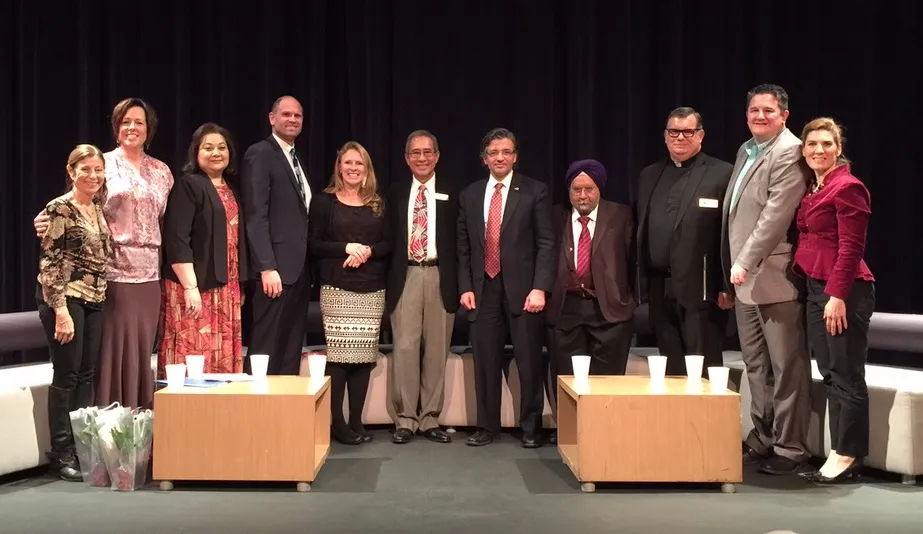
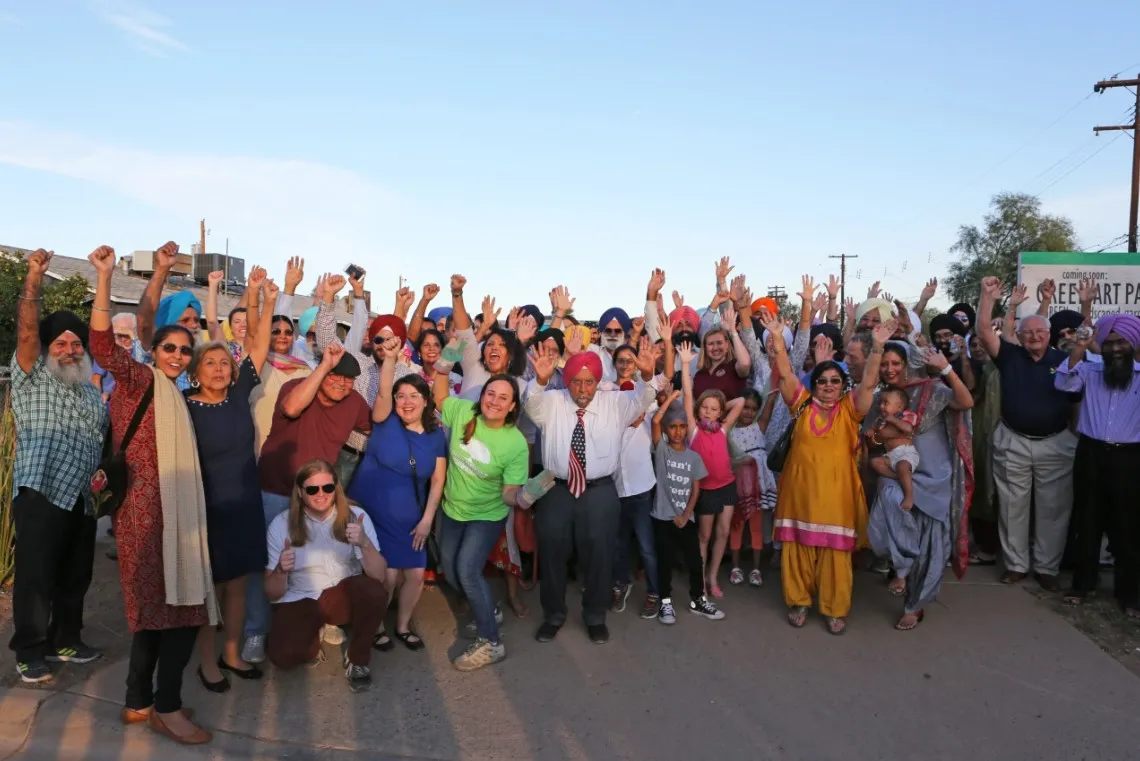
To work towards uplifting my community, I have volunteered to take up community work in garnering funds for the first Gurudwara Sahib in Arizona, Guru Nanak Dwara, and when Dr Jasbir Singh Saini Charitable Foundation wanted to open a gurudwara, I helped Dr Saini’s widow full scale to help build and establish Gurdwara Sahib Nishkam Seva too. When the hate crimes began against the Sikhs began in the aftermath of the September 11 attacks, I felt the immediate need to create awareness and show the community in a positive light. I ensured that influential institutions such as schools, synagogues and churches were given a clear picture of Sikhs and Sikhism. This was possible by adhering to the basic Sikh philosophy of sewa – selfless service for humanity – so I started monthly Homeless Dinner Programme.
I along with few local Sikhs set up a Sikh Task Force, the Sikh advisory board to the Phoenix Police Department and also joined the board of the Arizona Inter Faith Movement. I was awarded the Outstanding Citizen’s Award in 2004 by the Arizona Asian American Community.
Recently on 4 July 2019, the American Independence day, I led the local Sikh Community to distribute 20,000 free water bottles during the celebrations. About 40 Sikhs of all ages assembled in a tent under a banner saying Sikh-Americans Serving Fellow-Americans. Their aprons stated “I AM A SIKH. Serving Humanity is my Religion.” I am also putting a permanent plaque honouring Shri Guru Nanak Dev ji’s 550th anniversary and the local Sikh community. And hope not only the Sikh community but entire humanity will come forward for sewa.
Philosophy
Whatever you earn, share it with the world.
I love…
writing and have published five books: Square Pegs, Round Holes; One Coin, Two Sides; Sikhism: Points to Ponder, Perspectives of a Sikh Living Abroad; Western Mirror, Easter Reflections; and Adapting to the Adopted Culture.
I’d suggest the youth…
To follow the footprints of our Sikh gurus and their teachings. Be an inspiring role model of the Sikh principles and clarify the ignorance about the community and humanity together.
Success Mantra
You have the momentum to succeed. The more you succeed, the more you want to succeed, and the more you find a way to succeed.
The world doesn’t know that…
I have been penning my thoughts and views about the issues faced by the Sikhs and Indian diaspora. My columns have found space in various ethnic Indian weeklies.
AKA
Dr. Jaswant Sachdev FAAN | Neurologist Dr. Jaswant Singh Sachdev
Gallery
ISBN : 9788193397695