
Mahanbir Singh Grewal
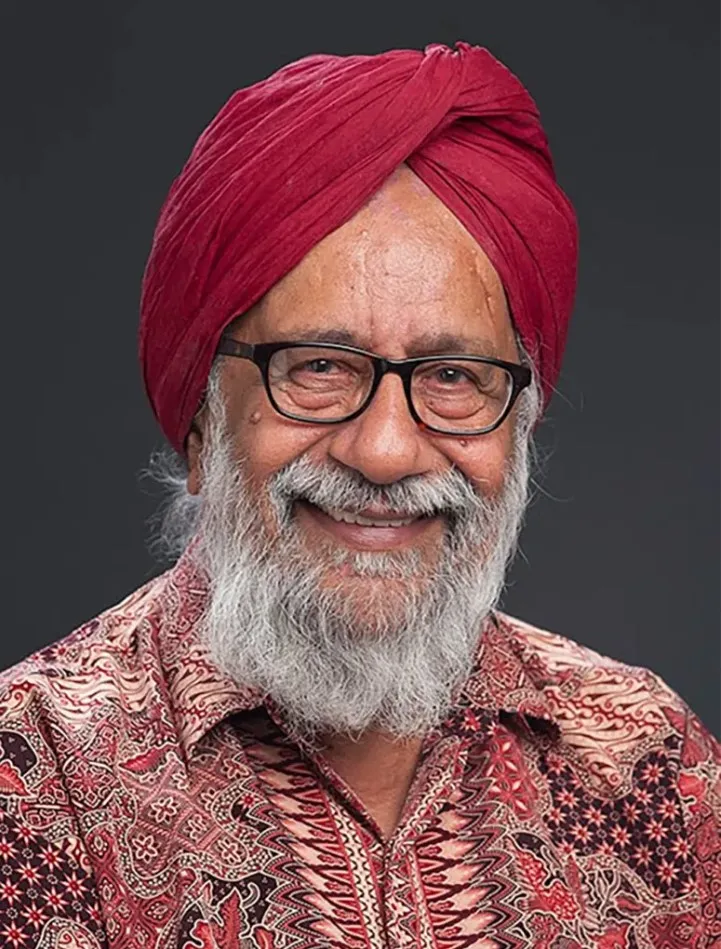
President
Guru Nanak Society of Australia | Port Augusta, SA (AUSTRALIA)
Ancestry & Birthplace:
Okara, Punjab (undivided British India)
Residence:
Port Augusta, SA (AUSTRALIA)
Fostering Togetherness with Sports
An adventurer who has turned challenges into bridges to success, he feels both hard work and play are equally important to get ahead in life.
We were all living a happy life in Okara, which is now in Pakistan, where I was born on 8 November 1939. We lived in 53 Chak, where my nana ji, Sardar Hazura Singh Jhajj, had retired to serving the British Army. He had been to China as a soldier and achieved the rank of Subedar, a rank which was the second highest rank in the British Army at that time.
But the partition of India spoiled it all. I have clear and vivid memories of the time. I was 8 and was now living in Gujjarwal, our village near Ludhiana. One morning, my dada ji, Dr Sardara Singh Grewal, and I were out for a walk when we heard the sounds of sporadic gunshots. Scared, I started running, while he kept his cool and cautioned me not to run but I was too terrified to listen and ran all the way back to the house, which was some distance away.
Those were sad and traumatic times. For the following few weeks, there were more than 30 people seeking shelter and refuge at our home. Dada ji, a kind man, let them all stay. In fact, he made all arrangements for them to be taken to safety. Many of our past relatives had been engaged in trading goods and produce with Afghanistan and through Pakistan and knew some people who helped.
Dad inspired me towards the best
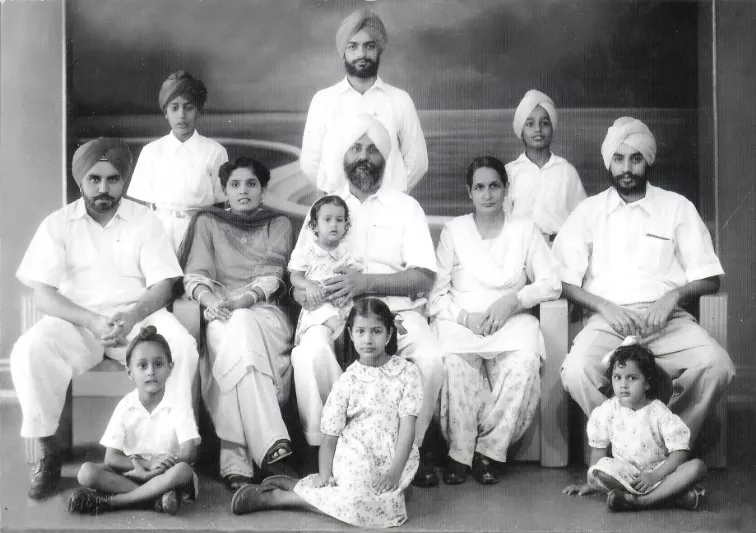
My father, Dr Manmohan Singh Grewal, a doctor in Indian Army, had moved through Burma to British Malaya during the war time and landed in Seremban after the war was over for a short while and liked the country. However, he went back to India after the war and started a Medical Practice in Ludhiana for a short time before some family tragedies came into his life.
While we were still in Gujjarwal, my mother, Rajinder Kaur Grewal, suffered a stroke in 1951 at the Guru Saar Gurdwara. She was just 35 years old then. My Dad took her to Amritsar for treatment. Her recovery was quick and good, although it left her partially disabled. Dad was heart-broken but my mother was a strong-willed lady. Although the stroke had partially impaired her mobility, she never let anyone else takeover the household chores, especially when the cooking was concerned – the kitchen was her domain. Naturally, the food was more than just delicious.
Dad moved to British Malaya in 1952 along with my mother and my other siblings where he set up his practice. My chacha, Sarabjit Singh Grewal, also moved to Malaya.
I was sent to live with my second eldest bua, Ripduman Kaur Aulakh, in Jalandhar. She was the headmistress of a school there. During my schooldays at her home, I was mischievous, playful and loved sports.
After matriculation in 1953, I began to prepare to join my father in Malaya. Since I’d never stepped out of my village in Punjab, my father arranged for me to travel by steamer from Calcutta along with some of his acquaintances from the village Gujjarwal in Punjab.
However, a fire on board on our boat, Sangola, halfway up the Hoogly River, meant that the steamer had to return to port in Calcutta. Hence, we were stranded for a month before we could set sail again. The only saving grace was that I had a relative who was a bus driver in Calcutta, Mohinder Singh Grewal. He showed me around every day. Once we resumed our journey, we reached Malaya in about 10 days and I landed in Penang on 19 August 1953.
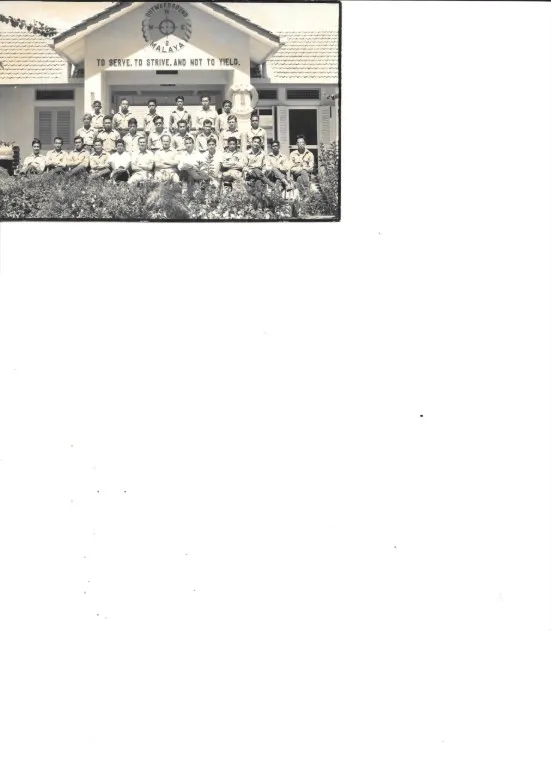
Once there, I got on with my studies in earnest and passed my Senior Cambridge with second division in 1956 from Anderson School, Ipoh. I did my Higher School Certificate in 1958 at the English College, Johor Baru, and reserved a place in University of Malaya in 1959. By 1964, I was able to secure a degree in Mechanical Engineering.
New country, new job, new experiences, new partner!
I met my wife in 1963 during my third year in the university and was impressed by her calm nature and beautiful eyes. She was from a good family of the Gills and her father was a well respected Mathematics teacher and my father knew the family when he came to Malaya in 1952.
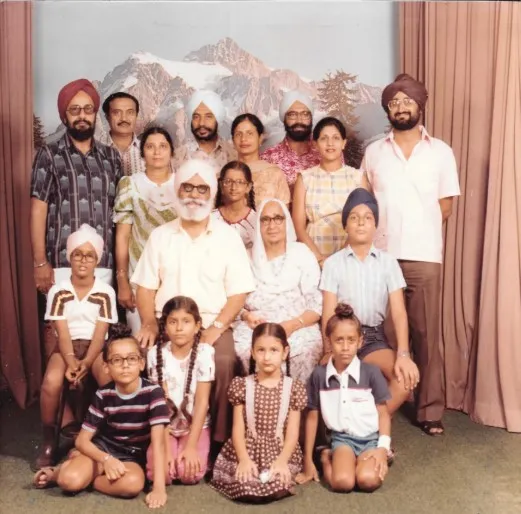
We got engaged on 15 February 1964 and married on 20 December 1964. We have four lovely children, three boys, Jagbir, Gurinder and Nirmal, and one girl, Jagdeep. The first two are in business and the other two in practice of medicine.
When I look back on the zigzag trajectory of my career, and my enthusiasm to take care of my wife and children, I move to Johor Baru in 1977 when I had put my children to school in Singapore, which was close-by.
The deciding factor to leave Malaysia and move to Adelaide, Australia, were the 1969 riots in Malaysia. My brother, Devinder, was working in Penang and was doing his housemanship and saw the riot victims brought to the Penang Hospital. He volunteered to go to the UK to complete his specialisation. It was there that his Professor recommended him take up a job in Adelaide at the IMVS , where he started working from 1 December 1971.
Devinder did not like the job in IMVS and decided to buy the general practice of a Russian doctor in far North of South Australia and at a place called Quorn. He worked very hard and soon needed more doctors to join his busy practice and, of course, Dad, the only other doctor in the family then, was the first one to join him in 1973.
I used to go to Australia almost every year from my involvement in the sugar industry and invested some funds in a Medical Centre and thus gained Permanent Resident status for my family.
After the successful completion of Gula Padang Terap sugar project in 1977, I joined Malaysia Shipyard and Engineering Company in Pasir Gudang Port near Singapore and put my children in Singapore for studies. After working for almost two years in the shipyard, I decided to go to Australia in August 1980 with my family and joined Dad and Devinder in Port Augusta.
Devinder and I joined hands to start a real-estate business and the first project was building 12 townhouses, a shopping centre and a motel in 1983. The venture into all these three entities kept the family busy and together and promotes good results for the children as well.
Promoting humanity
As time went by and we had more time to sit back and enjoy, I began to think of ways in which I could engage with the Sikh community, yet I wanted to do something completely different. In fact the thought of my mama ji, Sardar Beant Singh, a former Chief Minister of Punjab, who had laid his life for people of Punjab and got rid of 10 years of militancy in Punjab attracted me to join the Labor Party in South Australia and start to contribute to the Sikhs in South Australia.
I was sure that getting our children to play games together was a way to getting the Community together in a healthy way.
The first Sikh games were held in Adelaide in 1988, in which five teams from South Australia, Victoria and New South Wales came to Adelaide to compete as a celebration of opening of the city’s first gurudwara. Later a national body was formed to look after the games. It is now held annually during the Easter period. To date, Australia National Sikh Sports Council (ANSSAC) has organised 32 games and with time it had developed a strong presence, growing multidisciplinary and multilevel. In the last games in Melbourne in 2019, we had over 100 Soccer teams of both men and women coming from all over Australia. The other disciplines in the meet were Hockey, Cricket, Netball, Volleyball, Kabaddi and Athletics.
While organising the games, I also met a lot of immigrants and found that a lot of Indian students coming to Adelaide had no idea of the city and the places where they would find things of their taste. We started putting in small efforts to help them, but there were no concrete plans. By 2005, through the gurudwara, we made it known that they can go to a certain shop, called Made in India, to buy provisions and cook for themselves in the gurudwara as often as they liked. I had an understanding with the shop owner that I would pay all the bills for the rations used. To ensure an efficient and smooth running of the temple, my wife and I used to come from Port Augusta every Friday by noon, mingle with all these young folks and get back to Port Augusta on Sunday.
Philosophy
Suno, Samjho, Socho, aur phir karo (listen, understand, consider and then and only then act) guides my life.
I love…
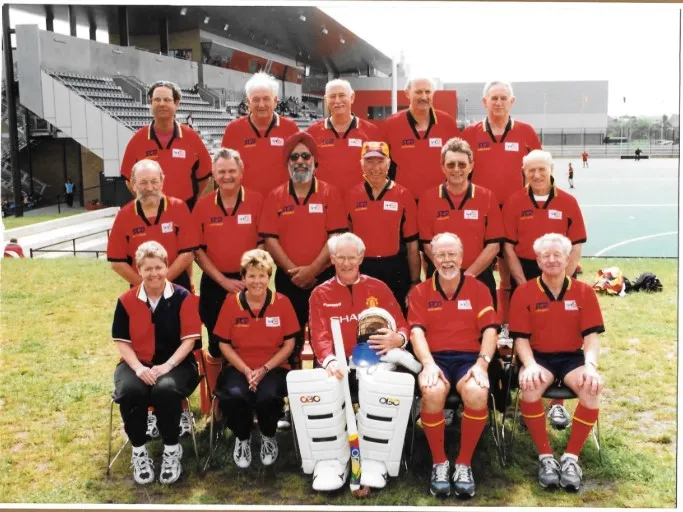
Hockey.
I’d suggest the youth…
To give their 200 per cent. And not to look back once they put their hand to the plough.
Success Mantra
When you continue to apply yourself to whatever you do with total dedication, success happens.
The world doesn’t know that…
My dada ji too was diagnosed with prostate cancer and my youngest bua, Daljit Kaur, with terminal cancer.
AKA
President, Guru Nanak Society of Australia | Sikh community leader Mahanbir Singh Grewal
Gallery
ISBN : 9788193397695