Dr Arun K Garg
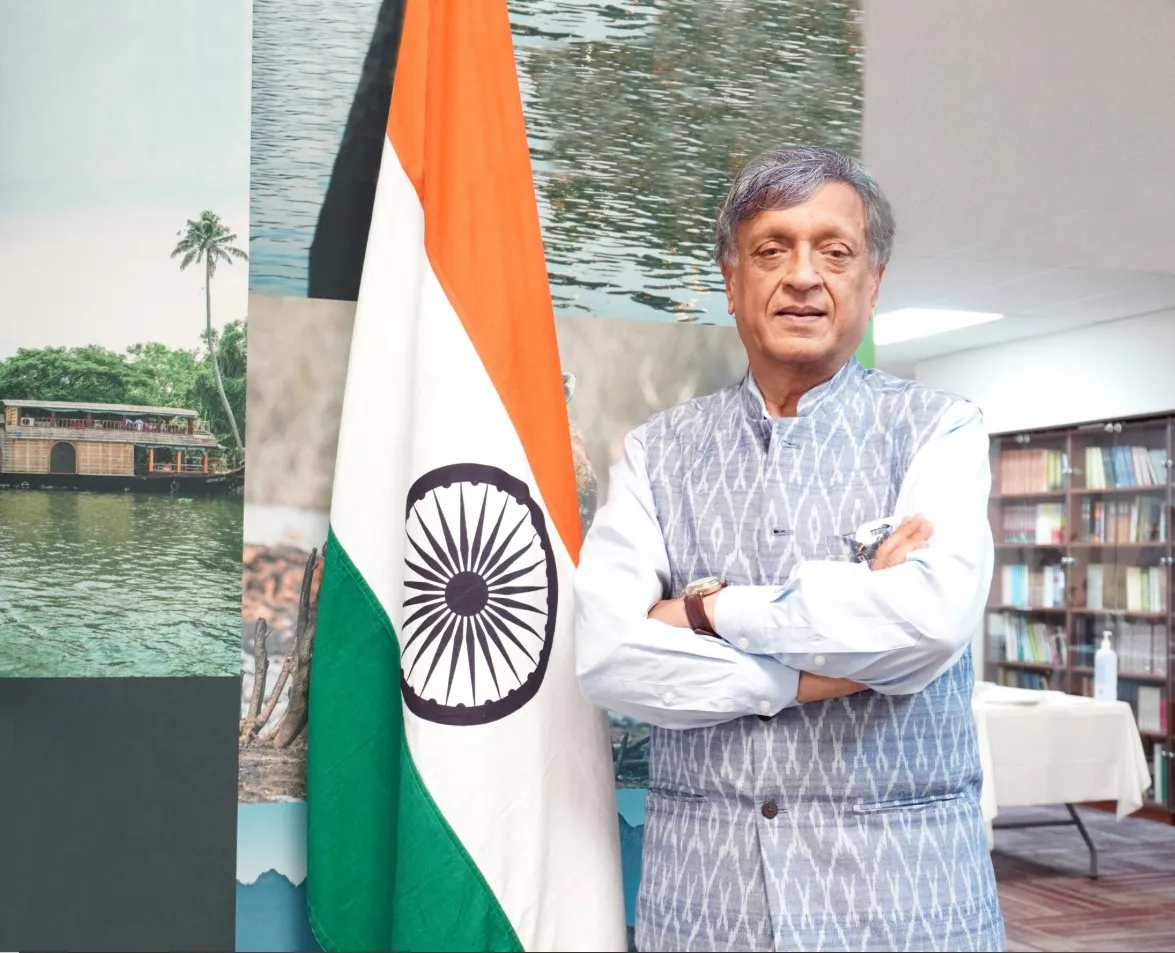
Clinical Professor of Pathology and Laboratory Medicine, University of British Columbia
Founding Chair & President, Canada India Network Society (CINS)
Vancouver, British Columbia, Canada
Janma Bhumi:
Agra, Uttar Pradesh, India
Dharma Bhumi:
Indus Valley Vedic Yogic civilisation
Karma Bhumi:
Vancouver, British Columbia, Canada
Yogi of Mind, Medicine, and Spirit
The ‘Dr Arun’ Factor: “Health is the total sum of physical, mental, emotional and spiritual wellbeing.”
THE MAN
In his seventies now, Dr Arun K Garg is at peace with himself. It has taken him three decades to get here, amid life’s many vicissitudes, each bringing him a step closer to his real self.
Dr Arun was born on 16 July 1946 in Agra, Uttar Pradesh. His maternal grandfather, Dr Bishambhar Lal Vaish, was among the first Indian professors of chemistry at Agra College and ran a home dispensary where young Arun spent his summer vacations. His father, Dr Kanihaiya Lal, a gold medallist and among the earliest PhD scholars in economics, became a college principal at a very young age. Dr Arun was only five when his father was killed by students he had caught cheating in examinations. “Our world, especially my mother’s, turned upside down in a matter of hours,” he recalls.
His mother Hemlata’s quiet strength, fuelled by her deep-rooted beliefs in Sanatan Dharma, became the family’s charioteer. She raised her four children alone with limited means but more than ample spiritual and moral grounding. “I imbibed the values of faith, discipline, honesty, and resilience long before I could articulate them,” he says.
Dr Arun was always a precocious child. From skipping grades and being admitted directly into Grade 4 when he was only six to completing his Grade 12 examinations at fourteen, his academic brilliance shone brighter than the sun. He earned a BSc. in biology at sixteen and a MSc. in chemistry at eighteen from St. John’s College, Agra. Too young for Indian medical colleges, Dr Arun left India in 1965, “naïve,” as he now calls himself, unaware that his real journey had only just begun.
THE JOURNEY
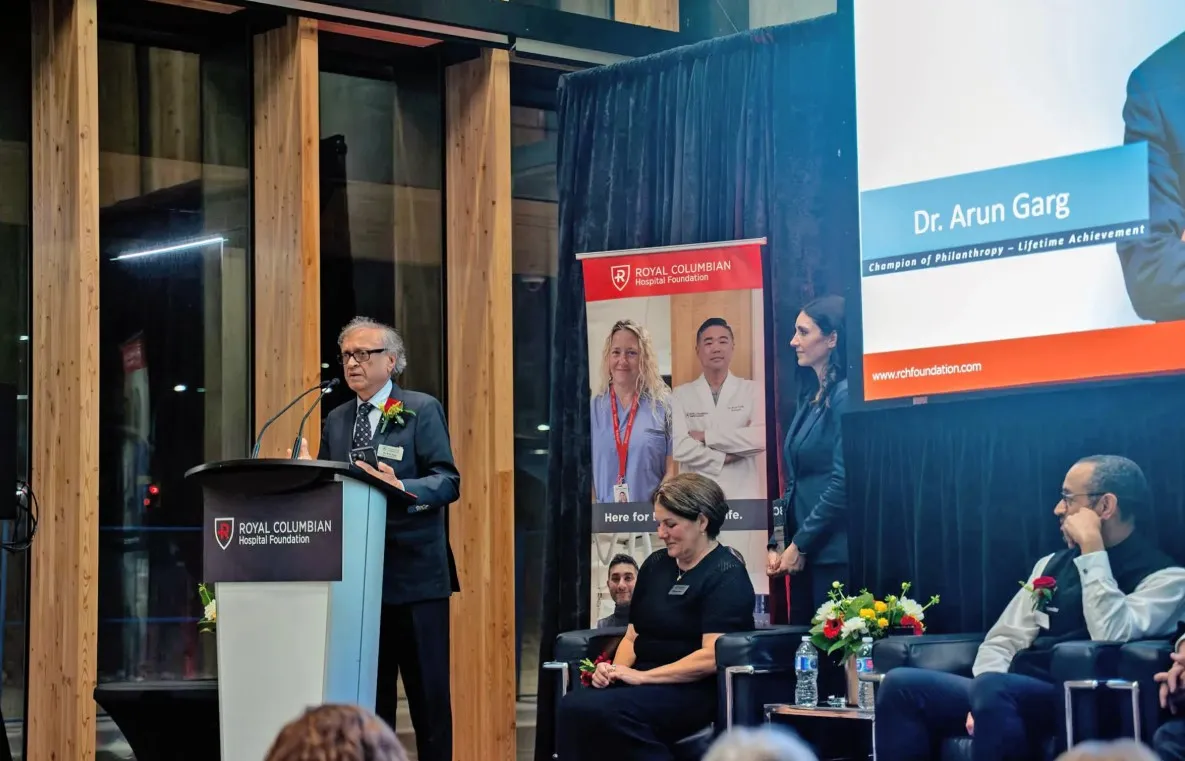
In Canada, Dr Arun’s academic journey took him from an MSc and PhD in Biochemistry at the University of Saskatchewan to a Doctor of Medicine from the University of British Columbia followed by a Fellowship in Medical Biochemistry (FRCPC) in 1980. He joined the Royal Columbian Hospital as a resident in clinical biochemistry, beginning an association with the institution and Fraser Health that would span nearly four decades, until his retirement from active hospital practice in 2020.
His work extends beyond the lab. “You can’t just publish a paper,” he says. “You have to get to the root cause and do something.” That conviction led to the founding of the Canada India Network Society (CINS) and the South Asian Health Institute (SAHI), where he works to create lasting public good, especially through events like CINI 2026, which is a global call to examine and rethink health, culture and society itself.
THE SPIRIT WITHIN
When a colleague once asked Dr Arun ‘Who are you? What is a Hindu?’, it stumped him. “I couldn’t answer,” he admits. For a man of science, this question became the epiphany for the search of the self. It led him to the Bhagavad Gita and “reading that changed the entire course of my life,” he reflects “It gave me the insight I was looking for.”
Another work that inspired him was Deendayal Upadhyay’s vision of Integrative Humanism. It enabled him to see healthcare not merely as treatment, but as culture in action. “You cannot separate culture from policy,” he says. “You cannot separate people from their culture, if you want a healthy society.”
From that moment emerged the philosophy that now defines his life’s work: integrative thinking. As a doctor, he only knows too well that Western medicine has given us extraordinary understanding of the human body and physical health. He explains, “But health is more than physical. It includes mental, emotional, ‘gyanic’ (wisdom-based) and ‘anandic’ (wellbeing of joy) health. He adds, “To truly heal, we must find a happy medium– the best of the East and the best of the West.”
Through radio programmes and public lectures, he carries healing into communities. “I seek ‘aatma-to-aatma’ (soul to soul) connection,” he says. “I aim for healing that begins not with prescription, but with understanding.”
THE LEGACY
On this journey of self-discovery, Arun found his life partner Lori, whom he met while he was at university. Married to her for over fifty-five years, Dr Arun calls her his steady anchor. Lori, a trained health record administrator and long-time yoga practitioner, keeps him “honest.”
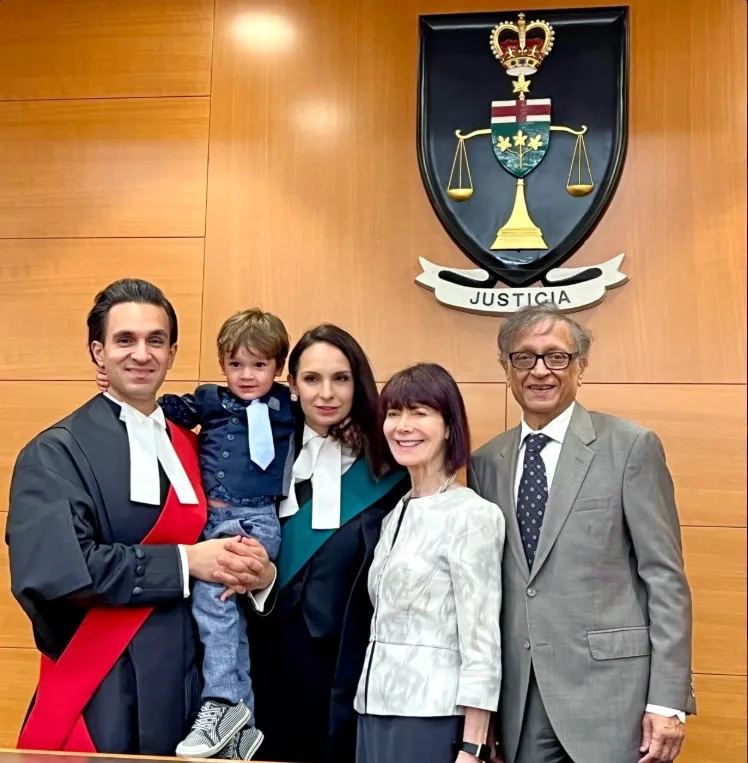
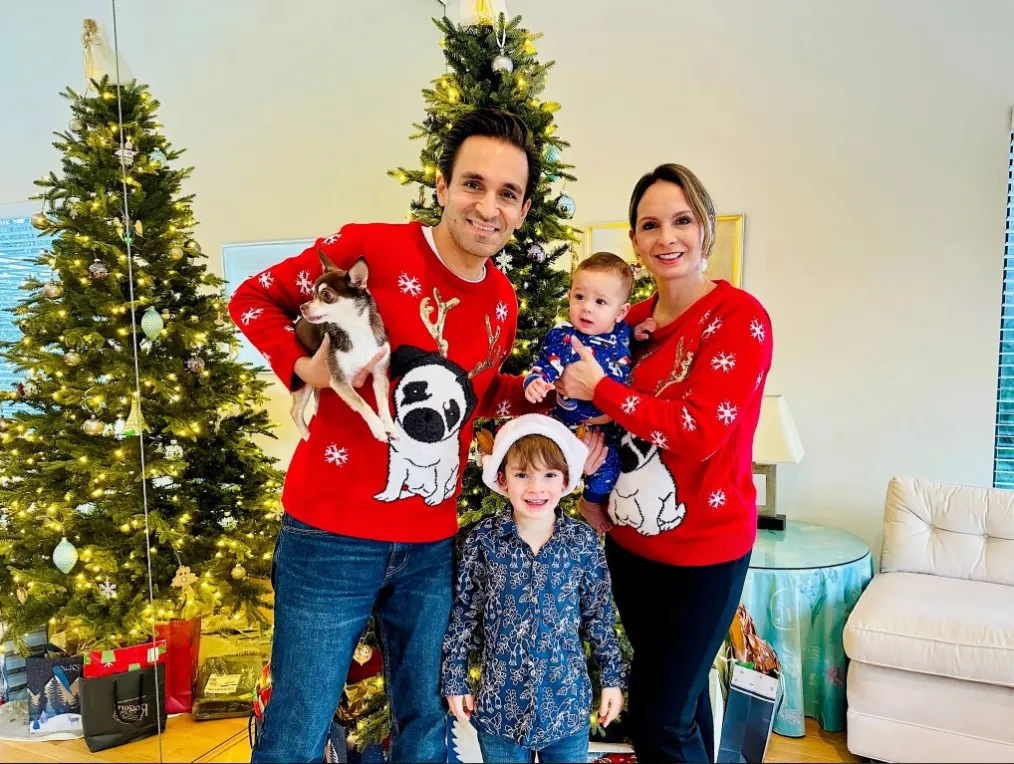
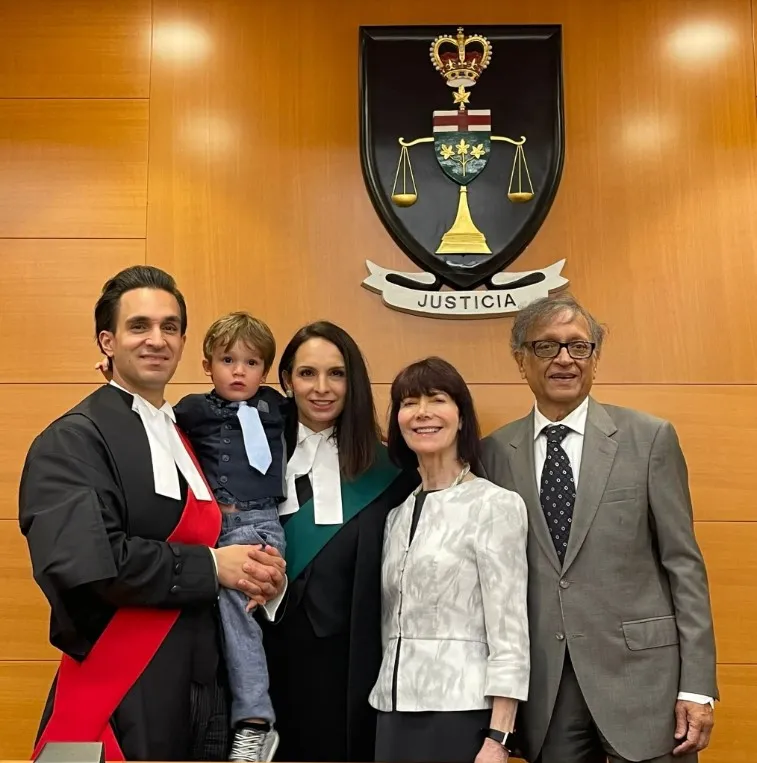
She devoted herself to their son, Davin, who has done both of them proud. Today, he serves as a Justice of the Ontario Court of Justice — appointed at just thirty-nine, among the youngest and among the first Hindu judges in the Hamilton region. “Davin took his oath on the Bhagvad Gita – it was a proud moment, and it felt like life has come full circle,” Dr Arun declares. Justice Davin, his wife, Libby — a lawyer and Regional Justice of the Peace, Government of Ontario, — are now raising two sons, Theodore William Kanihaiya and Akash Krishna, names that proudly carry civilisation, philosophy and continuity. To watch his grandchildren be raised to respect all cultures and to hear his five-year-old grandson talk about ‘Hauman, Krishna, and Jesus Christ’ as his superheroes, fills Dr Arun with a profound sense of satisfaction.
As for Dr Arun – if the first half of his journey was the search, the second has been about living his truth, in work he’s bridging the gap between Western and Eastern medicine through integrative thinking. In life, he practices discipline, devotion, and holistic wellbeing.
So, when asked once again ‘Who is Arun K Grarg?’ The response is clear and resounding. “I am the proud descendant of the Indus Valley Vedic Yogic civilisation. I live the principles of Dharma, Artha, Kama and Moksha. I practise Karma Yoga, Bhakti Yoga, Gyan Yoga and Raj Yoga. And most of all, I recognise that I am only a tiny particle in this entire universe, with many limitations.”
A speck he might be, but the impact Arun K Garg is creating in the lives around him is anything but.
MAPPING THE INDIA WITHIN
Bharat: Then and Now
“When I left India in 1965, I thought the country was doing well, a proud republic emerging from colonial rule. Today, I see more positive change: a renewed connection to our roots, a civilisation reclaiming its identity, and citizens beginning to reflect on who they truly are.”
Bharatiya Values that Travelled
My mother instilled faith, hard work, honesty, and integrity, and these values shaped my choices even when abroad. They were the unseen compass, carrying the essence of our Indus Valley Vedic Yogic heritage.”
Generations Abroad: A New Bharatiya Identity
“Raising my son and seeing my grandchildren, I recognise that Bharatiya identity evolves yet remains rooted. My grandsons, Theodore and Akash, connect with both their parents’ heritage.”
Pride, Progress, and the Spirit of Bharat
“India’s recognition globally has changed remarkably. Earlier, foreign buyers hesitated to try Indian products; today, they trust our quality. That transformation fills me with pride. The spirit of Bharat lies in its resilience—our ability to find solutions and never give up.”
Dreams for the Youth and Future of Bharat
My dream is a healthy India — physically, emotionally, culturally, intellectually. To the youth, I say, there is no substitute for honesty, hard work, and integrity. Follow your inner voice, pursue your calling, and embrace your roots, whether in India or abroad. Build a society that is clean, wise, and compassionate.”
BACK TO THE FUTURE – IN FIVE MOMENTS
Food Cravings
THEN
I loved street chaat, boiled fruits, and my mother’s home-cooked meals — Flavours I remember vividly from childhood.
NOW
I enjoy preparing Indian meals, replicating those chaats, and experimenting with spices.
Sport Spirit
THEN
Street Cricket was my favourite.
NOW
Yoga is central to my routine. I rise early and practice during the Brahma Muhrata. I also enjoy outdoor activities and hiking.
Music Tastes
THEN
Old Hindi melodies, and devotional songs were a balm for the soul.
NOW
I focus more on Bhakti and devotional music.
Holiday Life
THEN
Travel meant going to my grandparents’ home (a few miles away). Playing around the Taj Mahal was the highlight.
NOW
We enjoy travel, exploring nature, river cruises, and the greenery of places like Kerala.
Leisure Habits
THEN
Reading books and attending bhajan gatherings were small joys.
NOW
I devote my time to yoga, studying the Bhagavad Gita and Patanjali Yoga Sutras, and building a library on Vedic Yogic Science.
AKA
Dr Arun K Garg UBC | University of British Columbia Faculty Pathology | Founding Chair Canada India Network Society | President Canada India Network Society