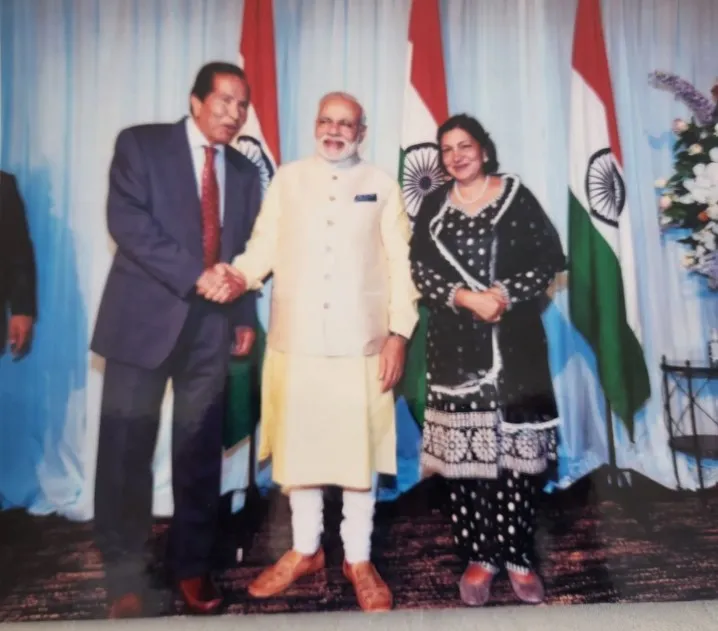
Col (Rtd) Dr Mahinder & Sharad Tak
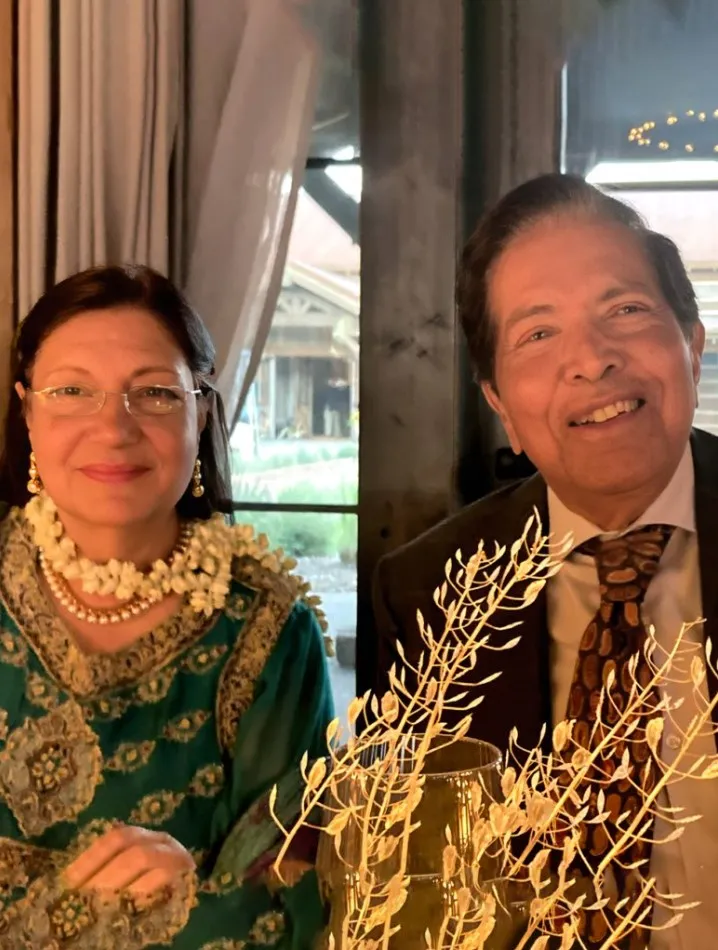
Radiation Oncologist & Art Collector
Founder, ST Systems Corporation | Washington DC, USA
Janma Bhumi:
Sharad: Jodhpur, Rajasthan, India; Mahinder: Srinagar, Kashmir, India
Dharma Bhumi:
Sharad: Jodhpur, Rajasthan, India; Mahinder: Srinagar, Kashmir, India
Karma Bhumi:
Washington DC, USA
Wired for Global Success
The ‘Mahinder-Sharad’ Factor: “Integrity, hard work, and education have always guided us. If you live by these principles, giving back becomes a part of life.”
THE COUPLE
“Let me not to the marriage of true minds admit impediment,” wrote Shakespeare. Some of the deepest partnerships emerge not from convenience or similarities; they fuse in an alignment of purpose.
Sharad and Mahinder Kaur Tak represent such a meeting of minds: two individuals, shaped by different cultural influences, geographies, and disciplines, yet entwined in the same moral core.
Born in 1944, Sharad grew up in Jodhpur, Rajasthan, in the post-Independence era. His parents, Kishori Lal and Bhuri Tak, were devout Jains, and Sharad was surrounded by a community of professionals and administrators from private and public service who lived by the ideals of Jainism and practised a work ethic of discipline and honesty. “My parents were very religious, honest, and had a lot of integrity,” he reflects. “They always wanted me to get a good education.”
Elsewhere, Mahinder Kaur was being brought up to be an independent, educated woman. Born in Kashmir to Madhav Singh and Bhagwant Kaur Bali, she recalls her father being emphatic on getting his daughters educated. She says, “My father and grandfather were highly educated and placed importance on education for girls. We four sisters and our brother were given the best opportunities.” Educated across India, she learned the value of critical thinking while maintaining her Sikh values.
In the 70s, Sharad and Mahinder’s roads intertwined. The rest, as the cliché goes, is history, albeit still in the making.
THE JOURNEY
For Sharad, academics were a choice between following his peers or veering from the trodden path. He chose the latter, pursuing a B.Tech in Electrical Engineering from IIT Bombay, where he learned, as he puts it, “to think clearly, to question assumptions, and to respect the discipline of hard work.”
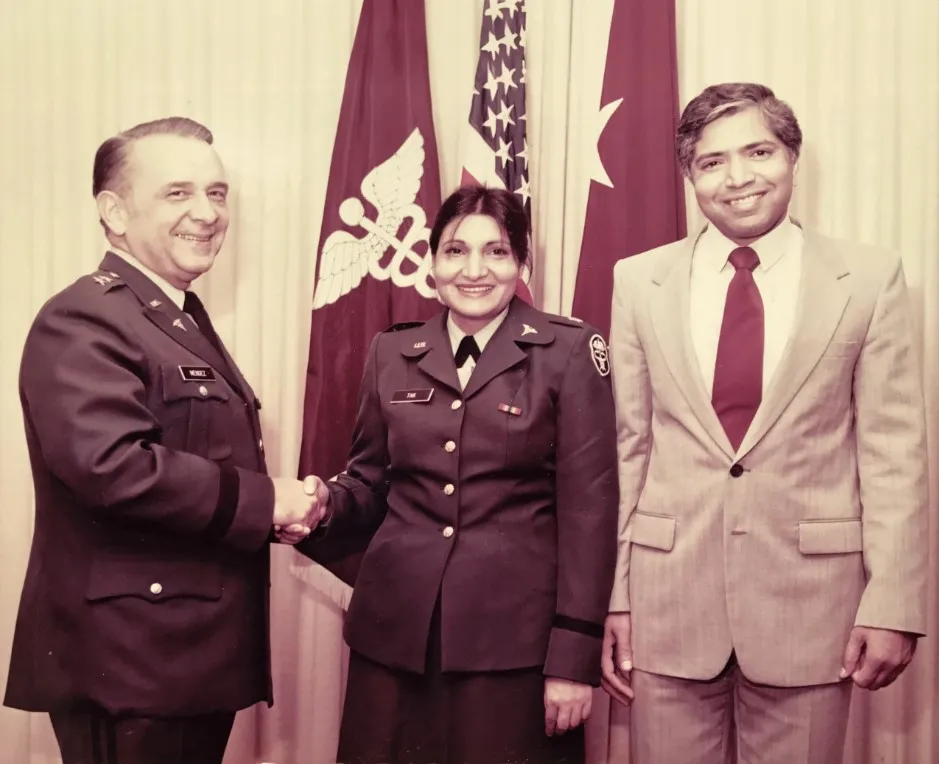
The Technology sector was still nascent when Sharad moved to the US in 1966 to complete his Master’s degree in Computer Science at the University at Buffalo. Computers were still a novelty. Mahinder, on the other hand, decided to pursue a career in medicine and public service. She studied medicine at Lady Hardinge Medical College in New Delhi and relocated to the US in the early 70s, securing a residency at George Washington University and specialising in radiation oncology. Sharad and Mahinder’s careers may have been different, but their achievements have always complemented each other. Sharad began his career as a senior computer engineer and went on to found Systems and Applied Sciences Corporation, later renamed ST Systems Corporation (STX), which served major US government agencies before he sold it to Hughes Aircraft. Mahinder practised as a radiation oncologist before she gave that up to join the United States Army Medical Corps. Among the first Indian-Americans to join the US Army, she was commissioned as a Major, rose to Lieutenant Colonel and later retired as a Colonel after years of service on active duty and in the reserves, including training for deployment during periods of conflict.
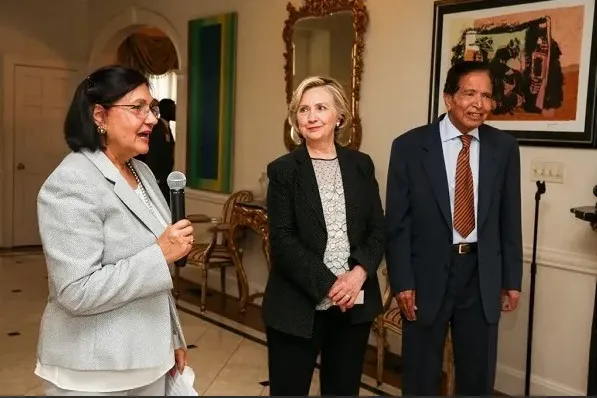
In later years, their careers have moved beyond professional borders. Sharad has continued to advise institutions and support academic programmes, while Mahinder moved into civic and cultural leadership, serving on museum boards and contributing to public initiatives in Washington, including serving as co‑chair of the Democratic National Committee’s Indo‑American Council during the 2008 Obama campaign.
THE SPIRIT WITHIN
Sharad and Mahinder’s philanthropic ideology is similar and focused on tangible impact, and reflects in the belief that personal success comes with social responsibility to enrich the cultural, educational and social fabric of their communities. From healthcare, girls’ education, and mentorship to arts, their philanthropic work is as much an expression of their shared values as it is of their individual sense of commitment. Sharad, who earned the Distinguished Alumni Award from the University of Buffalo, has been instrumental in bridging the gap between industry and academia by supporting scholarships, engineering initiatives and development programmes, particularly at his alma mater, and has served on boards such as the WHEELS Global Foundation.
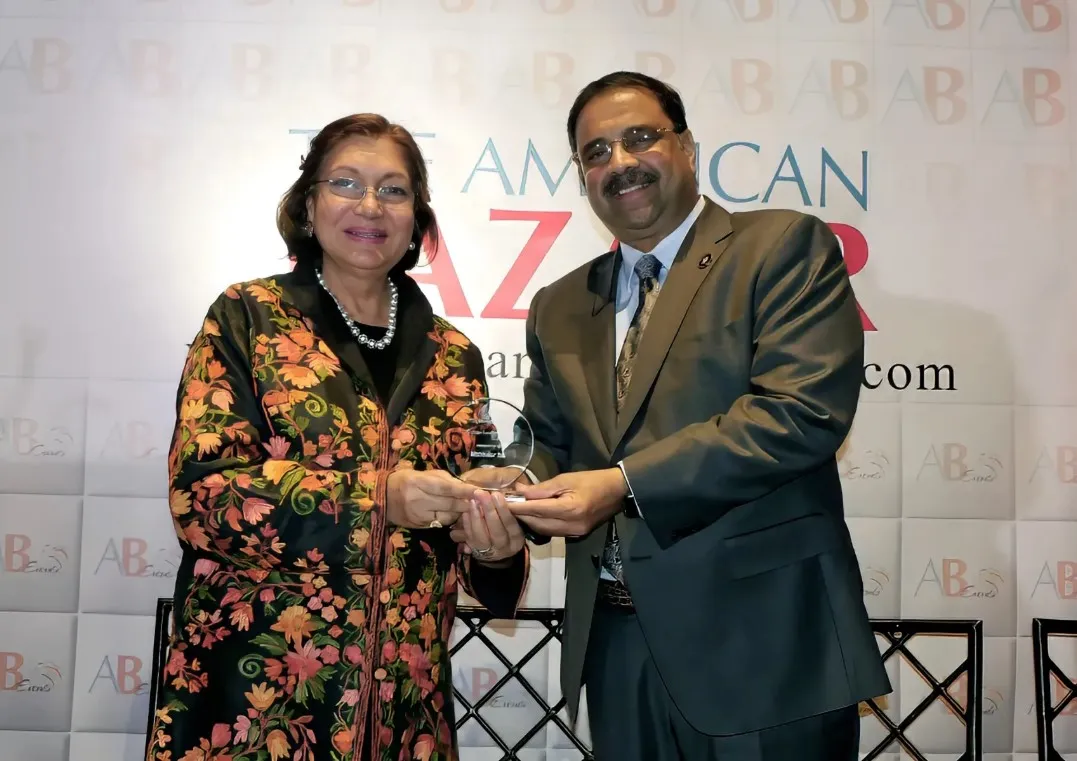
Mahinder’s philanthropic footprint is expansive, too. She is one of the biggest champions of South Asian art and has been involved with institutions such as the National Museum of Women in the Arts, and supports major cultural exhibitions. Also known for her civic engagement and political support, she has been honoured with the American Bazaar Women Leader of the Year Award.
THE LEGACY
In 2022, works from The Visionary Collection of Mahinder and Sharad Tak realised millions at Christie’s Asian Art Week in New York — the highest total ever achieved for South Asian Modern plus Contemporary art at any international auction house.
The millions aside, what matters the most to Mahinder and Sharad is that they have been able to use their private collection to generate much-needed conversation and recognition for South Asian art. Mahinder began collecting art more seriously after meeting legendary artist Maqbool Fida Husain. She says, “What started as a curiosity is now a passion with a purpose. But most of all, collecting art has allowed me to keep my Indian identity in my home in America.”
Their collective identities as Indian-Americans have been passed on to their children and grandchildren. As busy professionals, Sharad and Mahinder were thankful for the support of their parents, and Mahinder observes, “I think family is the centre of everything and our culture teaches us to take care of that most precious asset.”
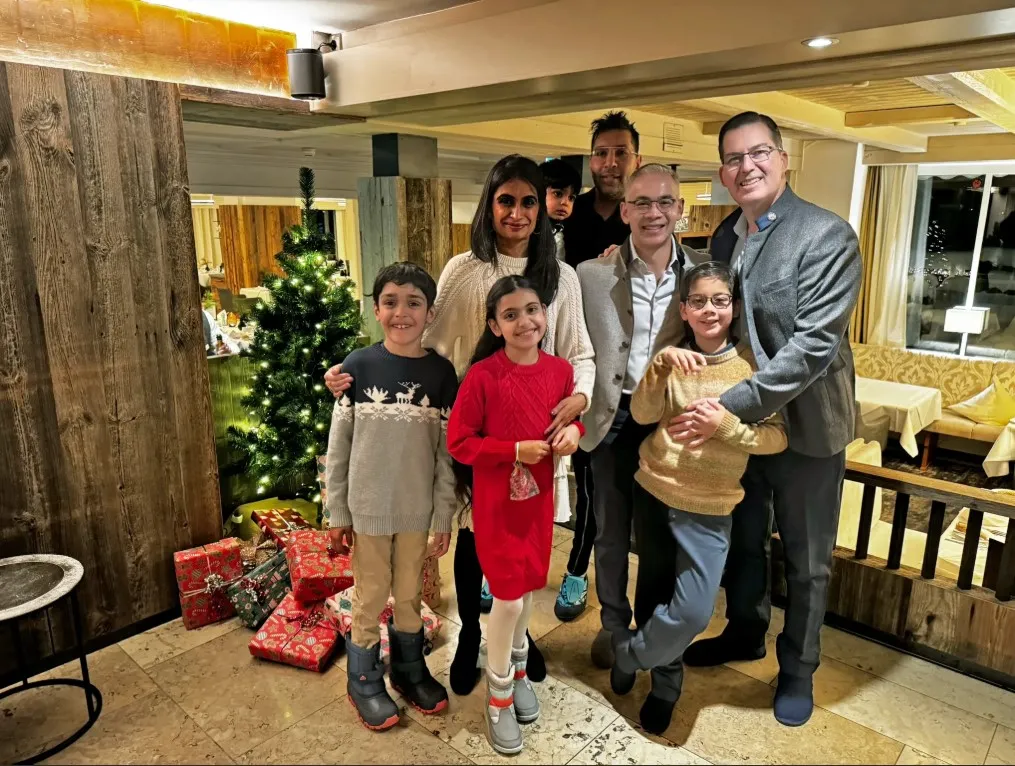
The Tak family legacy is thriving through their children, Sahil, who holds a BS degree and leads as President of Paper Mills, and Himkar, with an MS degree and a thriving career in the energy business. Sahil is married to Rupa, and Himkar to Amrita. Sharad and Mahinder are completely besotted with their six grandchildren: Dhilan, Shann, Sheena, Sohana, Jhoven, and Ahvin.
Both of them agree on the definition of legacy and put it best, “You do your best while living, and what you do naturally becomes a legacy.” Theirs is a marriage of true minds, growing stronger every moment.
MAPPING THE INDIA WITHIN
Bharat: Then and Now
“India has changed tremendously since we grew up. From airports with one or two planes to thriving cities and technology, the progress is remarkable. Yet the openness, respect for education, and family values that shaped us remain the same, guiding us wherever we are in the world.”
Bharatiya Values that Travelled
“We carry our Indian values naturally—honesty, integrity, respect, and the importance of education. These guided us in the United States and now shape our children’s lives. We never forced them; they embraced them, learning responsibility, generosity, and the joy of giving back, as we did growing up in India.”
Generations Abroad: A New Bharatiya Identity
“Our children were born here, yet they proudly carry India in their hearts. They blend Indian culture with American life, celebrating festivals, cherishing traditions, and understanding their roots. They inherit the values we lived by, creating a Bharatiya-American identity that bridges continents, family, and culture seamlessly.”
Pride, Progress, and the Spirit Of Bharat
“We are proud to be Indian, nurtured by family, culture, and education. The spirit of India lies in togetherness, resilience, and openness. Seeing women succeed and youth innovate reminds us that India’s progress is unstoppable, and its cultural pride remains a compass, wherever life takes us.”
Dreams for the Youth and Future of Bharat
“We hope for an India that thrives democratically, respects all communities, and continues growing in education, infrastructure, and opportunity. The youth inspire us—their energy, openness, and ambition show that India’s future is bright. We wish for them to seize every chance and shape a country they can be proud of.”
BACK TO THE FUTURE – IN FIVE MOMENTS
Food Cravings
THEN
Back home, it was simple fare—‘dal’, ‘roti’, and ‘sweets’ from nani’s (maternal grandmother) kitchen.
NOW
We still love those flavours, but now we enjoy exploring global cuisine wherever we travel.
Sport Spirit
THEN
We were both very active and enjoyed a variety of sports, including cricket and tennis.
NOW
A bit of golf, and we both enjoy watching tennis and other sports on TV.
Music Tastes
THEN
We grew up listening to classical, folk, and popular music
NOW
Our playlists now mix Indian melodies with jazz, pop, and world music—we love discovering new tunes.
Holiday Life
THEN
Vacations meant Nani’s house, Chacha’s farm, trips to Rajasthan, Delhi, Kashmir, and Bombay.
NOW
We travel the world now, experiencing cultures, history, and nature wherever we go.
Leisure Habits
THEN
We both loved reading and spending time with family outdoors.
NOW
Golf and reading. But our most favourite activity is moments with the entire family.
AKA
Radiation Oncologist Dr Mahinder Tak | Founder ST Systems Corporation | Technology Entrepreneur Sharad Tak | ST Systems Corporation Founder | ST Systems Corporation Washington DC | Tak Family Business Leadership | ST Systems Technology Leadership | TiE DC Legends Awardee