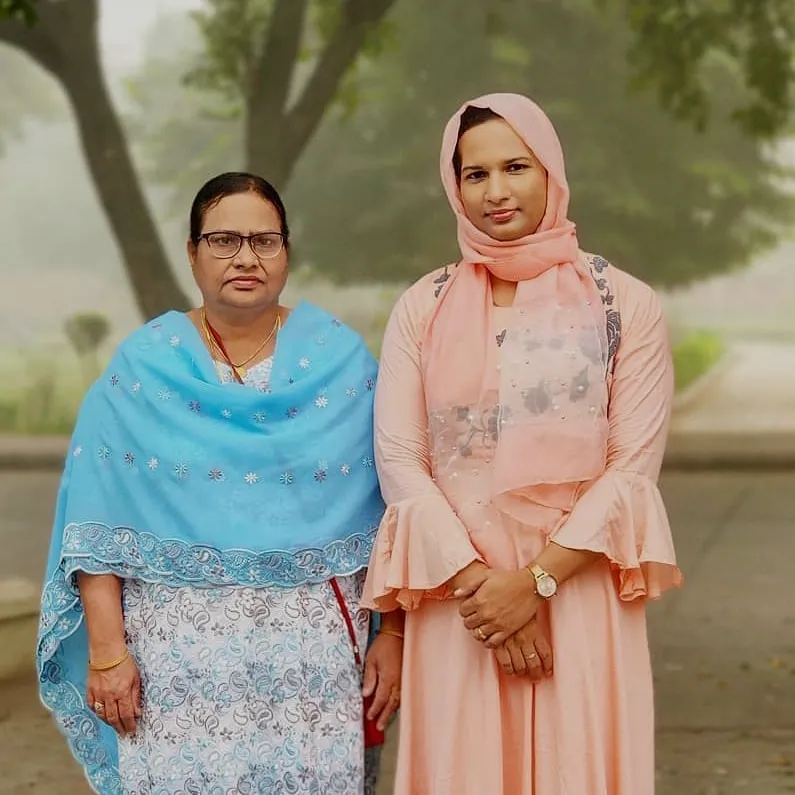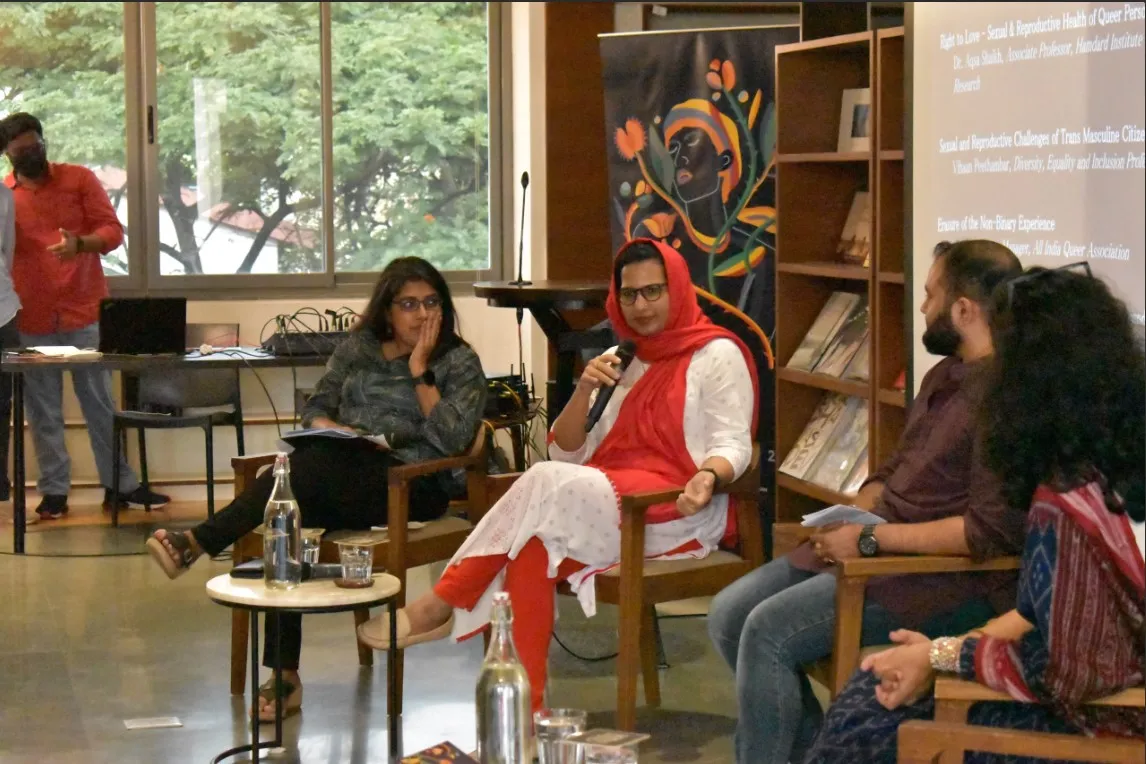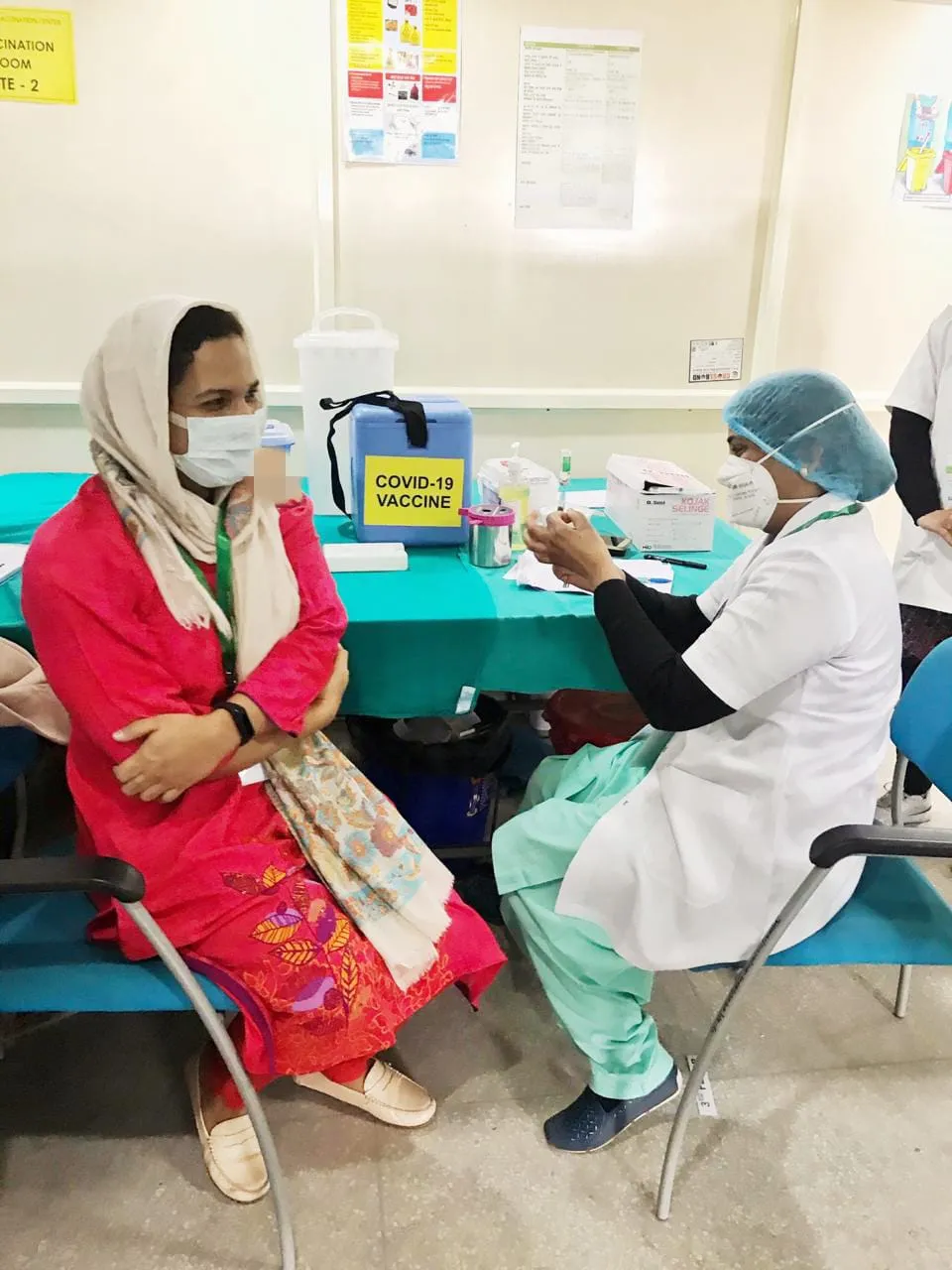
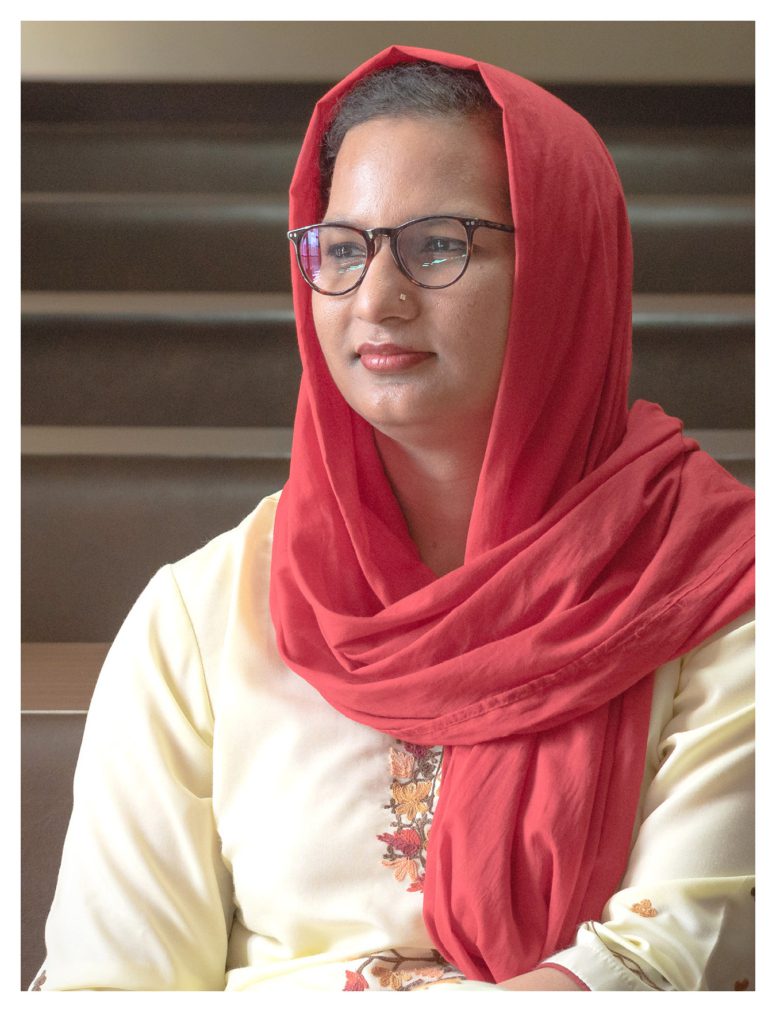
Dr Aqsa Shaikh

Birthplace:
Mumbai, Maharashtra
Residence:
New Delhi
Qualifications:
MBBS, MD (Community Medicine)
Inspiration:
Mother Teresa
DOCTOR SAHEBA: A MOVING JOURNEY TO SUCCESS
She alone is enough to prove that a woman can contribute significantly to society. The first transgender person to head a COVID-19 vaccination centre, she is an Associate Professor at the Hamdard Institute.
Born Zakir Hussain in 1983, Aqsa’s search for identity didn’t stop her from pursuing her academics. It rather helped her in her determination.
Five years of age and she felt she wasn’t quite like her two brothers. Though her family was raising her as a boy, she felt different. At that age, she didn’t quite understand what she was going through. To make it more challenging was the fact that she went to an all-boys school. “I was not like other boys, I didn’t play with them, didn’t have any friends and always sat alone and aloof. A child’s mind is very inquisitive. I had noticed the difference that I had, what, why, how were the questions of my kid-brain.”
There was a lot to add to the questions. Her ‘unmanly’ acts were often admonished and she was constantly told to “behave like a boy” and to “correct” herself. That you tend to internalise and start feeling the guilt adds to a person’s difficulties, more so when it still is an innocent child. “Thinking it shouldn’t be so difficult to act like a man, I then started acting like one. I’d walk and talk like a man and tried to get attracted to a woman but could not. Then I questioned myself all the more.”
A battle with self
Here she was, trying hard to go by the society’s rule, failing and yet not accepting herself… creating herself a battle.
The early times were tough. The battle within, however, had a silver lining. The alone time helped Aqsa concentrate on her studies. She excelled academically and secured a medical seat in one of the finest government medical colleges, Seth G.S. Medical College MUHS, Nashik, Maharashtra.
She entered college thinking she had left behind the trauma of school. Bigger city, professional people, she thought, would be more accepting. She was up for disappointment. “School students and teachers do not know it at all. Here it was seen as a mental, psychological issue – in a medical school!”
However, Aqsa too till age 21 hadn’t found the right terminology to categorise herself in. “Thus, there was a lot of stress and anxiety. I had to take medical consultation for constant high blood pressure.”
Probably the medical world was her rightful place, she thought. “I never discussed it with my parents. I never had any friends to share my thoughts with. The first time someone asked me, it all automatically came out and revealed my confusion. It was my doctor!” The doctor, she says, was a lovely person to say it was all “perfectly alright” and suggested she consult a mental health professional too. “I then went through a long two-month counselling session in college and it became clear what my orientation was. So, the search for many answers finally ended in my college’s psychiatry department. I was 21.”
Aqsa then sat her parents down to talk to them and tell them that she now wants to live as a woman and that she wants to have a sex-change operation. “Though they probably had suspected all those 21 years, they objected to it.” They told her it was a passing phase, there is nothing like that and to play active sports and get married. “It was very emotionally distressing. I didn’t know what to do – it was my third year of medical college. I knew I had to anyhow complete my studies, forego the depression. You know, back then, depression too was a taboo.”
She cleared her exams with flying colours but chose not to attend the convocation. “Let me try to explain what each one of us go through: We first battle ourselves, then family, then society. My parents told me they’d sever ties with me if I remained me!”
Aqsa decided to move away from family – for safety purposes – to Delhi where could peacefully research and understand SRS for herself.
She suddenly found wings. She joined HLPPT, a not-for-profit organisation, performed well and made some good friends. Later, she joined HIMSR. Flourishing, she bought herself a home and a car. When she eagerly awaited her surgery, her mother told her she’d die if that ever happened. “You know what this confusion, rebuke, rejection do? I told my mother that I’d await her death to get operated upon. That’s what it does to us. Things made me walking dead.”
Weak moments: A turning point
She could not carry on; she was increasingly getting depressed living like a man. In fact, she became suicidal. Some close friends made her realise no one would be happy if she ends her life. And she finally decided to get her surgery done.
She started her hormone therapy in 2017; and as changes happened, her mother noticed. Then, except for her mother, most of her family cut ties with her. She completed the surgery in 2019. The transition phase was very tough. And even as the changes in her body were visible, she still dressed up as a man. Going out was becoming difficult as people would wonder. In fact, her mother who was with her at that time refused to go out with her but continued to stand by her side nonetheless. “She is my strongest pillar of support now.” Being a loner, she never met any transgender person and so has no mentor. However, she watched a TV interview with Gazal Dhaliwal, a transgender woman earning laurels in Bollywood, and it became an inspiration for her. It also changed the dynamics of her relationship with her mother.
Aqsa faced most of it rather alone with some support from her mother later. “Not exactly… during college, I did find a friend through social media who was the only one who understood what I was going through.”
Helping others
“I am a doctor, a researcher, a teacher and my work is my strength, my platform to help others.” She now helps transgender people facing discrimination at hospitals. “Medical curriculum does not have many references to transgenders; we are trying to get that included.”
She has now started an NGO, Human Solidarity Foundation, with three friends, which works not only with the transgender community but also with every marginalised. Other than running a charitable clinic, it provided food and support to migrants who were displaced from Delhi during the COVID pandemic. She is also associated with Sangath India, a mental health organisation in Bhopal, which provides access to better health-care to transgender people. “During COVID, I was admitted to my hospital where everyone knew about me and my gender preference was ignored and I was administered some medication that I shouldn’t have been – emergency and lack of information. But it made me think. Now, at Sangath, we got together to analyse better health for the community. We are researching and working on it.”
What makes her proud is that she is self-made and is successful in spite of people, unfortunately, her family too, trying to pull her down. “I teach in a Muslim minority institute which has about 7000 students and to be able to exert my identity there and be successful is something to be proud of.”
Aqsa concludes with, “If I hadn’t gone through this experience, I wouldn’t have become a better human being.”
VISION FOR THE TRANSGENDER COMMUNITY
To bring about a structural change, health-care needs of the community too should be addressed. “We are called the third gender for a medical reason. You study males and females in medicine, study transgenders too. We are working with the University of Chicago on how to make the medical curriculum transgender friendly.”
MESSAGE FOR THE MAINSTREAM SOCIETY
She doesn’t want much. “We do not want to be special, just be treated normally like any human being.”
FIVE FACTS ABOUT AQSA
Biggest strength: Not giving a damn about anyone.
Biggest weakness: Loneliness.
Loves: Art and literature. She writes poetry and her favourite author is Khaled Hosseini.
She has been in acting workshops and hopes to act one day.
For her love of cooking, she has participated in Master Chef India.