

‘Bibi’ Inderjit Kaur
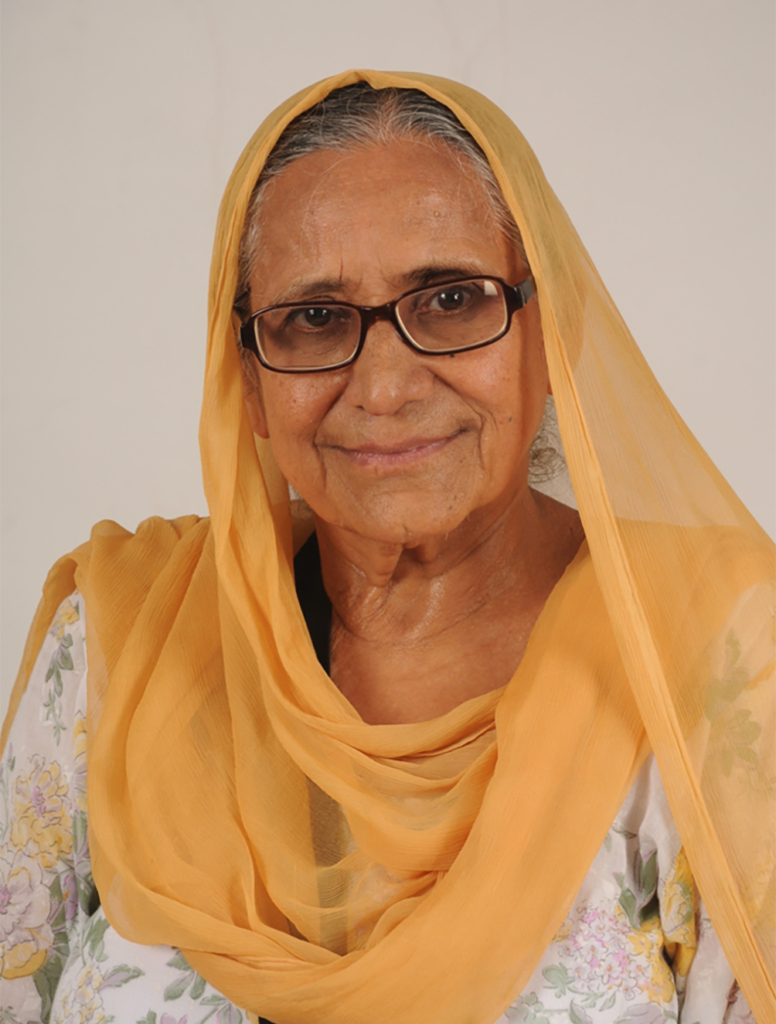
Social Welfare
President | All India Pingalwara Charitable Society | Amritsar, Punjab (INDIA)
Native:
Gujranwala, Punjab (undivided British India)
Birth & Residence:
Sangrur, Punjab (INDIA)
Building A Home of Hopes
Fondly called Bibi by Bhagat Puran Singh, she is one pious lady whose family has been serving the needy since ages. A humble servant of God who despite the challenges has never shied away from her responsibilities as a daughter, sister, doctor and a saint, she is a mother to many.
I was born on 25 January 1942 in Sangrur, Punjab, but my dada ji, Sardar Shivdayal Singh, used to live in Gujranwala village in the Majha region of Punjab which is now in Pakistan. He died of plague at a young age, leaving behind a wife and three children. My dadi ji, Sardarni Kesar Devi, ensured that after demise of her husband, she gave proper education to her children. She sent her eldest daughter, Kartar Kaur, to the nearest gurudwara to learn to read and write and to manage accounts. Her son, Harbans Singh (my father), was sent to Lahore, an educational hub of the time, to study Ayurvedic medicine. In order to not hinder her youngest daughter, Shanta’s education, she would commute eight miles each day to pick and drop her to school.
Her efforts paid off and Shanta bua ji finally made it to the medical college in Amritsar. After completing her medical studies, she took up a government job in Dalhousie, then in Punjab but now is a part of Himachal Pradesh. Once, when Rajasthan had a shortage of doctors, she went to Kotputli in Thikana Estate (an erstwhile princely estate in the state), where she was showered with affection and considered an angel. Reciprocating their love, she decided to settle down there and took a vow of celibacy. Amazingly, dadi ji respected her decision!
My family is the reason for who I am!
My Papa ji, Dr Harbans Singh, just like dadi ji also found great pleasure in serving people. After completing his study in medicine, he settled in Sangrur, Punjab, in the year 1930, and started his medical practice with missionary zeal. Till then, Sangrur lacked in medical practitioners and the people of the area had to go all the way to Patiala or Ludhiana. Papa ji became a Godsent for them with his low fee and precise medication. The best part was that he was not alone in his endeavours. My mother, Smt Ranjit Kaur, whom we called Mata ji, fondly shared his passion. Besides providing the patients with meals and tea, she would often vacate the rooms of our big haveli to accommodate more patients. Today, I am glad that people loved him so much that when Sangrur too came under the grip of horrors of partition, at his behest, Hindus, Muslims and Sikhs arranged a safe passage for both emigrants and immigrants.
While Mata ji was busy assisting my Papa ji, dadi ji looked after the household very well. Papa ji gave all his earnings to her, and Mata ji never questioned him. Dadi ji was a pillar of strength and inspiration for the entire family and many others as well. I remember dadi ji once called and told me “Inderjit, you are the eldest among your siblings and will be their role-model. I hope that you will never do anything to leave a bad impression on them.” I assured her that I will live up to her expectations.
After completing my MBBS in 1969, I got a government job in Barnala, which gave me an exposure to the outer world and paid me good salary too. But, by 1974, I had decided to quit my job and assist Papa ji in his hospital as he was suffering from some heart problem. At that time, I didn’t know that I would lose my father the next year.
On 27 August 1975, Papa ji succumbed to a fatal heart attack. Earlier, in 1974 I had also lost dadi ji. Being the eldest, Papa ji’s sudden demise made me feel very sad and lonely. As a part of last rites of Papa ji, our family invited people for Akhand Paath. Bhagat Puran Singh ji, a rather well-known social reformer, was also invited. His services to common people and Pingalwara, an NGO he had established, were a ray of hope for those who had lost it all. Therefore, when he came to attend the Bhog ceremony, all the family members were both surprised and elated because he rarely attended such occasions.
On his return to Amritsar, Bhagat ji wrote to me saying that he was honoured by the respect and love that he received during his stay at Sangrur. And thus, he would accept my siblings and me as his children and be the head of our family. This was much more than I had ever expected of such a pious person whose blessings and teachings would influence and shape my future. God surely had beautiful plans laid out for me.
Giving a meaning to my life
This was the start of my association with the selfless man. I started visiting him every 15 days and got involved in his charitable causes. I would often seek his guidance in my personal matters as well. Yes, looking after my family and managing the hospital in Sangrur and meeting Bhagat ji in Amritsar was quite tough but the effort was worth it. At Pingalwara, I got a chance to serve those who were rejected and abandoned by the society and their families. Under his guidance, my desire to serve them grew increasingly stronger, day by day.
In 1987, I became one of the seven members of the All India Pingalwara Charitable Society. During his lifetime, he got his will registered on 3 November 1986, by which he made me his successor as the Patron President of Pingalwara, after his death, of course.
What are we if not servants to Him!
His last day in the world was 5 August 1992, a calm and scary day for us. He had shared his last wish of having a broom lying next to his body so as to remind people that he was not someone special but a true servant of God.
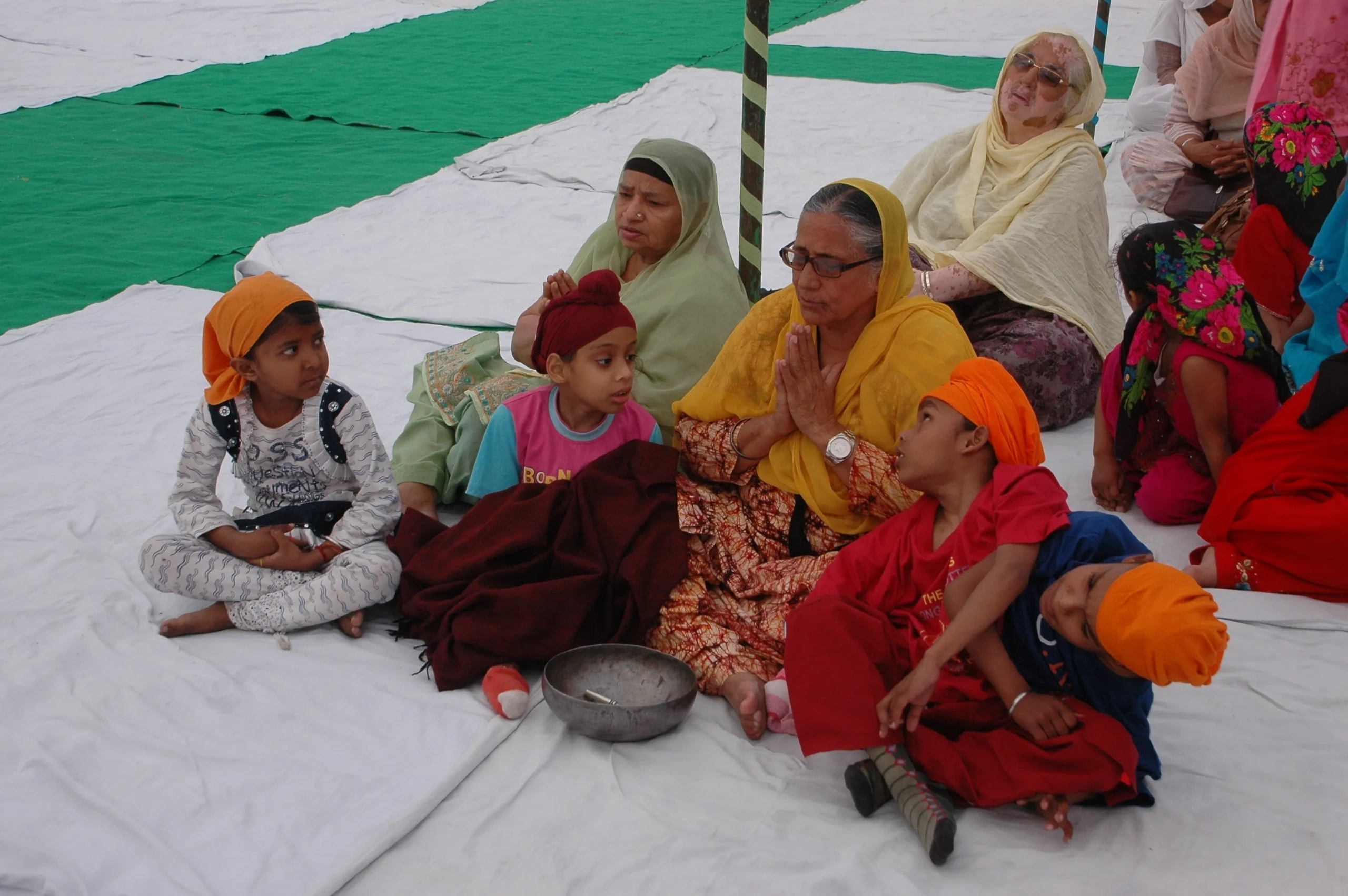
In 2005, I came to know about an abandoned pair of conjoined twin brothers. None of the NGOs were fit enough to follow the guidelines of All India Institute of Medical Sciences (AIIMS) for their care. They were brought to Pingalwara where they are growing well.
In 2012, Pingalwara organised an eye camp with a team of American doctors where around 25,000 patients were examined in four days. Additionally, an operation theatre has been established for performing cochlear implant operations, where nine such operations have been performed till date.
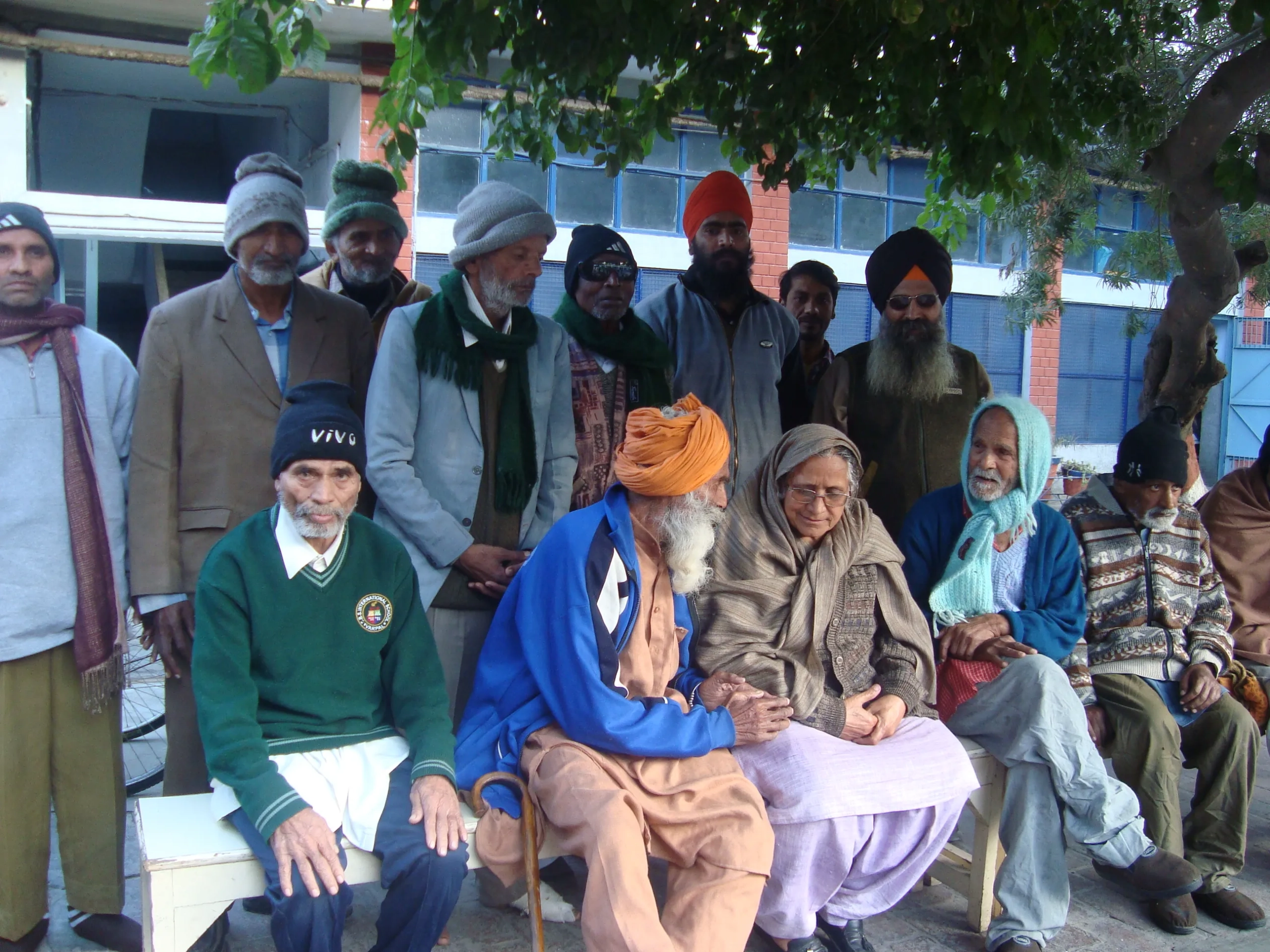
With the help of those dedicated to the welfare of the society, Pingalwara has now set up its branches at Manawala, Pandori, Goindwal, Jalandhar, Sangrur and Palsora (Chandigarh) where over 1800 residents are provided free medicines, shelter, food and moral support, etc. Special children of Pingalwara participated in World Special Olympics in the years 2015, 2017 and 2019, and won numerous medals.
Besides providing free aid to the victims of natural calamities, Pingalwara also provides tricycles and artificial limbs to the needy. Then there’s a chain of Bhagat Puran Singh Schools where free education is provided to normal, special and deaf children with mental or physical disadvantages. Many normal children brought up in Pingalwara have studied upto post-graduation level, many are well-settled and doing good today.
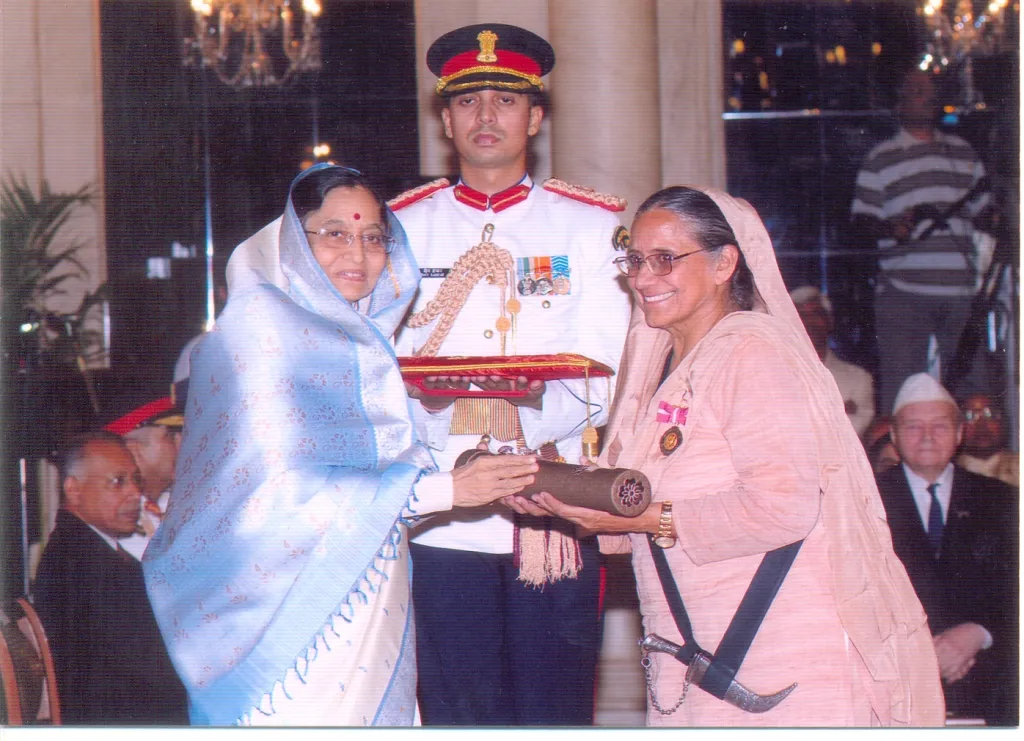
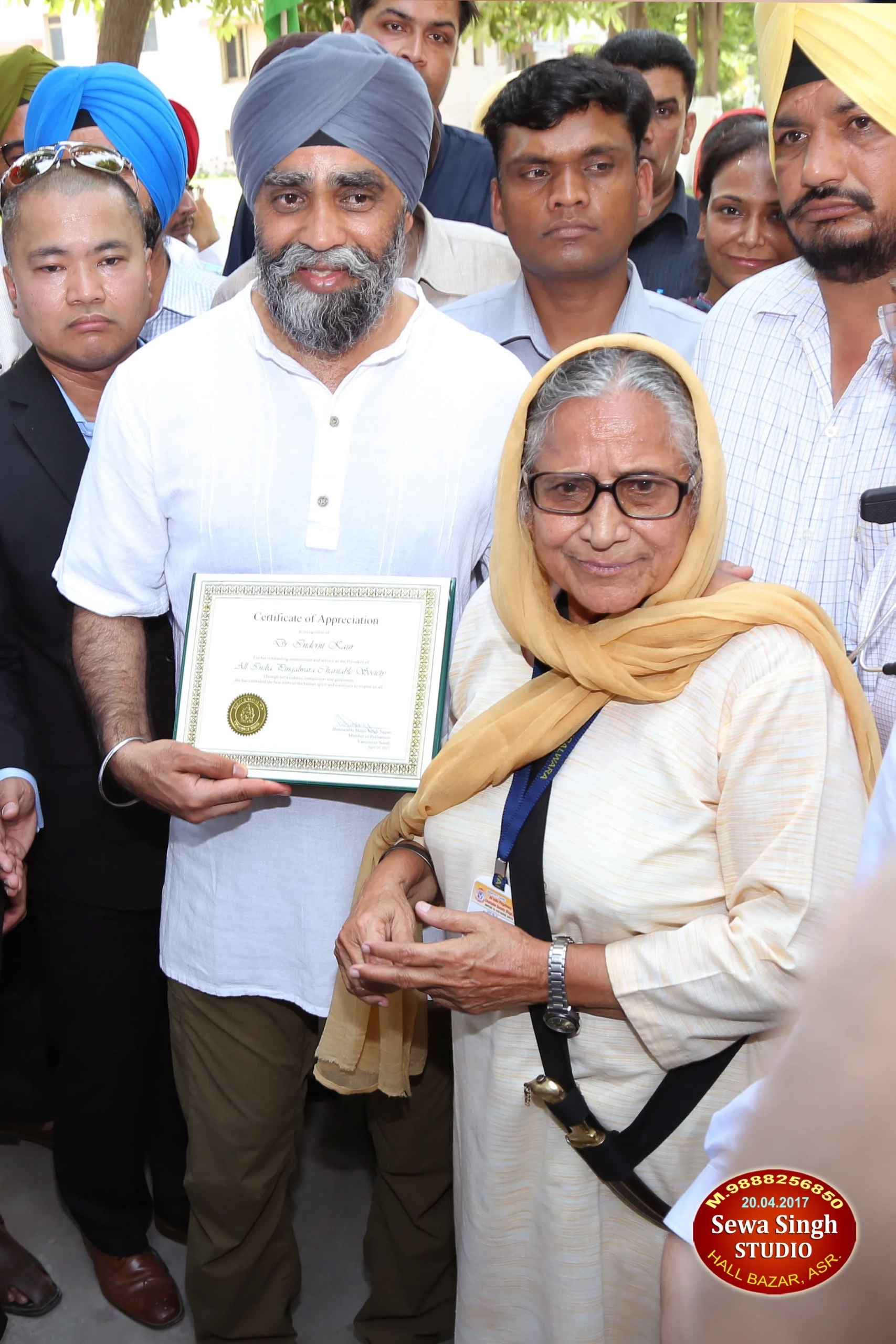
Pingalwara has also started a model agricultural farm to promote zero-budget natural farming. Nothing much to mention it, but, keeping it short, I have been presented with several awards during my many years of service to humanity. However, the one that makes me the proudest is the smile of my family at Pingalwara.
Philosophy
What my father said became my mission: earn like a hero and give like a saint.
I love…
Serving the destitute and the disabled. Without service, cursed are the hands and feet, useless are other deeds.
I’d suggest the youth…
The same thing what my father told me: “Enjoy as much as you can but never at the cost of your duty.”
Success Mantra
My mission will be achieved only when everybody will have equal opportunities for their overall development.
The world doesn’t know that…
Though I am a 2008 Padma Bhushan awardee, what gives me happiness is the smiles of my large family in Pingalwara.
AKA
Inderjit Kaur (Pingalwara) | All India Pingalwara Charitable Society
Gallery
ISBN : 9788193397695