

Dr Manmohan Singh

Former Prime Minister of India
Government of India | New Delhi (INDIA)
Ancestry & Birthplace:
Gah, Punjab (undivided British India)
Residence:
New Delhi (INDIA)
SILENT BUT EFFECTIVE
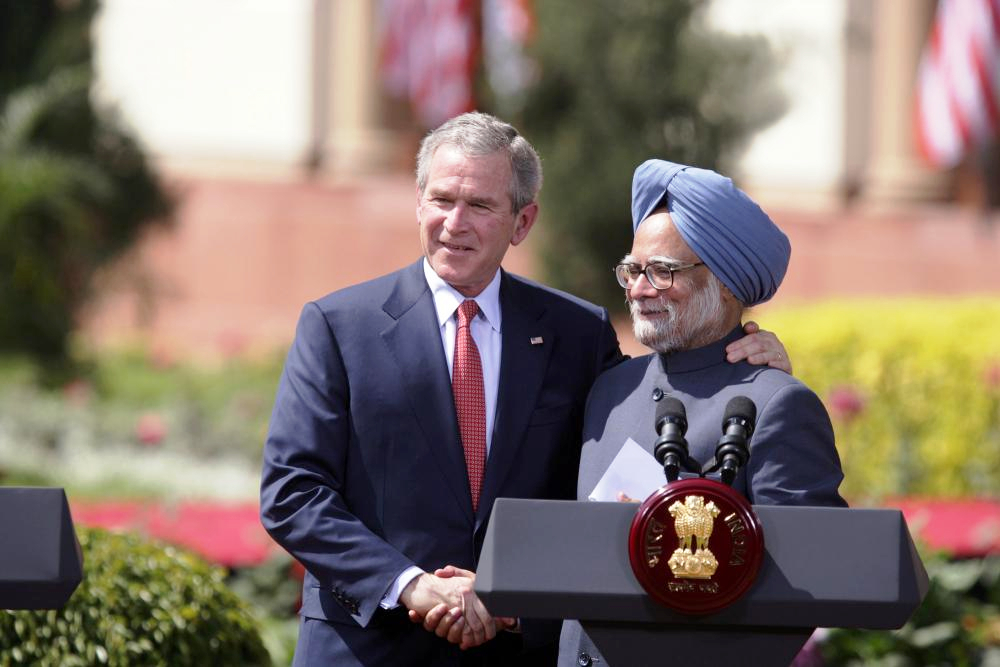
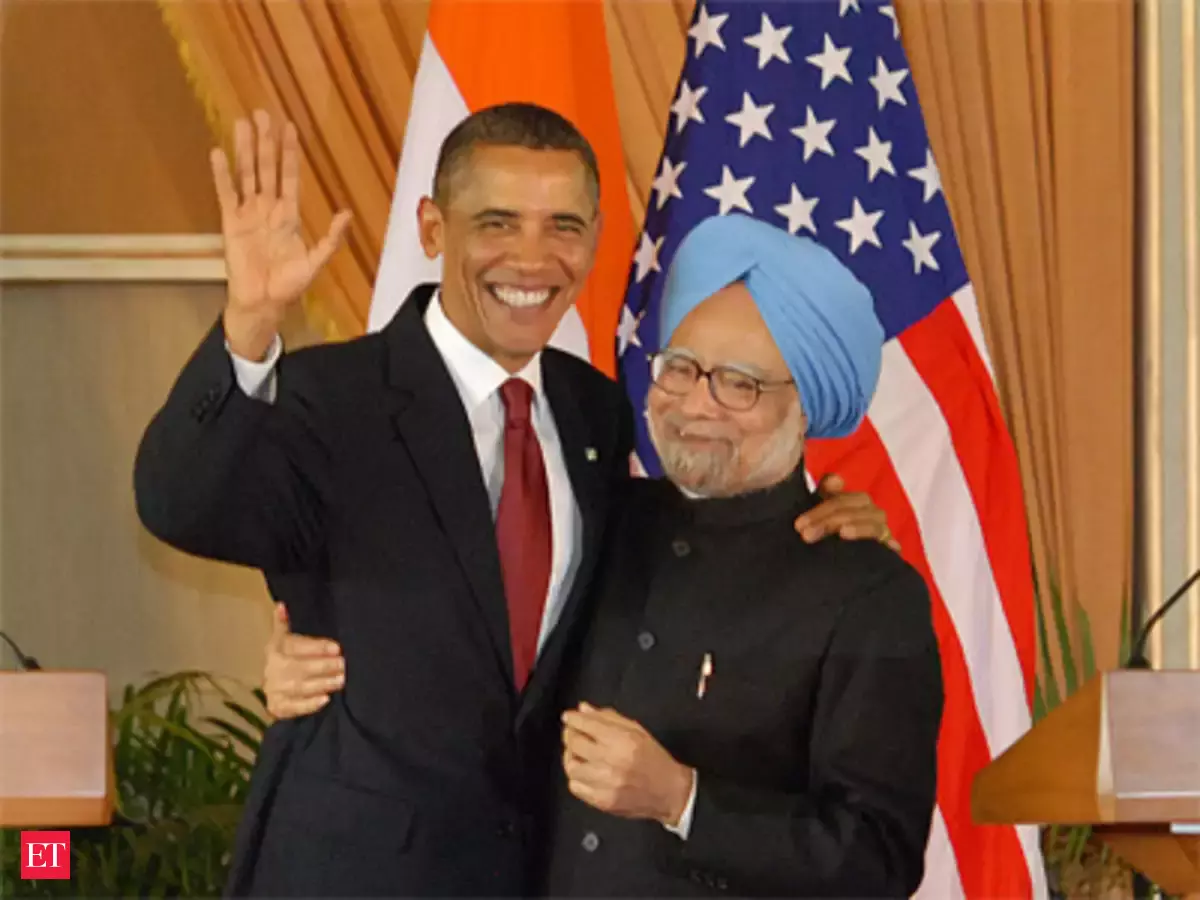
A brilliant scholar, he has been an economist, bureaucrat and politician. His first tenure as Prime Minister became known for high economic growth, rolling out of rural employment guarantee scheme, MNREGA and signing of the Indo-US nuclear deal.
After losing my mother at quite an early age, I did not have a sense of direction. I was distressed and lost, but my grandmother, Jamna Devi, raised me and made me a responsible human being. It is because of her love and care that I could not only become a successful person in life but also a good human being. Becoming the Prime Minister of the second most populous country in the world is a dream come true that I hadn’t ever dared to dream.
To serve my country is my honour
It was in 1991 that I entered into politics when the then Prime Minister, PV Narasimha Rao, appointed me as Finance Minister of India. To be honest, I did not believe it when his Principal Secretary broke the news until the Prime Minister himself tracked me down and demanded that I get dressed up and attend the swearing in ceremony at Rashtrapati Bhavan.
As a Finance Minister of India, I realised India was facing an economic crisis. I explained to the Prime Minister that if the economy was not deregulated, it would collapse. As a result, we eliminated the permit rule, reduced state control of the economy and reduced import taxes. Few more decisions came in as an effective measure and it pushed India towards a market economy.
My advice to improve India’s economy in the 1990s earned me the position of the Leader of the Opposition in the Rajya Sabha between 1998 and 2004 while the Bharatiya Janata Party was in power. But political fortunes changed when the Congress the won 2004 elections. Chairperson Sonia Gandhi declared me the UPA candidate for the Prime Ministership and, on 22 May 2004, I took the oath as the 13th Prime Minister of India.
Coming from newly built Pakistan, I never thought I would be PM
My father, Sardar Gurmukh Singh, was a clerk and my mother, Sardarni Amrit Kaur, was a homemaker. I was born in Gah on 26 September 1932. After my birth, my parents took me to Panja Sabhi, Hasan Abdal. When the priest opened the Guru Granth Sahib, the first word on the page began with M, so I was named Manmohan.
My mother passed away when I was a child, so my grandmother raised me and I was very much attached to her. After studying some years in a school in village Gah, I attended Khalsa High School for Boys, Peshawar, where I participated in a debate and, though I was not good in sports, I loved playing Hockey and Football.
When I was 11, my father remarried. I was not comfortable with this idea until I met my step-mother, Sitawanti Kaur, who was very warm and affectionate towards me.
On 14 August 1945 – after the end of World War II – sweets were distributed in our school, but I protested on the pretext that India was yet to get its freedom from Britain. When finally we were an independent nation, we were also divided into two. With riots all around, we shifted to Amritsar. There I studied at Hindu College, and later attended Panjab University, Chandigarh, to study BA (Hons) and MA in Economics. After my master’s degree in 1954, I studied Economics Tripos from the University of Cambridge. During that time, I was also a member of St John’s College.
My stay at Cambridge was a transformational phase of my life. I remember my teachers, Joan Robinson and Nicholas Kaldor, making me think the unthinkable with their questions. When I returned to India in 1957, I joined Panjab University as a Senior Lecturer.
In 1958, my parents arranged a match for me to get married. The first question I asked Gursharan was her rank in high school. She was born in Jalandhar on 13 September 1937 and had four sisters and a younger brother. We got married on 14 September 1958.
In 1960, I went to England once again to attend Nuffield College, University of Oxford, for DPhil. My thesis at the doctorate was ‘India’s export performance, 1950–1960, export prospects and policy implications’. It later became the basis for my book India’s Export Trends and Prospects for Self-Sustained Growth (Clarendon Press, 1964).
I returned to India in 1966 and worked for the UNCTAD until I joined Delhi School of Economics, University of Delhi, as a professor in 1969. However, I could continue till 1971 only. For the next two decades, I was the Chief Economic Adviser, Secretary in the Ministry of Finance, Governor of the Reserve Bank of India, Deputy Chairman of the Planning Commission, Secretary General of the South Commission, Advisor to Prime Minister of India on Economic Affairs and Chairman of the University Grants Commission until 1991 when I joined politics.
With power comes responsibility
As education is the biggest investment, we opened eight more IITs, continuing with the Sarva Shiksha Abhiyan programme that includes the improvement of mid-day meals and the opening of schools in the rural areas of India.
I continued the pragmatic foreign policy started by the former Prime Ministers, PV Narasimha Rao and Atal Bihari Vajpayee. Also, our party continued the peace process with Pakistan, initiated by Atal Bihari Vajpayee. We also made efforts to end the border dispute with China. As a result, the Nathula Pass was reopened in 2006 after being closed for more than four decades. It also resulted in making China the second biggest trade partner of India. Along with Pakistan and China, relations with other countries across the world were considerably improved.
With so many successful stories, we won the 2009 general elections and I became the first prime minister after Pt Jawaharlal Nehru to win re-election after completing a full five-year term. It was a moment of great pride as I was also the first Sikh to achieve this achievement. I was sworn in for the second time as the Prime Minister of India on 22 May 2009, but when the 2014 general elections were about to be held, I did not contest and resigned from my post as Prime Minister on 17 May 2014, though I served India as the acting Prime Minister until 25 May 2014, when Narendra Modi was sworn in as the new Prime Minister.
In 2016, I took up as the Jawaharlal Nehru Chair at my alma mater Panjab University, Chandigarh.
What are you but nothing without family
All this while, Gursharan had been my biggest support not only in raising our daughters, Upinder, Daman and Amrit, but also in helping me emotionally and mentally. She loves kirtan singing and is known in the Sikh community of Delhi for her singing. She has also appeared on Jalandhar Radio.
Our eldest daughter, Upinder, is a professor of history at Delhi University and has written six books, including Ancient Delhi (1999) and A History of Ancient and Early Medieval India (2008). Daman is a graduate of St Stephen’s College, Delhi, and Institute of Rural Management, Gujarat. She is the author of The Last Frontier: People and Forests in Mizoram and a novel, Nine by Nine. The youngest, Amrit, is a staff attorney at the American Civil Liberties Union.
They all say they are proud of my achievements and want to become like me some day. My achievements inspire them. Apart from over 20 honours and international recognition from various institutions and organisations around the world, I was also awarded the Padma Vibhushan in 1987. And though I am a member of Rajya Sabha from Rajasthan Constituency, my dream of India is above politics. It is to see a new united India turned into an economic power.
Philosophy
The world speaks a lot, but only you know where lies your destination. So concentrate on where you want to reach.
I love…
Poetry, reading, writing and listening to music. Iqbal is my favourite poet. I love to eat missi roti, vadiyaan, pulao and chhole.
I’d suggest the youth…
To join politics to reshape your country. Do not run from something you find flaws in; jump into it to mend it.
Success Mantra
Success is not everything. Living a life of integrity is more important.
The world doesn’t know that…
I studied by candlelight, as our village before partition did not have electricity.
AKA
Architect of India’s economic liberalization | Distinguished Economist | Statesman & Reformist Leader
Gallery


ISBN : 9788193397695