Dr Umesh K Gidwani MD
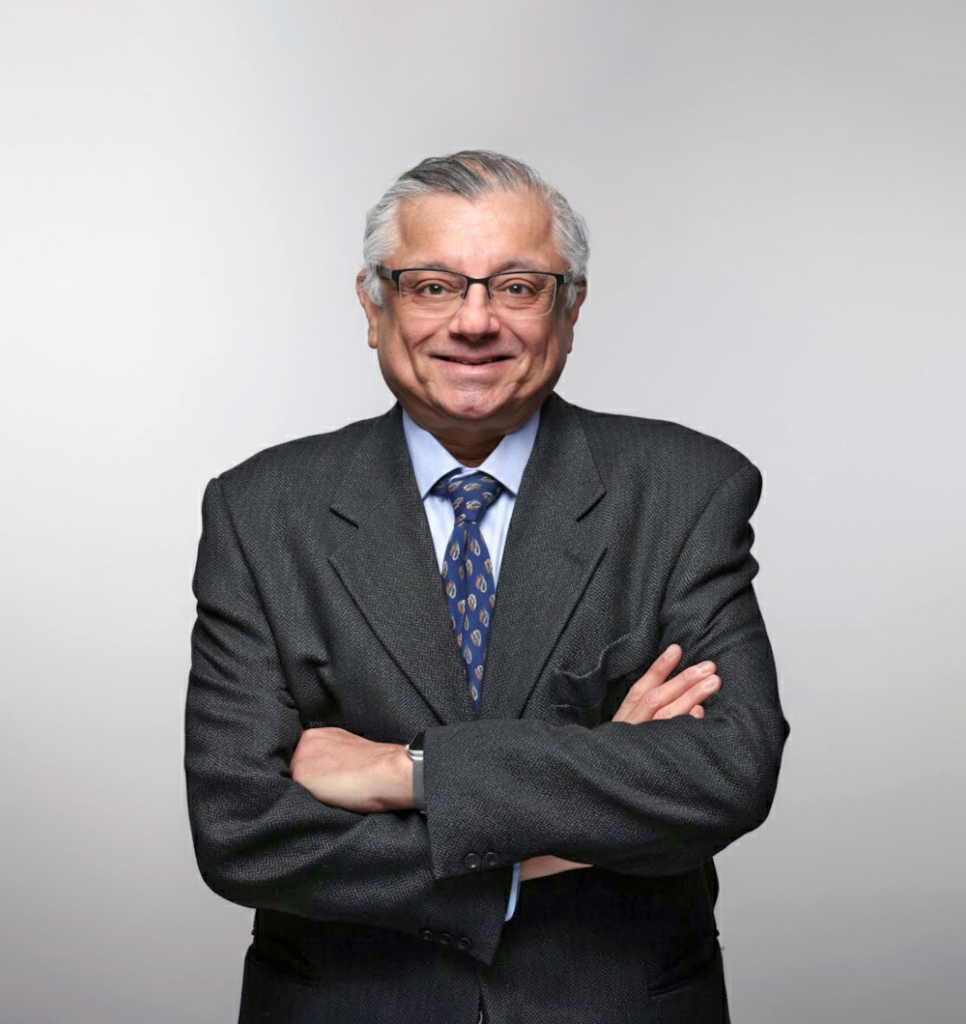
Professor (Cardiology)
Mount Sinai Medical Center | New York, US
Janma Bhumi:
Bombay, India
Dharma Bhumi:
Sindh, (now Pakistan)
Karma Bhumi:
New York, United States
The ‘Umesh’ Factor: “Do not forget your roots, do not forget you have a duty to contribute.”
THE MAN
You may outgrow a place, but a part of you will always speak its language. “Bombay still has my heart, I’m still a Bombaywala,” Dr Umesh K Gidwani says. But Dr Gidwani is far more than just that one identity.
Bombay, the city of dreams, is where he was born in 1961 to a family that had to leave Sindh during the partition. They were fortunate that Dr Gidwani’s father was a government bureaucrat, so he got a transfer to the city. Dr Gidwani says, “My father was an anomaly among civil servants – hardworking and ethical to a fault. He led by example and I learned to be scrupulously honest.”
Growing up in Colaba, South Bombay — known for its rich colonial charm, among old and new money families, gave him a unique worldview. ““I played at the Gateway of India, long before it became such a closely guarded monument. I saw the city gain its ‘Maximum’ status even as we dreamed big, but our means were limited. In those days, even the smallest of comforts, like a refrigerator, felt like a luxury — they rented one from BEST (Bombay Electric Supply and Transport) for ₹50.” But that didn’t interfere with the quality of life. Dr Gidwani got priceless values and the best education possible. He attended The Scholar High School and later St. Xavier’s Boys’ Academy, where life sciences fascinated him. It took him two months in Nagpur’s Visvesvaraya Regional College of Engineering to realise that his heart was elsewhere. His calling was medicine.
THE JOURNEY
Living with limited means meant not owning a car or a scooter. So, Dr Gidwani once asked his father if they could buy a car. His father’s reply would direct his next course of action: “We can think about it when you get into a medical college.” They never got the car, but what he got was a path that was set for success.
Dr Gidwani joined the prestigious J.J. Hospital and Grant Medical College, where he chose orthopaedics for his post graduation speciality. Amidst the long hours and constant learning, he also discovered a passion for teaching.
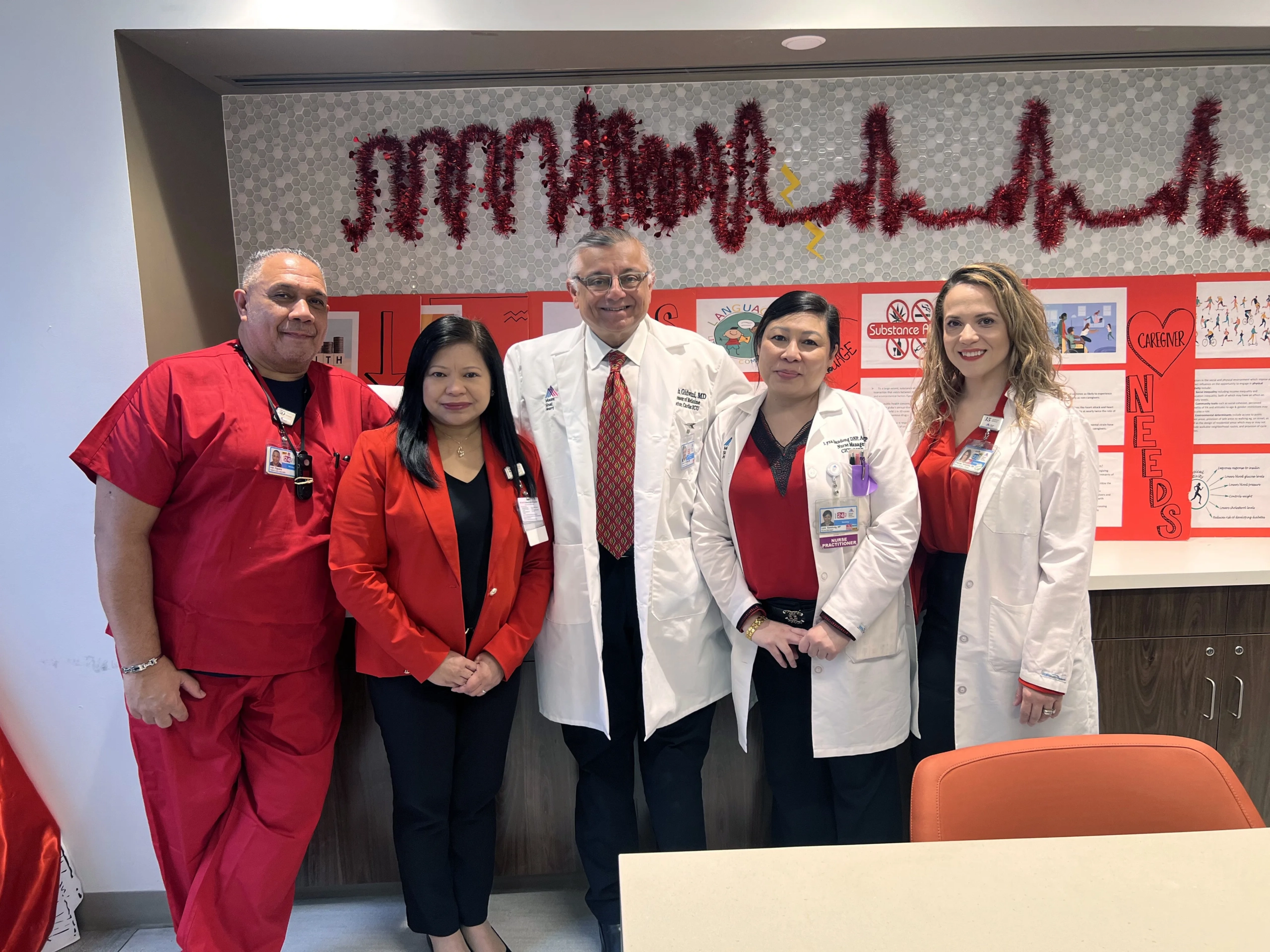
The turning point arrived when he went to the United States. His uncle, Narain, helped him find his purpose, while providing him a roof. Orthopaedics was a competitive field, and Dr Gidwani course corrected his ambitions and pivoted towards internal medicine. He completed his residency in Internal Medicine at the Seton Hall University School of Graduate Medical Education, followed by a Fellowship in Critical Care Medicine at Mount Sinai Hospital, and a Fellowship in Pulmonary Disease at New York Medical College. After a successful stint at the Metropolitan hospital, Dr Gidwani found himself back at Mount Sinai. Dr Valentin Fuster and Dr Samin Sharma, both leading figures at Mount Sinai, reached out and invited him to return. He did and since then, Mount Sinai has been his professional home. There, he currently serves as Professor of Medicine (cardiology, pulmonary and critical care medicine). With several research papers to his credit, Dr Gidwani has been mentoring and shaping the next generation of clinicians and critical care specialists.
THE SPIRIT WITHIN
Dr Gidwani has channelled the deeply personal trauma of displacement of his people into his social raison d’être, helping Hindu-Sindhi Pakistani refugees find hope and stability. He works closely with UJAS–Jodhpur, a remarkable initiative led by Hindu Singh Sodha, himself a former refugee who has dedicated his life to uplifting displaced Hindu families from Pakistan. Together, they strive to provide education, shelter, and dignity to people who arrive in India with nothing but faith in their hearts. For him, philanthropy is about involvement. He says, “The easy part is giving money, if you have money. The hard part is giving your time, your commitment, and yourself.” It is a philosophy that defines not only how he serves others, but how he lives with empathy as his guide and humanity as his purpose. He says “It’s my duty to give without expectations, and I give in the way I believe is right. I’ve been fortunate to do well, so I share what I have. At Mount Sinai, I’m able to guide and mentor immigrant medical students — and I do that with pride.”
THE LEGACY
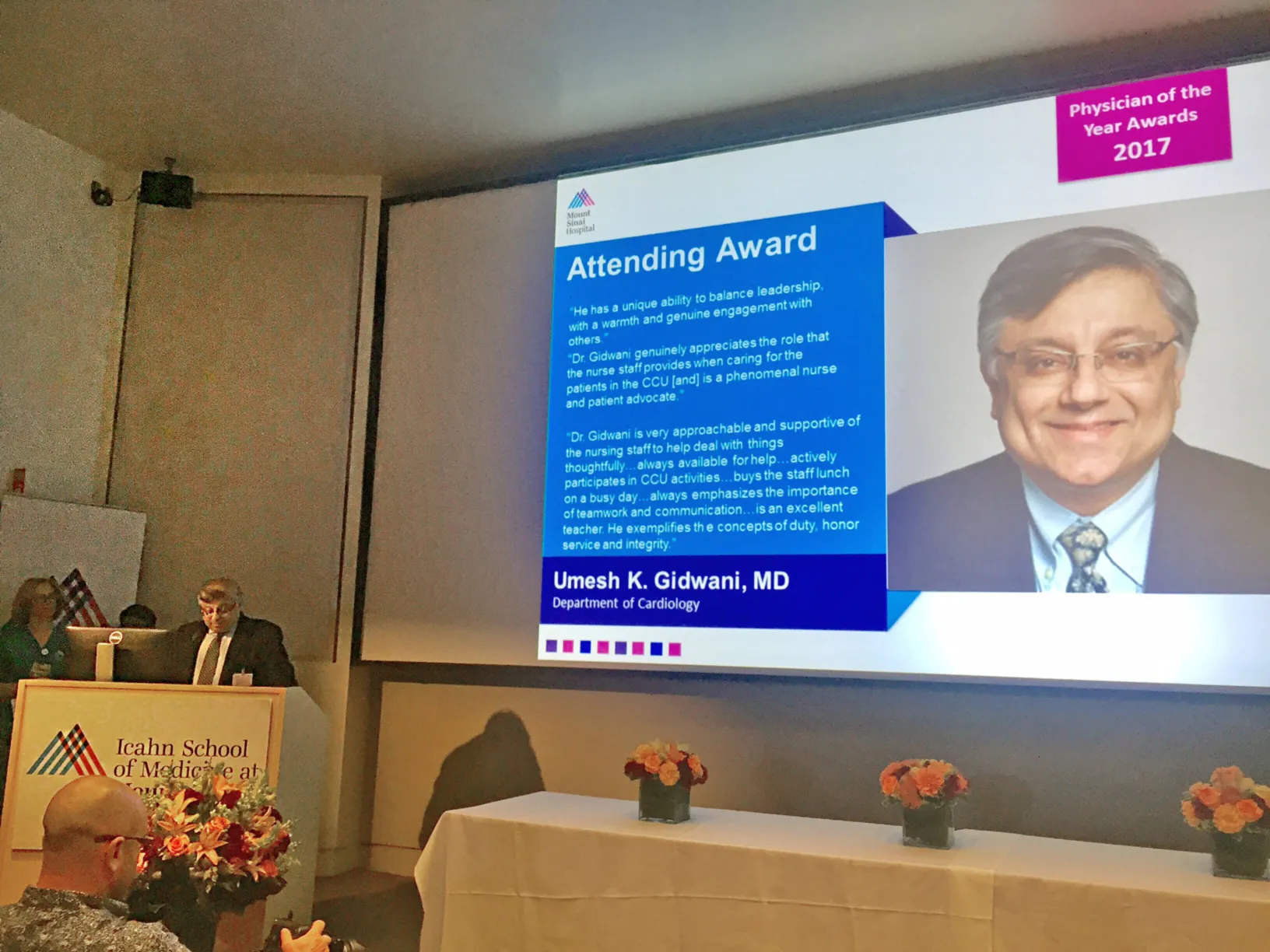
Over the years, Dr Gidwani’s professional excellence has gained global recognition and multiple accolades, including the ‘Attending of the Year’ award ‘Service Excellence Award’, the ‘Lifesaving Award for Excellence in Emergency care’ and several teaching awards, among others.
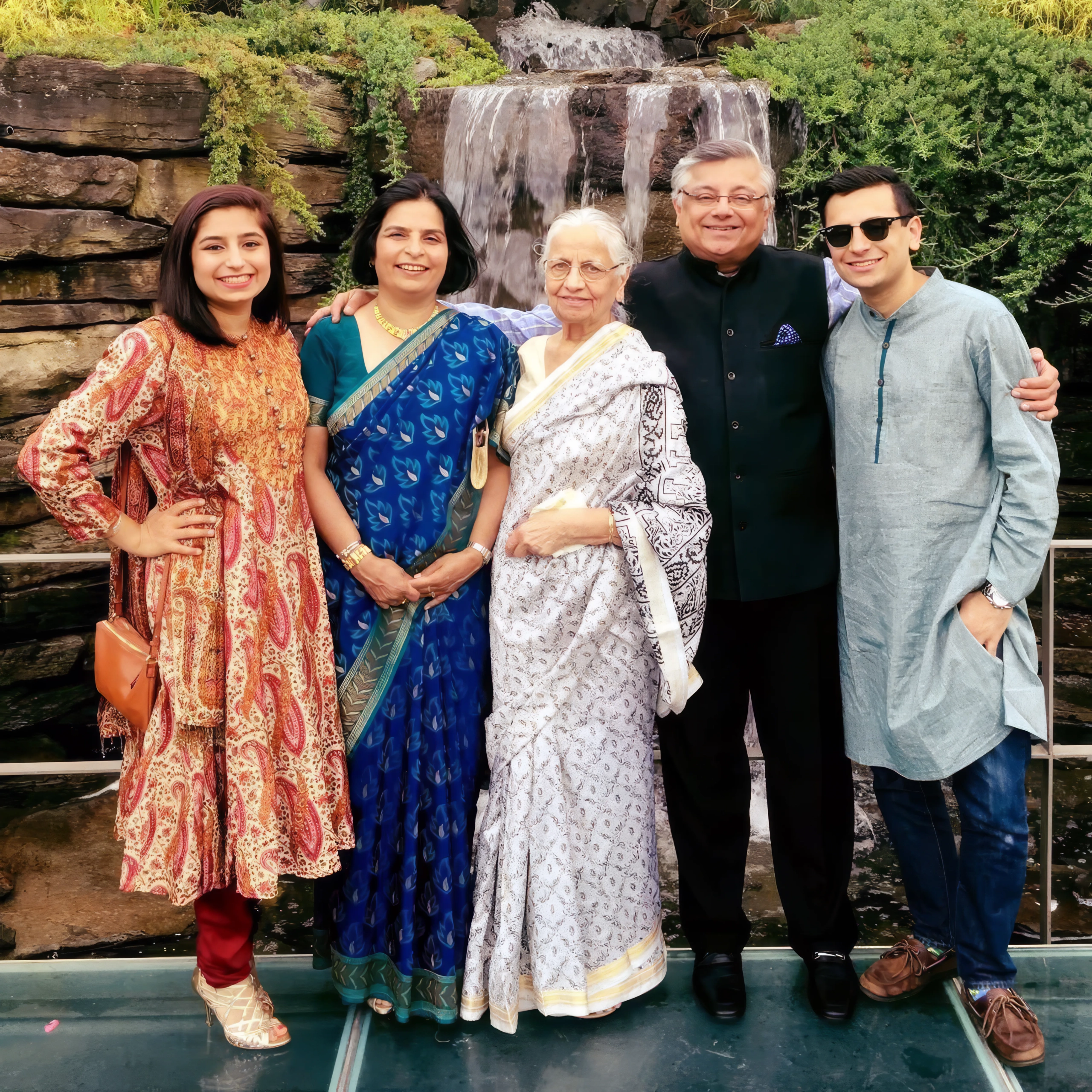
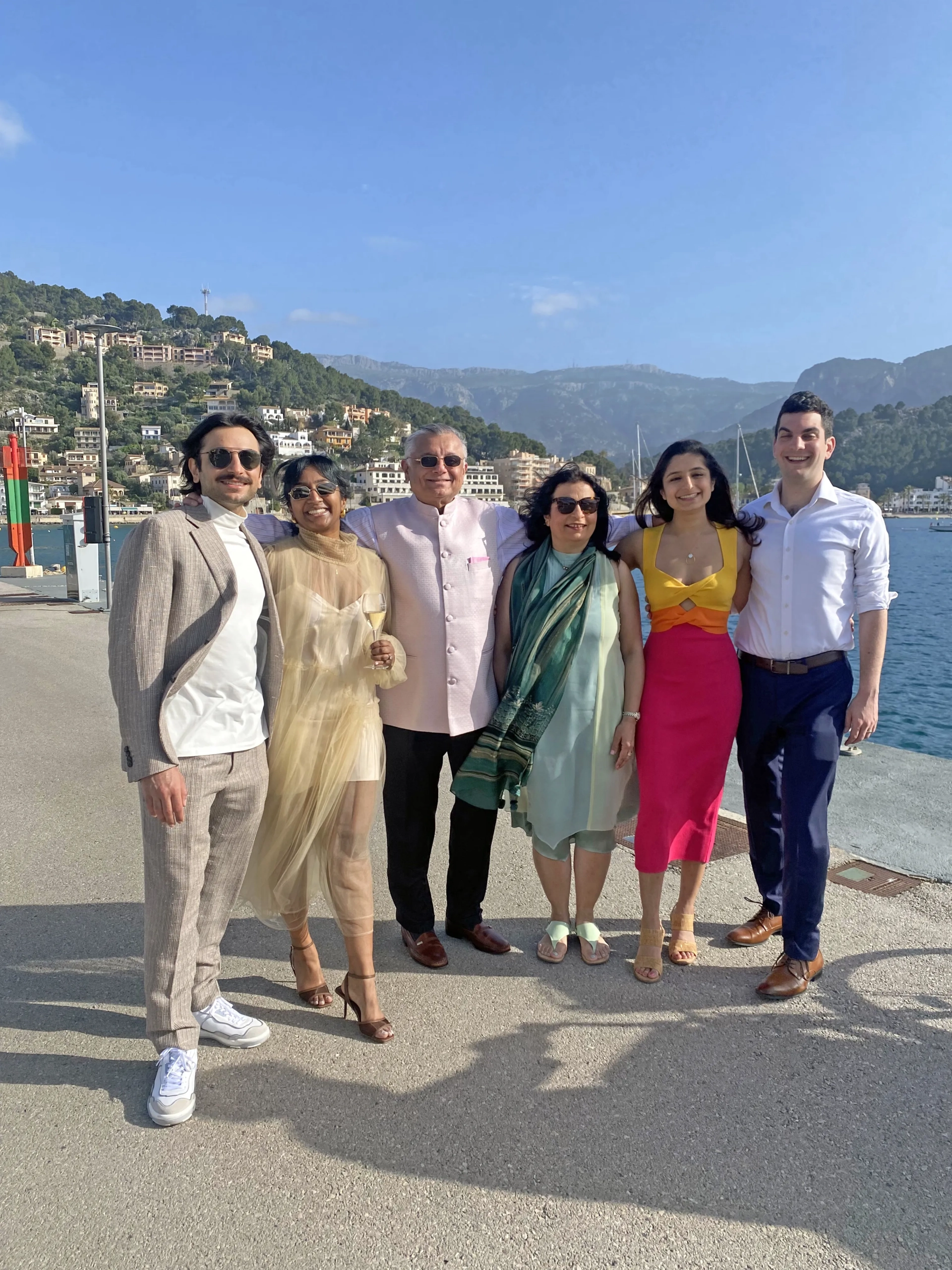
He and his wife, Sonia, a dedicated paediatrician, tied the knot in 1990 and have raised two wonderful children. Suman (32) is a passionate dancer, who has trained in Bharatnatyam for nine years. At Duke University, she minored in Hindi, staying connected to her roots. Currently, she is working with IBM Consulting and is married to Henry, an associate at a top New York law firm. Their son, Vickram (30), is working with Meta, and recently got married to Manasa, who works at JPMorgan Chase. Suman and Vickram are both exceptionally intelligent, but as Dr Gidwani often reminds them, intelligence alone is never enough – hard work, dedication and laser-like focus are essential. “I frequently tell my children, ‘The road to success is littered with the dreams of intelligent people’,” he says. And, Dr Gidwani should know. His journey is a reminder that honesty, hard work and commitment are akin to the cardiac rhythm of a heart that beats with purpose.
MAPPING THE INDIA WITHIN
Bharat: Then and Now
“Those days, everything was about survival, and getting somewhere. Today, India is more than about the daily hustle. I visit Bombay every six months and notice something new. Not only the white-collar workers, but even blue-collar workers, have seen their wages rise. I think we are making progress after several decades of misdirection and lost opportunities.”
Bharatiya Values that Travelled
“Hard work, dedication, and honesty — these are the values I grew up with. My father never took bribes, even when he was in positions where people expected him to. My mother managed the household with whatever we had. Those early lessons stayed with me, and have carried them with me throughout my life.”
Generations Abroad: A New Bharatiya Identity
“We ensured our children learned to read, write, and speak Hindi, and understand and read Hindu cultural and religious texts. Both my wife and I wanted them to know who they are and where they come from. They also had their grandparents helping to raise them, so our culture was always a firm part of their lives.”
Pride, Progress, and the Spirit Of Bharat
“I think India has tremendous potential. I have seen how much it has progressed from the scarcity of my childhood. The diaspora of 30 million people is the strength of India, and we should all remember to pull together to take India to greater heights.”
Dreams for the Youth and Future of Bharat
“I dream of an India that keeps progressing, becomes stronger, and gives everyone a fair chance, whether they are in the country or abroad. To the youth I would say, ‘Don’t be afraid of staying in India, and if you want to go abroad that is also fine. You are still going to be valuable to your country, whether you come back or you contribute from outside of India.”
BACK TO THE FUTURE – IN FIVE MOMENTS
Food Cravings
THEN
Growing up, we loved street food – ‘pani puri’, ‘vada pao’, ‘masala dosa’
NOW
Now I cook healthy meals … a delicate piece of fish, salad, and green vegetables.
Sport Spirit
THEN
I played bridge at competition level.
NOW
I go to the gym, and I go for a walk.
Music Tastes
THEN
Indian music, and I loved rock — all the great bands of my time.
NOW
I enjoy Karaoke sessions, especially singing Billy Joel and Jagjit Singh songs.
Holiday Life
THEN
We travelled a little, maybe to a relative’s house.
NOW
We travel everywhere, including India. We easily do 3–4 trips a year.
Leisure Habits
THEN
I read everything and anything.
NOW
Reading, listening to music, watching movies.
AKA
Chief of Cardiac Critical Care at Mount Sinai Medical Center