Kailash Satyarthi
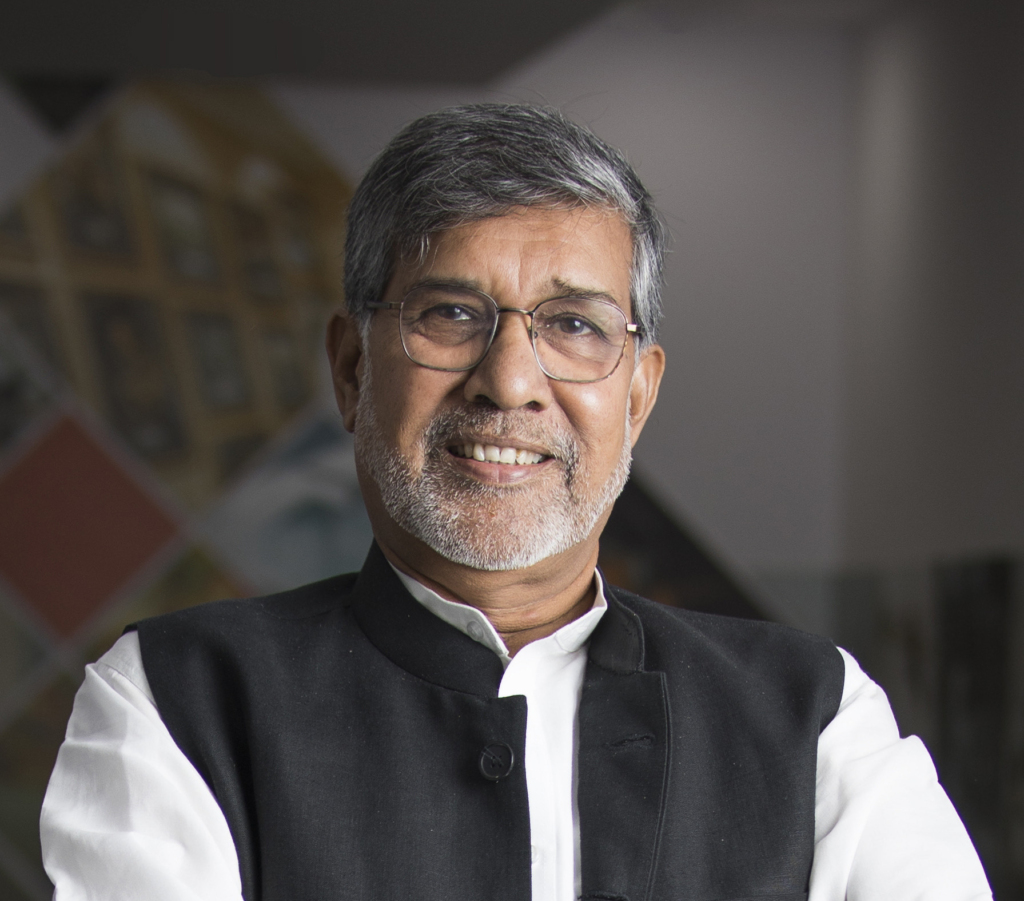
Founder
Satyarthi Movement for Global Compassion | New Delhi, India
Janma Bhumi:
Vidisha, Madhya Pradesh, India
Dharma Bhumi:
Vidisha, Madhya Pradesh, India
Karma Bhumi:
New Delhi, India
Seeker of Truth, Saviour of Hope
“Act with compassion, uphold justice, and serve those without a voice.”
THE MAN
As he walked into his classroom in Vidisha, Kailash Satyarthi noticed a boy of his own age sitting outside, polishing shoes. When young Kailash asked why he wasn’t in school, he was told that poor children have to work. That single sentence pierced his heart—not with anger, but with a lifelong moral restlessness. It transformed compassion from a feeling into a personal responsibility. “I am not driven by hatred or vengeance against injustice,” he says, “but by faith in humanity—and the belief that even one honest act of compassion can challenge centuries of cruelty.”
Born in 1954 as Kailash Sharma, he was raised in a modest, lower-middle-class family in the narrow lanes of Andar Qila in Vidisha. Life was simple, often economically constrained, but rich in values. His father, lovingly called Kakka, was a police constable who taught integrity not through sermons, but through action. “When I once stole toys and lied about it,” Kailash recalls, “he made me return every single one—even those I had bought myself. He wanted me to feel the weight of honesty. That lesson never left me.”
These early incidents shaped his moral clarity and his ability to feel deeply for others—turning values into instinct rather than ideology. “I learned early that conscience must lead action,” he reflects, “and that compassion should never wait for approval or applause.”
THE JOURNEY
Kailash trained as an electrical engineer and went on to teach at a college. Yet even while imparting knowledge, he felt a growing moral unease—as if education detached from action was a form of silence. Success, when separated from social justice, felt ethically incomplete.
This awareness had begun much earlier. As a schoolboy, Kailash started a simple book bank, collecting discarded textbooks and redistributing them to children who could not afford them. It was his first organised act of social intervention—and his first lesson in the power of collective action.
Over time, this commitment evolved into a global movement against child labour, slavery, and trafficking. In 1980, he founded Bachpan Bachao Andolan (Save Childhood Movement), which has since rescued and rehabilitated thousands of children from bonded labour, trafficking, and hazardous work.
In the late 1990s, he led the Global March Against Child Labour, mobilising millions across more than 100 countries. The march played a pivotal role in shaping international conscience and directly contributed to the adoption of ILO Convention 182 on the Worst Forms of Child Labour in 1999— the only universally ratified ILO convention in history.
He also helped ignite national moral movements such as the Shiksha Yatra, reframing education not as charity or privilege, but as a child’s non-negotiable right—helping shift public consciousness and policy towards universal schooling. His advocacy extended to global platforms, including his role as a United Nations SDG Advocate, where he consistently asserted that no vision of progress can be complete if it excludes the youngest and most vulnerable.
International recognition followed, including the Nobel Peace Prize in 2014, awarded jointly with Malala Yousafzai for their struggle against the suppression of children and for the right of all children to education.
“My accolades are not personal milestones,” he says. “They are a global acknowledgement of children’s rights and our collective moral responsibility.”
THE SPIRIT WITHIN
At the core of Kailash’s value system lies the belief that every human being carries the same divine light—and that injustice anywhere diminishes humanity everywhere. “I have always believed,” he says, “that when you truly feel someone else’s suffering, it automatically creates a responsibility to respond—to not look away.”
He chose to focus on children because he understood that the future of society is shaped not in boardrooms or parliaments, but in childhood itself. This belief translated into action not only through rescue, but through rebuilding lives and reshaping systems. Beyond freeing children from exploitation, Kailash worked to restore what had been stolen from them—education, dignity, and the right to dream. Long-term rehabilitation centres such as Bal Ashram in Rajasthan became living models of healing and reintegration, where rescued children were supported through education, skills training, emotional recovery, and a gradual reclaiming of agency over their futures. Through initiatives such as GoodWeave International, he disrupted the economic incentives that fuel child labour, enabling consumers and businesses to participate consciously in child-labour-free supply chains.
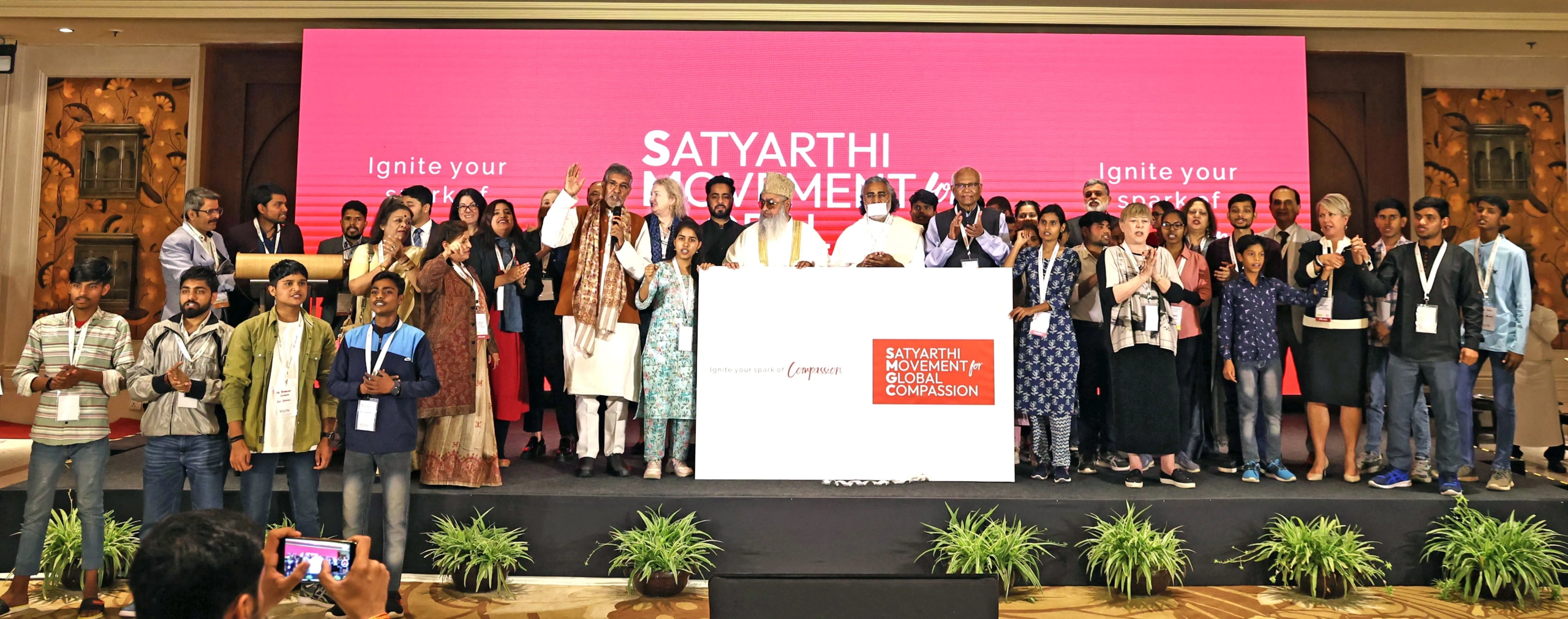
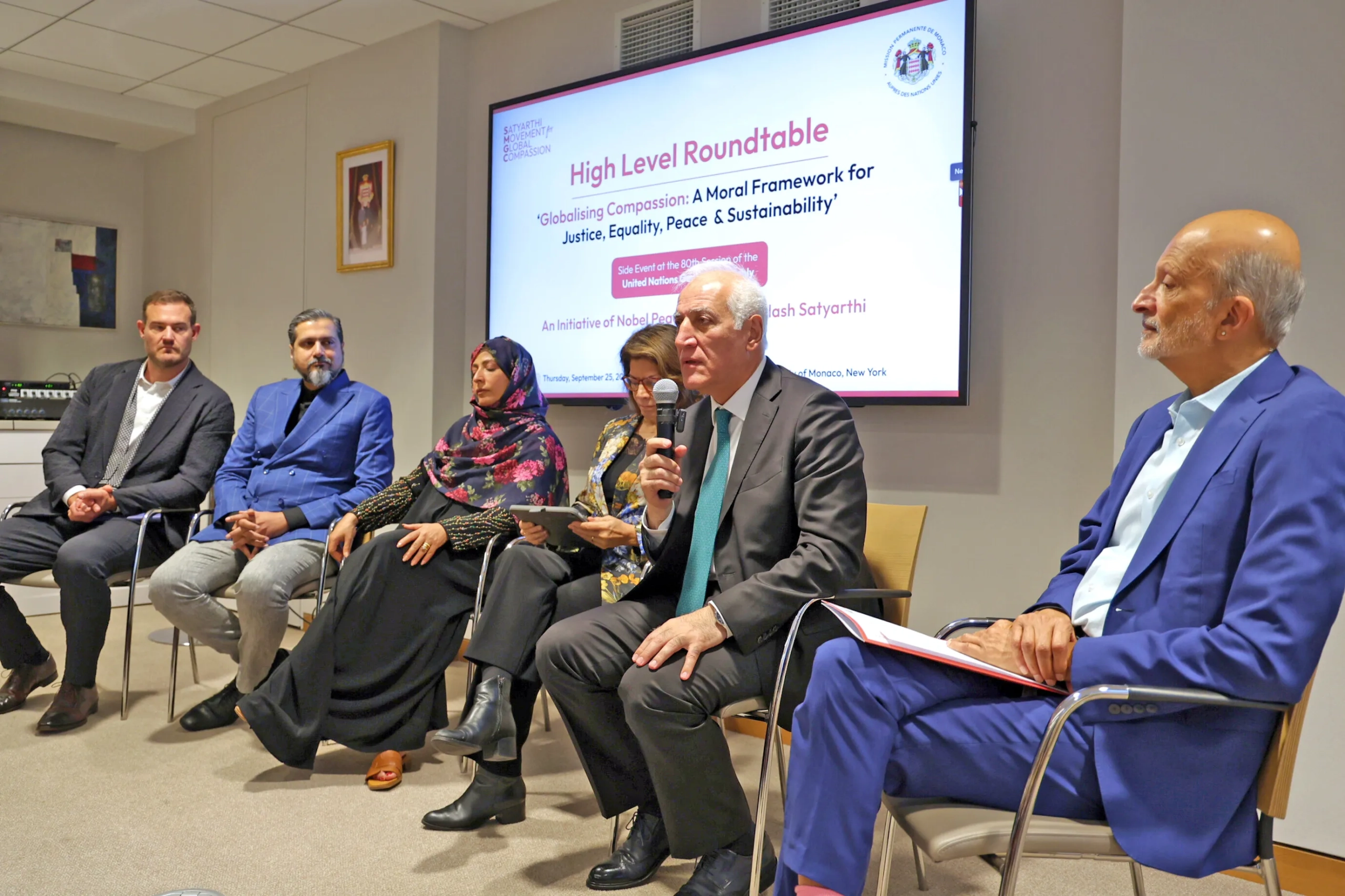
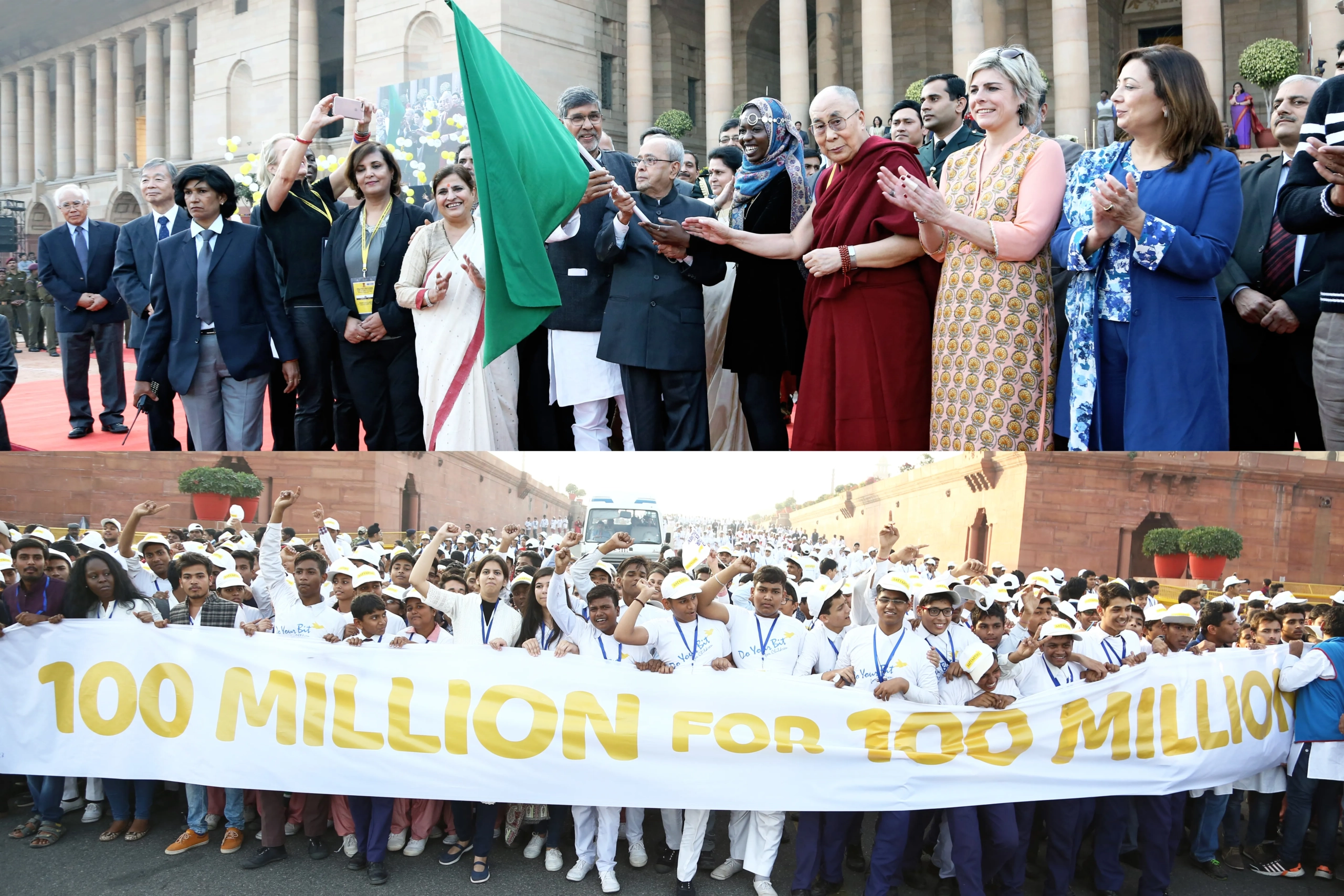
In recent years, this inner philosophy has found renewed expression through the Satyarthi Movement for Global Compassion, an effort to universalise compassion as a guiding principle for justice, equality, peace, and sustainability. Complementing this is the 100 Million for 100 Million campaign, which invites young people worldwide to stand in solidarity with the most marginalised children— awakening compassionate action as a shared moral responsibility.
THE LEGACY
Every committed social champion stands alongside a pillar of strength whose conviction makes the work possible. For Kailash, that has been his wife, Sumedha, who has shared every uncertainty of his journey. Together, they raised their children in an environment where values were lived daily, not preached. The family endured long absences, personal risk, and financial uncertainty—yet remained rooted in resilience and purpose.
“I never believed in conventional parenting lessons,” he reflects. “Children learn not from instruction, but from conduct. How one responds to injustice, treats the vulnerable, and remains consistent under pressure shapes a child far more than any advice ever could.”
Kailash has always responded to injustice with tangible action. Even when he decided to adopt the name Satyarthi (seeker of truth), he did so to honour his commitment – being the voice for voiceless children, fighting the good fight and tirelessly striving to make a difference. Kailash is not only a genuine seeker of truth, he is also the purveyor of hope for the world and its future.
MAPPING THE INDIA WITHIN
Bharat: Then and Now
“Bharat, for me, began in a small lane of Vidisha—under a guava tree, in shared courtyards, and in lessons of dignity learned early. Today, Bharat stands before the world as a moral force—ancient in wisdom, youthful in hope. The scale has changed, the speed has grown, but my question remains unchanged: does our progress protect the dignity of the weakest? If it does, Bharat is moving forward. If it does not, we must pause and realign.”
Bharatiya Values that Travelled
“I never left Bharat behind when I stepped onto global platforms. Compassion, integrity, and moral courage are values I carried from home. Whether challenging child labour or speaking to world leaders, I relied on quiet conviction rather than power.”
Generations Abroad: A New Bharatiya Identity
“Distance does not weaken identity—purpose strengthens it. When you stand for justice, protect the vulnerable, and act with conscience, you remain unmistakably Bharatiya. Bharat is not only a geography; it is a way of living.”
Pride, Progress, and the Spirit Of Bharat
“True pride in Bharat is not a loud celebration; it is a quiet responsibility. Progress means little if it excludes the marginalised. Our civilisational spirit asks a deeper question—not how far we have come, but who we have carried with us. That spirit is a reminder that ethics must always lead ambition.”
Dreams for the Youth and Future of Bharat
“My dream is that our youth do not chase success blindly, but that they ask whom their success serves. Question injustice. Choose courage over comfort. Stand up for the child who has no voice. When compassion guides ambition, leadership becomes service—and service shapes the future of Bharat far more powerfully than any title or position ever could.”
BACK TO THE FUTURE – IN FIVE MOMENTS
Food Cravings
THEN
Sharing ‘poha’, ‘chhole bhature’ and ‘chaat’ with friends—more about togetherness than choice.
NOW
I enjoy cooking. For me, a simple home cooked meal is the best.
Sport Spirit
THEN
‘Gilli-danda’ and ‘kabaddi’ in narrow lanes filled with laughter.
NOW
Outdoor Badminton and cricket with the children at Bal Ashram.
Music Tastes
THEN
Bhajans and Kabir’s couplets.
NOW
Music crosses borders, yet still connects hearts.
Holiday Life
THEN
Swimming in the Betua River with my friends and family. Sleeping on rooftops under open skies.
NOW
Driving in the Himalayas, cooking, writing, spending time with the kids at Bal Ashram.
Leisure Habits
THEN
Reading, thinking, and unhurried conversations.
NOW
Playing carrom, outdoor badminton, playing with my dogs.
AKA
Bachpan Bachao Andolan | Satyarthi Movement for Global Compassion (SMGC) | Mukti Ashram for child rehabilitation | GoodWeave | Kailash Satyarthi Satyarthi Movement | Satyarthi Movement for Global Compassion Founder | Global Compassion Movement India | Humanitarian Movement by Kailash Satyarthi