

The Rt Hon The Lord Swraj Paul, PC
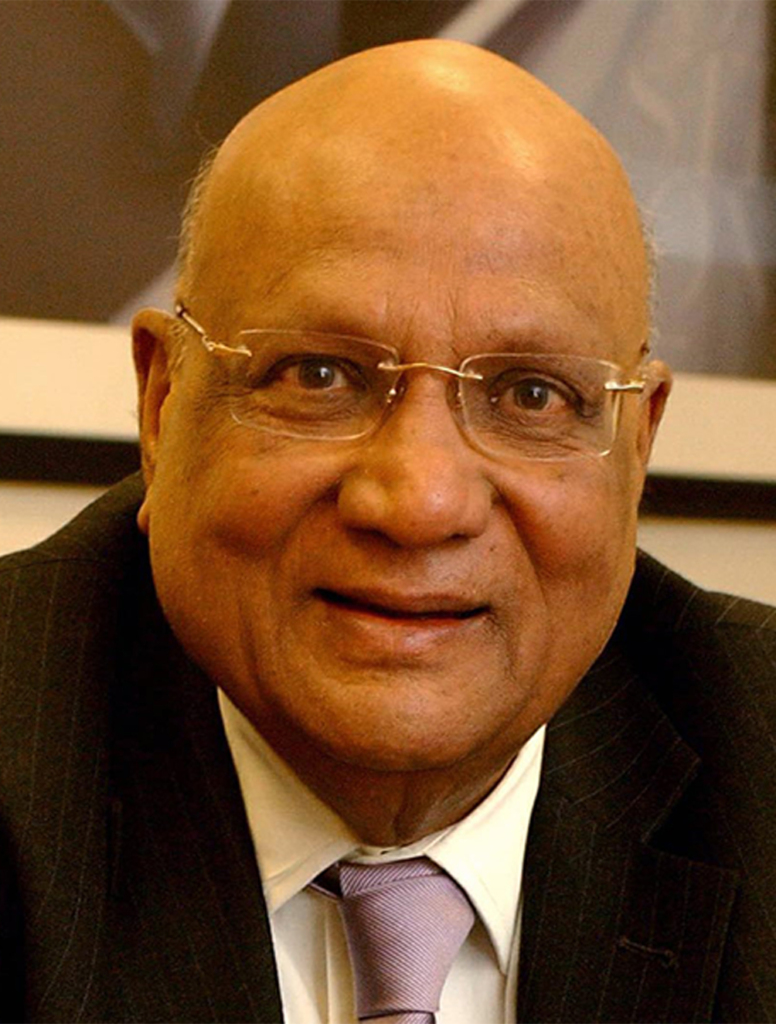
Chairman, Caparo Group Ltd
Chancellor, University of Wolverhampton | London (UK)
Ancestry
Hisar (undivided Punjab)
Birthplace
Jalandhar, Punjab (India)
Residence
London (UK)
LIFE: A Matter of Balance
Fifty years ago, a newbie in business sought advice from the largest player in the field, but was rebuffed. Today The Sunday Times Rich List has him among the top 50 richest people in Britain and yet he prefers to commute by public transport like any common man.
Life has taught me to be strong and to face every challenge otherwise, life would be very different. Losing my parents as a child, and two children as I approached my twilight years, was a setback not just for me but for the entire family, yet we moved on. We moved on to live, which has changed everything.
Tell the truth, you won’t have to rehearse it…
… said my father. Among seven siblings, I was born on 18 February 1931 in Jalandhar to Mongwati and Payare Lal. My family too was involved in the freedom movement with Mahatma Gandhi, who advocated swaraj1; I was named Swraj. We lived as a joint family. While my mother was a homemaker, father ran a small foundry where he made steel buckets and farming equipment, later manufacturing other steel products too.
A firm believer in discipline and humility, father made my elder brother, Jit, and me clean his office and shop for daily household items. Our eldest brother, Stya – I addressed him as Praji – was exempt from such chores; polio had made him depend on a crutch. My father considered any wastage and luxury sinful, so we were given only two sets of clothes. He also ensured we understood the concept of sharing. He kept roasted grams outside our home for the passersby; it stopped only when he breathed his last in 1944. I was just seven when my mother bid adieu to the world. All I remember about her is that she loved me a lot and would say “my children are my jewels”. I still keep grams at my UK office.
When my mother was no longer around, I grew closer to my father and elder sister, Prakash, who saw to my well-being. I started attending my father’s office to look after his clerical or typing tasks. The bond we developed thereafter was so intense that I started sleeping in his bed.
With World War II raging across Europe, business opportunities in India grew. Jit expanded the business to Calcutta and began manufacturing ferrous items. It seemed that only a few days ago we children were riding our bicycles and now we were grown-ups helping in our father’s business! To our delight, he bought a second-hand Hudson car from Lahore. But this happiness was short-lived. The shock of losing his brother, Khemchand, to heart failure took him away three months later. I was only 13, yet it felt like my childhood had died.
Education and exposure helped me a lot
All of the family lived together in Jalandhar. I was absorbed with studying and playing hockey. Completing my schooling from Labhu Ram Doaba High School in 1945, I joined the Forman Christian College in Lahore, the best in the Punjab Province and graduated in Maths, Physics and Chemistry. Unfortunately, the partition riots interrupted our lives; schools were closed and we volunteered to help in the refugee camps. It meant I had to leave Lahore in 1947, and then return to Jalandhar later when I completed my Bachelor’s degree from Doaba College, Panjab University. The principal’s wife at the Forman encouraged me to go to the Massachusetts Institute of Technology (MIT), Boston, USA, to study engineering. As engineering was my dream, I applied there and was accepted.
Considering the expenses, I was unsure about going to MIT, though Praji and Jit were excited about it. On my way to the USA, I stayed in London for two days and returned to India feeling homesick. My brothers consoled me and sent me back the same evening. Everything seemed alien; I was one of only seven Indians at MIT. In fact, we were thought to have come from some remote tribe! I preferred to stay aloof and dived into books, though meeting people from different cultures helped my development. Meeting Pt Jawahar Lal Nehru at MIT in 1950 was exciting. I started participating in various activities, I played squash and soon adapted to the environment. I worked part-time to avoid being a burden on my brothers and learnt to strive to be the best. When I got both my bachelor’s and master’s degrees in Mechanical Engineering in 1952, I had saved enough to buy a car which I took to India.
I joined our family business, Amin Chand Payare Lal, which later became Apeejay Surrendra Group, started by my father, forming the name from Amin, Payare, Jalandhar and Surrendra. Today it owns Apeejay Schools and Colleges. Praji and Jit were already in the business and Surrendra also joined us. Our skills enabled us to diversify in education, real-estate, hotels, pharmaceuticals and confectionery.
Breathing demands strength
While my professional life was touching new heights, I met Aruna Vij, a charming young lady, in Calcutta on two separate occasions. When I proposed to her, she asked me to seek her mother’s permission instead to which I chuckled, “I am not marrying your mother. It’s you I want to marry, so you talk to her.” Her mother agreed – and three days later, on 1 December 1956, we were married. We were blessed with twin boys, Ambar and Akash on 20 November 1957, and my daughters, Anjli and Ambika, were born on 12 November of 1959 and 1963, respectively.
Things were perfect, we were all happy until Ambika was diagnosed with leukaemia in 1965. We moved to the UK in 1966 for her treatment at Middlesex Hospital. When she was in convalescing, we’d often take her to London Zoo, a place she loved visiting. She departed from the world in April 1968, which shattered us. All the intelligence, money, position and assets could not save her. Overcome with grief, I resorted to sannyasa2.
After making peace with myself, I gradually began to devote more time to business, starting with one steel unit named Natural Gas Tubes (NGT, Caparo Tubes now). Aruna provided me with all the support I needed.
My strength, hopes and dreams increased when in 1970, we were blessed with a son, Angad.
NGT – a company which began with £5,000 of borrowed capital and three workers – soon acquired more steel plants. We named it Caparo Group after my friend, Cavendish, whom I asked to become a director, my name, Paul and our lawyer, Rothman.
In 1996, I was raised to a life peer by Conservative Prime Minister, John Major, and I sit in the House of Lords as a crossbencher with the title, Baron Paul of Marylebone, in the City of Westminster.
Life was good but the pain of losing Ambika was always there. I sought refuge in work; it helped to ease the pain. When my sons joined the business, our company went on to become one of the UK’s leading producers of welded steel tubes and spiral welded pipes, becoming one of Britain’s big family-owned holding companies with operations in steel products, wire, aluminium castings, fasteners and shipping. With Angad’s interest, we ventured into hospitality and entertainment; he had, in fact, made the two British movies, Lock, Stock and Two Smoking Barrels and Snatch with Guy Richie and The Tournament. He expanded Caparo further into India – a dream I had had for a long time – and opened 24 subsidiaries.
Something for your community
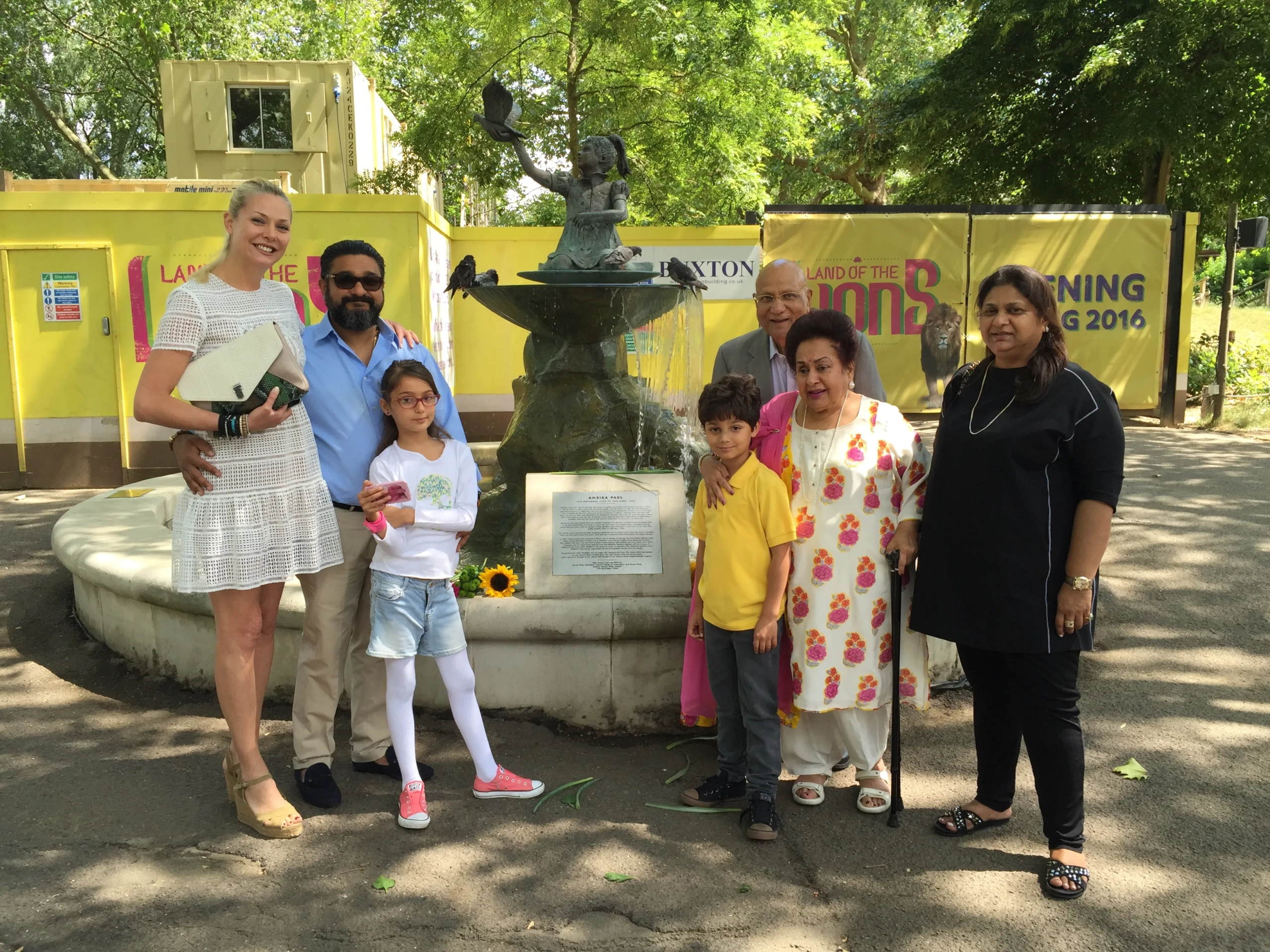
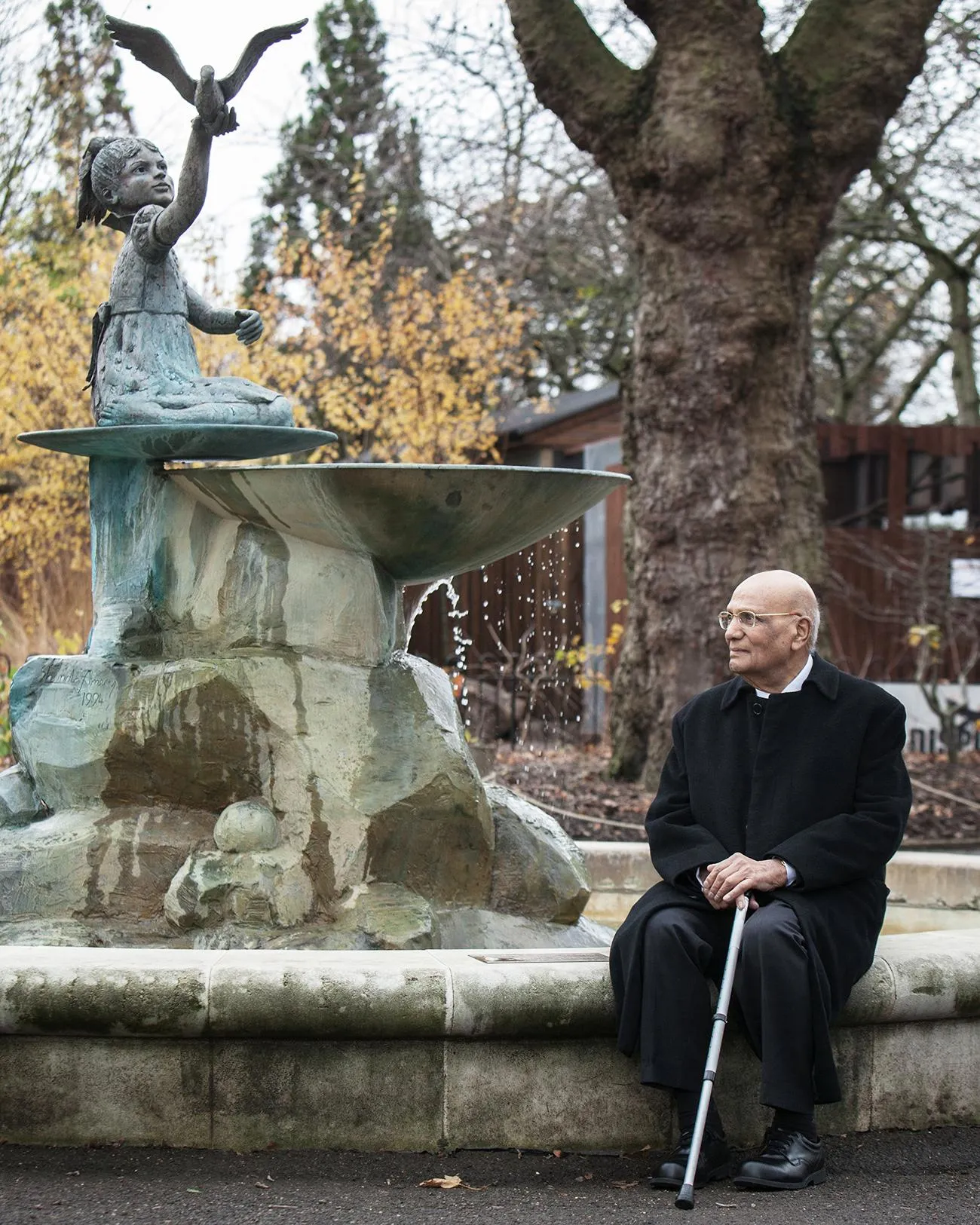
Ambika loved to visit London Zoo which was suffering from financial problems in 1993. The Zoo would have closed down but I was able to help it overcome the crisis. Today, a part of it is dedicated to her – the Ambika Paul Children’s Zoo. It was here that Angad was married to Michelle in late 2004.
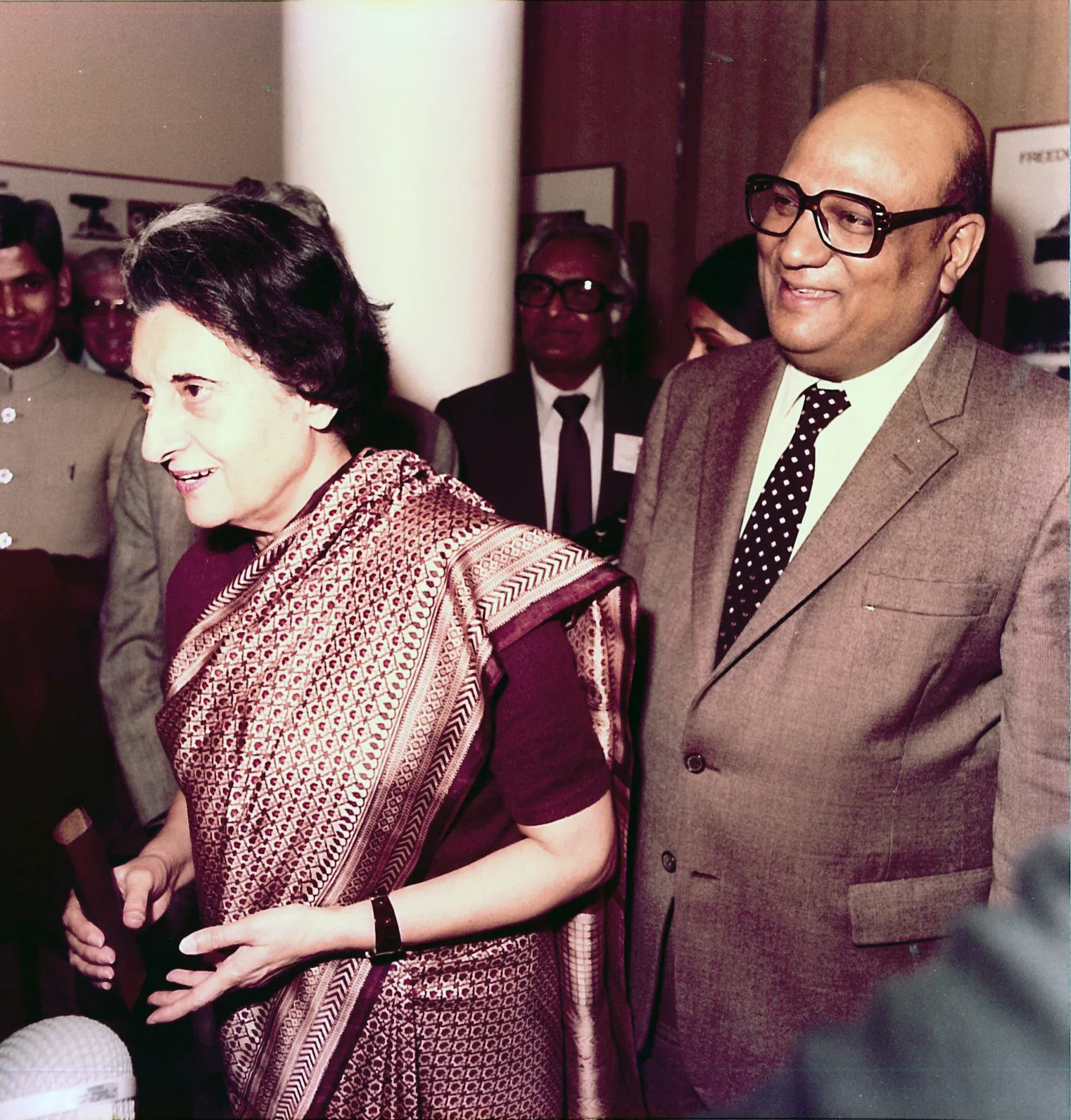
In 1996, I handed over the business to my sons and started participating in public affairs as I had long promised myself. I established the Ambika Paul Foundation in memory of my daughter. Believing education to be the strongest tool to revitalise the world, I try to invest my time and resources there. For my efforts, I was awarded the Padma Bhushan by the government of India in 1983 when Mrs Ghandi was the Prime Minister. I have been bestowed with 15 honorary degrees from several global universities. I held the positions of Chancellor and Pro-Chancellor of Thames Valley University and Chancellor of Westminster University. I was also the Co-Chairman of the Indo-British Roundtable from 2000 to 2005 and a member of Panel 2000, created by the Prime Minister, which aimed to re-brand Britain. I have written a biographical account, Indira Gandhi (Heron Press, 1984) and also an autobiography, Beyond Boundaries: A Memoir (Penguin, 1998).
In December 2008, I became the first person of Indian-origin to be appointed the Deputy Speaker of the House of Lords; in October 2009 I was appointed to the Privy Council.
Yet another tragedy awaited us. In November 2015, we lost Angad to fate. But life, I guess, has its own plans. One should learn to smile during hard times. In 2018, a luxury boutique hotel, the Angad Arts Hotel, St Louis, USA, was opened in his memory. The adversities of life are inexplicable but one has to endure them as part of destiny. I prefer to keep the memories I have made with my family alive, for MY FAMILY IS MY STRENGTH.
Philosophy
Nobody is the sole arbiter of whatever befalls them. We shouldn’t abandon all to destiny.
I love…
Reading the Ramayana and the Mahabharata. I have taught it to my children also.
Success Mantra
Be so unselfish that when God writes your destiny, He willingly asks for your will.
I’d suggest the youth…
To practice honesty, hard work, discipline, prudence and charity as a MUST.
The world doesn’t know that…
We still live in the same flat we lived in with Ambika.
AKA
PC, Rt Hon Lord Paul of Marylebone
Gallery
ISBN : 9788193397695