
Sherjung Bahadur Singh ‘Raji’ Sandhar

President
Seinan Group | Tokyo (JAPAN)
Ancestry
Hoshiarpur (Punjab)
Birthplace
New Delhi (India)
Residence
Tokyo (JAPAN)
From Sikh model to An entrepreneur in Japan
Once a Sikh model in Japan, he today owns a fashion company in this land of rising sun and restaurants in various parts of India and Japan.
Indiscriminate killings of Sikhs was widespread across India as riot broke out in 1984 following the assassination of the Indian Prime Minister Indira Gandhi. I decided then that New Delhi was not safe, and I temporarily moved to Japan. No one then knew that I would make it my new home.
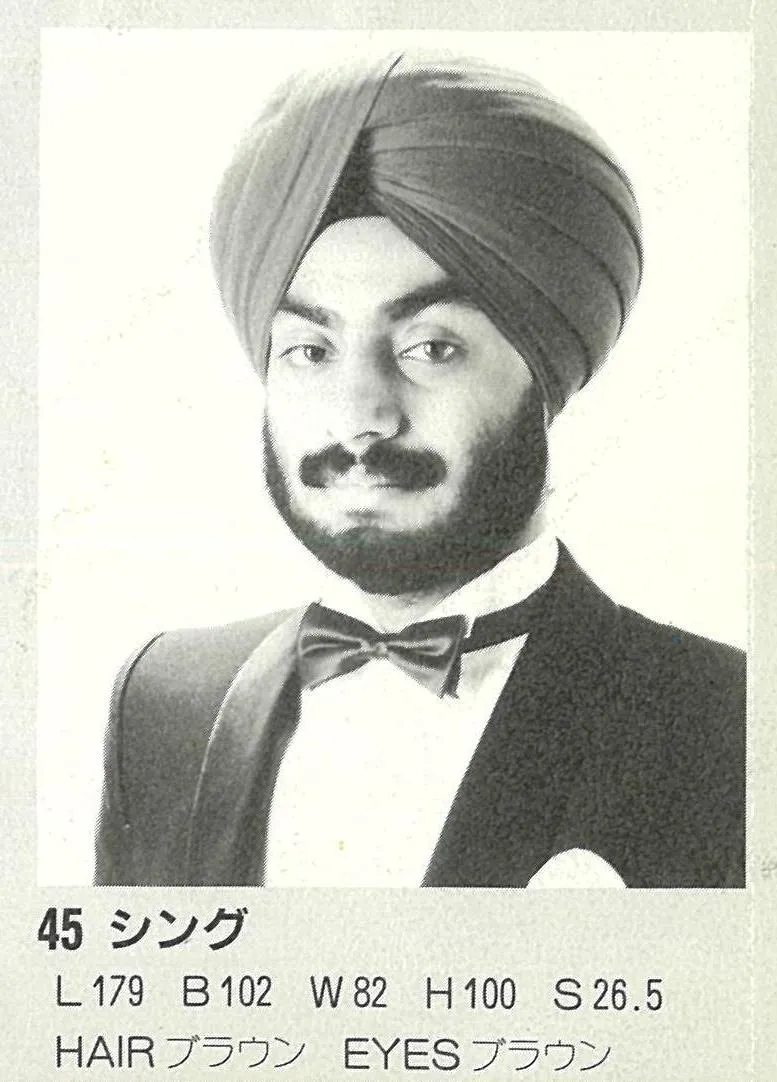
In my initial days, I found Japan challenging to adapt to. The culture was different and the language was even more complicated, so I started learning Japanese at a language school. Meanwhile, I joined my family business as a part-timer. While still there, I started getting modelling offers which seemed alluring as it was something new. I discontinued with the family business to take up modelling. Back then, the Japanese had the impression that any person from India wearing a turban was a Maharaja. They gave me a lot of respect and I was given a lot of modelling work because of the novelty of being a Sardarji in a Japanese setting.
My passion and interest have always been in fashion and trading. My brother, Davenderjeet Singh (we address him as Daisy), is my role model, who has inculcated in me the love and knowledge of fashion and trading. So, in 1988, I decided to take a shot at fashion industry. This wasn’t easy as the Japanese fashion industry favoured trade with Europe, not India. They had this impression that high-quality products were just not possible from India. As a result, I couldn’t make any headway at all, but I didn’t lose hope. My parents, Sardarni Jatindar Kaur and Sardar Harbhagat Singh, had taught me to never lose hope and always be strong; I stood by their words.
Stop chasing the money and start chasing the passion
Born on 29 July 1964, I have three sisters and a brother. Dad was in the Delhi Police department and it reflected in his personality. He was disciplined and strict and wanted us to be equally disciplined. As it happens in every Indian home, we were supposed to seek his permission for going out anywhere. Since we were afraid of him, we would never dare ask him for any of it; the maximum leverage we could take with him was to ask him to allow us to go to Hoshiarpur for the vacations. Mom, however, was just the opposite, a calm homemaker who raised us in the best possible manner.
While I was in school in New Delhi, my friends and classmates started calling me Raji. I remember playing the role of a President in a skit in grade 10. I loved being the centre of attraction and sitting on the stage, I decided that one day I would something big that people would look at me with much more respect and honour. In 1982, I cleared school and started graduation studies in Delhi. By the time 1984-riots spoiled things, my sisters and brother were already settled in Japan so, with the upheaval, I too decided to move there to establish myself on my own.
In Japan, I met Tomoko Takahashi at a party. She was charming and intelligent. Once we became friends, she motivated me, standing by my side as a partner. Driven by her encouragement, I stuck to my guns and found an offer with Bigi, one of the biggest fashion brands. Once they agreed, I came to India, got the samples ready and surprised them with quality and work culture. As the orders grew, in 1988, I decided to start my own manufacturing unit, under the name of EKOM, taken from ‘Ek Onkar’ in Punjabi which means one God. And hence on, my relationship with Japanese retailers began to grow and flourish.
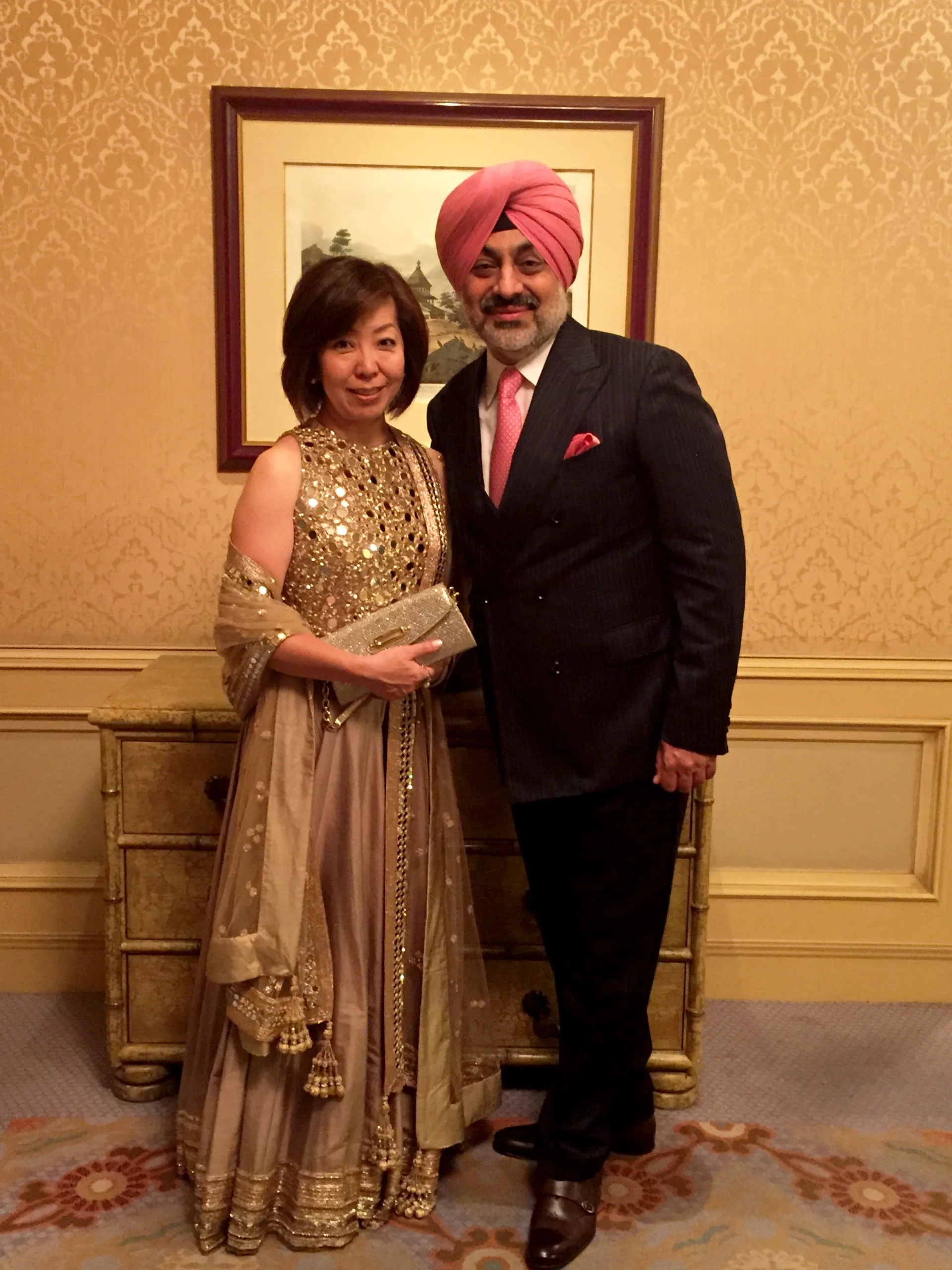
Following our entrepreneurial journey, Tomoko and I decided to get married but her parents wouldn’t agree until they met my family. Meeting each other, they were convinced and with the blessings of our elders, we got married on 2 December 1992 in New Delhi. She came out as a huge pillar and a rock in my life. Living in Japan by myself after leaving family in India was not easy, but she had been my support system through the struggles and successes, and the creative drive that always provided new ideas. Now she is even more. She is my wife, my life!
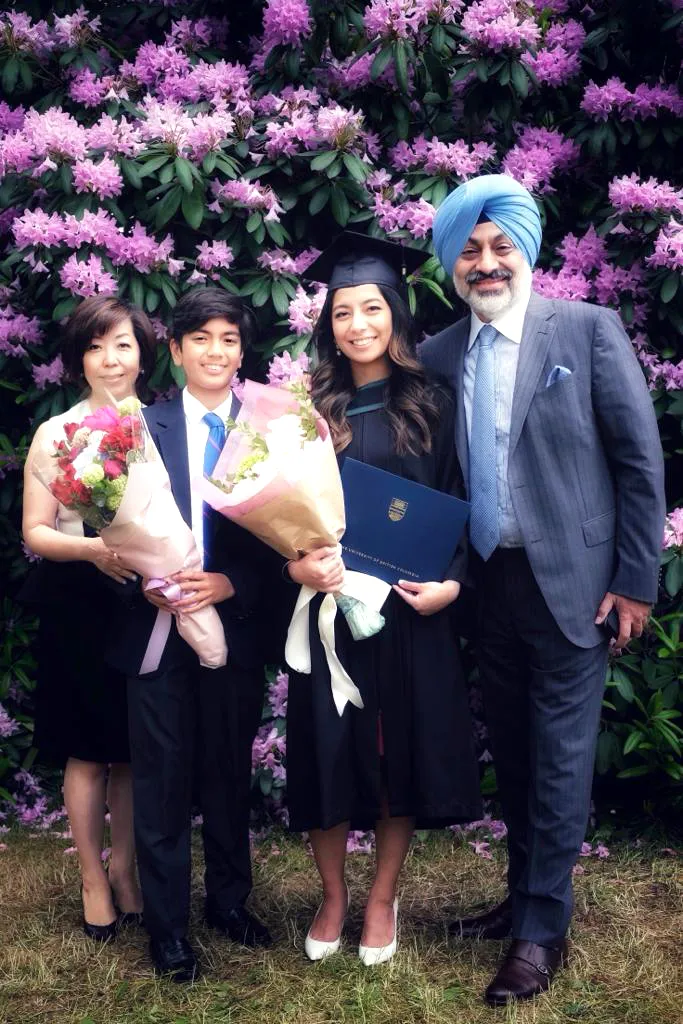
We have two children, Sharni and Shaanvir. We believe our roots and values are the gifts that ensure children can navigate the world, so we raised our children to learn and imbibe both Indian and Japanese cultures. In the early days in Japan, there were hardly any Sikhs; the first gurudwara opened only in 2001. So, we installed a shrine in our home to ensure they understood the concept of Sikhism and where they came from.
Success is not final; failure is not fatal
As Tokomo and I share an equal passion for food, after our success in the fashion industry, we opened the first Indian fine-dining restaurant, Ghungroo in Omotesando, the fashion capital, in Tokyo, in 1993. In the restaurant, we tried to ensure the authenticity of Indian flavours in Japan, though we wanted it to be an amalgamation of both our cultures. We started importing the best of spices, reinventing dishes mixing the styles of both the countries. I realised how endless the food industry was and what immense scope it offered to innovate and explore. I decided on production and importing and we gradually started importing the best quality of wine, beer and other liquor too. This worked wonders for us, and the Japanese began to accept the quality of the food. We were now in a position to open more locations for our restaurants and spreading our wings on the import side too. Along with, we took our focus back to the fashion industry. As there were some Visa issues, we downscaled the restaurant business and went a notch up with digitisation to ease it out. At the same time, we garnered our focus on fashion industry.
I feel there is a lot of scope in the food inductry so I decided on production and importing from worldwide
Since I was always looking for something new to venture into, Tokomo’s uncle, the owner of Hakungen Company, suggested me to dive into chemical industry. He gave me a sample work, which I delivered him so well that he was impressed. But it took me more than a year to research and finalise it. Once orders started flowing in, we opened a factory, Seinan Metal & Chemicals Co Ltd, producing raw material for Hakugen, one of the largest manufacturers of household products in Japan. It gave us confidence and now noticing the lack of Japanese cuisine whenever visiting India, we set up a fine dining Japanese restaurant, EN, in Delhi, in 2013. This restaurant went on to win the Times of India Best Restaurant of the Year award. I also partnered with celebrity chef Saby to open Lavaash. I also joined ventures with Rooh from California who opened his restaurant outlet at EN. Recently, in 2019, I opened the very first sweet store in Japan, Tokyo Mithaiwala.
Success is mine but efforts alone were not
Working across cultures to supply products of high quality has been extremely challenging but what sustained me was Tokomo’s advice and the values my parents… if you get each of the small details right, the larger whole will fall into place. Their teachings also taught me to never forget my roots, enabling me to build strong personal relationships that I have with both my team and clients. And now, whenever I start something new, I ensure going deep into it to know it inside out, and give all my heart to it – probably the reason that I am counted among the successful of the society.
The business that had started in Japan, with little or no knowledge of Japanese, today runs across Japan, Vietnam, India and North America, with diversified segments from industrial goods supply to importing packed food, wine and beer and commodities to designing and manufacturing apparels, and owning and operating six restaurants in Japan and two in India. In this successful journey, I cannot forget the immense support and strength that my parents have given me. No matter the failures or little successes, they were always proud. Tomoko and I have tried to teach our children Sharni and Shanvir the same values: To blend the best of both cultures family norms, language, celebrations and values. They have visited India many times and finally decided to set up base in Canada as there is a large Sikh population there giving them all the cultural advantages while not having the language problems the family faced in India.
Philosophy
Always share your knowledge and success with the people around you, because you wouldn’t have made it this far without them.
I love…
Guru puja. When I have time, I listen to bhajans and participate in kirtan.
Success Mantra
Caring builds trust, trust builds confidence, and confidence gains trust of people and business. It is this cycle that makes business and life a success.
I’d suggest the youth…
To do it today! Never leave it for tomorrow. Always remember, there are two kinds of people who will tell you that you cannot make a difference in this world: those who are afraid to try and those who are afraid you will succeed.
The world doesn’t know that…
My team here calls this office their temple, because they find most of their dreams coming true here.
Gallery
ISBN : 9788193397695