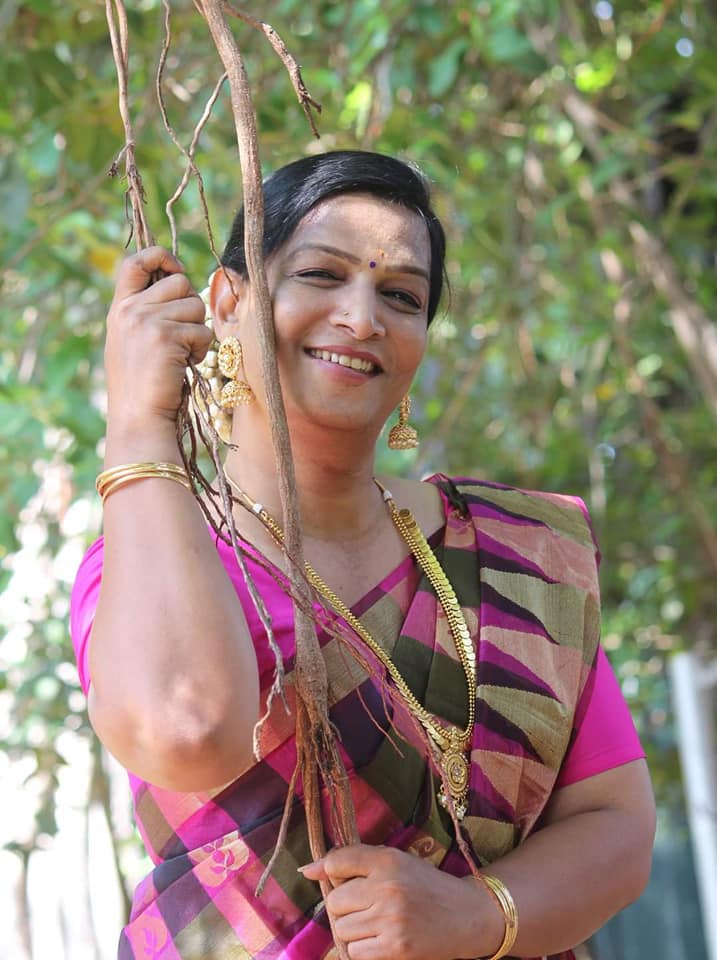
Priya Babu
Birthplace:
Tiruchirappalli, Tamil Nadu
Residence:
Chennai, Tamil Nadu
Qualification:
Class 12
Inspiration:
Her mother
LITTÉRATEUR WITH A CAUSE
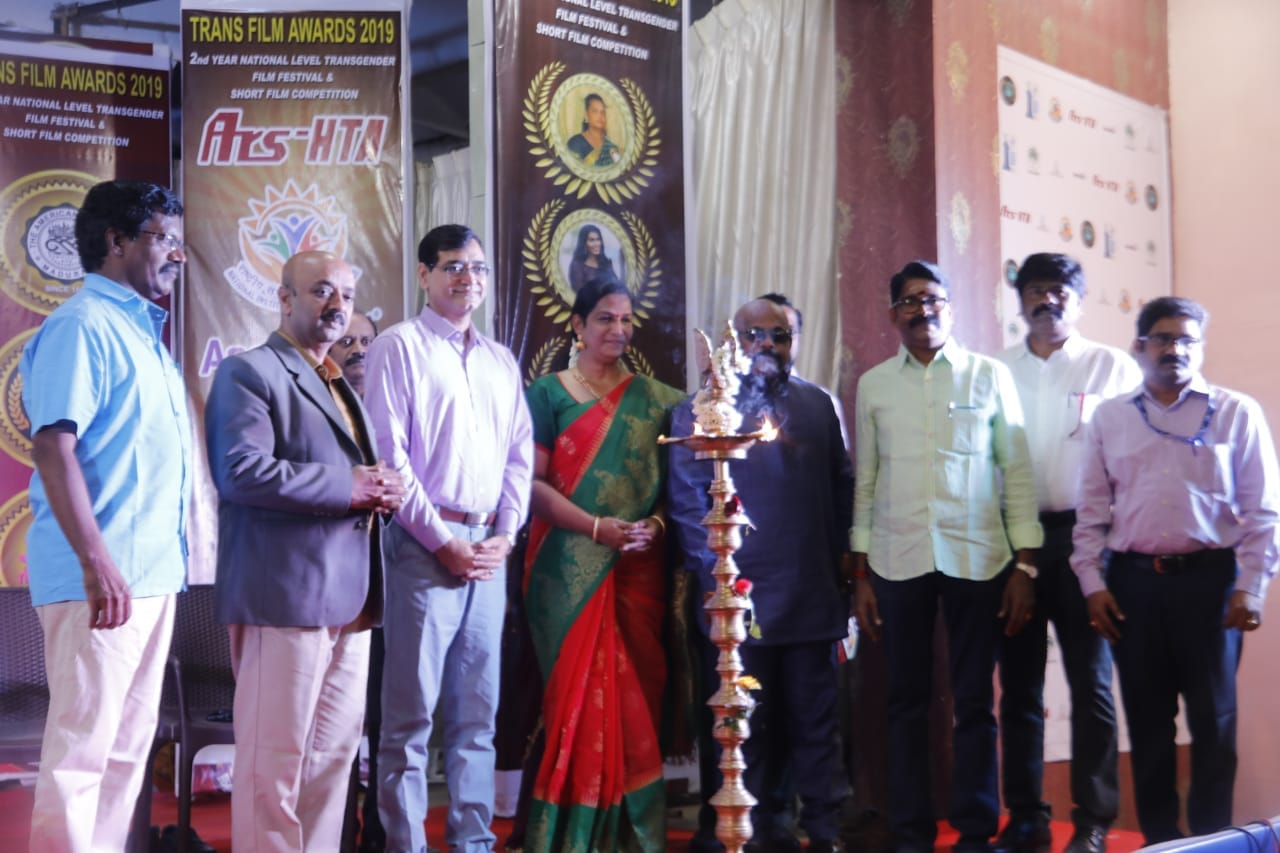
She is a tireless activist using her creative prowess to script a story of hope and empowerment for the trans community. Inspired by Tamil Nadu transgender Revathi’s autobiography, she brought out Aravanigal Samuha Varaiviyal, an ethnographic study of the trans community, and Moonrampaalin Mugam, a touching account of a mother-son duo discovering the son’s transgender status, which won an award and is now a part of the university syllabus and a preferred topic of many M.Phil. theses. She is also the founder of India’s first trans-based publishing and film studio, Trans Film.
Clarity of thought and intelligence shine through when she speaks. Her words are sincere and full of hope. There’s also a childlike quality that seems to have never left her. She personifies both strength and vulnerability. Strength through her tireless and targeted approach to transgender rights, and vulnerability through her heartfelt words published as books and novels.
She has been among the pioneers of the LGBTQIA+ movement and the first person to file a writ on transgender rights. Among the first members of the Tamil Nadu Transgender Welfare Board, she is a member of the National Network of Transgender Persons (NNTP), a national-level collective of transgender persons, transgender rights activists, and transgender community-led organizations from India. She is also a member of the Integrated Network for Sexual Minorities (INFOSEM).
Priya, born on 20 April 1970 as a biological male in a prominent and respectable family in their village, Musiri, was named Padmanathan. Her leaning towards all things feminine came as a threat to her chartered accountant father, Chellamutthu’s stature.
“I was the youngest child with two brothers and a sister. Growing up, I loved helping my sister cook, clean, draw kolams, and like my mother, Govindambaal, I paid a lot of attention to being tidy and neatly dressed,” she recalls.
After her sister married and moved to Malaysia, she had no one to share her troubles with as life at school became more difficult and the men at home were not very empathic either.
“One of my brothers demanded that I not be allowed to step out of the house if the family wanted to protect its social standing. My mother was helpless but lent her silent support.”
Chasing hope
Newspapers, novels, and periodicals that the family subscribed to became her escape from reality and a source of information and wisdom. She came upon an article on the famous Koovagam Festival where the transgender community congregates once annually to worship Aravan, the son of Ulupi and Arjuna, from Mahabharata. “I was intrigued. That piece introduced me to an entirely new world,” she says.
Despite the bullying and sexual abuse by some teachers, she scored 80% in her class 10 board exams. And yet, her father stopped paying her school fees claiming it would be a waste as children like her had no future.
After this, she started working in a book-binding workshop after school hours earning Rs. 5 for every 100 bound books. With this amount and with some help from her mother, she kept paying her school fees until class 12.
“Harassment in college too was unbearable. I dropped out and took up a one-year HVAC maintenance course. Things, good or bad, at least seemed like flowing in sync,” she recalls.
It was around this time that her father suddenly passed away, following which, mistreatment by her brother increased. To escape him, she went to her sister’s in Malaysia and worked as an HVAC technician for two years.”
Her ties with her brother did not improve even after her return to India. “In 1997, I decided to leave for Chennai in the hope of exploring and finding myself. Mother was inconsolable but our paths were meant to diverge.”
In Chennai, Priya joined the Community Action Network’s (CAN) HIV/AIDS awareness programme, which was among the first such initiatives to be launched in India. “They paid me a decent salary of Rs. 800. But I moved to Mumbai soon only to find that livelihood options for transgender people there were limited – begging, dance, or sex work. I did it all.”
The writer and the historic writ
All this while she never gave up her love for reading, setting aside a part of her day’s earnings for books. This is how she happened to read Su. Samudram’s Vaadamalli, a story of a transgender child who runs away from home to Delhi and becomes an activist. “Why couldn’t I become an activist too?”
The first article she wrote on transgenderism was for a local Tamil periodical in Mumbai and this was also her first move towards activism. In 1999, she worked for Muktambar Trust run by former Mumbai Deputy Municipal Commissioner G.R. Khairnar. As she travelled extensively across Maharashtra for work, she decided to launch a dedicated organisation for transgenders. And thus, Dai Welfare Society, India’s first organisation for transgenders, took shape.
“Ashok Row Kavi made the first donation towards its founding and helped us get projects to propel it ahead,” she informs.
Priya returned to Tamil Nadu in 2001 with a similar vision and worked for organisations focused on transgender sexual health. Among them was Arogyam near Madurai, where she raised the issue of official identification documents.
“It was the time of the Lok Sabha elections in 2004 and thus a good opportunity to highlight the issue in Tamil Nadu. We submitted a writ petition in the Madras High Court seeking transgender voting rights – the first-ever petition in India on transgender rights and our path to obtaining an official identification document through a voter card,” she recalls.
Progressive groups and activists joined in after she filed yet another writ, this time to have Aravani added as a category on voting IDs. Many experts and leaders from different fields and media joined her.
The big leap
“We formed the Mirror Theatre Group and produced two plays on our struggles and legal rights – Unsettling Memories and Heart Calls. We took it to 78 locations across Tamil Nadu – from schools, colleges, SHGs and lorry associations to government offices. This direct interaction with our target audience made a huge impact. Members of the audience would hug us and cry.”
Her flair for writing led to Priya becoming the first transgender to receive the National Folklore Support Centre Fellowship under which she filmed her first documentary on folk art among Tamil Nadu’s transgender community. Then the Sarai Fellowship from New Delhi followed.
In 2007, inspired by Tamil Nadu transgender Revathi’s autobiography, she started writing and brought out Aravanigal Samuha Varaiviyal, an ethnographic study of the community that explores members’ secret societies, ritual practices and belief systems and Moonrampaalin Mugam, a touching account of a mother-son duo discovering the son’s transgender status. The latter became an award-winning book and is now a part of the university syllabus and a preferred topic of many M.Phil. theses.
She has also led to the establishment of India’s first transgender library in Madurai in 2016. “It is a rich resource in the community with more than 200 books, 9,000 paper clippings collected since 1999, government orders, court rulings and policy documents.”
She then launched an online lifestyle magazine, Trans Woman, in Tamil and English. “It includes empowering and educative articles on the community besides recipes, beauty tips and fashion. It has a dedicated e-commerce page for handicrafts made by transgender persons.”
Not the one to stop, she next established India’s first trans-based publishing and film studio, Trans Film.
VISION FOR THE TRANSGENDER COMMUNITY
Having dedicated nearly a quarter of a century to this movement, Priya feels hopeful about the future, especially since the NALSA judgment and the Transgender Persons (Protection of Rights) Act. She sees education, political rights and media support as the biggest catalysts for change. “Every school must have transgender teaching and administrative staff to encourage seamless social assimilation without gender bias. Currently, we are only armed with court verdicts and policies but don’t have notes on implementation planning on issues like education, marriage, health care adoption rights, family inheritance and pension rights. We have a long road to travel.”
MESSAGE FOR THE MAINSTREAM SOCIETY
“There is diversity in everything around us. We have different flowers and animals – even the leaves have different shades of green. This is how nature creates. Accept it all.” Priya wants all parents to be like her mother – sensitive to their children’s gender preferences and support them in overcoming the conflict. “She helped me channel my energies towards bigger, meaningful goals and became a role model for many parents. She was with me in my rights movement until her last days.” Acceptance begins at home.
FIVE FACTS ABOUT PRIYA
She calls herself a strong woman, a proud transgender activist, a filmmaker, a photographer and an artist.
She has authored eight books; literature and books inspire and strengthen her.
She is also the editor, heading a team of five reporters and five interns.
She is a Lord Shiva devotee and begins each day with Shivapurana.
She loves soulful music and is addicted to pav bhaji.