Ankura Patil
Birthplace:
Dahod, Gujarat
Residence:
Vadodara, Gujarat
Qualification:
B.Com., Diploma in Performing Arts
Inspiration:
Mother, ex-boyfriend and Laxmi Narayan Tripathi
AN ACCEPTANCE TOO LATE
Rejection, exploitation and depression… She has left it all behind her and emerged a winner to now run the CBO, Forum Foundation, spreading awareness about LGBTQ+ rights.
Life is strange, isn’t it? It takes pleasure in throwing googlies at us. It has a way of showing us our place in the universe, telling us that we are not the ones who choose, but the ones who will take what is given to us – whether we value it or not is up to us.
Ankura was to be terminated in her mother’s womb because her parents could not afford to have another. If the child happened to be a girl, the Patils, earning a modest income and already parents to three children, would then have to worry about her education and marriage expenses.
The family’s prayers for a male child were answered when Ankura was born on 15 October 1972. Well, life and its googlies! Although a male at birth, she found herself inclined towards all things feminine.
An embarrassment
Beatings and scolding by her father and elder brothers take up a lot of space in her childhood memories. “Back then, parents would lock up their children in a room if they wanted an evening out or went to the movies. I would use this chance to wear my mother’s sarees. First my brothers would thrash me for doing so, and later my father.”
She only had girls as her friends, loved playing with them and would always accompany her mother to social and religious gatherings.
“Dad was a Railways employee and the Railway Colony in Dahod had a culturally diverse environment. Women would come together every afternoon to pursue their hobbies and gossip. I would always be around them. Mom supplemented the family income by sewing for Railways workshop employees. After school, we siblings would help her. And I would enjoy every bit of it.”
She hated being with the boys because they were rough and foul-mouthed. Plus, she had always seen her father as a dominant, abusive male, a wife beater. “I had never come across a compassionate man in my life by that time. I had begun fearing all men including my father.”
Her preferences were questioned at every step – spending time with girls, girly gait, applying nail paints. “People’s behaviour made me feel different, and I started keeping my distance. As an adolescent, I felt attracted to boys but very well knew that I would never have a close confidant to share my feelings and problems. There was no gender sensitisation back then. I didn’t even know the meaning of ‘gay’.”
Ankura found solace in dance and music. “Despite the mockery, I would always participate in school’s music contests and win.” Recently she featured in India’s first music album by transgenders released by the Jeevan Trust.
She was also good at studies but issues at home and harassment at school took a toll on her. “I didn’t want to be seen. I would arrive at school before everyone else just to avoid taunts on my gait. My brothers would beat me if I was seen around their friends because my effeminate nature was an embarrassment for them.”
She could not clear the class 10 exam on her first attempt. As a punishment, she was made to do all household chores. “I did them with all my heart without complaining in the hope that it would somewhat make up for my poor academic performance.”
Big city move
The family moved to Vadodara in 1993 after her father’s retirement and Ankura felt lonely in the big city. Having earned her bachelor’s degree from Dahod, she took up a supervisor’s position in Gujarat Industrial Development Corporation but quit within four months only because subordinates didn’t take her seriously.
She started giving private tuitions to neighbourhood kids. The student numbers grew from one to 150 in no time. She also began interacting with the LGBTQ+ community in the city and felt a little at ease. She was living the life she wanted outside the restrictive environment at home. She now had a strong network, thanks to which she came on board the Lakshya Trust in 1999 which was then laying the groundwork for its establishment. “I was their first official employee, joining them on the condition that my job be kept a secret from my family. I had a good hold over the community, which worked in my favour and helped the Trust reach its goals. It was a good experience.” All this while, she continued teaching kids and attending music college pursuing a Visharad degree in Hindustani classical music, in the evenings.
The day when it all changed
Her family now wanted to get her married. “I asked my mother why two males can’t get married. She said if there was someone who could promise to be with me all my life, she won’t force me to marry a woman.” Her boyfriend, however, was not willing to come out. He wanted a parallel life with her. “This left me heartbroken. At home, my mother threatened to end her life. I unwillingly gave in to marrying a woman. But how long could I hide my gender identity and sexual preferences? One day I told my wife everything.”
She left home and filed a case of mental harassment. Vernacular media picked up the news. “This was a juicy story for the reporter. She had gone to lengths to get every detail of my life, with complete disregard for my privacy. The article kicked off a media juggernaut. Media began hounding my family. It became a spectacle.”
Blackmailing from cops, crumbling love life and the fear of the case getting murkier began showing on her mental health. “I was in a dark space. I feared the phone ringing, I would hit my head against the wall out of frustration and lose my temper at the drop of a hat. It was all getting too much to bear and one day, I slit my wrist.” Ankura was just 27. It became her turning point.
“I thought I cannot lose so easily. I started therapy and counselling. Lakshya counsellor, Apoorva Pandya, stood by me through it all patiently listening to me for hours.”
As the divorce case dragged on, she decided to bring a closure that would also allow her to move on. She appeared in court wearing a saree and told the judge she was a hijra and could not pay any alimony. “This was my first public appearance in a women’s attire and was it liberating! The divorce soon finalised, and I regained charge of my life.”
VISION FOR THE TRANSGENDER COMMUNITY
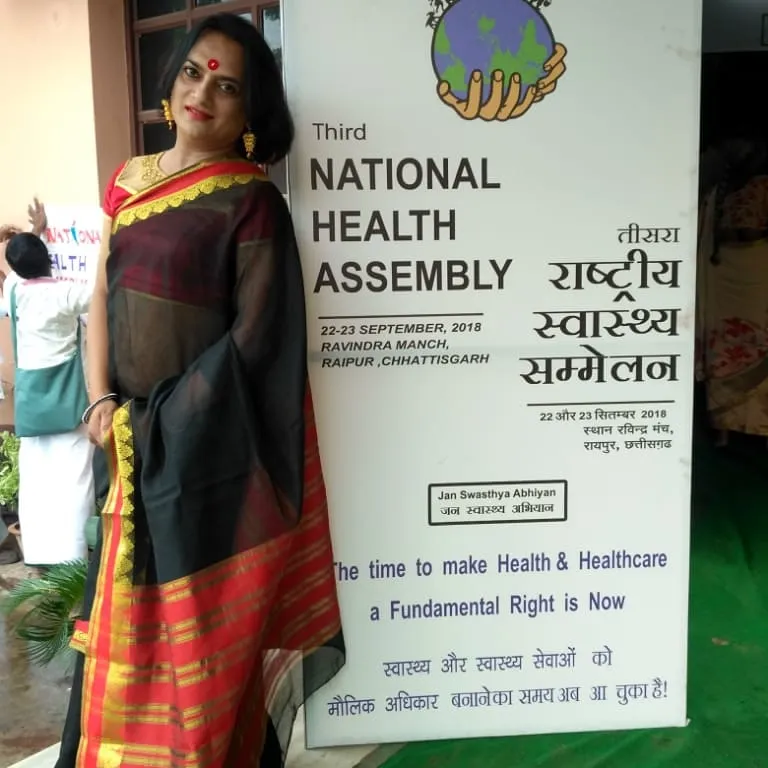
She currently keeps busy with the Forum Foundation, which works on gender sensitisation, HIV/AIDS awareness, rights awareness, advocacy and counselling. “Many within the LGBTQ+ community aren’t aware of their rights. They don’t know about the NALSA judgement or that IPC Section 377 no longer criminalises them. They are still in hiding.”
She wishes for more visibility for the community. The awareness needs to percolate down to the grassroots within the community and in mainstream society. “We target college students, policemen, lawyers and bureaucrats. They will spread the word to their colleagues or families or friends.”
She suggests having special police squads for the community, a quick response team that can curb harassment. She also calls for stricter punishment for offenders.
MESSAGE FOR THE MAINSTREAM SOCIETY
Though rejected before birth, she has taken care of her elderly parents. Ankura is touching 50. Her siblings reconnected with her a couple of years back. She has stood by them despite the storms in her own life. “My father was bed-ridden for nearly a decade after a paralytic attack. He would apologise to me for his behaviour. I don’t want parents of other transgender kids to have such a late realisation. I want society to help bring change.”
FIVE FACTS ABOUT ANKURA
She began singing at the age of three but her parents came to know of this talent only when she was 12.
She was once known as Dahod’s Lata Mangeshkar.
Her mother is her biggest weakness.
She describes herself as emotional, kind and beautiful.
She is a self-confessed foodie and makes excellent puran poli.