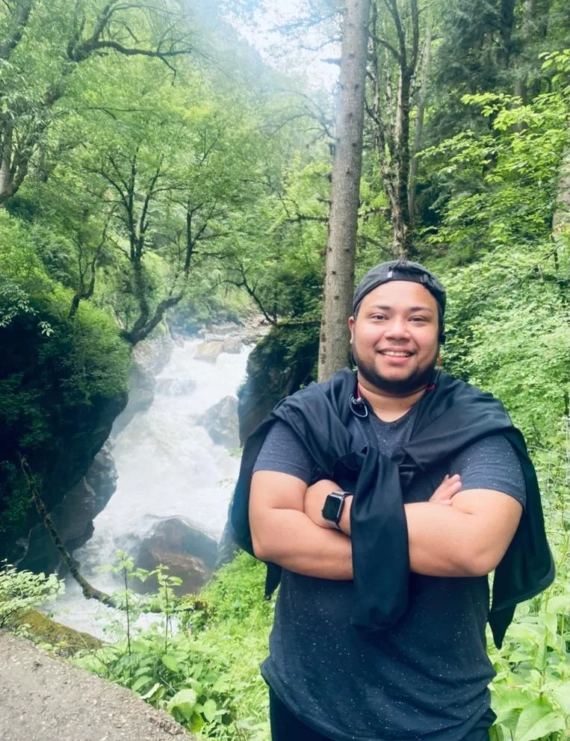
Dr Anmol Singh Rawat
Birthplace:
New Delhi
Residence:
New Delhi
Qualifications:
Postgraduation in Public Health
Inspiration:
Maternal grandmother, Laxmi Narayan Tripathi, Elon Musk
HEALTHCARE: THE WAY FORWARD
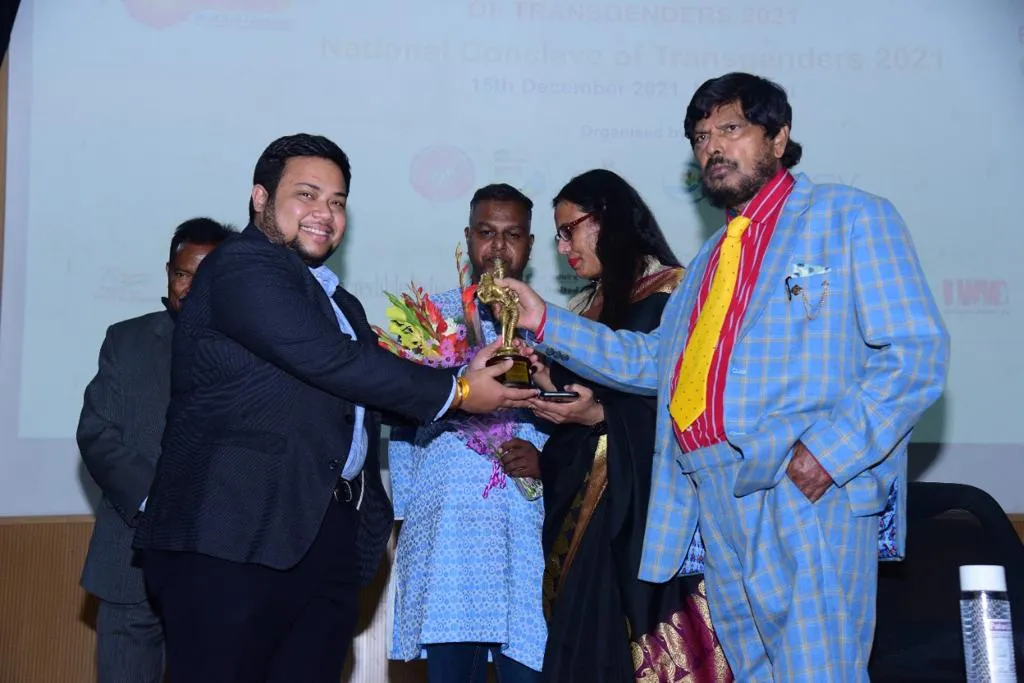
Public health specialist who has worked in the UK and India, Senior Manager for Project Echo, winner of the Pathbreaker award at the National Transgender Conclave, and Vice President for the National Network for Transgender Persons… He’s a lot more than just his profession!
A young man sat in despair on a bus in Glasgow, Scotland, fearing his future and uncertain if the world he was returning to the next day would be as accepting as his circle here. He was consumed by the sadness of a fairy tale coming to an end when he felt a tap on his shoulder. It was a woman he had never met before. She told him she had a message for him – from God. “God asks me to tell you not to be sad. You will find what you want from life in the place where you are going,” she told him.
It was a bizarre, overwhelming and oddly strengthening moment for him. “I was sad but I wasn’t crying. How did this woman know of my inner turmoil or that I was leaving? She said she would pray for me. Suddenly I felt more confident.” This episode was the beginning of Anmol’s work for India’s LGBTQ+ community.
Be a DJ, and chill
Some tend to understand their gender and sexuality over time after exploration. Anmol always knew he was a boy, the society didn’t. Born a girl, his parents had named him Samali. “Whenever my mother would dress me up as a girl, I would go stand under a tap just so that I could change into the clothes I liked. I loved being a boy.” Family support was vital in early struggles with mainstream society, his maternal grandmother, Kaushalya, being the biggest strength. “She was cool about it. My mother, although uncomfortable sometimes, always put her children before everything else.”
As a struggling and harassed teen who had come to hate school – he changed several – Anmol wanted to know more about himself. “I was around 12. Dial-in internet was a new phenomenon then and I would extensively research on the topic. Two things hit me. One, being a transgender was primarily linked to gender dysphoria. Second, I wasn’t alone but there also weren’t many transgender men of colour – the forums mostly only had whites.”
Growing up in Noida (Uttar Pradesh) till the age of 25, Anmol hadn’t met any member of the community, making him feel more alone too. Life took a turn during his years as a medic.
How he chose to be in medicine is itself an anecdote. His sister, Nupur, suggested that with ‘Dr.’ as his prefix, he would get the liberty to not accept titles of Mr., Ms. or Mrs. “I was chuffed by her out-of-the-box thinking. Till then, I wanted to be a DJ and chill because I felt that no one would question my identity in this field; it seemed a welcoming path.”
But his perceptions about the medical fraternity were about to be shattered. “Doctors are supposed to be above these norms but I experienced widespread transgender phobia.”
He decided this was not a good place to transition – the trauma would be too much. He moved to the UK in 2015 for a postgraduate degree in medicine. “It was like stepping into a different universe. I became a part of the university trans-collective on the second day of my arrival. I met people undergoing transition. I came to know that surgeries were free under the NHS. Life changed for the better and I decided that I would get SRS done here.”
Working with Stonewall, a Stockholm organisation for LGBTQ+ people, Anmol sensitised and trained medical professionals on treating community members.
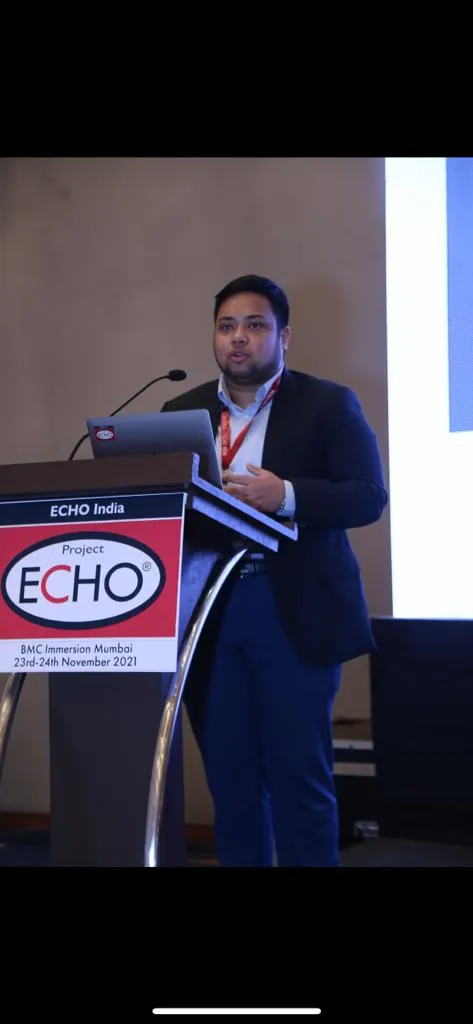
Upon his return to India in 2018, Anmol associated himself with Project Echo which helps build capacities of underserved communities and came in touch with Laxmi Narayan Tripathi. “She impacted me in a big way. She has been such a force for the Indian transgender community. I tell my friends in India and abroad – had these torchbearers not stood up for us, we would have been nowhere. I can’t thank her enough.”
Together, they are now focusing on making good healthcare accessible to community members. It wouldn’t be dramatic to say that the women’s prophecy on the Glasgow bus has come true.
Dr. Anmol has been deeply involved in pushing for legislation and policies to fill the lacunae in healthcare – the disparity between enacting laws and their implementation, especially at the grassroots. “Is it fair to charge even minutely for simple documentation when many in the community are poor, uneducated or unemployed?”
He has been actively advocating insurance coverage for hormone treatment and SRS, neither of which is a cosmetic procedure but a necessity for transgender people to feel comfortable and get accepted in mainstream society. “Many are committing suicide, dealing with pressure from home and society, don’t have jobs because they don’t have access to what can help them become more confident and work towards their life goals.”
Celebrations? For what?
Anmol wasn’t euphoric when Section 377 was repealed. He agrees that the community is more expressive now but wonders if policy-makers who introduced the changes internally accept them. Has violence against the community stopped? Are there rights parity? Is access to healthcare easy? The answer to these and many more such questions, unfortunately, is ‘no’, he says. “What are the celebrations for? A politician compared being asexual to bestiality. Such shocking, thoughtless comments do not support the movement and neither do they sensitise people to the community’s rights and struggles.”
“Many a time, definitions are listed using Wikipedia,” he rues and cites examples of how developed countries succeeded in blurring the lines between mainstream society and the LGBTQ+ community. “They included these discussions in the building of a student or an adolescent, which is why they are more adaptive and accepting. Let’s start with small steps like diversity and inclusion in education.”
It’s paradoxical, he says, to have to fight laws imposed by British rule when they themselves are a transgender friendly nation now. “Why can’t we abolish archaic laws?”
Anmol praises the Modi government’s measures but awaits more efforts from the bureaucracy and mainstream society as policy review, assessment and change are lacking.
He is glad that the National Council for Transgender People formed by the Ministry of Social Justice will consult the community on issues. “Community think-tanks are quite vocal and the government is listening to them.”
Organisations like INFOSEM and NNTP, he says, have strengthened the movement and called for a larger national body to address issues of smaller, community-based organisations for legislation, transformations, policies or facilities. “It is going to be a game-changer.”
VISION FOR THE TRANSGENDER COMMUNITY
Anmol hopes Indian educational institutions too will have student LGBTQ+ groups. “Society must allow every individual to grow. If you want the nation to grow, empower this community too, which has immense potential.” He envisions an India where parents understand; children are screened early to save them from conflict and trauma; healthcare is one call away; the community gets equal rights; and there is no need for government-issued identity. “We can’t hide anymore. Be bold and be out. Keep your head high. Don’t fall into negativity.”
He wants community representation in Parliament and policy consultation. Healthcare starts with training and sensitising doctors on treating transgender patients. Insurance should include SRS and hormone treatments can help medicals.
MESSAGE FOR THE MAINSTREAM SOCIETY
Harmony, he rightly says, brings out the best in every country while discrimination stunts growth. “We might need quotas but more than that we want equality, respect and acceptance. The community is an asset, and historically, an important part of India’s social fabric. Why are we undermined now?”
He is against corporates cashing in on gender inclusion and diversity initiatives and wishes that they treat the community with empathy. “There is immense talent, zeal, hard work and capability in the community but no access to jobs. I was lucky to get acceptance and education but many don’t.” Parents need to be friendly with their transgender child.
FIVE FACTS ABOUT ANMOL
His parents, Santosh and Puransingh, and Nupur are his strengths.
He loves to visit his father in Nainital, Uttarakhand.
He is a foodie and loves barbeque.
Leisure for him means chilling at home with his mother.
He finds gardening therapeutic.