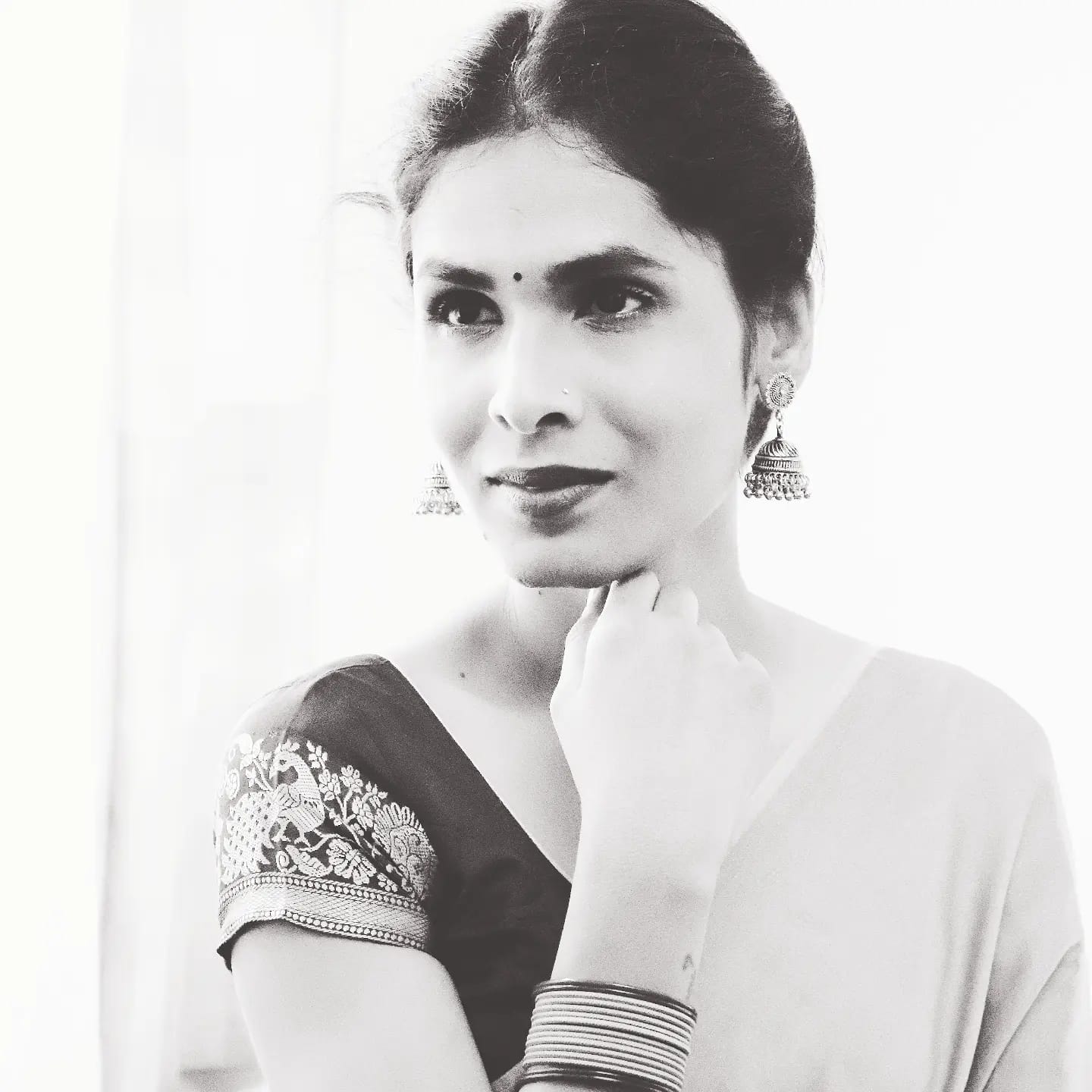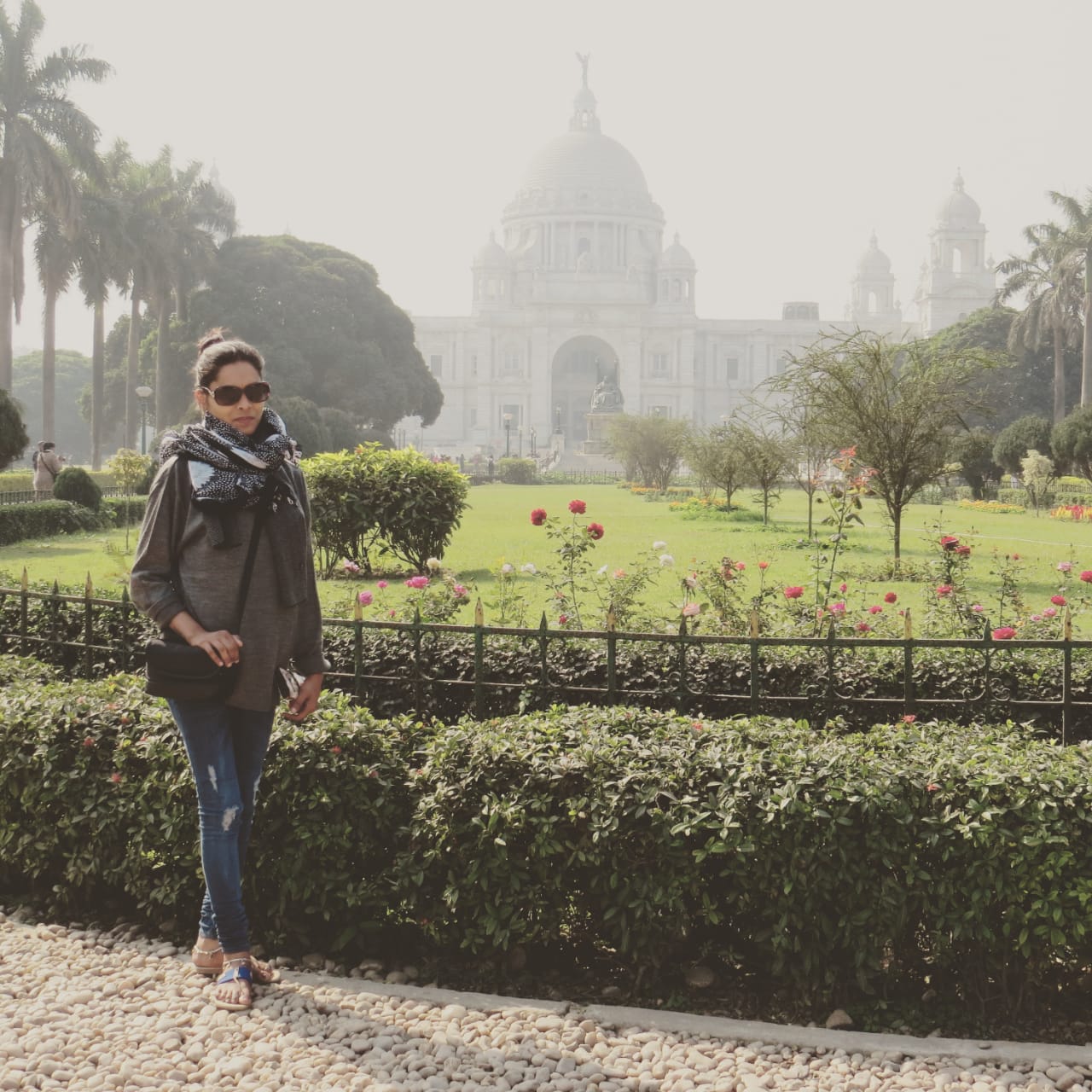
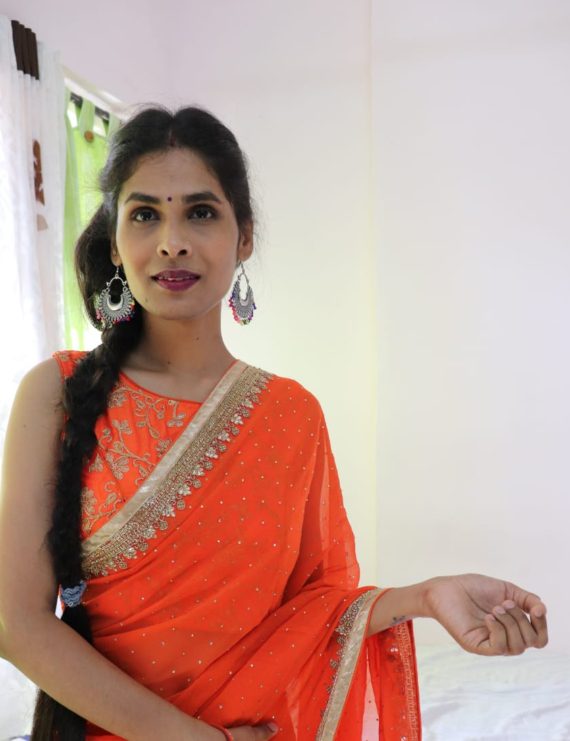
Gargi Dhoke Raut
Birthplace:
Nagpur, Maharashtra
Residence:
Nagpur, Maharashtra
Qualifications:
Diploma in Advance Dietetics Health and Nutrition
Inspiration:
Mother & her sister-like friends, Abhina Aher and Gazal Dhaliwal
LIVING HER NAME: FIERCE AND SCHOLARLY
She’s truly blessed to have a family like hers. It’s common knowledge how families shun their transgender children, often forcing them to fend for themselves, once they come out seeking to transform the bodies they suffocate from within and which they consider not their true gender. Yet, for Gargi Dhoke Raut, no such travails ever bogged her down as her parents never for a moment left her feeling unsupported, or unwanted. She went on to become a trailblazer in her own way.
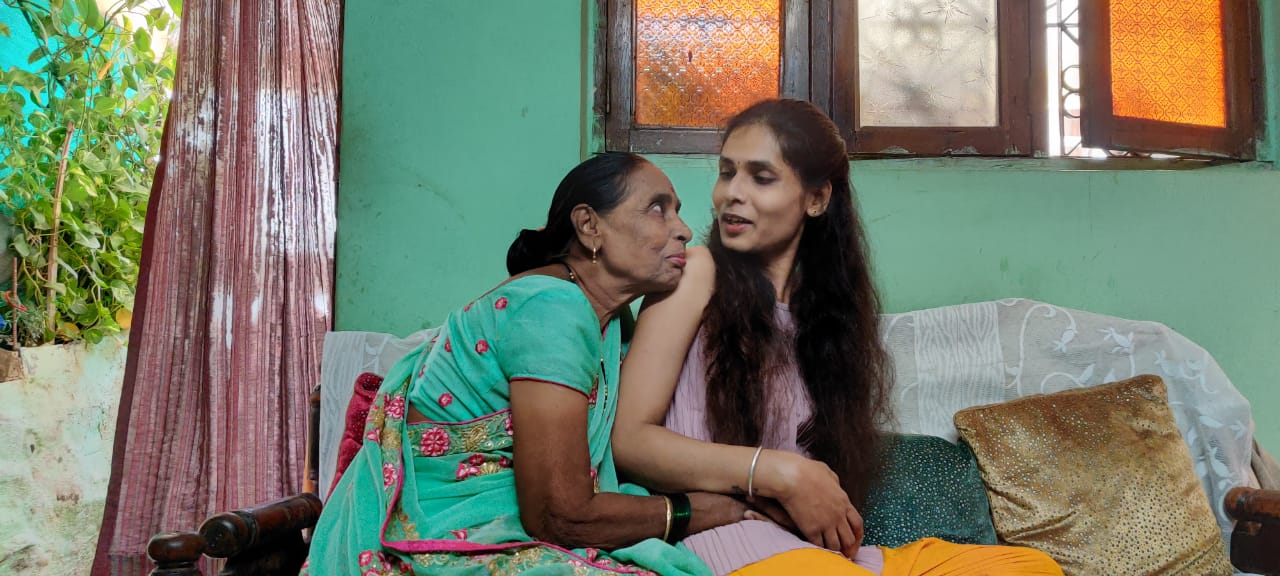
Families are the cocoons that facilitate a person’s catharsis. The protective environment of this cocoon is what makes the pupa turn itself into a beautiful butterfly. For Gargi Dhoke Raut, unlike most of those from the transgender community, her family has been that protective shell for her. Every member of the family has stood with her, helping her through her crises and setting a wonderful example of love and acceptance irrespective of individual choices.
This unflinching support from family has stood her in good stead as despite being denied a rightful chance by the education system, she has been able to make a mark as a para-medical professional and as an activist.
Gargi is not the name she was given at birth. It was Deep. For transgender people, the initial years are full of confusion and questions surrounding their gender. They feel trapped in their bodies. She never questioned her soul – she respected it and this protected her from her inner conflicts. Although being an effeminate male in a patriarchal society is not easy, external elements don’t matter when the familial ecosystem is supportive.
She had decided early on that there were certain things she needed to fix. “It was while pursuing Diploma in Electronic and Telecommunications from the Government College of Engineering in my city when I realised what I wanted to do with my body.”
After finishing college in 2007, she began working to save for her gender reassignment surgery. She started out as an Aircel BPO employee in Pune, working for the TATA group, and then moved to Hyderabad before returning to Nagpur. She started looking for the LGBTQIA+ community in the city and in 2009, became part of a community-based organisation (CBO) where she worked for four and a half years. It was during this tenure that she started transitioning.
Always a woman
“For me, the surgery was to formalise myself externally; I was always a woman within. But people refused to understand this, and I lost many good friends. While my peers were progressing with their careers, I was deprived of opportunities for higher education and professional growth because of my gender identification,” she says.
Gargi comes from a family that highly values education. “My mother, Kamal, and father, Krupashankar, were teachers. My elder sister, Bali, is a lawyer. The other is a professor while my brother, Ashish, is an MBA in Finance. I wanted to earn a degree in the medical field, but our education system had not evolved to accept transgender individuals into its fold,” she rues.
Her parents were aware of her gender preference, and recalling their support to their child, she says, “My father is the king of my world. Despite his mild reservations earlier, he never degraded or disrespected my choice. He is the only reason why no one has ever dared say a word to me. He ensured things remained easy for me.”
She came even closer to her mother and sisters after her Sex Reassignment Surgery (SRS). “They went way beyond their strength for me,” she says with a tenor of gratitude.
The sex reassignment surgeries are complex and life-changing procedures from which there is no going back. The first step to SRS is getting the mandatory gender dysphoria certification from psychiatrists and then looking for trusted endocrinologists.
“I was the first transwoman in my city to transition. I was first put on Hormone Replacement Therapy (HRT) and then had to travel to Mumbai for my surgery because the city has good doctors and better access to post-operative medical care,” she says.
Gargi’s transition was finally completed in 2013. “I am a decade-old woman now,” she says proudly.
When she met her role model
Looking back, she narrates how she met her role model, Gazal Dhaliwal, and how it was a defining moment in her life. In 2010, NDTV had hosted Gazal on its show, Salaam Zindagi. The noted Indian film script writer was talking about her transition.
“As I watched the show on TV, I connected with her journey and nurtured this wish to meet her someday.” And she got this chance in 2010 in Mumbai. She recalls that meeting: “I had for so long mugged up her poetry, Zindagi ko Salaam, for this meeting. I was so awestruck by her. ‘I am not Salman Khan,’ she quipped.”
She told Gazal, “Mera yahaan tak aana mushkil tha. Par ab aagey ka rasta accha hone wala hai (it was a difficult path up to here; the journey is now going to be smoother).” And of course, it did as Gargi has never looked back since.
While her stint with the Nagpur-based CBO empowered her, it also brought her face-to-face with the community’s challenges.
“Members struggle for their basic needs to be met and there is a general lack of awareness. I have seen children from educated families in situations they don’t deserve to be in.
“On the brighter side, the work gave me a chance to expand my boundaries and accept a lot about myself. Everything was new to me; I wasn’t even aware of the term ‘transgender’. I was expanding my boundaries and accepting a lot about myself.”
No time to stagnate
Gargi did not want to stagnate. “I wanted to grow as a professional. I deserved a good, comfortable life. My family background, my capabilities, and my ambitions mattered to me,” she iterates.
“Even though society crushed many of my chances, I am a successful dietician today. However, I live each day with the painful reminder of what I could not achieve because society wasn’t willing to give a transgender woman her due chance. I feel incomplete without my degrees,” she rues.
Gargi always wanted to be a medical practitioner. When other doors closed, she changed her course towards dietetics, mainly to help community members with proper diets during their transition. She completed a Diploma in Advance Dietetics Health and Nutrition from Mumbai.
“I am probably the country’s only transgender nutritionist. I am capable of, and experienced enough, to help with many ailments. But this fact will not be acknowledged because I only have a diploma certificate and not a degree,” she rues.
The government, she feels, needs to act swiftly to improve education avenues for the transgender community. “Give them employment opportunities too, but minus the humiliation. The transgender community are aware of their right to education, but they fear harassment and abuse in schools and colleges. It takes a lot of courage on their part to break through the barriers,” she points out.
The root cause of discrimination
Gargi says the root cause of discrimination in any form is the fear of competition. “We live in a male-dominated society where even cisgender women don’t have rights parity. Now imagine what happens when transgender people enter the fray. The competition certainly gets stiffer, which leads to fear, which in turn, raises its head in the form of discrimination. As a result, every oppressed segment starts to believe that they don’t deserve equality,” she notes.
Ignorance is preferred because awareness may empower a marginalised person to fight for his or her rights. “Society does not like someone, especially a transgender person, outperforming them or reaching goals they could not or may not have dreamt of.”
The transgender community has only a handful of leaders working for their rights and welfare. “We need more activists. Society takes time to shed its stereotypes of the transgender community dancing, clapping loudly, or begging. They don’t see us as people with respectable professions and people with family,” she laments.
Besides a loving family, Gargi is also fortunate to have the perfect man in her life. “Ours is a two-decade-old relationship.” Punu was her college mate. “But we hadn’t exchanged a word until he saw my social media posts after surgery. He left his well-paying job in South Africa to be with me. He is the man I look up to.”
VISION FOR THE TRANSGENDER COMMUNITY
Gargi wants to see transgender women having sustainable and successful lives, and be financially independent. “They deserve it. Modern India should shed the notion that a transwoman only begs, does sex work, or leads a marginalised life,” she asserts. “Many of us are super talented. We are willing to work hard. We deserve a chance; we don’t seek charity.” She also fervently hopes that transgender or same-sex couples get child adoption rights. “Currently the procedure is difficult even for single cisgender women, so one can imagine the problems transgender community faces. Maybe we are still not trusted as good parents.”
MESSAGE FOR THE MAINSTREAM SOCIETY
She wants society to rise above tokenism and truly step forward to accept the transgender community without fear or prejudice. “Learn to accept people the way they are – from your heart. Transwomen are not objects. Don’t kill their capabilities and dreams,” she urges.
FIVE FACTS ABOUT GARGI
She finds strength in family, husband, friends and her education.
She loves to cook and wishes to learn Kathak.
She is a beautiful guitarist.
She loves Lata Mangeshkar songs.
She loves trekking; she’s the only Maharashtrian transgender woman to reach the highest peak, Kalsubai.