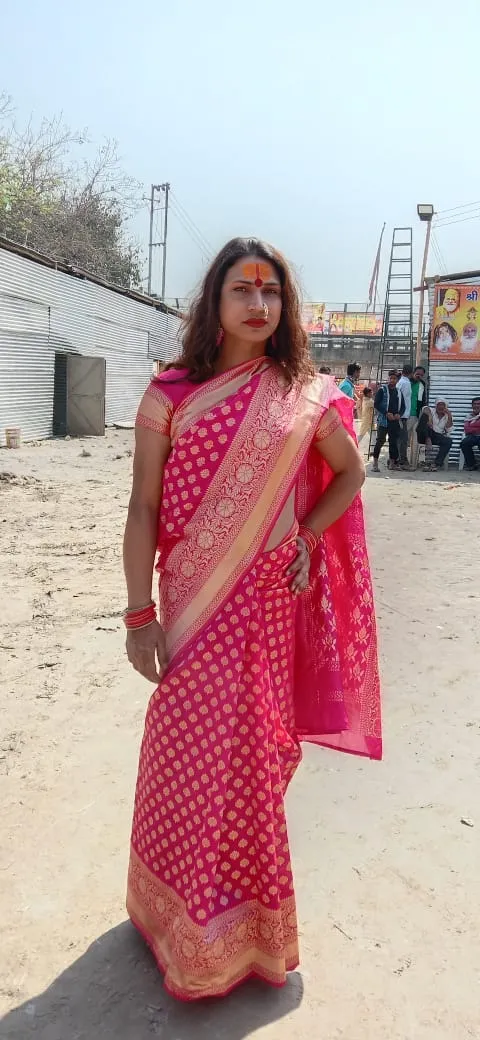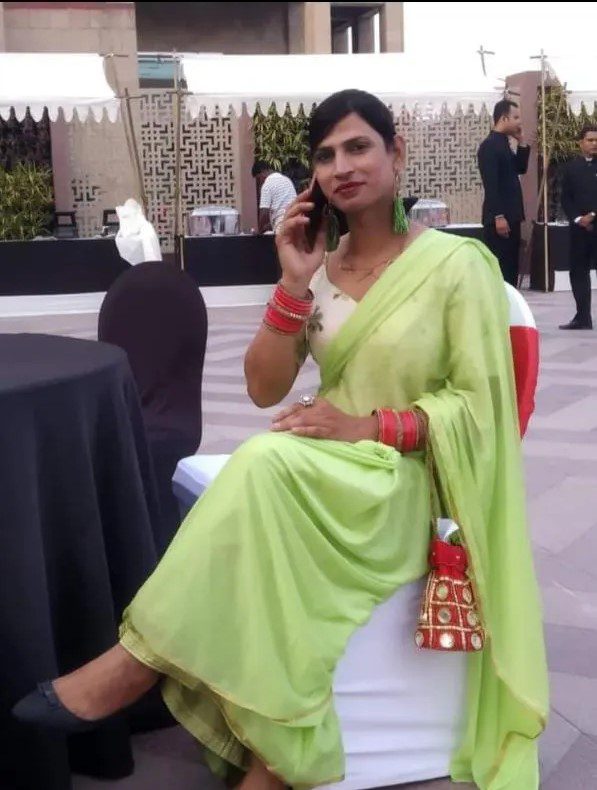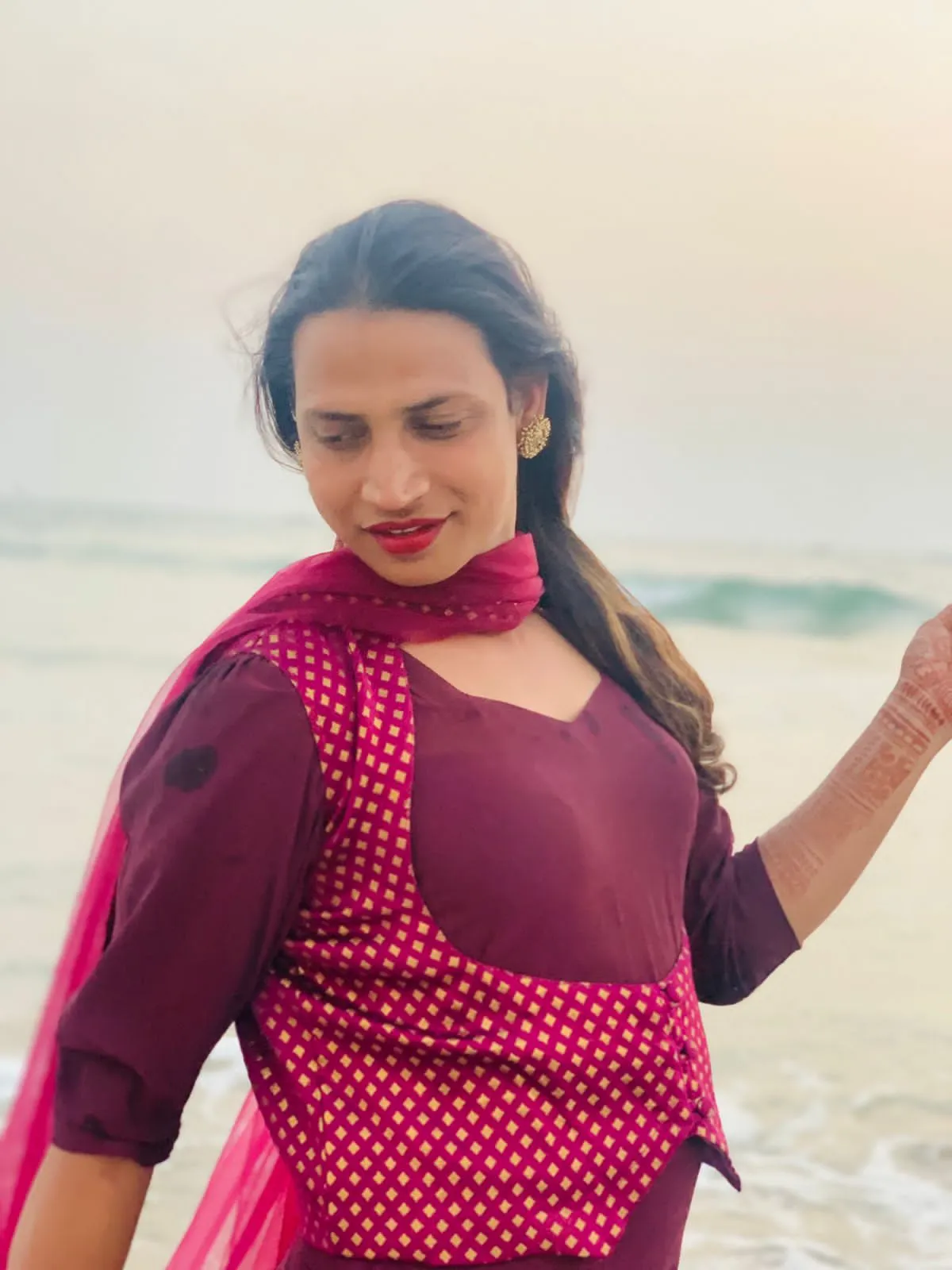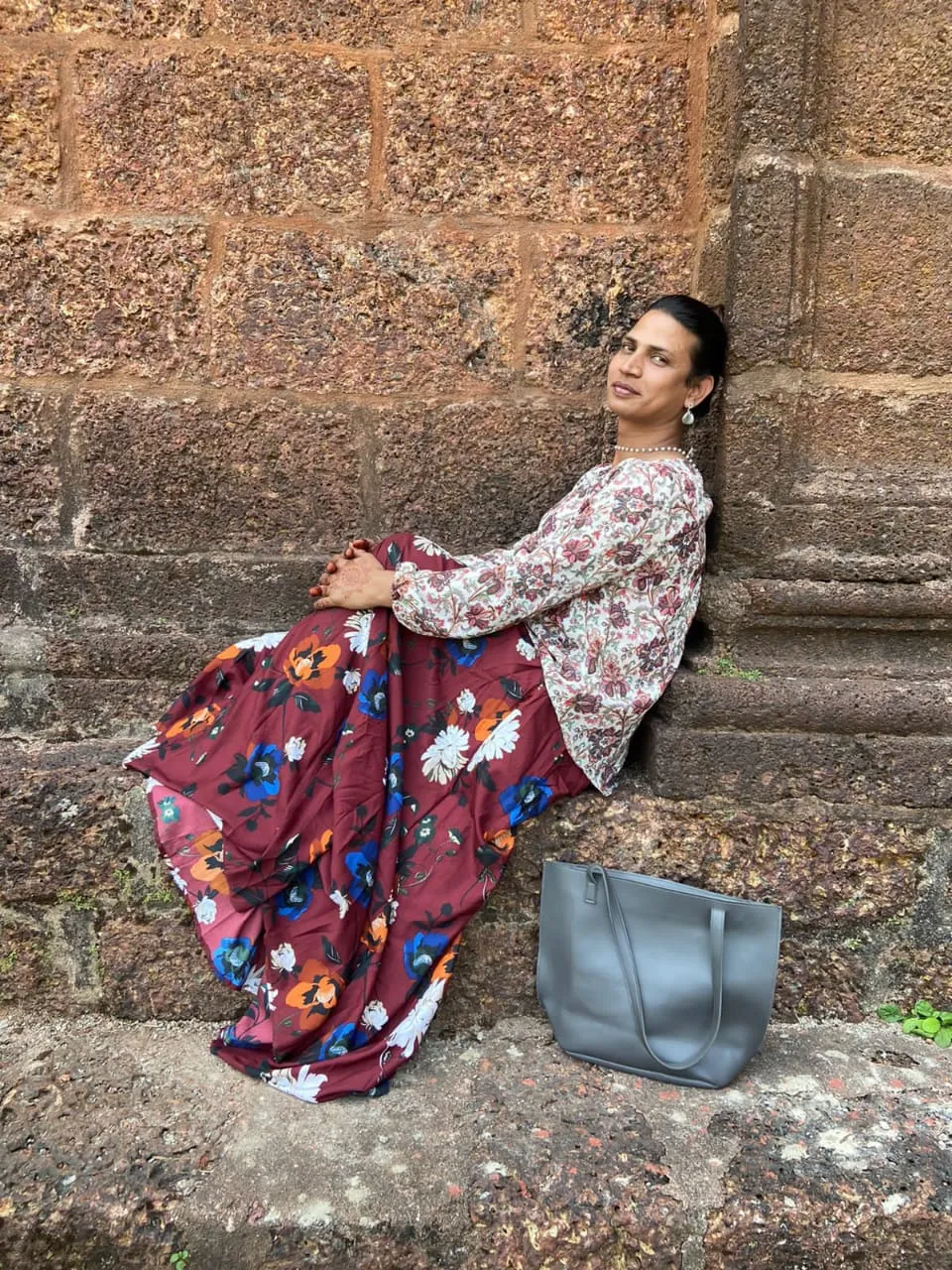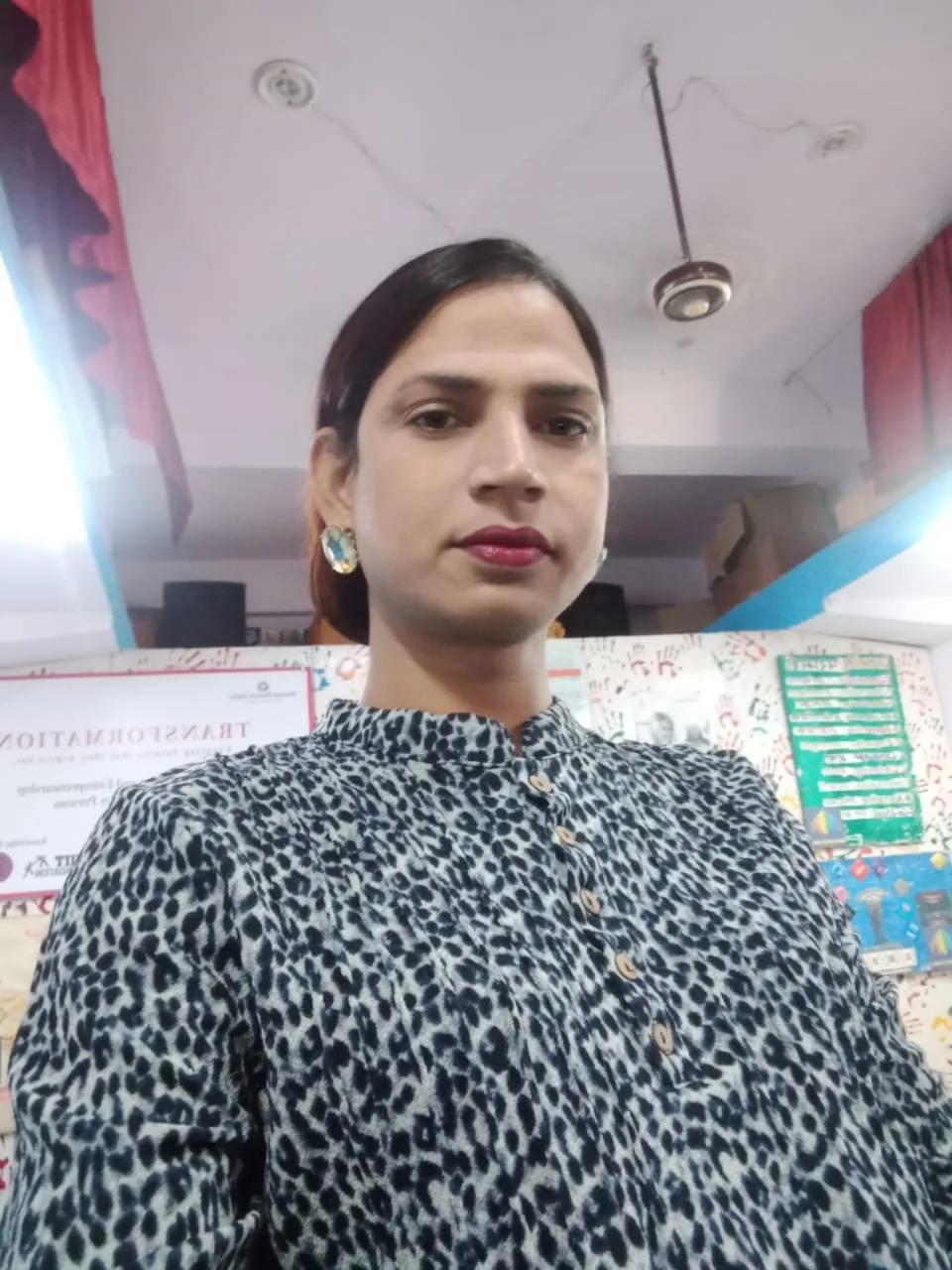
Ramkali
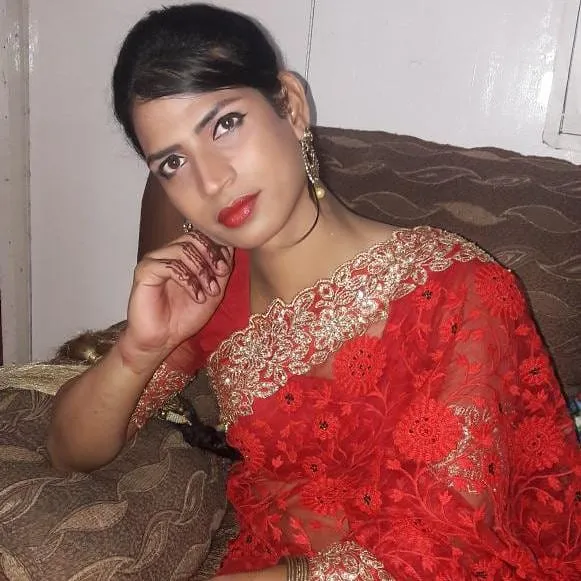
Birthplace:
Bijnor, Uttar Pradesh
Residence:
New Delhi
Qualification:
Madrasa-educated
Inspiration:
A close friend she doesn’t want to name
BEATING THE ODDS, ACCLAIMING HEIGHTS
She was helpless once, but now she helps others. She was considered a bad omen once, but she helps others find positivity now. She couldn’t complete her education, but she now helps many others to study. Life threw many challenges in her path but she always stood her ground and fought back. Basera, the NGO she founded, helps transgenders to obtain Aadhar cards, open bank accounts, and get medical help. One of its main tasks is to talk to them to help them with mental and emotional crises. It also helps them find jobs. She is an inspiration for society.
Born Rizwan Ansari, a male child, Ramkali remembers going to madrasa with her four sisters and two brothers, where girls and boys have to sit separately. She invariably went and sat with the girls. She loved to dress up as a girl with her mother’s dupatta, put on her slippers and braided her hair. This incensed people and they constantly complained to her family about her feminine mannerisms.
Subsequently, she was expelled from the madrasa. When she was 12, the village panchayat declared her a eunuch. “I didn’t know my gender until then, but the panchayat did. Now, when I think back, I wonder how biased they were – how quickly they judged with their limited understanding of human beings. My company could have been a bad influence on other children, they said,” she says, hurt write large on her countenance.
The hint of her winning streak
“I wasn’t allowed to study. Had I studied, I too would have had a regular job, and probably could have held a strong position,” she says.
Not just education, her family decided to take away from her the comfort of the family too. “Was it good? They were anyhow stressing me out telling me how I was a shame for them and it would have been better if I were not born.”
She was packed off to her elder sister’s place some 10km away from the home. Her sister, a young married woman, insisted that Ramkali stay with her and not go anywhere else. It wasn’t that life was easy there. Ramkali did all their farm work all the while she was there. “I lost a lot in those eight years; I had so badly wanted to go to school but all I ended up doing was hard work.”
Her sister’s mother-in-law constantly chided her saying “she was someone else’s responsibility”. Things became difficult for her sister too. When she gave birth to three daughters, her in-laws blamed Ramkali.
“I was considered a spectre. It was one of the toughest periods of my life. I often slept hungry, on the farms or even in the stable among the buffaloes. But I was determined to live and that is what kept me going.”
Breaking off the cage
Eight years later, Ramkali finally found a break. Her mother had moved to Delhi along with her brother and she took Ramkali with her. Call it providence, three months later, her sister gave birth to twin boys. “It gave them a chance to confirm what they had been saying all along,” she rues.
In Delhi, her mother forbade her from going anywhere fearing that other transgender people would whisk her away. However, it was here that she befriended another person, Pankaj, similar to her. Pankaj too has transitioned and her name is Paaro now.
When she was 18, the two started searching for jobs. Though they found various jobs, none lasted for more than a week. Almost everyone teased them because of their girl-like mannerisms – many even termed them hijra. All this made them wonder if they were different. They were yet to fathom who exactly they were.
During this period, unfortunately, there arose a dire financial situation. Pradeep, a close friend, helped them out with some flour and vegetables. She was already into sex work and influenced Ramkali too into it.
“I didn’t know about sex work, though I was attracted to boys and even had a small affair in my village. But here we were in dire straits. As we were new in the city, nobody would lend us money. My first earning was Rs. 15. I bought some rotis and vegetables and we ate well. From then on, I was a regular sex worker. I was only 18 at the time.”
She despised sex work and was always looking for a respectable job and soon found one as a peer educator in Sosua, an NGO that supported and counselled sex workers, MSM, and HIV-positive people, among others. However, she couldn’t free herself from sex work and came back to it three months later.
Yet, the NGO gave her a cheque of Rs. 45 – it pleased her mother no end. She told her mother that as a peer educator, she would be entitled to Rs. 1,500. “My mother told me that for people like us living in poverty, Rs 1,500 is akin to Rs 15,000. I’d thus be free of sex work as well.” It was the year 1998.
The way upwards
But it wasn’t to be. “It’s difficult once you are into it. It’s like a swamp – it keeps pulling you in.” She spent some three years with the kinner community of Kanpur, visiting families to bless new couples and newborn babies and seek alms.
“I was anyhow suffering – either doing such menial things or with family. Wasn’t it better to suffer with family? I returned. My family told me I was free to live as per my will. Only my mother had a demand – I shouldn’t beg or clap.”
Ramkali returned to Sosua as a peer educator. She graduated as a counsellor and then started her own NGO – the Basera Samajik Sansthan in Noida.
“I now work for my sisters, for their health, their rights, and I do it to help my sisters with whatever problems they are going through. The idea, says Ramkali, is to sensitize people about transgenders and to get them regular mainstream jobs.”
While her mother always supported her, Ramkali says she will always be grateful to Pradeep, a friend she made during an outreach programme. “All that I am today and the organisation I have floated are thanks to him.” He convinced her to get some education. “He said to me, ‘Help yourself first to help others.’”
Basera now helps transgenders to obtain Aadhar cards, open bank accounts, and get medical help. One of its main tasks is to talk to them to help them with mental and emotional crises. It also helps them find jobs in Delhi.
Ramkali feels that government support needs to be enhanced multifold. “They should bring out TV advertisements, to begin with. Even if one out of 10 people is made aware, it will be an achievement – the rest will follow suit.”
VISION FOR THE TRANSGENDER COMMUNITY
Sensitising people, she says, is one of the most important issues. “Human rights are for everyone and so it should be for us too. We should be treated like every other normal human being. Bills and legislation won’t help until the society doesn’t accept us.” Transgenders must find regular jobs as this will help people adopt a normal attitude towards them. Every qualified person, irrespective of gender, should be offered jobs. “Awareness should start at the school level with at least a chapter on trans people included in the curriculum.”
MESSAGE FOR THE MAINSTREAM SOCIETY
All that she looks forward to is being treated as an equal human being with rights and duties like every citizen of India. “It will bring us equal job opportunities, which in turn will fetch us equal respect.” Mainstream society should accept trans children. “Imagine a child who doesn’t even know the concept of genders is thrown out because of their gender. It’s very upsetting, for the child and everyone who watches. It’s inhumane and disheartening,” says Ramkali, adding: “My mother always tells me that I am not only her son but also a daughter.”
FIVE FACTS ABOUT RAMKALI
Her strength lies in her mother and friend, Majid.
She ensured working out every day.
She simply loves to watch TV serials.
She is a hard taskmaster.
She is in total love with biryani.