Salma Umar Khan Shakarkar
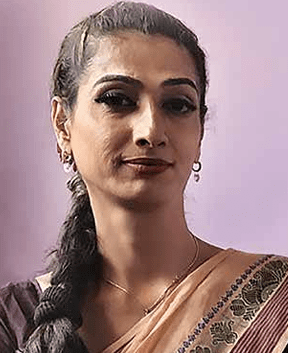
Birthplace:
Mahad, Maharashtra
Residence:
Mumbai, Maharashtra
Qualification:
M.A. (Social Work), Tata Institute of Social Sciences, Mumbai, Maharashtra
Inspiration:
Guru Aruna Nayak
WITH A QUEST FOR UNBIASED EDUCATION
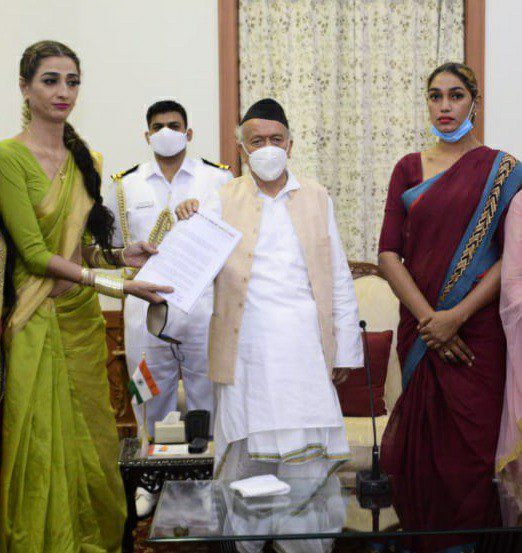
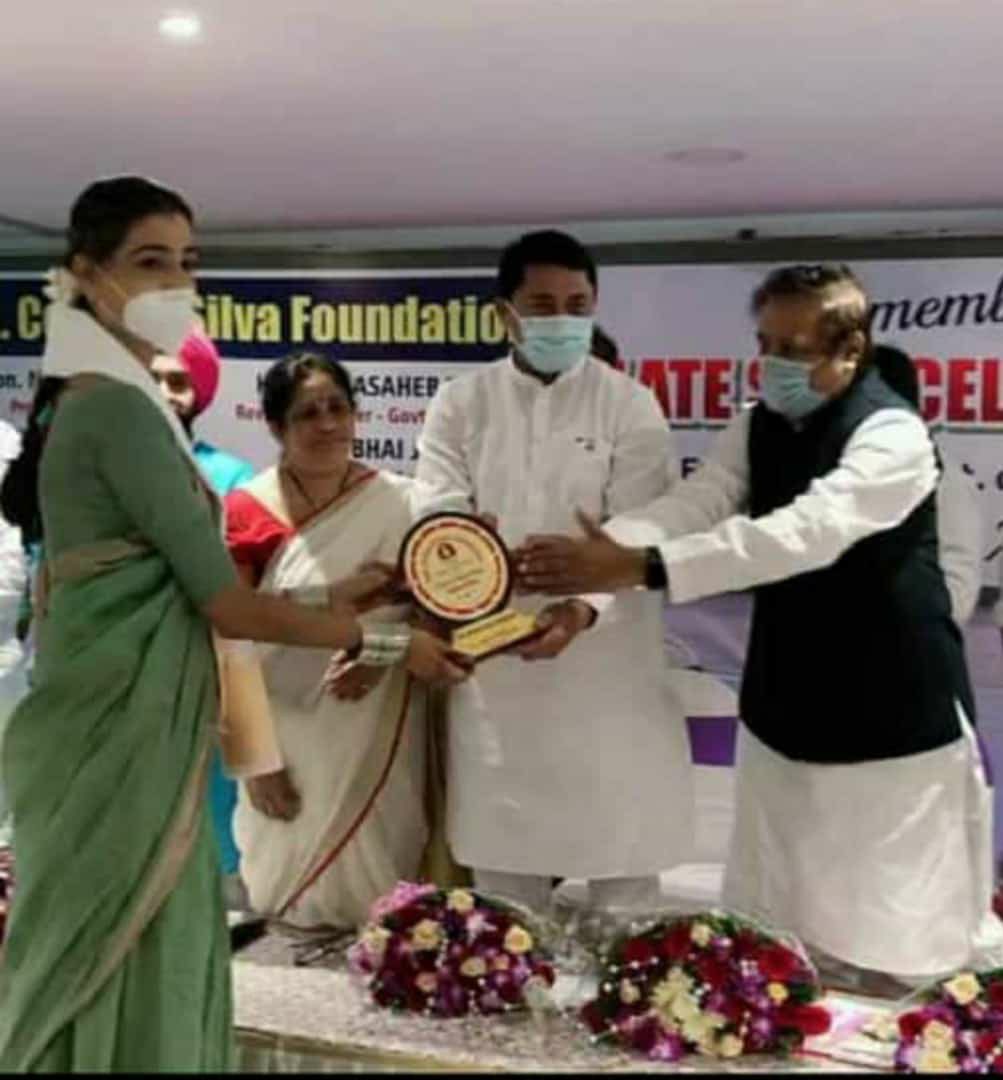
Founding President of Kinnar Maa Trust, one of the first two transgender people appointed as Maharashtra Pradesh Congress Committee (MPCC) Secretaries, Vice-President of Maharashtra State Transgender Welfare Board; winner of Legend Dadasaheb Phalke Award for Social Work (2020), Ahilya Bai Holkar Award, Jeevan Gaurav Award.
When the COVID-19 lockdown was implemented in 2020, several lives were disrupted: Many were left without work and at the mercy of charity doers. But the guidelines needed the charity doers to maintain a distance. Police were strict about allowing people. All of it hit the most vulnerable and unprotected populations the hardest. Food, healthcare and other services had become harder to come by.
While entire India came to know of Sonu Sood’s large-heartedness, there were many others who went rather unheard of. One was Salma. Her trust, Kinner Maa: Ek Samajik Sanstha, and she distributed 80,000 ration kits to people in distress across Mumbai and its suburbs. “In difficult times, people should support each other without much ado,” she says. She has championed transgender rights for the last 25 years. Besides activating its network of 5,000 people, the Sanstha coordinated with various other organisations to distribute aid. “The pandemic was a challenge – the aftermath of the pandemic, the lockdown, the virus itself – everything about it was deadly. And also an experience, a lesson to humans to stop fighting the creation of nature. And that brings me to say, transgender people too are a creation of nature! You see the scope of holistic work!”
She believes such selfless and inclusive service will gradually mitigate transphobia in society. “The fight for transgender equality must include everyone standing against hate.”
The beginning
In 1980, a couple couldn’t hide their happiness as they welcomed a baby boy. A year later, they moved to Mumbai where the man took the job as a Regional Transport Officer and his wife managed their home and her business. Youngest of four siblings, the child was always gleeful around girls. “As I grew up, boys in school and neighbourhood started ridiculing me. My siblings too would laugh at me. Ultimately, my family, except for my mother, disowned me.” At 14 years of age, she was put on the road; the clothes she was wearing were her only belongings. “People called me a hijra. So now that I was on my own, I knew where to head to. I started living with the transgender community,” she says.
She found support from nuns and other NGOs, which helped her pursue higher studies. She did well in academics and graduated in Social Work from the Tata Institute and a postgraduated from the Indian Institute of Technology, Mumbai. Keen on social work since childhood, she followed her passion despite personal challenges and started working for the betterment of the community from 1986 onwards as a school-going child. Salma worked for several organisations, including Gravittus and Humsafar Trust. This was also the time when the central and state government had begun their war against HIV/AIDS and the transgender community was found at risk the most. In 1996, she was among three transgender staff who worked at Blackstone Marketing on a mapping and size-estimation study of the transgender community in Maharashtra. She also counselled transgender people on HIV prevention and care at Sion Hospital. She then took another postgraduate degree from the prestigious Tata Institute of Social Sciences in 1999.
Kinnar Maa Trust, established in 2014, advocates for the welfare of the transgender community, their education, medical support, skill development, capacity building and social recognition. It has a network of more than 5,000 people across Maharashtra. In 2016, as a part of Swachh Bharat Mission, they built 7,500 toilets in 1,100 villages in the Palghar district. Salma’s Trust has helped many children who dropped out of school prematurely after severing ties with their families and lack a support network. Many are keen to finish their education, often aborted during their teen years.
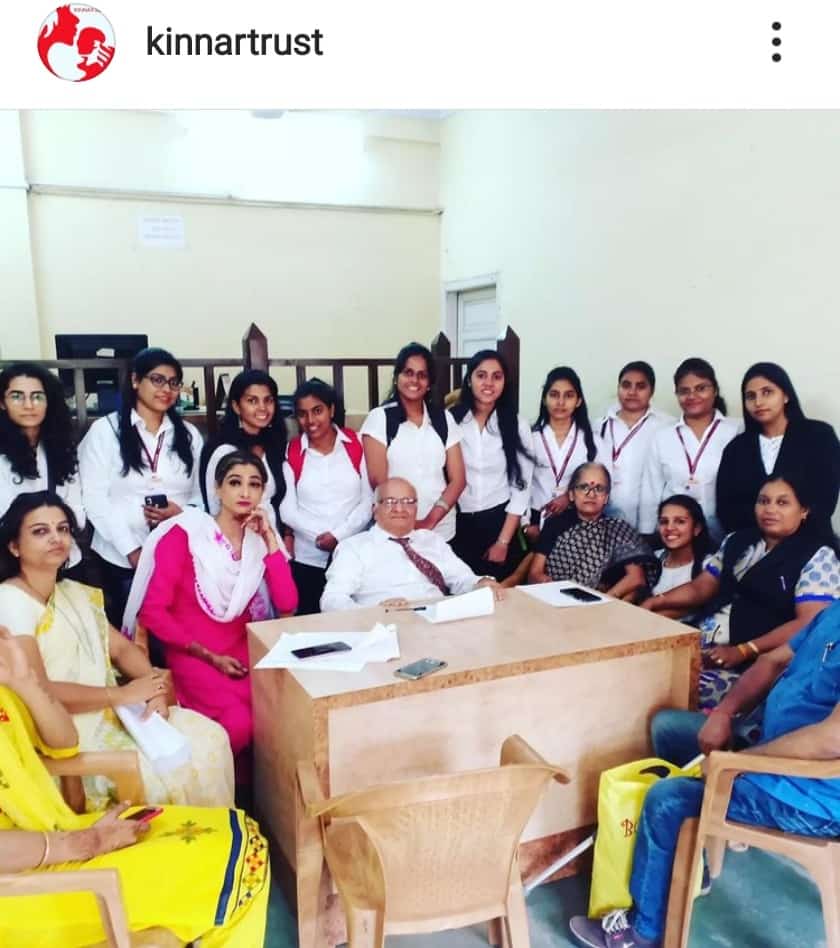
Having suffered humiliation numerous times, Salma took up the issue of transgender people’s access to public toilets. The Trust runs a campaign on the radio programme Loo Ki Karlo Baat for gender-neutral public toilets and to raise awareness about gender sensitivity. She has worked as a consultant for the Water Supply and Sanitation Collaborative Council, the state agency in Mumbai on sanitation and hygiene for the transgender community. In 2018, Salma co-presented a paper ‘Transgender-inclusive sanitation: Insights from South Asia’ in collaboration with the council. The same year, she became the first transgender person appointed as a panel member of Mumbai’s Lok Adalat.
Pride of the nation
Salma’s been through a lot – from an outcast to a social worker to where she is today. Friends and relatives, who once shunned her, are now proud of her work. Her mother supported her and helped her pursue higher studies. “She stood by me all along. Nuns and various organisations supported me. I’m very grateful to them all. My guru, Aruna Nayak, has been my support, my inspiration, my guide. The hardest thing about being a transgender woman is to continue. I’ve fought my whole life against an unfair society that believes we are sick.”
Though the result came in slow, she is very hopeful with the NALSA judgement in 2014 as she talks of the job opportunities and the legal and constitutional protection the government provides. “Without the right media coverage, this wasn’t possible. The youth is a lot more awake because of the media. Hopefully, it will act as a catalyst to assimilate the transgender community into society. However, it still is not our time to stop; in fact, now is the time to run with all the more energy!”
For the longest time, Salma has been rather upset with the way the government found time to listen and work on their shelter requirements. “Well, that was in past. Though I still press the state government to provide homes for aged transgender people, with health support and safety, there are some welcome visible changes. I hope for more.”
“Lack of medical facilities, insurance and pension fund, alcohol and drug abuse, marriage and child adoption issues,” she says, “in the community need some intervention from the policy-makers.” She does not want to rest on the success of her advocacy. She is not celebrating how far the movement has come but examining how far it must go. “The community should be treated with the same dignity and respect as anyone else.”
She has reservations about the statutory provisions of the Transgender Persons (Protection of Rights) Act the Parliament passed in 2019, which “prohibits discrimination against transgender people, but it violates the NALSA judgment on various fronts”. According to her, the Act fails to provide reservations in admissions to educational institutions and public appointments by treating the transgender community as a socially and educationally backward class, which ultimately leads to anxiety, depression and thus suicides.
VISION FOR THE TRANSGENDER COMMUNITY
“Value and acceptance – the only things we should seek. Society doesn’t value us and so fails to accept us. So, to be accepted, do something that people value you, acceptance will follow and so will respect and love. The change that we seek is at an extremely large level and so, it will come gradually. Till then, hold your breath, do things that small changes are visible, celebrate small changes and continue.” If one person continues, the others get encouraged too and it becomes a vicious circle – the reason they can’t lose heart now, she believes.
MESSAGE FOR THE MAINSTREAM SOCIETY
“Not my entire family but only my mother supported me and that was enough. Show a person one ray of hope and see the wonderful effects – that’s how support works. Families should accept each child regardless of their gender identity. No tantriks, no medication are cure enough like love. The first institution, the first school, the first society of life is family. If the family accepts, society will gradually come around.” She also looks forward to ‘non-discriminatory’ education for everyone. “Many transgender kids drop out, parents disallow schooling to their transgender kids, all for the fear of harassment and discrimination by teachers, students and neighbours. The forced uniforms, the lack of washrooms, etc., add to the pressure.
FIVE FACTS ABOUT SALMA
Her favourite thing to have is fish.
Her favourite actress is the ever-charming Rekha.
Her favourite thing to pass her time is cooking.
Her identity as an Indian makes her the happiest.
Despite two postgraduate degrees, she still wants to study Law.