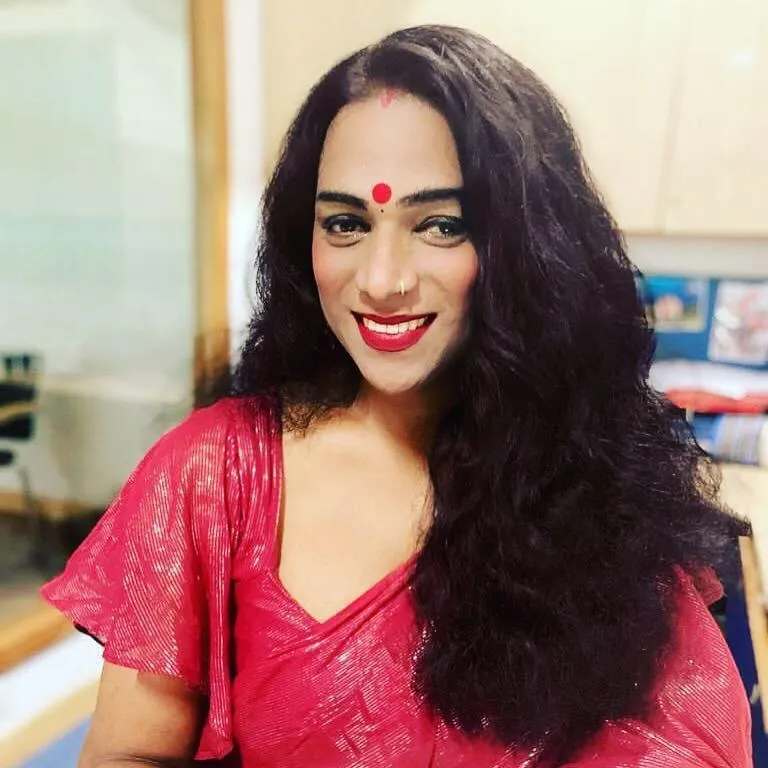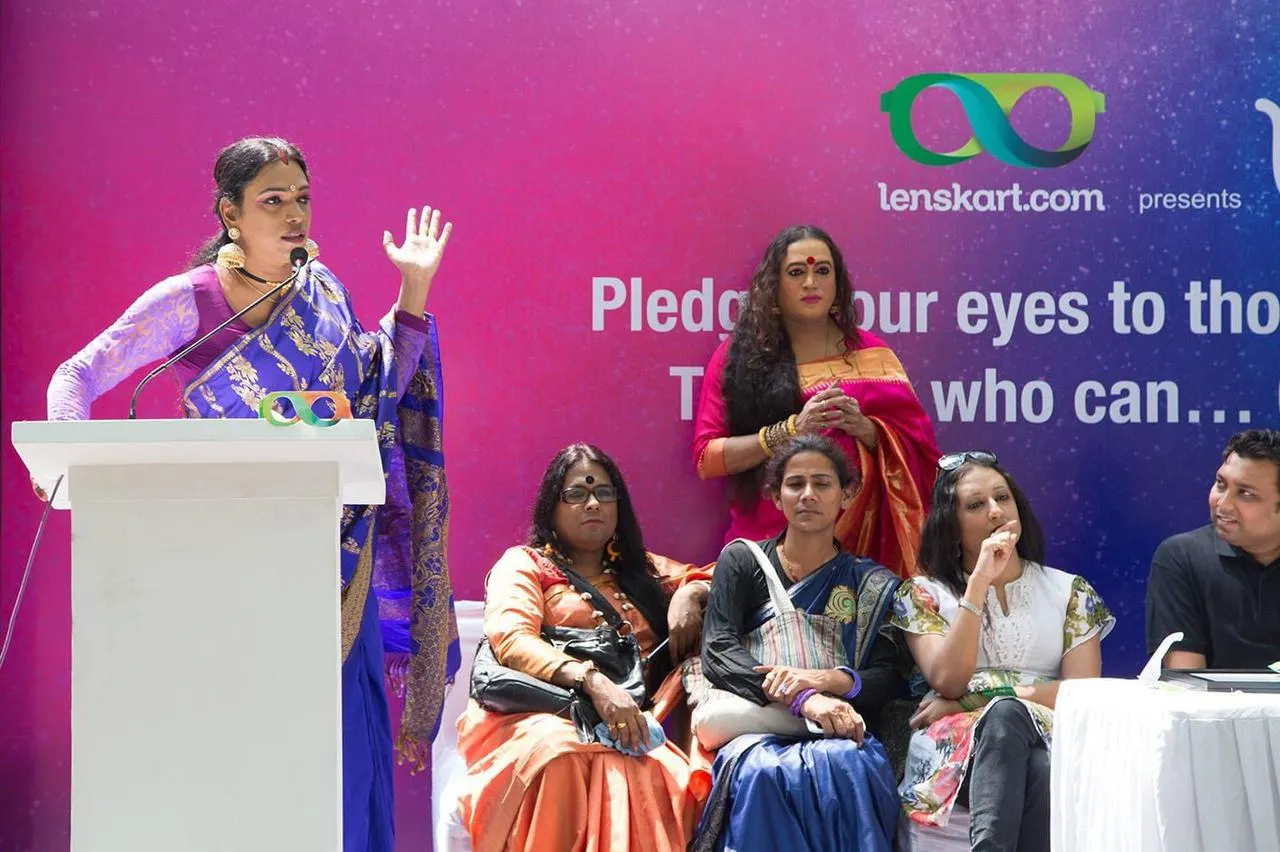
Abhina Aher
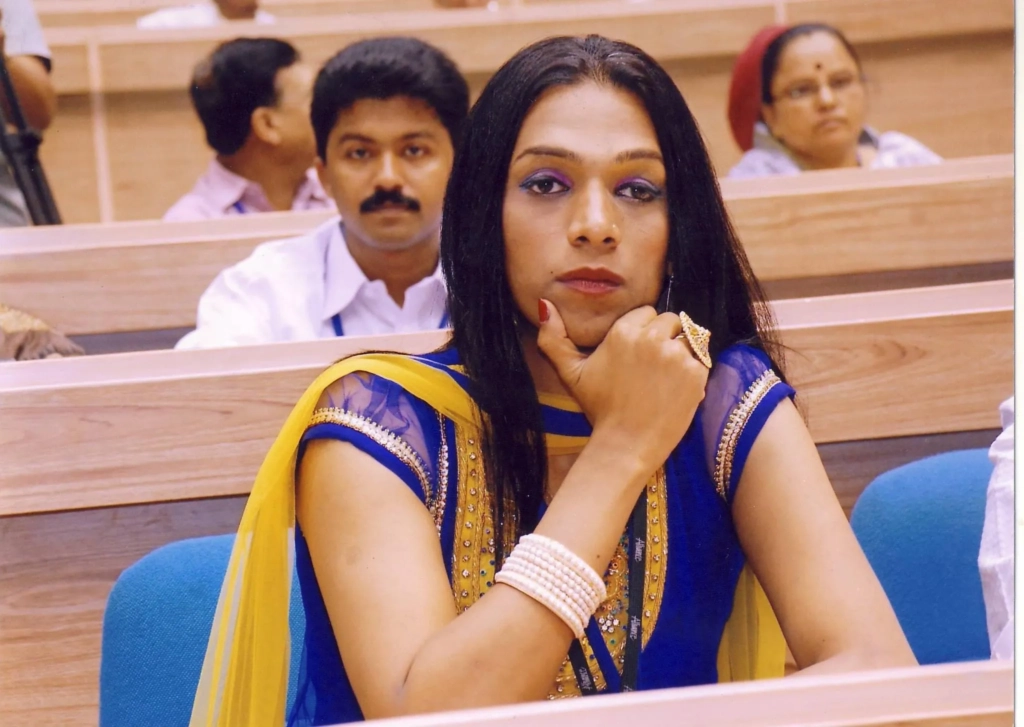
Birthplace:
Mumbai, Maharashtra
Residence:
Delhi
Qualification:
Postgraduate Diploma in NGO Management, Diploma in Software Programming
Inspiration:
Mother Mangala Devi, Laxmi Narayan Tripathi, Ashok Row Kavi
FEARLESS AND AT THE FOREFRONT
She is among India’s front-running transgender activists. A technical expert with I-TECH India, she has been associated with the World Health Organisation, National AIDS Control Organisation, Joint United Nations Programme on HIV/AIDS (UNAIDS), International Planned Parenthood Federation, International Trans Fund, Asia Pacific Transgender Network and International Reference Group of Transgender Women working on HIV/AIDS globally.
Abuse, stigma, breakdowns, suicide attempts, struggle with livelihood. Leading the national movement for LGBTQIA community, representing India at global forums, raising a child and working for the community’s civil rights. These lines showcase two sides of her life – a story of inspiration.
Born on 19 September 1977 in a middle-class family in Mumbai’s Worli suburb, she faced more than her fair share of difficulties and internal conflicts. She lost her father to brain haemorrhage – she was just three at that time. She was raised by her mother, Mangala Devi Aher, who became her inspiration, her Maa Durga. “Her conviction, strength and fearlessness inspired me. She fought against her family to marry my father. She raised me alone after his death, supported by nothing but a government job.”
Inner quest
Abhina’s quest for her true identity began when she began cross-dressing at the age of seven. Although she was being raised as a boy, she liked dolls, sarees and make-up. It wasn’t until puberty that she could recognise her conflict.
“Society doesn’t demand anything from a child in terms of body, behaviour, gender norms, thoughts and conduct until it reaches puberty. I was not comfortable with my male body; I wanted a female body. It was then I realised that I was born in the wrong body.”
The ensuing years weren’t easy, especially in school where she was bullied, beaten, harassed and called names. The other challenge was having to use gender binary washrooms – she would often wait until classes began as then there would be no one to harass her.
“It was a strange time – I was confused, had no friends, no support from teachers and everyone thought I was a psycho. My mother too didn’t know I was transgender for a long time. Also, I didn’t want to burden her further, so I never shared whatever I faced. It all was very tough.”
Society blamed her preferences on the absence of a father and her mother’s job. So, her mother remarried. Having to live with a man whom she could not connect with added to her struggles with herself. Wracked by despair and humiliation, she attempted suicide three times.
A long road ahead
One day, Abhina expressed her desire to speak to a hijra she saw begging on the streets. Her mother’s reply that they were child snatchers exposed society’s general misconception. “It jolted me. Gradually, I realised education and moving to a liberal, gender-inclusive country would be my only saviour.” She earned a diploma in software engineering. But again, to stay focused on her goal, she had to hide her identity. “I hid my long hair under a cap and dressed like men to save myself from abuse, disrespect and trauma. I played sports like cricket, volleyball and basketball just to prove to society that I was like any other man.”
Jeering, abuse, harassment continued even at the institute she taught in. Abhina quit that job at 20, an age when careers for mainstream people begin.
Meeting Ashok Row Kavi, the pioneer of the LGBTQ+ revolution, was another turning point. “When I told him I felt unnatural, he replied, ‘Everything that Nature creates is natural’.”
This was her first step into the community and towards understanding its larger issues. She met the most amazing people and torchbearers. Here, she got the chance of being who she really was, without fear or inhibition and worked for the organisation for eight long years. She was active in the forming of Integrated Network for Sexual Minorities (INFOSEM). During these years, she had transitioned and sported long hair, wore what she liked – without societal pressure.
She began focussing on professional growth but no company was willing to recruit her. “I wanted to contribute my skills but they were more focused on making me follow their gender norms.” She had to resort to being a commercial sex worker to get by, to pay for her treatment or her healthcare. “My education and experience were wasted.”
Better things were in store.
Abhina became a respondent in research by Johns Hopkins School of Public Health on HIV/AIDS among high-risk groups, and was later absorbed into the programme by its head, Sanjanthi Velu. This exposed her to global LGBTQ+ advocacy groups and platforms.
On the family front, her mother had stopped communicating with her. “We didn’t talk for nearly six years despite living under the same roof. I must have been around 29, when one day I told her that this is who I am and this is how I want to live my life.”
No looking back
“I had formed Dancing Queen, India’s first transgender-led dance troupe, to use dance as an advocacy and awareness tool, sensitise people on gender and sexuality issues and raise funds for transgenders. I had learnt this art from my mother and when she joined the group, my life came a full circle.” Mangala Devi too is now a part of Sweekar: The Rainbow Parents, a support group for parents of LGBTQ+ community members.
Abhina moved to Delhi in 2010 and became the first transgender national manager of India HIV/AIDS Alliance, handling over 200 organisations at a time. She began attending global conferences and was made the Chair of Asia-Pacific Transgender Network in 2011 and member of the International Trans Fund Steering Committee. In 2013, she started Transgender Welfare Equity and Empowerment Trust (TWEET) Foundation.
She feels organisations like INFOSEM and NNTP have given the community young leadership.
Government and judicial support
The 2014 NALSA judgement by the Supreme Court added to the movement. She calls it a breakthrough. The scrapping of Section 377 of the IPC was another liberating moment.
Policies don’t change mindset, she underscores. In fact, hate crimes against transgender community increased after Section 377 was scrapped. “But the community is stronger now, led by younger revolutionaries. The movement will go on.”
She continues working for more gender supportive policies, stronger laws on rape, political representation, parity, rights to adopt children or marry, health, mental and social welfare. Abhina advocates equity and government reservation, be it in public offices, hospitals or the armed forces.
“Employment and financial independence are the only way forward. We are happy to see initiatives like the Transgender Persons (Protection of Rights) Act, 2019, Garima Greh, online portal for gender certification and SMILE, a virtual hub where registered trans-people will be able to avail healthcare and other support… thanks to the Modi government and the Ministry of Social Justice and Empowerment.”
VISION FOR THE TRANSGENDER COMMUNITY
Mainstreaming, inclusion and rights – these three words articulate Abhina’s vision. She wants to see transgenders hold India’s highest offices like the president’s or the prime minister’s.
India should have a top-quality public facility for gender affirmation services because the main challenge for transgenders is gender transition, which entails complicated and expensive surgeries.
She feels the government also needs to preserve socio-ethnic transgender groups because they form an alternative support system for those who don’t have their families behind them.
MESSAGE FOR THE MAINSTREAM SOCIETY
“Enough is enough. Not talking about inclusion won’t stop transgenders from getting their rights. Come what may, tomorrow belongs to the transgenders.”
While emphasising that the mainstream society needs time to accept the community, Abhina says that transgenders do not want charity, but empathy and due rights. Society needs to break misconceptions that transgenders cannot be good parents, that they are paedophiles or incapable of contributing towards organisational or social growth.
FIVE FACTS ABOUT ABHINA
Her passion for dance comes from her mother.
She was named Abhijit at birth after the lead character in Bollywood’s Jal Bin Machhli, Nritya Bin Bijli.
She has raised a child like her own. The child too knows her as her mother. “What more can I ask for? What more should I prove?”
She loves dressing up.
She has eight dogs. “I can live without a man but not without a dog.”