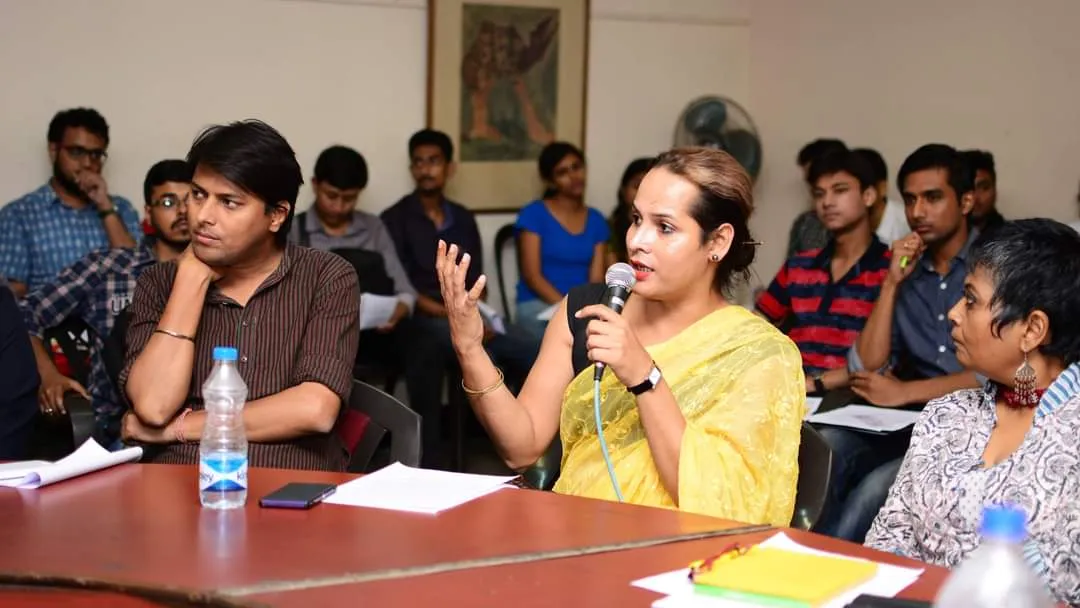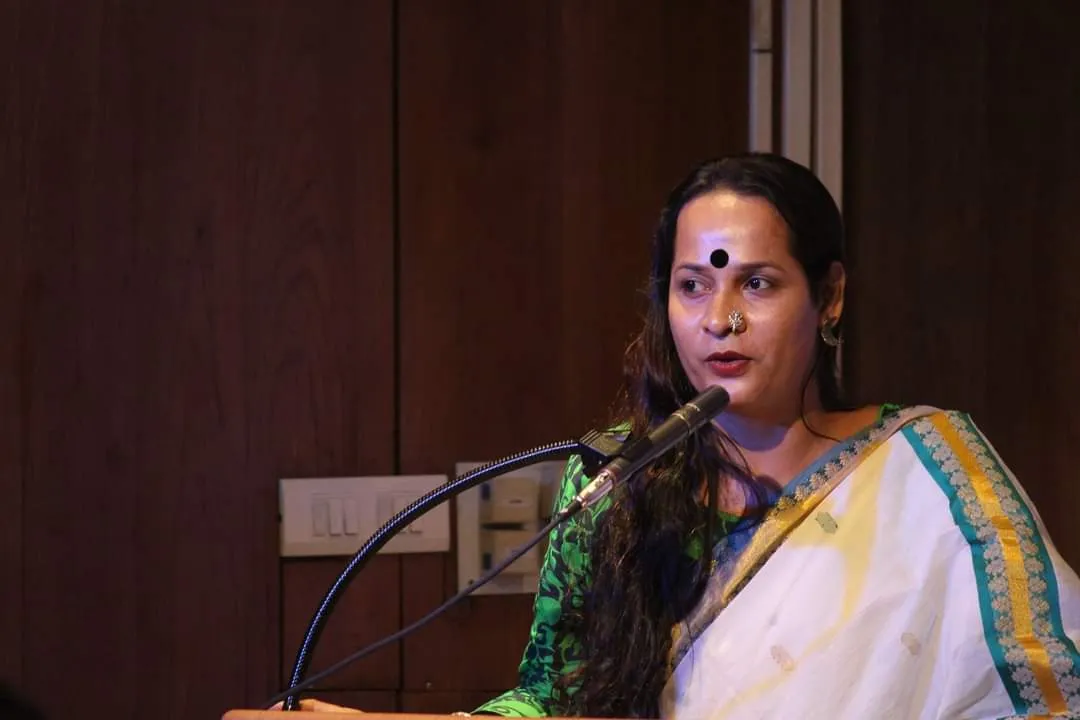
Aparna Banerjee
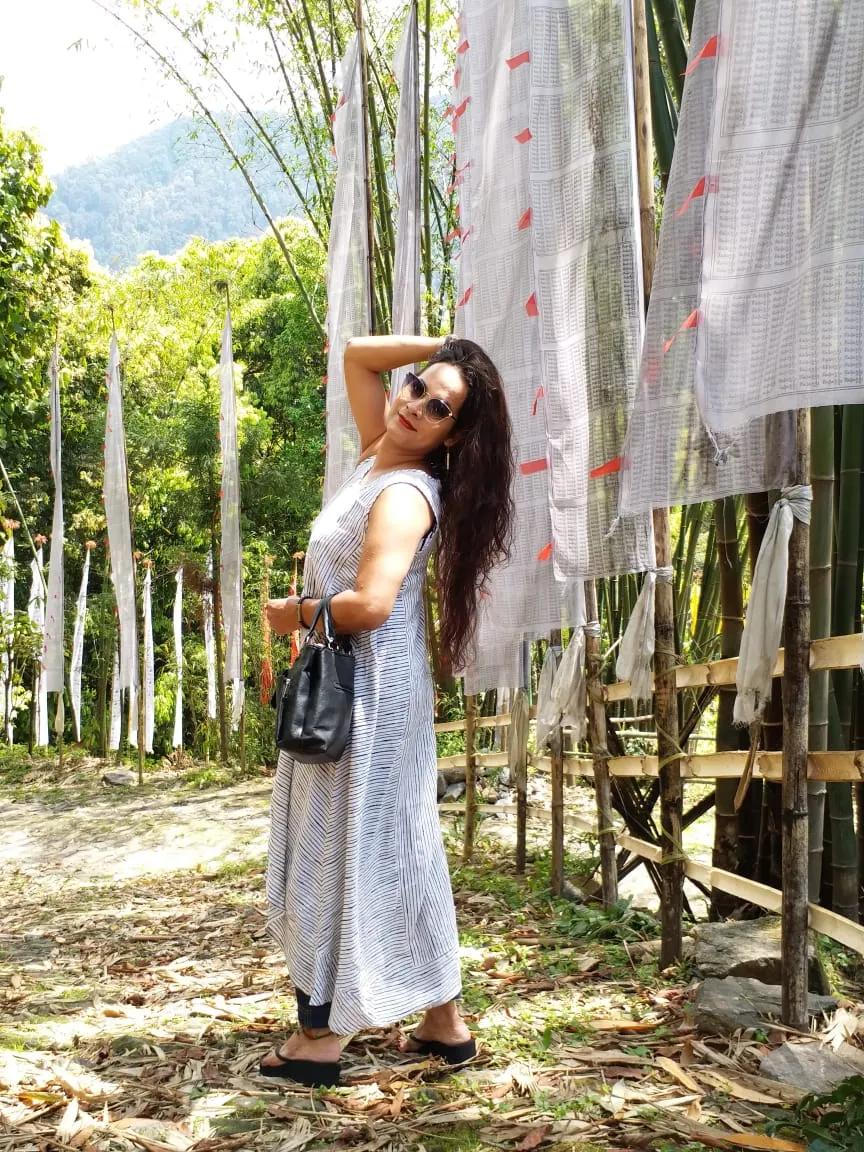
Birthplace:
Kolkata, West Bengal
Residence:
Kolkata, West Bengal
Education:
Class 12
Inspiration:
Self-inspired
UNBREAKABLE, INDOMITABLE, TRANSFORMATIONAL
She wears her emotions on her sleeves. Fiery, outspoken and determined, she is a self-made woman living life on her terms… A spirited person who minces no word when it comes to fighting for justice – an icon for the transgender community.
Born in 1981 to Rupa and Arun Kumar Banerjee, she began her long and arduous journey rather early. Nevertheless, a journey that despite its ups and downs has given her an identity she sought and fought for. “Those times were different and there were only two gender roles specified either man or woman. My young mind knew I was different and as far as I remember, I blamed myself for being different. It triggered a kind of loneliness, living alone, being scared and not meeting people.”
Being from a well-to-do family and studying in a convent co-ed school, she strived to know how and why was she different. “Everyone knew I was different. My mannerisms, my language, my body language shouted difference, the kinds that most of the kids my age did not understand.”
She also realised that she’d herself have to search for the answer to all her whys and hows. “As I read a lot, I realised it wasn’t just about spending my life but about surviving on my terms, living in happiness and prosperity – in a broader spectrum. I had to find the answer for myself.”
The transgender nomenclature was not quite in use those days and neither was Aparna aware of it. Subsequently, everyone started labelling her gay, homo, etc., which she despised. “That was when I realised the battle was not going to be easy; even more so at home. Because while the family can protect you, it can also disown you. And no amount of money can counter the love the family provides.”
In search of answers
Her search for answers surfaced around 1999 when the movie Fire was released and it triggered raging arguments about lesbianism. “Around that time, a local language newspaper had published an article on it. It talked about an informal LGBT collective in East India in which the names of Pawan Dhall and Rafique-Ul-Haque-Dowjah-Ranjan were mentioned. That’s when I came to know I was not alone.”
There, however, was a thought in her mind. “Are they gay or transgenders?” At about the same time, another article was published in the newspapers about a Mumbai-based transgender woman’s life and struggles. It made a huge impact on Aparna. “Here was a person with whom I could relate to.”
She then joined the council club and felt empowered. “I was among my people where I was openly talking about my orientation, my identity, my desires, which I was never allowed to talk about. This was the first time that I felt like I was breathing, like I existed. It was all very emotional.”
Thereon, things changed for her; she didn’t – even if it meant losing friends in school and being admonished by her parents and brother. “I had just passed class 12 when I participated in a PRIDE rally. I was thrown out of the house, for behaving like a hijra, they said. I was being related to a cultural identity of which I had no idea.”
Out of home, she felt at home when she joined the community. “I was allowed to grow my hair, paint my nails, drape a saree and live like myself. This was the first time that I felt I can be myself and at that time this was the only place where we transwomen could survive.”
Turning point
The biggest turning point of her activism was in 2003 when she formed her own NGO, Amitie Trust. “It is from here that I started learning to negotiate with the government, family and other stakeholders about not only my existence but also about the existence of my community.”
It was from here she started working for the community, especially HIV/AIDS and slowly the transgender revolution provided for the biggest change the NALSA judgement and the scrapping of Section 377. “It was a widespread activism that ensured these changes.”
She was nominated to the West Bengal Transgender Development Board. Working for the community is her passion. “I empowered the community to think that they should understand the pains of the transgender community who want to study, find a decent job or become an entrepreneur and you should support them and not always pull them into begging, etc.”
She started other projects that found support from the various hijra gharana gurus who fund activities for education, seed grants for entrepreneurship, etc. “NALSA judgement and other laws are all fine, but the change has to begin from within. We need to support each other to get an education, residences, etc. At the same time, those in power also need to understand our issues or else these judgements will have no value.
Even as her stature in the community grew, personal tragedy kept pace. In what she terms the saddest moment of her life, her father passed away. “My family did not even bother to tell me,” she says, breaking down.
But the harder life threw her the punches, the harder she bounced back.
Another journey
One of the most satisfying moments for Aparna was when she started her family. “It is one normal moment we all seek.” She and her transman partner have adopted two daughters.
She met her partner during a film dialogue meeting, where they grew fond of each other. They came close when she had had her surgery. “I had left home and had thrown myself into full-time activism and was living a hectic schedule. He was with his parents living a different life, but we shared a lot and then we started living together.”
“We seek what every society member seeks – a family, a partner, children, some happiness.” She christened her partner Kaunish (meaning king) Dey Sarkar. “I gave that name to him after having thought about it for almost 15 days. We wanted a unique name and hence this.” Her daughters are Shaeen and Kaira.
“We enjoy each other’s company,” she says of Kaunish, “and support each other and help develop the community.”
The journey so far has had its share of ups and downs but that hasn’t thrown her off course. “I thank the almighty for giving me this life, or else I would not have seen this struggle and for giving me the strength to overcome the situations I have seen so far.”
VISION FOR THE TRANSGENDER COMMUNITY
“It is shameful if, in 2024, society is still not able to understand the struggles of the transgender community. It is prejudiced if people still cannot come around to accepting that a transgender person can live like any other human being. I would love to see transgender people in the top corporate jobs, as an IAS officer, as a politician and only then will we have arrived. It is then that we will feel part of the society – a long way to go when India frees itself from such prejudices!”
MESSAGE FOR THE MAINSTREAM SOCIETY
The government, if it intends to bring about a change, should make transgender community leaders contest the parliamentary and assembly elections. “Unless there is someone in the Parliament, no change will happen. Those who cannot understand us cannot make laws that govern us. We need representation there.”
For society, she says, “One may not prefer to, but one cannot deny the existence of transgender people so either tolerate or stop seeing us.” Parents, she says, being the first teachers and society for every child, are creating failed future generations if they throw out their kids based on gender. “A dignified life is only possible with support from family. Look at the child’s potential and not gender and raise it like any other child.”
FIVE FACTS ABOUT APARNA
She loves to write.
Fish and prawns are her favourite things to eat.
She finds strength in wisdom.
Her weakness lies in her emotions.
She is totally in love with the adventure of her life.