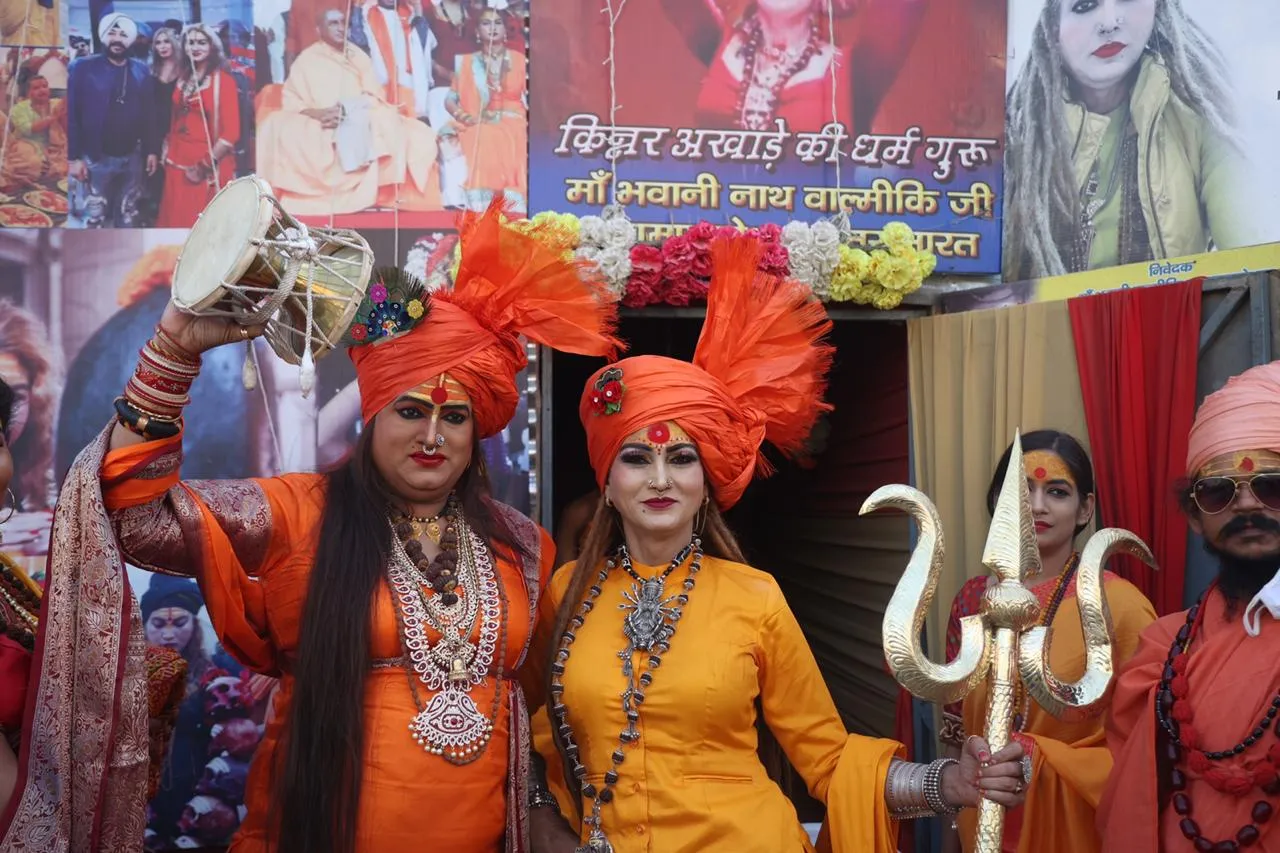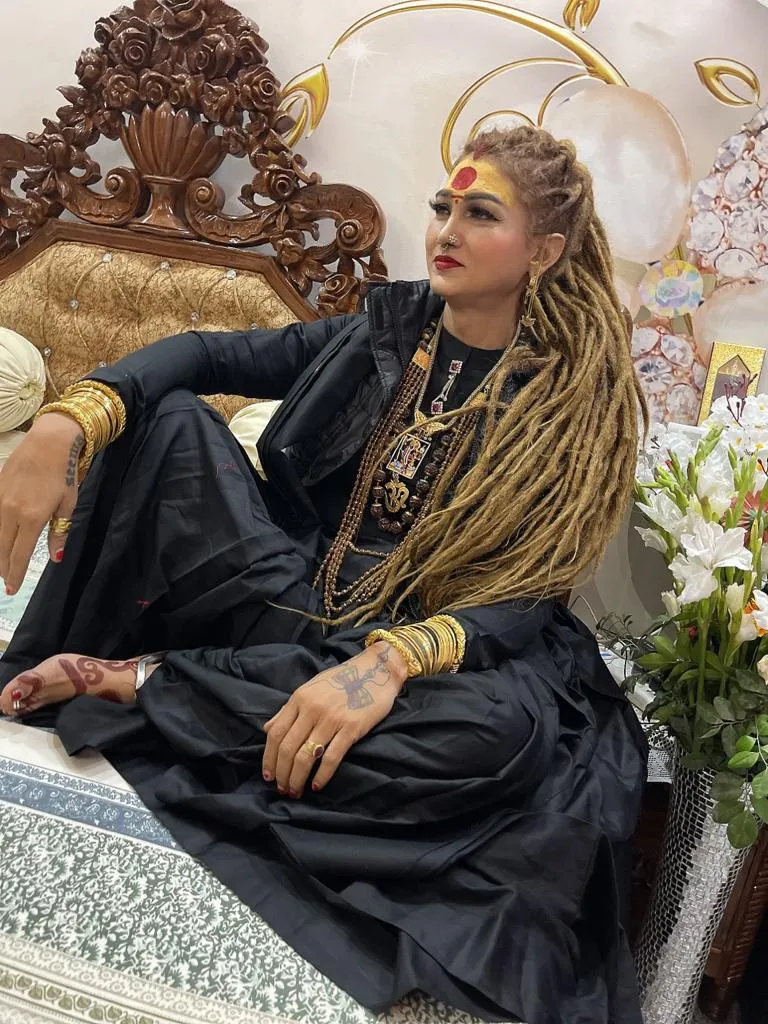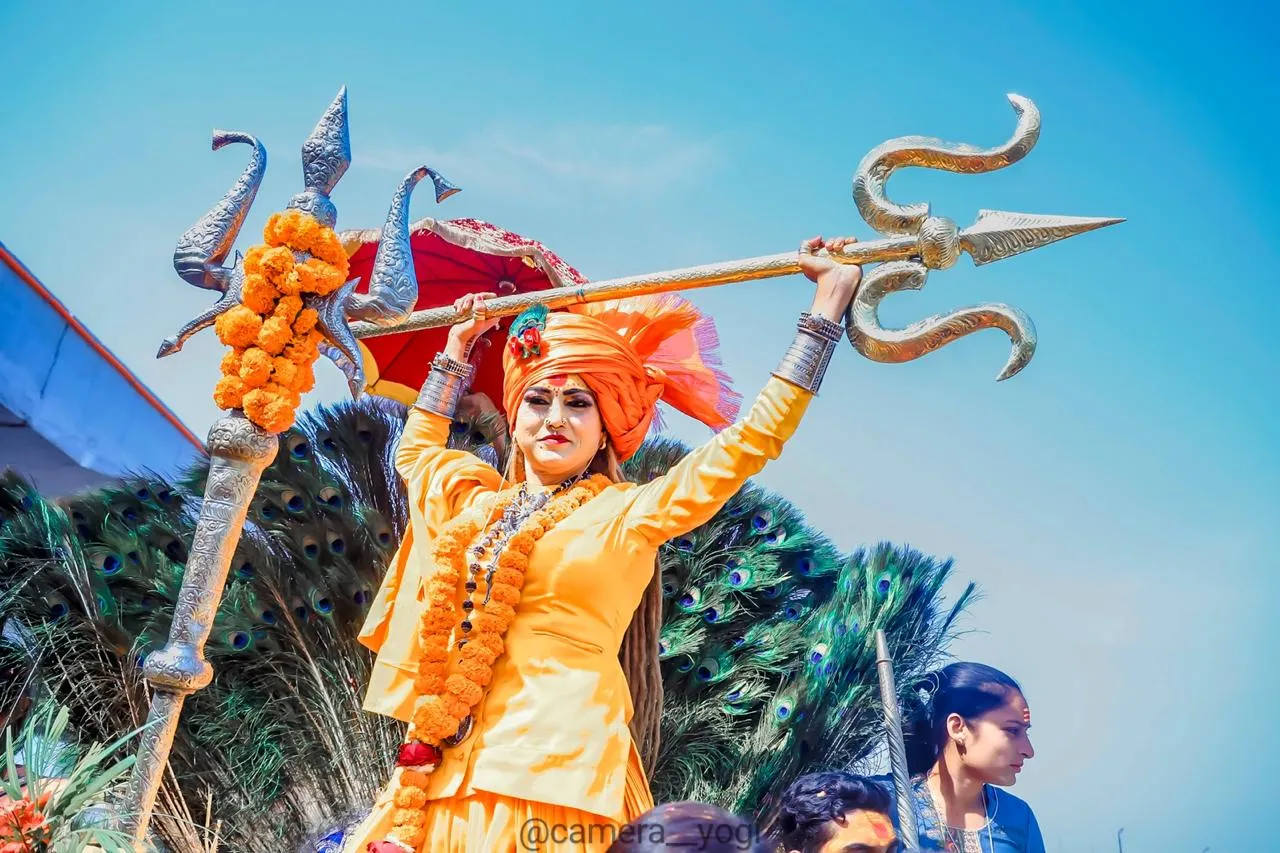
Bhawani Singh
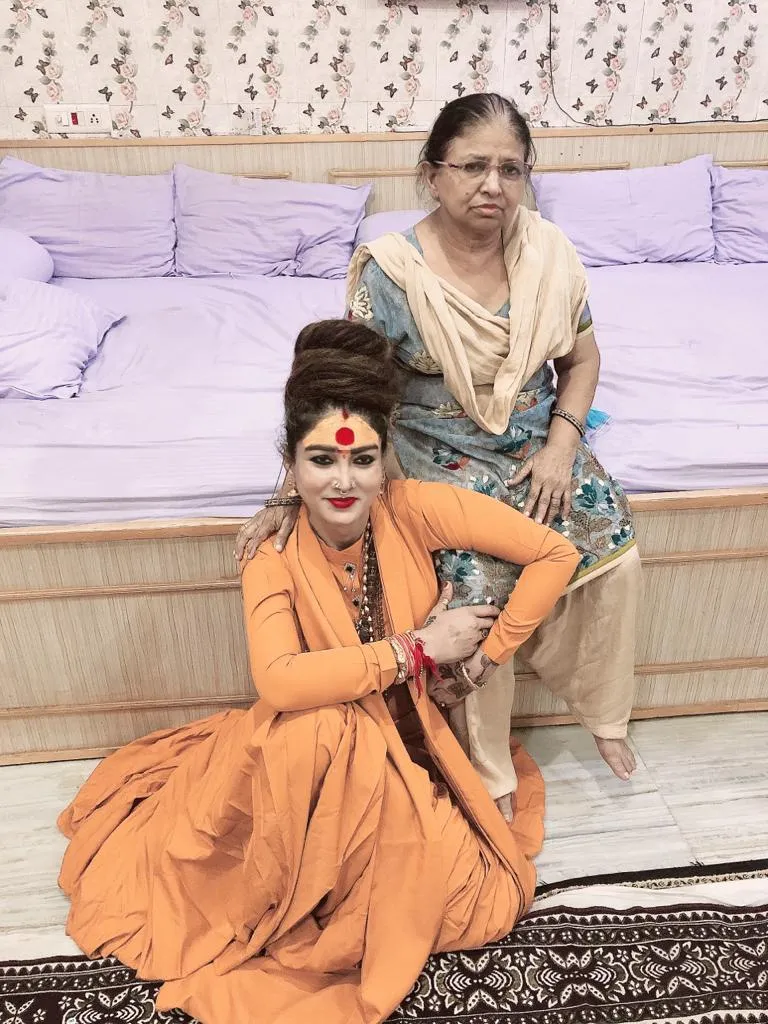
A FIGHTER ALL THE WAY
She’s often addressed as maa (mother) but ask her to describe herself and she utters the word ‘fighter’. And a fighter she has been, one with a dogged determination not to allow the circumstances to pin her down. Her life’s journey may have covered a mere distance of 10km but it took more than 50 years of blood, sweat and tears to cover that up.
On 17 November 1972, a boy was born to Rajwanti and Chandrapal Singh. They named him Bhawani. It was the eldest child of a large Dalit family. Later, the couple welcomed four daughters and three more sons. It was a family with meager resources and hand-to-mouth existence and the boy realised his responsibilities quite early. Chandrapal, a manual labourer, could barely earn enough for their sustenance.
At the young age of 13, the firstborn started to notice changes – physical transformation. But that was not all. Along with these noticeable changes came a life of agony for Bhawani. “People started to discriminate and harass me; they called me names like hijra. I was often sexually and emotionally abused. To make things worse, they became very prejudiced against my parents, especially my mother,” she says recalling those harrowing times.
Reeling under her torturous circumstances, Bhawani started looking for an escape route and finally found one in the local kinner community. “No one harassed me there; in fact, they understood me well. So I wanted to be a part of them”
Her family, though, was reluctant to send her off. Despite their penury, they didn’t want her to go and when they did relent it was with a heavy heart.
However, the challenges of this new life soon dawned on her. “It was quite a task to bring myself to beg, but I agreed to it as it could help my family with a square meal.”
Barely did she know then that things, one after the other, would lead her to the red- light district of the city. She started sex work but found it very excruciating. No longer wanting to continue, she joined the group of kinners that went house to house on marriages and childbirth and collected donations.
“The only satisfaction through all this was that my family was with me. I was really lucky because family members of transgender children hardly ever visit them. I don’t know what it was that kept us together – poverty or the fear coming from a lower caste or the atrocities of the two together – but we continue to meet with love,” says Bhawani.
Coming from a caste that’s considered the lowest among the low castes, Bhawani experienced disparities among the transgender community too. A minority among the marginalised, this experience of unevenness was something she had not mulled over as she joined the community of kinners. Incidentally, she also happens to be the first transgender gender with a scheduled-caste certificate.
And then, there are the usual stereotypes to deal with. “It is a give-and-take world, so if a transgender person has a romantic relationship, it is because the other person has physical needs,” she points out.
“Families invite transgender people to seek their blessings but they step back when the community seeks their acceptance – something that’s not even materialistic. It is just a pipedream that people have others to sustain. In reality, every person has to choose his/her battle. It is only an individual’s willpower that helps.
“I went through physical abuse and kept looking for ways to escape it; I mustered the courage to join the kinner community; I had the strength to raise my voice against social injustice; I had the will to convert to Islam and wanted to perform Haj and I did in 2012.”
Shining more light on her strong willpower, she adds, “I wanted to convert back to the Sanatana Dharma and all through, I found guidance from my guru Shankaracharya; I wanted a law degree and I gained one.”
Through the journey, a lot has kept changing for her – Bhawani became Shabnam to the community; Shabnam became Mohd. Aslam when she went to Haj; now, after much enlightenment, she finally has what she lacked all these years – respect!
History of her community
Through the lens of the history of India, Bhawani narrates, “Mughals came and they gave recognition to the community – maybe for their selfish motives. Many official posts were given to transgenders. Once, a transgender person was made the army chief. Due to the way the Mughals treated them, many among the hijra community adopted Islam.”
A keen observer of ancient Indian scriptures, she notes, “There are several mentions of the community in the Ramayana and the Mahabharata yet people hesitate to give them the respect they deserve. There’s been an instance when a kinner blessed Goddess Sita on her marriage; another gave Lord Vishu a lullaby on his birth.”
For all that she’s gone through in life, Bhawani remains a very traditional and simple person. She also firmly believes in the guru-chela parampara (teacher-pupil relationship) within her community of transgenders.
The NALSA judgment
The NALSA judgment of 2014 is considered a watershed decision where the Supreme Court held that the State and Central governments must grant transgenders full recognition in the eyes of the law so that they can get education and healthcare without being subjected to any kind of discrimination. Bhawani, however, is not very satisfied with the judgment. To begin with, she is dissatisfied with the term ‘begging’ used in their context. “Kinners seek donations as a fee for congratulating anybody because it is their tradition and often the only source of livelihood,” she says.
A date with politics
Bhawani is among the very few from her community to have forayed into politics. Her first step into this arena was when she ran for the Lok Sabha elections in 2019 when the transgender community had already been provided with an identity by law. She contested from Allahabad, Uttar Pradesh; however, it was mainly to pave a path for future transgender candidates.
“Success attracts people, respect and love,” she says, adding, “Many people in the community supported me during the elections. But I had to start with lots of rejections – parties denied giving me a ticket.”
Her morale dropped extremely low when people banished her based on her sexuality but undeterred from this she made every effort to exert the presence of her community.
The hijra community has fully backed her in her activism, strengthening her leadership. Through her guru, Shri Mahaji Chaudhary, she has also been allotted an area to work in and is actively associated with the kinner samaj and akhara.
‘Need to speed up the system’
“While the laws have been made and the policies changed, the entire process is still very slow,” she rues, adding, “It needs to speed up. Also, awareness should reach rural India.”
The NGOs, she points out, are not yet effective in the development of her community in her locality. “Let’s not even begin to ponder about the smaller villages and hamlets. A different section in hospitals, washrooms, and mental health assistance is very much needed. It’s just basic acceptance.”
Sharing her strong views on the subject, Bhawani says that even though a plethora of books have been written on them and many films have been made on them, there still are efforts to show the transgender community in a bad light.
“It’s not just India but every country that follows movies. Movies are accepted as the truth, but no royalty is provided to the transgender community even when books sell well or movies do a good business.”
VISION FOR THE TRANSGENDER COMMUNITY
Bhawani calls for a strong political representation of the kinner community in the Indian body politic. She asserts that they will continue to knock on the doors of Parliament until they get their due rights. As someone who follows the traditional way of living, she urges the gurus not to part with their old disciples, as it would cause a rift among members of the community. According to her, a message that every transgender person should follow is written in the scriptures, ‘Read me and change yourselves’. “That is how society changes. If you go on and try changing the society, the society will change you.”
MESSAGE FOR THE MAINSTREAM SOCIETY
The transgender community will always give back to society. This community has already fought for their rights, especially in the field of education and jobs. “Now it is time for society to show acceptance and involve the community as they did in the past. No one is bad. Our left body is not a copy of the right, our fingers are not equal. Similarly, not every person is good or bad,” she explains. “At the same, I want to highlight the fact that every coin has a flip side to it,” she says, adding, “We want society to understand that it’s just some organs that are different but the body remains functional – why not let this functional body function the right way?”
FIVE FACTS ABOUT BHAWANI
She loves cooking and likes simple home-cooked food.
She loves old Bollywood music.
She likes singer Lata Mangeshkar.
She has a simple way of living and still sleeps on the floor.
She finds strength in her willpower to represent her community, feels weak with her loneliness.