Dhananjay Chauhan

Birthplace:
Devprayag, Uttarakhand
Residence:
Chandigarh, Punjab
Qualifications:
M.A. in Social Work, M.A. in Human Rights and Duties
Inspiration:
Laxmi Narayan Tripathi, mother and herself
GIVING THE COMMUNITY A NEW IDENTITY
Master trainer of Maharaja Ranjit Singh Punjab Police Academy (Phillaur) and Chandigarh Police; a member of the think-tank under the aegis of the UNDP; a member of International InterPride – International Association of LGBTI Pride Organisers; International Equality Officer of National Indian Students Alumni Union (UK); a member South Asia Human Rights Association (Norway), etc.; she wears many hats. She’s one of the most vocal champions of the rights of transgender persons. She’s been through the worst as a gang rape survivor. Yet, she has emerged as a beacon of light for her community and others.
She is known as someone who pioneered separate washrooms for the LGBTQ+ community. Panjab University’s first transgender student, she’s also been championing greater political participation for her community.
A very strong individual, she’s been a victim of the worst kinds of sexual violence and crime. Having faced it all, yet emerging strong and strong enough to stand for others who face the worst, speaks volumes about her resilience and resolve.
A multiple gang-rape survivor, Dhananjay Chauhan is now seen as a beacon of hope for members of her community and others, and as someone who didn’t allow the circumstances to pin her down.
At 50, her retirement and a life without pension loom less than a decade away. “I had many dreams,” she says, adding, “I wanted to become an IAS officer, but the difficulties I faced in my early life put paid to that ambition.”
“Although my health nowadays is not good, I’m working to complete my doctorate in Social Work,” says Dhananjay, who works as a field investigator at the University Institute of Legal Studies, Panjab University. She lives in a one-bedroom apartment in Chandigarh and uses public transport to commute.
A countenance that wears a melancholic demeanour, and blank eyes, reflect a saga of struggle, rejection, pain, abuse, bullying, humiliation and multiple gang rapes. Like any other individual, she too aspired for a peaceful life and a successful career. But far from peace, violence and humiliation punctuated her early life.
Horrific incidents
It was with great hopes for a better life that she enrolled in a Master of Arts course. She had no inkling of the horror and travails that lurked in the not-too-distant future.
In 1993–1994, a group of men accosted and dragged her into a field and tried to rape her. She somehow managed to flee.
In 2002, she was not so fortunate when 20 men gang-raped her the whole night in Ambala, thrashed her and threw her near a bus stand early in the morning. “The incident crushed my soul,” she says.
“Two years later, in 2004, eight men gang-raped me in Panchkula, Haryana, and later urinated on my head. What could I have done if not committed suicide?”
Picking up the pieces of life
While the thought of ending her life kept coming back, she chose to do something else. After a long conversation with herself, she wondered, “Why should I kill myself and not fight for my rights and community?”
From thereon, she decided to fight it out. She took a vow to keep pursuing her studies and fight social ostracisation, injustice, and abuse. No wonder she did well in academics and started progressing in life, in the process becoming the first transgender student of Panjab University.
She graduated in History in 1993 and then completed her post-graduation in the same subject. She also has diplomas in Russian, French, and Computer Science; a Master’s in Social Work, and a Master’s in Human Rights and Duties.
Unlike other transgender people, Dhananjay chose to continue with her first name “to avoid the tedious task of visiting various departments to change my name on certificates and documents.”
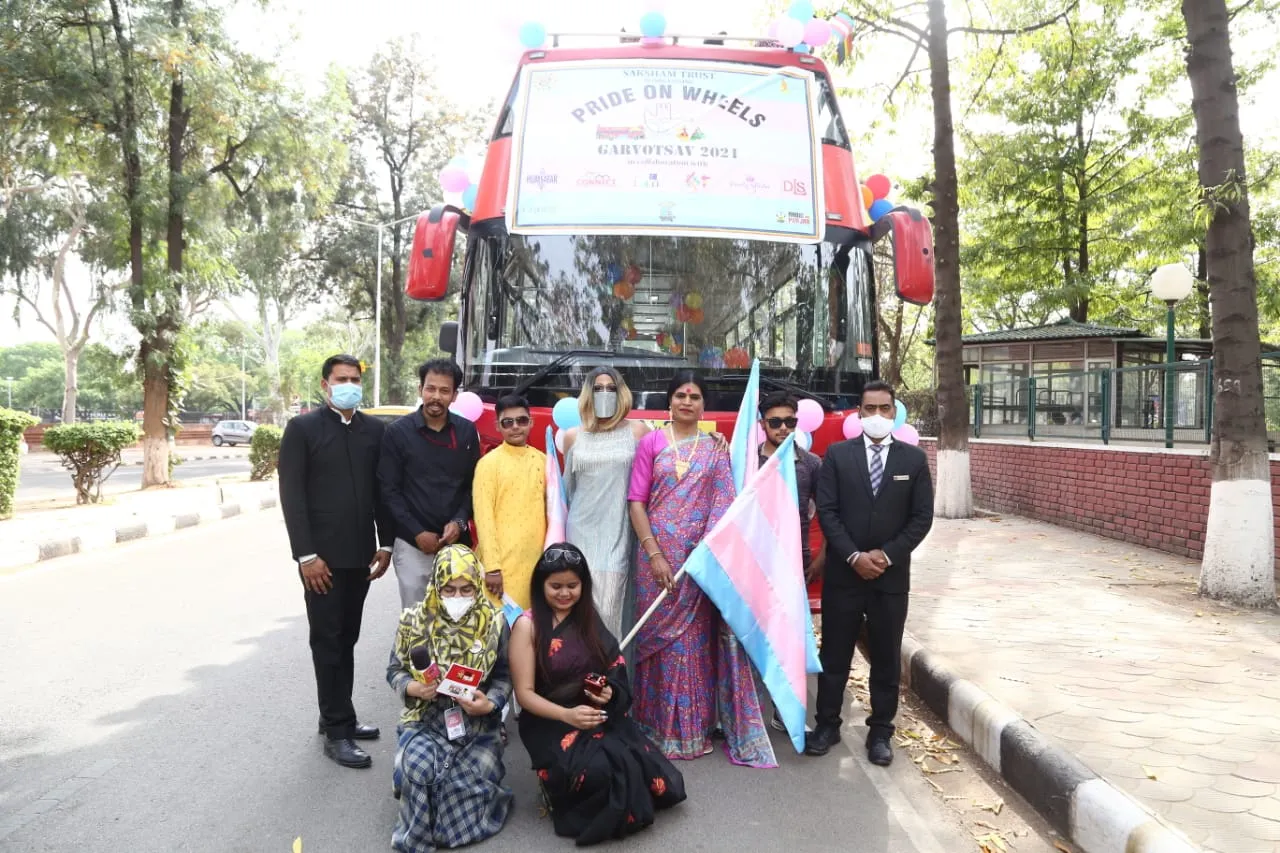
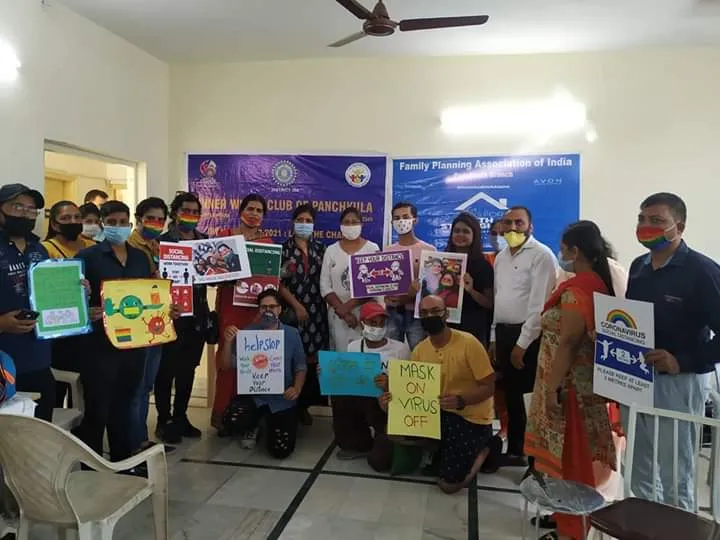
She holds memberships of several civil society groups. She’s been working for the cause and rights of the transgender community pan-India for almost two decades now. She is a member of Chandigarh Transgender Welfare Board; a non-official member of Transgender Welfare Board, Chandigarh; she’s the President of Saksham Prakriti Welfare Society, an NGO in Chandigarh working for the rights of transgender people; and the organiser of Garvotsav (LGBTQ Pride), Chandigarh.
“I realised that transgender victims have similar stories,” she says with puzzlement, adding, “I forgot my own experiences and started helping others in 2004 through NGOs and now I can’t stop doing my duty.”
The fact that transgender persons are not given jobs, rooms or houses on rent, etc., always bothered her a lot. “We don’t get jobs, we rely on unsocial ways of earning a living and we remain social outcasts; it’s like a vicious circle,” she rues.
Separate washrooms
The absence of public toilets for transgender persons once threw her in great distress. “Once I was in a ladies’ washroom. As I came out, a group of young girls panicked and started screaming on seeing me. From then on, I decided to push for separate public toilets.”
Her efforts for the rights of transgender persons in Panjab University succeeded in getting a separate washroom and free education for them on the campus.
However, one area she’s still pessimistic about is parenting ambitions of transgender persons. “The Indian society is not ready for it as yet. There are unfounded fears due to lack of awareness. I have motherly feelings, but I cannot adopt a child. Authorities need to sensitise people about it,” she says.
Parenting ambitions
Explaining the issue of parenting further, she adds, “Majority of the transgender persons leave homes, so there is a lot of pressure. Or they fight to survive – the only way to continue living with family, which is not easy either. My daughters cannot get married because nobody is ready to marry them. Children of transgender people do not find acceptance.”
The media, points out Dhananjay, can help spread awareness of transgender persons’ parenting ambitions. “In 2016, Punjab University gave me admission. Every newspaper in town reported my story. I got admission but I had no money to pay fees. While talking to a journalist, I mentioned that I didn’t have money to pay the fees. He took the initiative and collected enough money for me. The media has immense power,” she notes.
Struggle of early years
Recounting her family members’ reactions on coming out about her gender orientation, Dhananjay says, “I was seven when I told my mother about it. She told my father who made an exorcist cite mantras ‘to rid me of the evil spirit’. He beat me with hot iron rods. I had to promise to them that I would stop behaving like a girl. While my father never accepted me as a transgender person until his last breath, my mother did support me and advised me to focus on studies and be successful in life. She and my inner power were my only support.”
School was tough too. “The students bullied me, calling me a eunuch. Once, the boys locked me in the school washroom for more than an hour and they would often pull my knickers down. They never included me in their games. In class IX, some mean boys thrashed me.”
As if those travails were not enough, the hijra community too crushed her hopes. “I found it strange – they threatened me against working for the community, asking me not to help or educate them; they thought their source of income (begging) would stop. But once I started getting recognition, they started inviting me for events.”
Luck finally smiled on her and Dhananjay found her parents when Mrs. S. K. Chahal and Mr. Darbara Singh Chahal adopted her. They all live together as a family in Chandigarh now.
Winning and how!
A devoted activist, Dhananjay has hopes and desires like everyone else – for respect, love, and acceptance. Despite the challenges that come aplenty, she remains optimistic through everything – she is pretty hopeful that in future transgender people will get their rights to parenting, work, equality, etc.
She often talks about former Prime Minister of Ireland, Leo Eric Varadkar, who was elected leader by the people beyond any prejudices. A half Indian, half British and openly gay, he became the youngest-ever prime minister of the country at 38 and served from 2017 to 2020.
“I dream that India too will someday have an LBGTQ+ person leading the nation – it might seem absurd right now but if Ireland can do it, so can India, sooner or later,” she asserts.
Dhananjay bats for parity in all sectors – gender neutrality and inclusiveness in education, family welfare, health, employment, and economic and social security.
“Parliament [of India] should consider and pass a bill – an inclusive one – giving us housing and health facilities. The government should sponsor TV advertisements on the issue. The police now have more awareness of the issues related to the LBGTQ+ community. There should be some reservation for the transgender community,” she exhorts.
VISION FOR THE TRANSGENDER COMMUNITY
Lack of education, says Dhananjay, is the biggest drawback. “We have the potential and calibre. When transgender persons come on stage, they cannot speak because of lack of university education,” she says. “There are two reasons why we lack it: one, the institutions, parents and students don’t accept us, and two, the laws and policies don’t include us. We need education and inclusivity, especially politically, to feel equal, to get our voices heard in Parliament,” she explains further.
MESSAGE FOR THE MAINSTREAM SOCIETY
“Our entire society is very much masculinity-oriented – women are supposed to be strong like men, men who are soft are supposed to be strong. Moustaches, pagdi, etc., that symbolise masculinity and izzat, are things that men have,” she points out. “Why are ghunghat, dupatta, sindoor, etc., not reflective of strength? In this biased society, all that the transgender community can seek is acceptance.”
FIVE FACTS ABOUT DHANANJAY
She has made Mx the official prefix of transgender persons in Chandigarh.
She loves Hindustani classical music and listens to Ustad Bade Ghulam Ali Khan, Ustad Nazakat Ali Khan, and Ustad Salamat Ali Khan.
She has participated in LGBTQ+ events in Thailand, the Netherlands, Germany, France, Greece and Italy.
The documentary, Admitted, is based on her story.
The Governor of Punjab honoured her for yeoman’s service to society in 2017.