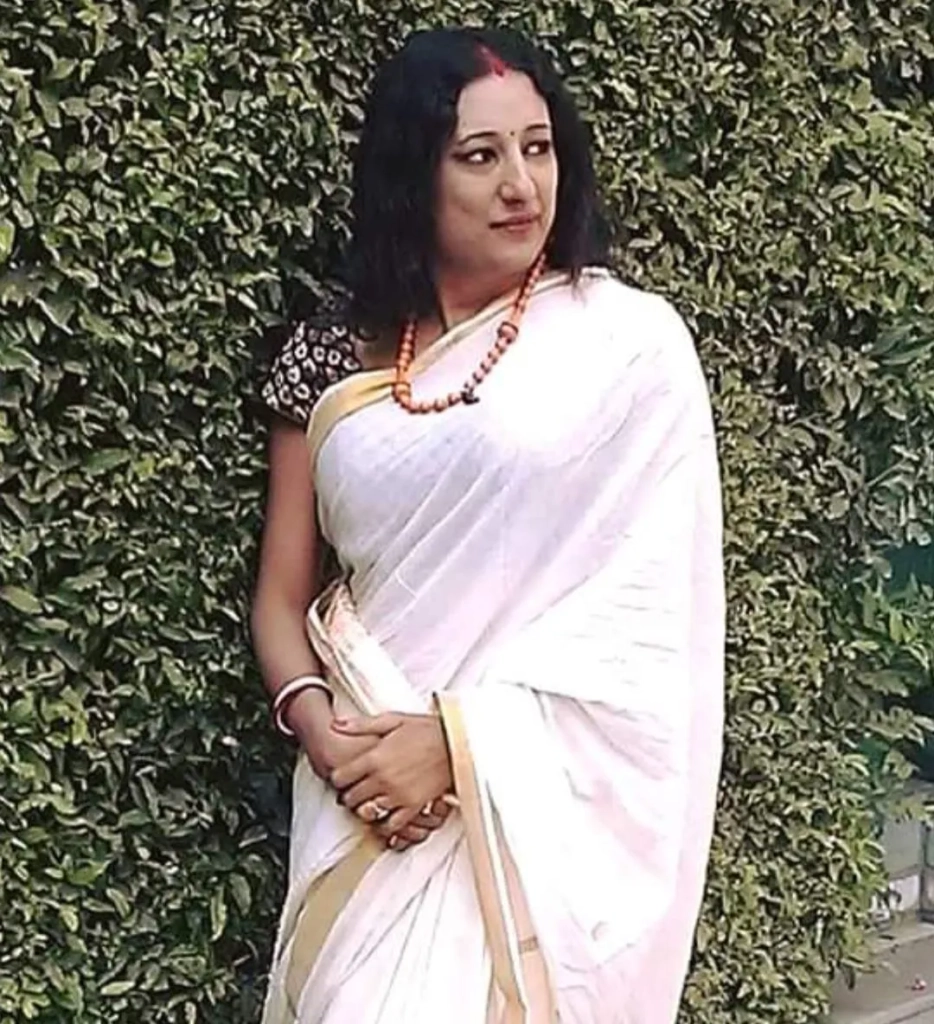
Dr. (Hc.) Amrita Sarkar
Birthplace:
Calcutta (Kolkata now), West Bengal
Residence:
Delhi
Qualifications:
M.A. (Social Welfare and Community Service)
Inspiration:
Mother
FROM GRASSROOTS TO GLOBAL PLATFORMS
Working tirelessly for transgender people’s rights, she shies away from calling herself a leader. She prefers being seen as a medium through whom the community can uplift itself.
The 70s were quite different. India was in the middle of awakening in many aspects. Social freedom and inclusion for the transgender community weren’t what India bothered about. Born to a middle-class family in the early part of this decade came with its challenges for her – for she was assigned male at birth. Her parents tied many expectations to their only child. “Following norms of the opposite sex was quite unusual in those days. Parents, neighbours and relatives tried very hard to change me, but I knew all along that I was trapped in the wrong body.”
Different from others
Her mother was her idol and inspiration. “I wanted to be like her. She was perfect – as a mother, a professional, a homemaker. There were so many great qualities in her that I wished to imbibe.” She would cross-dress, which would anger her parents. They conveyed their message quite strictly but that did not stop her. “I’d wear lipstick and kajal to school, much to the shock and chagrin of teachers and students.”
During these years, she began noticing hijras and empathised with their poor way of living. “I didn’t like them being mocked. I was determined to complete my education and use it to help them and prove to society that we are equally capable. I was fortunate that my will and confidence fuelled my journey to my goals.”
Her parents gave up after many failed efforts to make her follow gender norms. “Their acceptance came much later in 2003 when I was working on a male sexual health project. I showed mom my interview published on World AIDS Day asking her if I was doing something she was ashamed of. She replied that she knew very well who I identified as. Her only concern was if I could cope with society’s biases. That day I made peace with the thought that at least I was not an embarrassment for her.”
Amrita lost her mother in 2005 and in 2008, she formally came out to her father. “My movie had been screened at the International AIDS Conference in Mexico and one of the local papers had published the news with my name and picture referring to me as ‘she’.”
She had not undergone legal or medical transition then. “My father too said the same thing as my mom. It made me realise that my parents may have not liked my preferred gender, but they did not discount my work for marginalised people. This gave me confidence.”
Education and music were her way to overcome every challenge. “I want to tell everyone in mainstream society and in the community to empower themselves with education and heal through any form of art.”
Her healing has been through music, especially Rabindra Sangeet. She could not continue learning music as a child but resumed after her graduation in 1995 and earned a five-year diploma in songs of Tagore. She has also lent her voice to India’s first trans-music album. “Tagore had a deep understanding of all human emotions. His music, his lyrics lift my spirits every time I feel low. I listen to him every day. It heals me.”
Activism through advocacy
Amrita has been working for the community’s well-being for over two decades at the national and international levels. She has made two films on transgender issues. She is also a member of Transgender Professional Association for Transgender Health (TPATH) and an advisor on transgender wellbeing and advocacy, at Alliance India, New Delhi, apart from being a board member of Equal Asia Foundation.
In the early part of her journey, she trained with London’s Naz Foundation in Bengaluru and was introduced to startling numbers of transgender people and their issues. “This was my calling.” In 2005, she joined Solidarity and Action Against the HIV Infection in India (SAATHII) and worked on HIV/AIDS awareness in rural Odisha. “There were more revelations and shocks in store for us. Most of them were into sex work due to a lack of education and better means of livelihood. Because this was a rural area, many had no knowledge of the risks of HIV/AIDS.”
She then formed a support group, Shanti Seva with support from SAATHII, to provide healthcare services, non-formal education and skill-based training for the rural transgender community in Bhadrak, Odisha (Orissa). The same year, at the International Congress on AIDS in Asia and the Pacific, she presented a much-appreciated case study on transgender people and male sex workers, highlighting their challenges and how comprehensive healthcare programmes can help. “Meanwhile, awareness gradually grew through the work of Shanti Seva. Sex workers now had more choices of livelihood. I associated myself with various other organisations working for LGBTQIA+ community.”
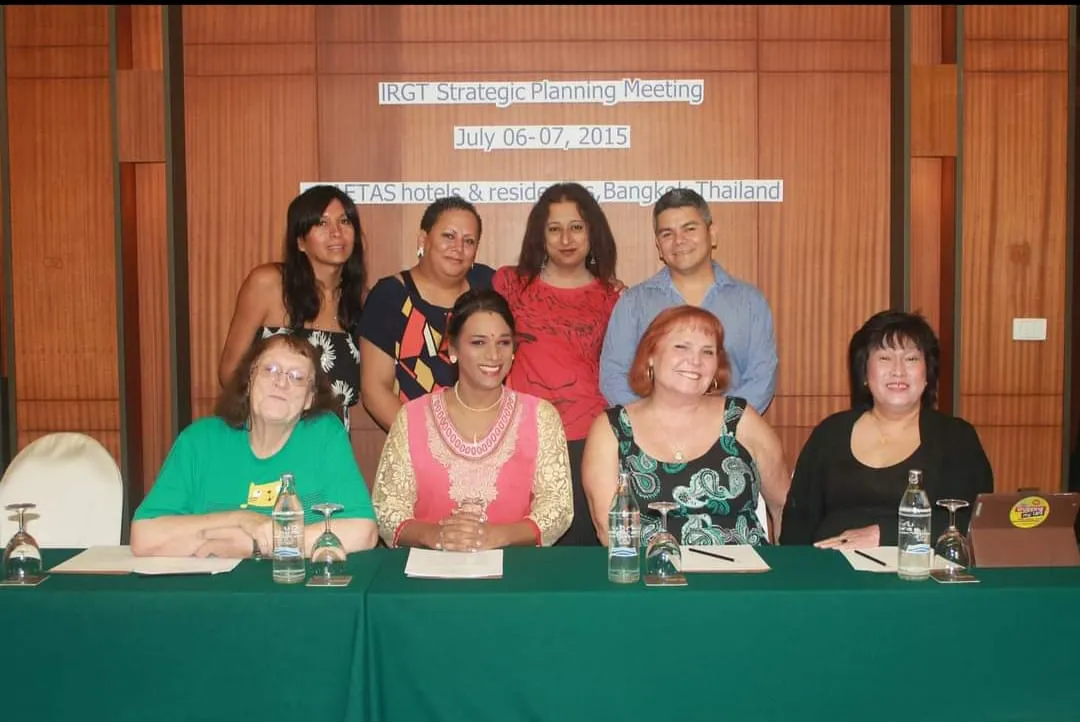
She met Joanne Keatley, the Director of Centre of Excellence, San Francisco, USA, at the International AIDS Conference 2008. “We found very low representation of transgender people at the conference. The community is highly vulnerable to HIV/AIDS but there were hardly any sessions dedicated to it and very few faces. We came to launch the International Reference Group of Transwomen and HIV (IRGT). It currently runs projects in Latin America, South Africa and Asia.” They both are instrumental in introducing the transgender-based pre-conference to the annual International AIDS Conference.
Amrita has led the chapter titled ‘Community Empowerment Initiative’ in TRANSIT, a book of best practices and the way to successfully implement programmes for transgender people. “Every contributor to my chapter was from the community.”
She was associated with INFOSEM for a long time and is a member of NNTP, which, she says, is being led by responsible leaders. “I am also a member of the Transgender Working Group formed by the National AIDS Control Organisation, pushing to implement comprehensive health programmes for transgenders other than sexual health.” Although lauding the government’s efforts for the community, she wants to see more members included in the policy development process. “Policies, laws and guidelines are not implemented in letter and in spirit. I request the government to sensitise cadres at every level and create reserved space for community educational institutions with inclusive infrastructure and curriculum if it wants to have an impact. The approach needs to be a participatory one.”
She underscores the importance of data in policy implementation. “A UNESCO study in Chennai threw light on the percentage of transgender children who had dropped out of schools due to bullying. We do not have country-wide consolidated data on such matters.”
“Roti, kapda aur makaan* – these amenities are the right of every human being. How can a transgender person lead a dignified life without education, livelihood, healthcare and legal aid? I reiterate that research and data will help in effective implementation.”
VISION FOR THE TRANSGENDER COMMUNITY
For her, the keyword is acceptance. I wish to see the community enjoy every facility like any cisgender: Maternity and paternity leaves are in place, so there should be leaves for gender reassignment surgery. My identity should not be challenged. Make the Transgender Persons (Protection of Rights) Act, 2019, the base document and define each Act.”
She says the community has come a long way from the times when the members were apprehensive about talking about their identity. “Things are moving forward, thanks to the government and media. The community needs to stand united as a network for continued welfare and progress.”
MESSAGE FOR THE MAINSTREAM SOCIETY
“It’s time to open your eyes and acknowledge our presence. We are but humans like you. We can do what you can. We too are creations of the same God. Don’t hate us, but love and respect us.”
Amrita reiterates her two mottos. First is advocacy with the government, the mainstream society and the bureaucracy. The second is building the capacity of the community. “So that when all the doors finally open, we are prepared.”
FIVE FACTS ABOUT AMRITA
She gets strength and determination from her painful past.
Her emotions weaken her.
She is a grandmother now. Her foster son is now himself a father to a child.
She is a great cook. “I make awesome macher jhol bhaat.”
She is a science graduate, software engineer and a trained counsellor.