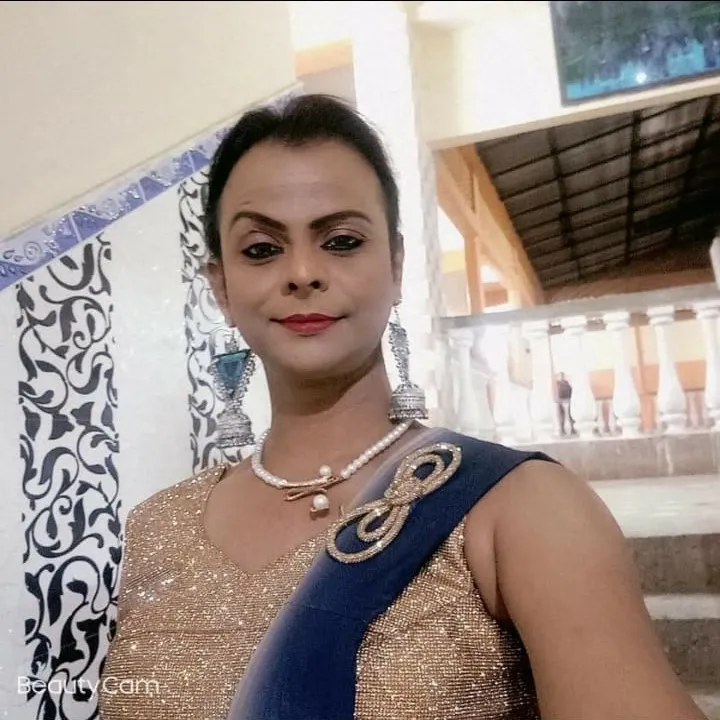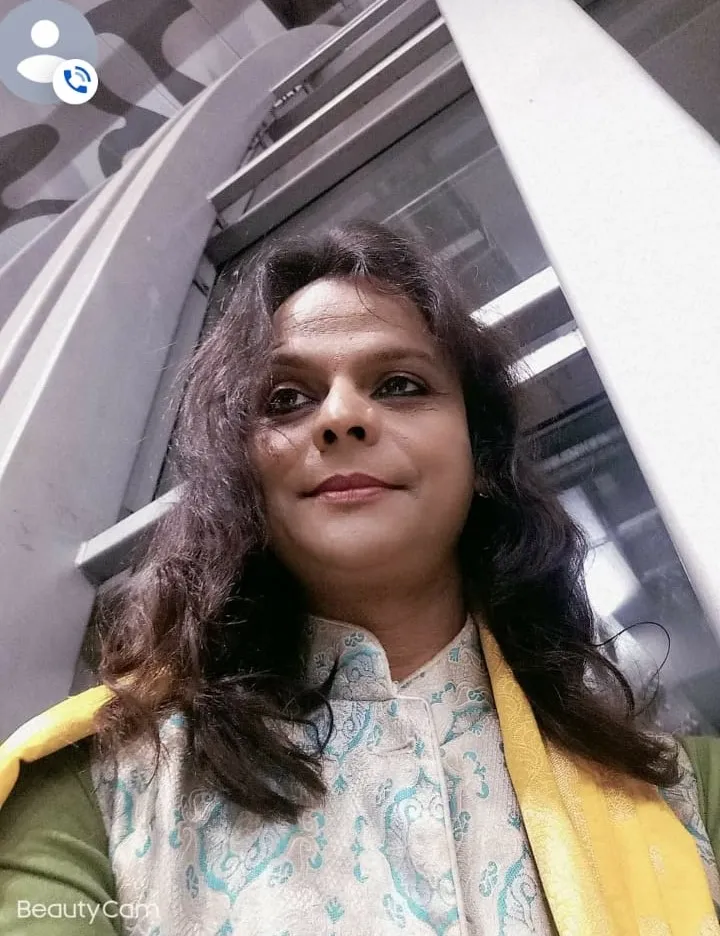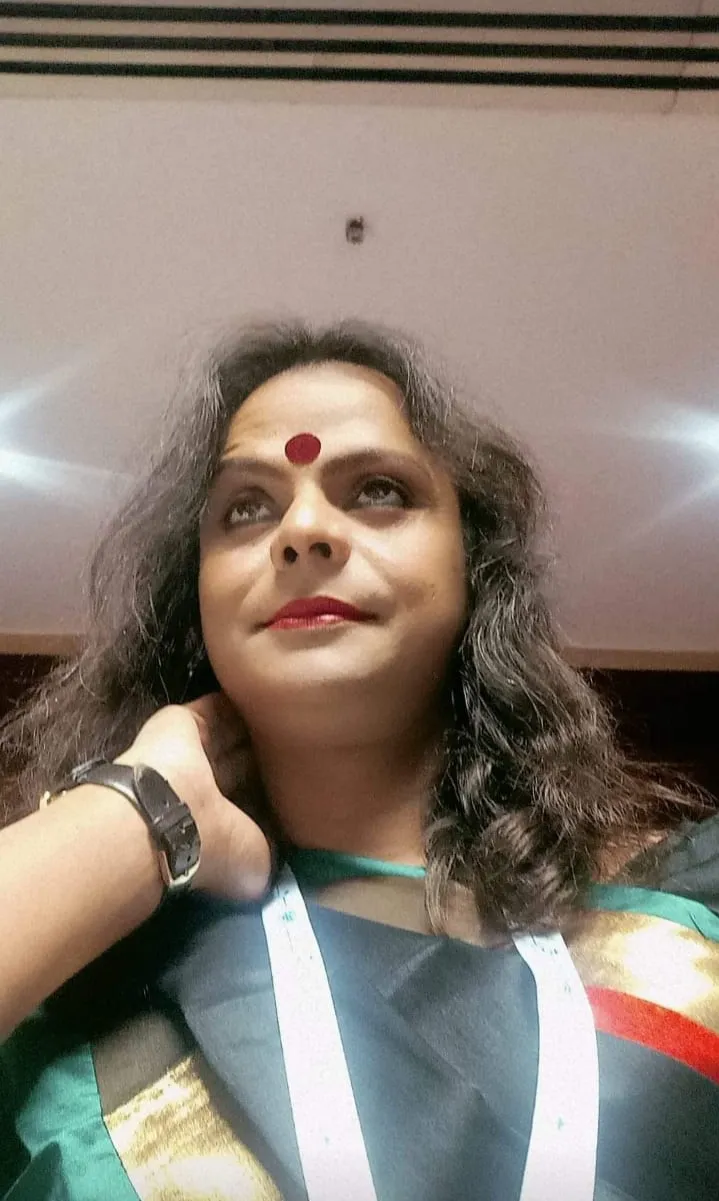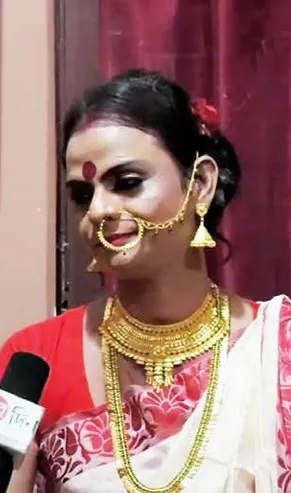
Dr Santosh Kumar Giri
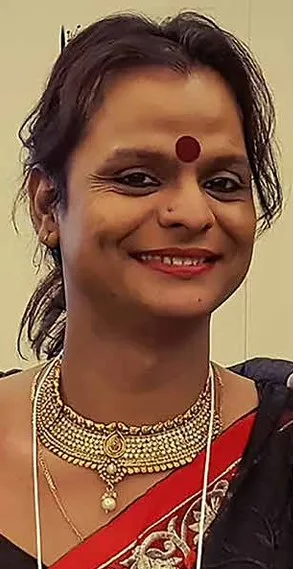
Birthplace:
Kolkata, West Bengal
Residence:
Kolkata, West Bengal
Qualifications:
MBBS
Inspiration:
Mother
JOURNEY OF A THRIVER
Founder and Director of Kolkata Rista, a transgender community, she is on the Men Engage Alliance South Asia (MESA) steering committee. She is also a member of the Global Men Engage Alliance, INFOSEM, Wada Na Todo Abhiyan, Right to Food Campaign, GCTA, etc.
“When you accept yourself for who you are, all the hardships, brutality, violence and discrimination you face become the driving force. You follow your heart and dreams to become what you want,” says Santosh.
Born in a Brahmin family, where gender discrimination was rampant, she was always in love with herself yet felt awkward because of how things were demarked based on gender. Her childhood was a bumpy road. Teachers in school used to touch her inappropriately, she was prevented from playing cricket, was ridiculed and suffered home violence up until one day at a very young age, her father kicked her out of the house, and the same night she was raped by four men. It was the night of change for her. While lying in the hospital bed, she understood that transgender people, cross-dressers and people of other identities suffer ill-treatment and violence once in their lifetime and are suppressed by society. “The only way to deal with such atrocities is to stand up for things that won’t change. I then knew why my mother too had become an activist of sorts.”
Santosh has seen her mother fighting for women’s rights and supporting them to get basic hygiene during their menstruation. When families used to leave women to suffer, without clean clothes, her mother, in her capabilities, used to give them all that was required. This inspired her, and today whatever she is, it’s all because of that. Today, she can fight for her community’s rights and be vocal about it. Except for her mother, she couldn’t find any support, but she was determined to take the reins in her hands and walk her path. This fearlessness helped her finish her studies and work for her community.
“I have faced dejection and insults, and it scarred me for life, but I mustered the courage to fight, as my mother was always there to support me. She played a significant role in my life and taught me to have a positive outlook, which gave me courage; because of her, I could come out of the closet. She has always stood by my side. If parents start accepting their children and supporting them, we will no longer be harassed by society.”
The pot calling the kettle black
Women, men and transgender people need saviours who can break the tradition that normalises violence. But there are people in society who don’t let this happen and suppress those they deem as weak. The train incident that she narrated, where a policeman questioned her and other transgender community colleagues for travelling in a first-class AC train coach, clearly shows how judgemental and mean people can be.
“The stereotype and prejudice blinded him that he couldn’t understand the word I was saying. Even when the train attendant explained to him that we had a ticket and were sitting lawfully, he was rude and just wanted us to leave. Looking at his behaviour and how he was acting, I had to pull the chain. As the train stopped, people gathered. The policeman got to know that I was an activist, ran an organisation, could speak in English and had filed a complaint against him; he started pleading for mercy and showered all the respect. Is that how a policeman should behave? That’s where awareness is needed.”
She is also concerned about the way no technological advancement, economic development or budgetary announcements create a safe environment for them. Most transgender people continue to live in poverty and eke out their livelihoods primarily through sex work and begging. Both are looked down upon by society and are still deeply entwined with the social fabric. When transgender people try to do something good or speak up against injustice, they are subjected to social isolation and scorn. “Even the judicial system discriminates. The understanding few of the mainstream society too are curious about our childhood, our identity, etc. – the reason being the obvious difference and pity they come with. Society’s outlook needs to be changed; Constitutional bills, NALSA judgment, etc., are just to begin with, not the only things!”
Equality for all
When asked about Section 377, the NALSA judgment and other policies that the government is making, Santosh appreciates the steps taken by authorities to end discrimination against the community. Yet, she says, “Recognising transgender as a third gender is one thing, social acceptance is another. The stigma associated with us will take a while to break.”
Adding to this, she says, “When there are no screening committees for men and women to prove their gender, why do transgender people need to face a committee to prove themselves? How can somebody who has not lived our lives or knows anything about us judge us? While making a bill or passing an act, why are transgender people not made a part of it? There are loopholes and contradictions in the bill that need to be rectified. Once that is done, this step will be fruitful for us.”
Also, she doesn’t just sit and condemn what others do. To bring equality, she organises numerous capacity-building workshops and has created groups to promote values of plurality and self-reflection. Her organisation, Kolkata Rista, creates awareness about the need for gender sensitivity and combat gender-based violence and works with men and transgender people. Moreover, it provides information and services to the gender and sexual minority, transgender community and the men having sex with men (MSM) community people. To improve the health conditions of the infected and affected by HIV/AIDS, impart knowledge about STIs and STDs. It helps build capacity, empower the community people and reverse and eliminate HIV/AIDS within the society and among the vulnerable communities.
She has received various awards for her work. She has been honoured by WISCOMP and KKR even recognises her work. She has received the SAHAAS award, “It is a testimony that transgender people can be equal to men and women.”
VISION FOR THE TRANSGENDER COMMUNITY
Giri’s vision for the community is to see an increasing number of transgender people, gaining education, choosing professional courses, finding love, building a family and leading a respectful life – exactly like a cisgender person. She wants the community to stick together through thick and thin and help uplift unprivileged transgender kids.
MESSAGE FOR THE MAINSTREAM SOCIETY
The term ‘gender’ includes men, women, transgender, intersex, hijras and a whole range of identities. All genders need to be treated equally. “Just because you don’t like us or have a stigma, you don’t have a right to make fun of us, ridicule us and debase us. In no way are we lesser than anyone; we are also God’s children. If you read mythology, we are treated higher than anyone else. Come and talk to us, try to learn our stories from us. It will help change the outlook and help change the heart and mindset for the better. In a society without discrimination, a dialogue about gender-based violence isn’t possible without involving people of all genders. This is why the need for organisations that speak out on these issues is necessary, and we need your support in this.”
FIVE FACTS ABOUT SANTOSH
She loves eating and cooking litti chokha.
Her father, who once disowned her, now actively participates in her work.
She has three daughters.
Her mother donated a house to Kolkata Rista
Community, second leadership, youth and her beliefs are her strength.