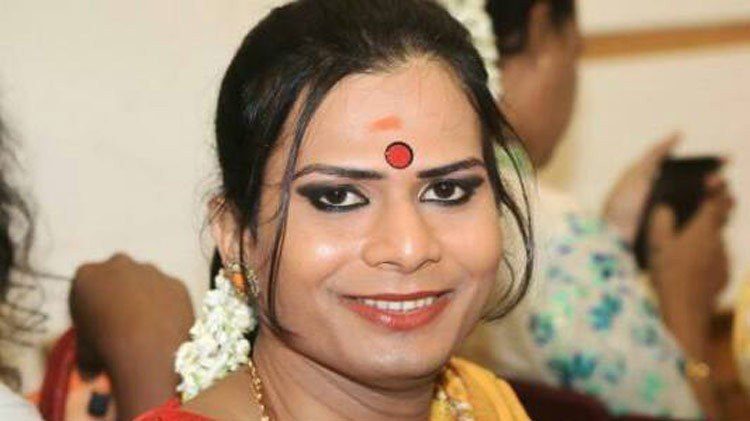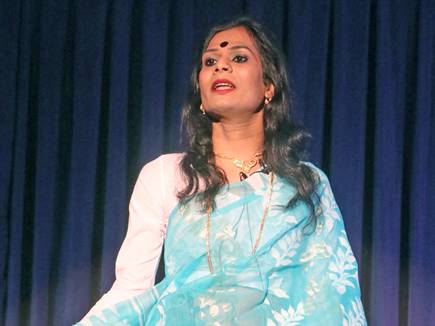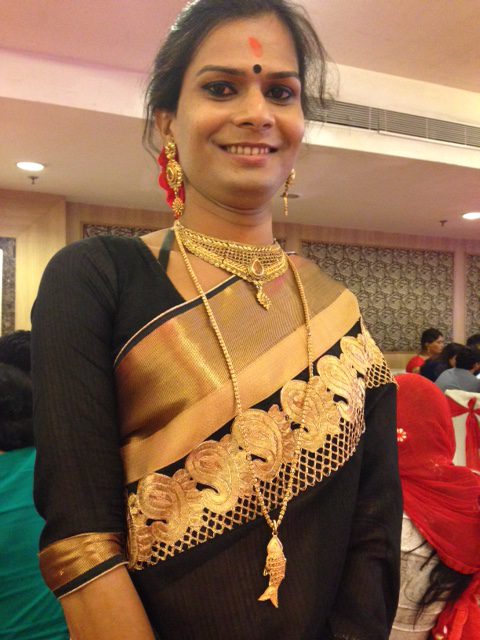
Joyita Mondal
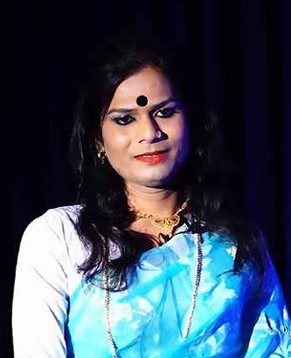
Birthplace:
Kolkata,
West Bengal
Residence:
Uttar Dinajpur, West Bengal
Qualification:
B.A. (Hons.) History
Inspirations:
Sisters
THE RIGHT JUDGEMENT
She was bullied in school and college and was subjected to physical and sexual abuse. And the discrimination meted out to her became so unbearable she had to relocate to a neighbouring district, where she had no place to sleep other than the bus depot. Now, as India’s first transgender judge, she has proved that the sky’s the limit for those from the community who wish to fly, and have the determination and courage to do so.
When faced with adversities, the brave among us respond with determination, steadfastness, intensity and an unwavering faith in oneself. Joyita Mondal’s journey of life quite exemplifies this. The teen who once left home repulsed by an all-pervading milieu of discrimination, today stands tall as a symbol of resilience. It has been excruciatingly tough though. Her fightback has entailed sacrifices, challenges and learnings.
Joyita was the third child born to Suchitra and Jogesh in Kolkata on 17 September 1988. The family was ecstatic to have a baby boy after two daughters and so named him Joyonto.
“But my family’s expectations from me and mine from them were poles apart. I always saw us siblings as three sisters. I hated being called a brother to them,” she says.
Her parents, meanwhile, were hoping she would one day outgrow this ‘phase’. “Everyone – from my parents to teachers to our private tutor – was trying hard to change me. I was taken to doctors, psychiatrists and counsellors in the hope of finding a ‘cure’. I was enrolled in an all-boys school while my sisters attended a girls’ school and got to wear skirts. I felt that was discriminatory.”
Bullying, sexual abuse
Joyita never got the protection a child should receive from its elders. The headmistress, out of love, once told the boys that Joyonto was her “special girl” and it became a big disaster as it opened the doors to more bullying and jeering. Sadly, none of the bullies were ever reprimanded by school authorities. Verbal abuse turned into physical and then sexual abuse.
“One day, I was physically abused in the washroom. I returned home traumatised, in mental, emotional and physical pain. My school dress was stained with blood. Imagine my mother telling me that it was the right thing to do to teach me to start behaving like a boy.”
College didn’t get any easier. “Stigmatisation and discrimination only worsened. I was ragged on my first day in college; I was made to smoke forcibly. What could I do? I had no one to defend me. To top it, my mother ensured that the few transgender friends I had also kept their distance.”
Social ostracisation
Joyita was treated like a blot on the family’s reputation. “I wasn’t taken along to social functions, and was prevented from participating in school or college programmes or platforms where I could be visible.”
Angry and dejected, she dropped out of college and left home in 2009, lying to her family that she had got a job in the neighbouring district.
“Now, this was an interesting place surrounded by Bangladesh, Bhutan, West Bengal and Bihar. But when I first arrived here, it seemed like a town where time had stood still. Slow-paced life, regressive mindsets, and social and caste hierarchies,” she recalls, adding, “Why would any hotel accommodate me in such a place?”
Joyita then joined the local socio-ethnic group of transgenders. “I met many more like me. But with no work, I too had to beg and often sleep on bus stands. But I had little choice. Around this time, encouraged by my guru, I resumed my education, studying History for graduation through distance learning.”
Raging the right war!
Inspired by organisations in Kolkata working for the LGBTQIA+ community, in 2010, she established her CBO, Dinajpur NotunAlo Society (New Light for Dinajpur).
“Initially, many local transgender people were apprehensive about joining it. They feared ostracisation if their families came to know about their true identity,” she recalls.
But it changed. “Currently, close to 3,000 transgender people are associated with us. As we got closer to the community at the grassroots level, we understood the health and social risks they faced and we had the opportunity to meet leaders like Laxmi Narayan Tripathi and Gauri Sawant.”
After the pronouncement of the 2014 NALSA vs Union of India case verdict, she changed her name to Joyita and went about carving out her real identity.
Joyita’s reputation grew, thanks to her CBO’s project outreach and her tireless work for the marginalised segments of society including the elderly and sex workers.
India’s first transgender judge
In July 2017, she was appointed to the National Lok Adalat’s bench of her district, making her India’s first transgender judge – a long way from the days when she had to sleep at the bus stand. “This appointment will be fruitful even if around 3% of the transgender persons here get dignified jobs,” she points out.
“However, a handful of us achieving success won’t bring a change. If the maximum of us beg and sell our bodies for a living, individual successes will mean nothing to me,” asserts Joyita, who is also associated with the Humsafar Trust and INFOSEM.
Even with the law decriminalising the transgender community, they continue to face harassment by people, police and in courts.
“Policemen refuse to file FIRs. I have had to intervene on so many occasions to get their paperwork done. How long will I be able to do this and why should I have to when the Constitution gives every citizen of this country equal right to justice?”
Although the Supreme Court verdict in the NALSA case clearly states that self-identification is enough, advocates often demand SRS certification or ID proofs for filing affidavits.
“They are making the procedures unnecessarily complex. In villages and towns, many people, including district administrative officials, don’t know about decriminalisation. We have to carry copies of the verdict to educate them.”
VISION FOR THE TRANSGENDER COMMUNITY
“I think we have been given the plate but the food is yet to be served. We are still fighting for equal rights,” she says. However, she adds, “The transgender rights movement is comparatively new but change is visible. I want to see transgender people in every profession and at every level of hierarchy. Job reservations will contribute towards achieving this goal. Government measures are not reaching the grassroots and we continue to work for that. I wish the community gets parenting rights too. Having faced so much ourselves as children, we can ensure our children don’t have to face the same.”
MESSAGE FOR THE MAINSTREAM SOCIETY
Joyita says the new laws and welfare measures, although late, have created awareness leading to some acceptance. “But we need more. We are all part of this society. We need a chance, love and respect. We want to walk together with society.” Her family accepted her back eight years after she had left home. “I hope other families don’t alienate their children. My mother now feels she should have stood by me then.” Meanwhile, Joyita is making up for all the lost opportunities by sensitising mothers of other transgender people. “‘We all are one’ – I want to experience this sentiment,” she says.
FIVE FACTS ABOUT JOYITA
She likes to stay updated on political happenings.
She visits Rabindranath Tagore’s ancestral house at least once a year.
She draws her strength from Tagore’s song Ekla chalo re.
Her strongest traits are resilience and determination. “I always aim higher.”
In 2010, she was the first transgender person in her district to get a voter’s ID.