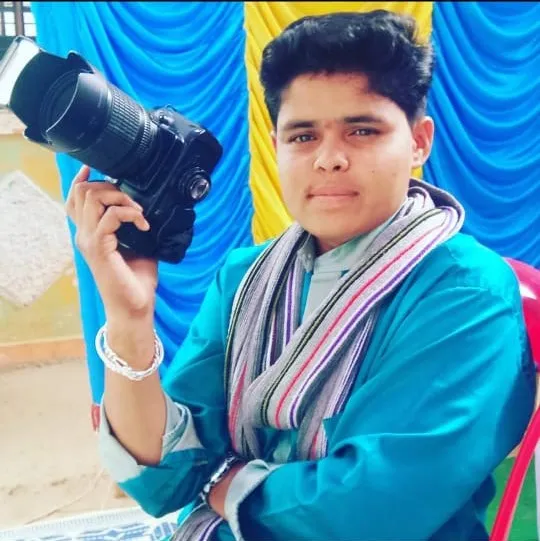
Kiran Nayak
Birthplace:
Warangal, Andhra Pradesh (now in Telangana)
Residence:
Chikkaballapura, Karnataka
Qualification:
B.A. (Social Sciences)
Inspiration:
His teacher, Krishnamoorthy, and Elavarthi Manohar
A STORY OF GRIT
Despite facing the mountain of challenges – as a transgender person with physical disabilities – he has never allowed the circumstances to dictate terms. One who’s been passionately running Karnataka Vikalachetanara Sanghatane (KVS), an organisation for persons with disabilities since 2012, to foster an understanding of the intersectionality of gender and caste, he is truly a superman in a wheelchair and a transgender man.
His story is one of quagmire on two fronts – struggle for an identity, and overcoming the challenges associated with his disability.
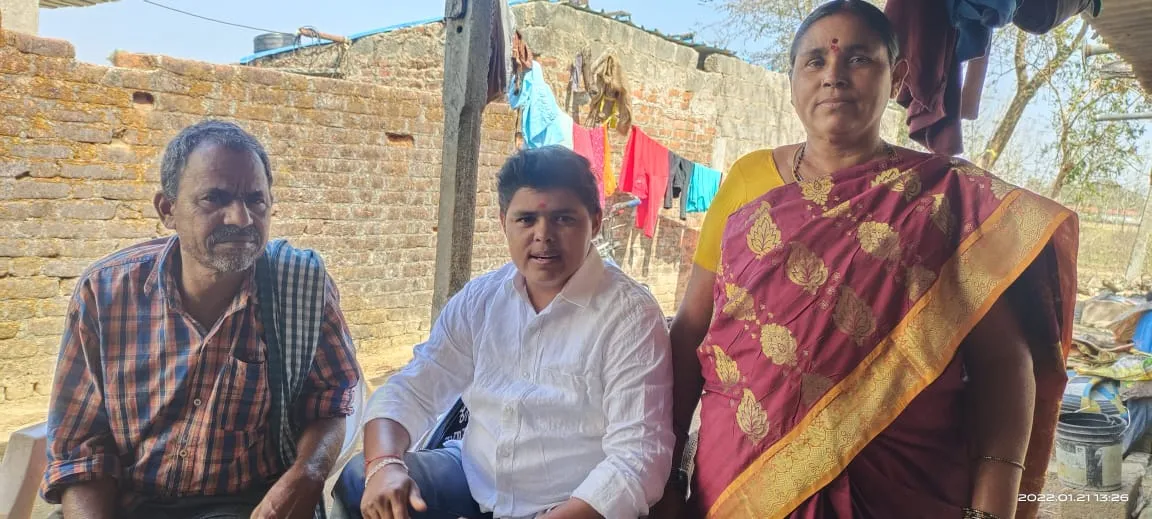
Born in 1986 as a girl, he was crippled by polio at the age of three, which left him paralysed waist down. Though poor, his parents did all they could to get him the best treatment, and for that, they even sold off their cows.
The Lambani tribe of the state, to which he belongs, is said to be biased against girls, so this and his physical disability meant he was confined to the house. But the urge to learn was very strong in Kiran.
It was around this time that Mr. Krishnamoorthy, a teacher in a nearby school, managed to convince his parents to allow him to go to school. He assured them he would take him to school every day on his bicycle.
At the age of nine, Kiran finally joined the school. Not only had he begun late, he could not play with his classmates because of his disability.
“To top it all, I was in a girl’s body that I knew wasn’t me; I was always confused about my gender. Most students in my class — both boys and girls — avoided me. I had very few friends. Thinking of it now, I realise how lonely I felt back then.”
After some early struggle, he started doing well, well enough to convince his parents, after class 5, to allow him to attend district-level school some 30km away. At the new school in Warangal, he easily settled in the women’s hostel for those with physical disabilities. He made friends with Saritha, another girl with disability challenges.
Once he completed school, he found help in Mr. Krishnamoorthy once again, who provided him with books and other reference materials to complete his pre-university course (PUC) at Narsampet.
When Cupid struck
During his school days, Kiran participated in a Disability Day meet at Hyderabad, where around 6,000 people with disabilities had assembled. Watching some of them do extremely well for themselves motivated Kiran to do something – for the cause of those with disabilities.
It was more of his disability that was visible during his school days. His opening up about his gender came about after he fell in love. While still studying, he fell in love with Saritha’s sister, Radhika. It was then that he realised he was more attracted to women. He did tell Radhika all about him but the love was strong.
Without informing their parents, they got married in a mass marriage ceremony at Tirupati in March 2008. Radhika had registered herself as Kavya. It created quite a stir when the news of this marriage came out. Kavya’s parents revolted. They were hounded by the media and the police. A court case was filed against them.
Was this marriage legal at that time in India? “It wasn’t,” he replies, adding, “It wasn’t even heard of. People might have come to terms with it now, but back then, it was taboo. But love wins in the end. We did find support.”
Help came in the form of Raju of Gemini News (one of Kiran’s best friends) who sheltered them in Hyderabad. Later, Sangama, a Bangalore-based organisation that supports and works for the rights of sexual minorities, sex workers and people living with HIV, came to their rescue and Kiran and Kavya relocated to Bangalore (now Bengaluru).
Turning point
Kiran decided to contribute to Sangama. He learned Kannada and computer skills and enrolled in a two-year fellowship programme from Aneka, Bangalore. In 2011, he formed a community-based organisation, Nisagara, and was instrumental in forming KVS, an organisation promoting the rights of the disabled community. He has formed strong connections with governmental organisations and officials.
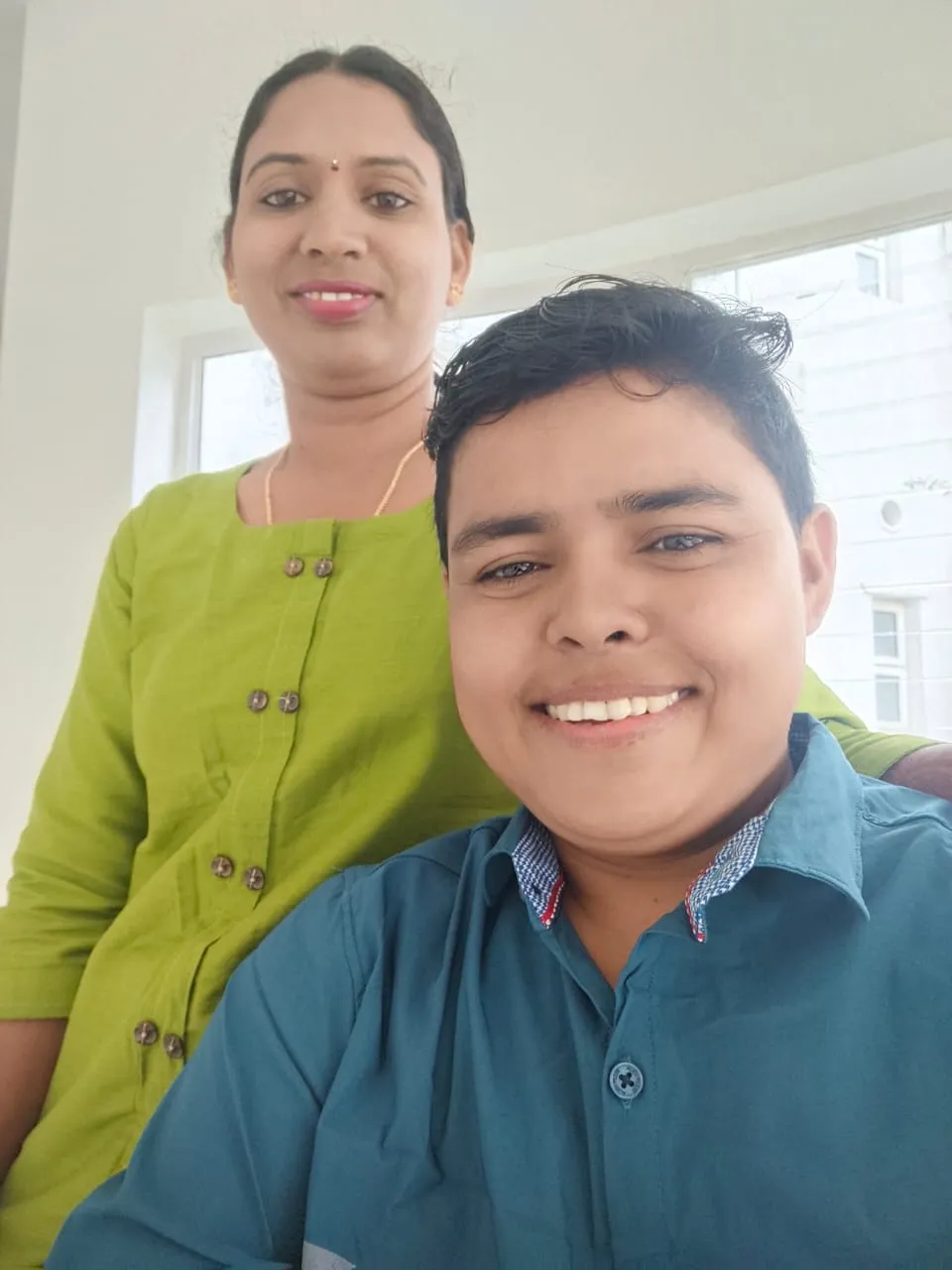
In all his endeavours, he finds great support from Kavya. “She is my biggest support, friend and guide,” he avers.
There are many in his village who face such problems, he says, adding, “I realised many are apprehensive of coming out. It was then that I decided to open up. I was sure others would follow suit.”
In 2014, he gave an interview to Prajavani, a leading news daily in Karnataka, where he spoke about his gender identity. “After that, many sought help from me.”
Apart from the pains and trauma of being disabled, he had to face the consequences of opening up about his gender. However, ever since, undeterred, he has been vocal, going to every meeting or interview, gathering people to discuss the issues, trying to find solutions and creating awareness.
“People look at those with disabilities with sympathy and may feel bad for them, but transgenderism is seen as a physiological issue,” he points out, stressing that society needs to give transgender people their own space.
“Hijra communities have a guru-chela system that is quite supportive but no system exists for transgender people. So, if someone comes out, where should the person go?”
To address some of these issues, he started the Society for Transmen Action and Rights group (STAR).
“For society to be aware, we have to be brave to talk about ourselves and not just blame the society,” says Kiran.
“Whether they understand it or not is secondary; we at least have to talk openly about it. The change will be slow but our effort is important. Not everyone will agree with us but at least there will be a discussion. One in a hundred changing is an achievement,” he emphasises.
Of course, without government support and policies, none of it is achievable, he admits.
“Without the right schemes and policies in Telangana, many transgender people have had to move to some other state. But then this heralds its own sets of problems as every state has its own recognition terms and conditions of castes. If every state makes it mandatory to provide shelter, education, housing, etc., for transgender people, quite a few things can be solved.”
Kiran has built networks of transgender people, which has enhanced their access to sexual and reproductive health and mental health services.
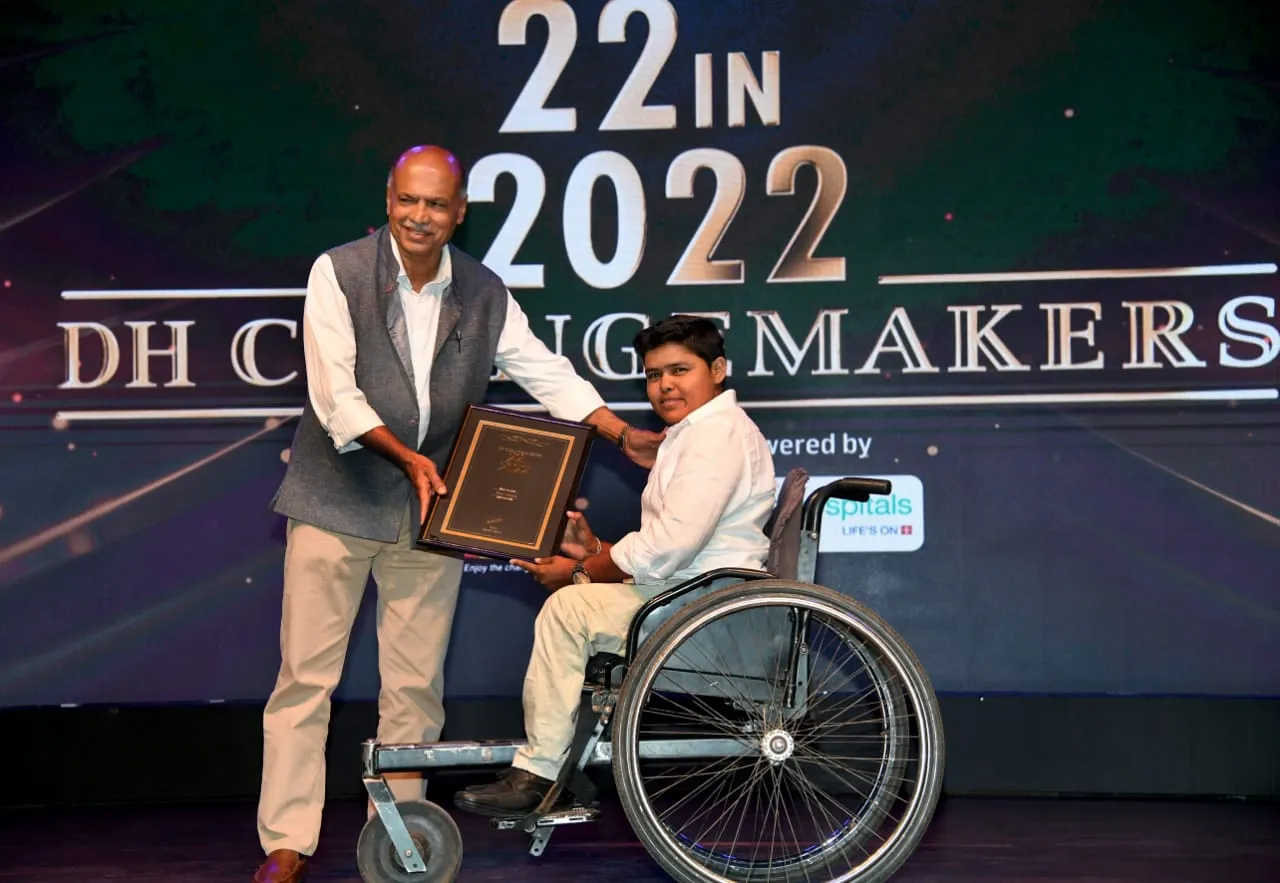
The National Centre for Promotion of Employment for Disabled People (NCPEDP) honoured him with the Helen Keller Award in 2020. He has also received the Rajya Prasasthi (good social worker) award from the Karnataka Government; the Uttama Samaja Sevakaru award from Interfaith Group; and the Good Community Encourager award from Women and Child Department, Karnataka, to name a few.
He credits all his present learnings to Manohar Elavarthi, the founder of Sangama. “Watching and listening to him, I learned about transgenderism, the way to speak to government officials and bureaucrats, and the way to address different issues.”
VISION FOR THE TRANSGENDER COMMUNITY
Kiran feels that the transgender community should take up issues of advocacy and also try to bridge the awareness gap with society. “They have to find their own leaders and draw on various people to take up these issues. Waiting for Godot will not help us. We need to initiate things, without depending on others.”
MESSAGE FOR THE MAINSTREAM SOCIETY
“Not every transgender person with physical disabilities is as lucky as I am. There are not enough Krishnamoorthys. There is no aid for transgender people with disabilities. Clinics for transgender people may have come up lately but there is so much more to be done. Society and government must work hand-in-hand to ensure the LGBTQ+ community can earn a respectful living and find a place. We are working towards their access to government entitlements, livelihood and loans, among others.”
FIVE FACTS ABOUT KIRAN
As a routine, he reads newspapers and follows the news on TV.
He loves to play carrom.
Fish, jowar and rice are his favourite things to eat.
He trusts everyone easily and is emotional.
Nagarjuna is his favourite actor.