Mahi Gupta
Birthplace:
Katihar, Bihar
Residence:
New Delhi
Qualification:
B.A. (Hons.) Sociology
Inspiration:
Abhina Aher
ON THE RIGHT TRACK
She is a doughty fighter – brave, determined, and not easily defeated. Facing a barrage of ridicule and harassment after coming out as a woman trapped in the body of a girl, she never lost her hopes; rather keeping head held high. She works hard and has been doing so for years – irrespective of derision or rebuke! She is smart, and she is intelligent. In a nutshell, she is a trendsetter.
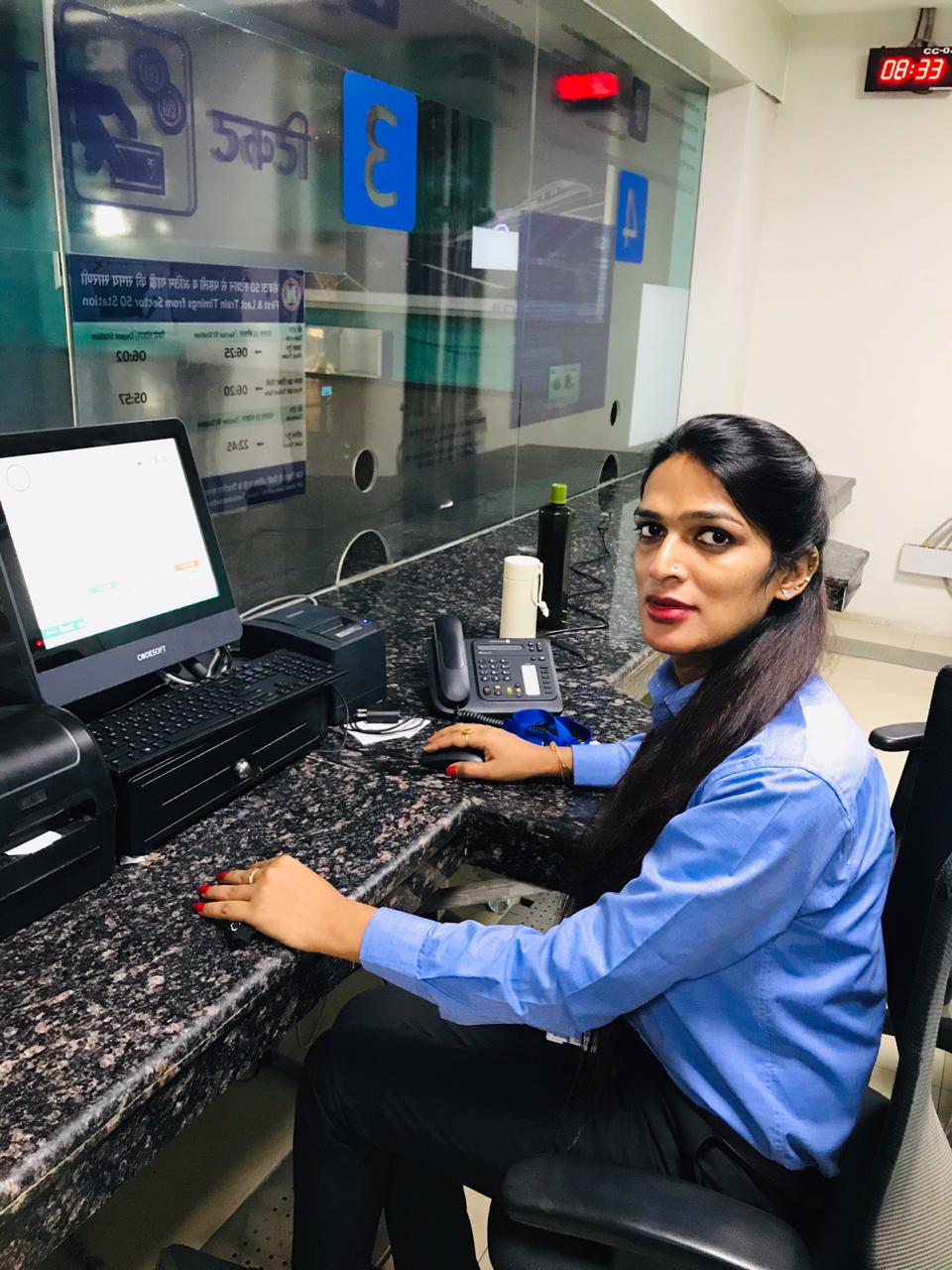
She works as a ticketing operator with Delhi Metro, the world-famous mass rapid transit system that serves Delhi and its adjoining satellite cities, in the National Capital Region of India. Efficiently handling her job, Mahi Gupta was not sure she could travel this far in life with confidence.
In her initial years, it was all about a quest for true identity. Born a male, she grew up with three sisters and always liked being a girl. Back then, her young mind couldn’t quite grasp why it was so.
“I always wanted to dress like a girl, do chores like a female. I loved henna as a child,” she recalls. With this behavioural pattern, many had started commenting that the child should have been a girl.
By the time she was in class 7, Mahi began to be aware that she was a girl trapped in a man’s body, and, therefore, the need to change. She, however, had no idea of how to go about it.
“By the time I was in class 12, I knew I was a girl and wondered why I had a male body. Unable to share this complication with anyone, I felt pretty lonely. I was a male for students and teachers but they treated me like a girl, which was okay with me, but to know that they did it all just to mock me hurt a lot. I was bullied. My parents faced flak. I was asked questions about things I didn’t know, I was often shunned. It was all very traumatic,” she reminisces.
Shared journey
It was around this time that she met a kindred soul, Navya Singh, a fellow mate at coaching classes. She was at a bus stop and saw some people misbehaving with someone. She was compelled to ask them to back off. And thus started her friendship with Navya. The two later realised they were both dealing with the same issues.
“We started our transgender journey together,” says Mahi.
It was sometime in 2012 when Navya, in Mumbai then, invited her to get her gender reassignment process done. “We were constantly in touch. We shared whatever news we could gather to help us out.”
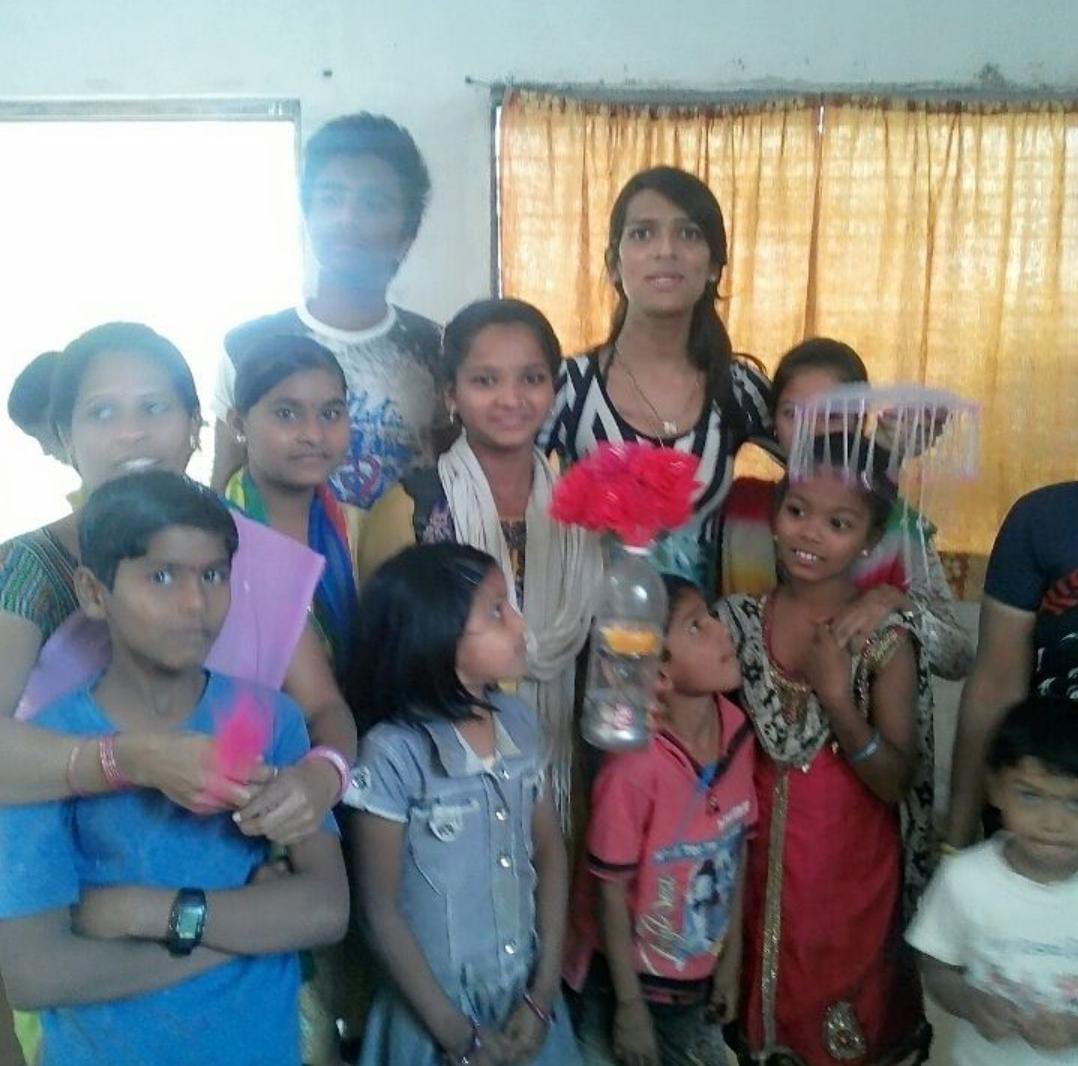
Mahi used to teach children the craft of making soft toys, besides giving tuition to them. With some money shored up, she left for Mumbai and started working as an outreach worker with an NGO. She, however, wasn’t very sure if she should go in for gender reassignment surgery.
“I needed to think clearly and felt I should give myself a year to sort out my thoughts.” She then returned to Bihar.
Back home, she joined Sneh, an NGO that worked to create awareness of HIV/AIDS, and started working as a counsellor and programme manager, in the process of learning, achieving something and also saving herself some money.
While visiting Delhi, she met a few doctors seeking their opinion and got counselled. In 2013, Mahi got her surgery done in Mumbai.
Fighting through trauma
Recollecting those traumatic days early in her life, she says she had to go through it all alone. “In villages, it is tough to convince people that a boy too can face harassment. However, things are slowly changing now.”
Mahi left home in 2008. “A friend, Manjul, helped me cope with the tough times,” she says. Later, from 2008 to 2012, she helped him with crucial moral and financial support.
As it turned out, a transgender person earning on his own and leading a normal life created quite a ruckus. “The villagers called up the police and threatened to punish me. The kinner community was not helpful. They wanted me to go to events, dance, and seek money with them. I was against it. Why should I if I could teach and earn – wasn’t it better and righteous? My self-confidence was completely eroded; I even contemplated suicide. And then I took the media’s support.”
That experience, however, had its impact – it made her tough and she also realised that she wanted to lead her life as a female.
“I had no idea what transgender as a term meant, while I had decided that I will henceforth live my life as a woman. All the scorn that came my way strengthened my determination to realise my wish,” she asserts.
Mahi then completed her graduation, earning through tuition on the way. However, she hasn’t yet got her degree as she got her gender changed after the exams – “that’s where I seek government intervention”.
All through, she says, family support has been non-existent. “The only time the family supports you is when you achieve something, otherwise not.”
The transition, she points out, is a lonely battle. “I visited home after my surgery in 2016. My parents, however, didn’t allow me home and I ended up staying at a friend, Manjul’s home.”
In Mumbai, tough times didn’t end even after the surgery. Hardly 30mins after reaching home post the surgery, some transgender people asked her to leave and she was forced to pick her things up and walk, resulting in a loss of blood. However, she found shelter at an NGO and started working as soon as she healed.
With just about Rs. 5000 monthly earnings, she generally survived on vada pav (a vegetarian fast food dish native to the Indian state of Maharashtra. The one silver lining was that her work was appreciated by the NGO, and she was asked to travel to Aurangabad and other places to help and teach other transgender people. Wherever she could, she also taught children to make soft toys.
She says that while she isn’t a part of any NGO, she is always ready to help other transgender people who come in touch with her. She raises their issues through social media.
She was on a visit to Delhi when the lockdown was declared. It was then that she saw an advertisement for placement with the Delhi Metro Rail Corporation (DMRC). She applied and was offered the job, and she joined it. What impressed people was that despite all the hardships, Mahi had never resorted to alcohol or drugs.
“Bollywood actors, Anupam Kher and Vivek Oberoi and Indian politician and social worker Priya Dutt, awarded me,” she recalls with pride.
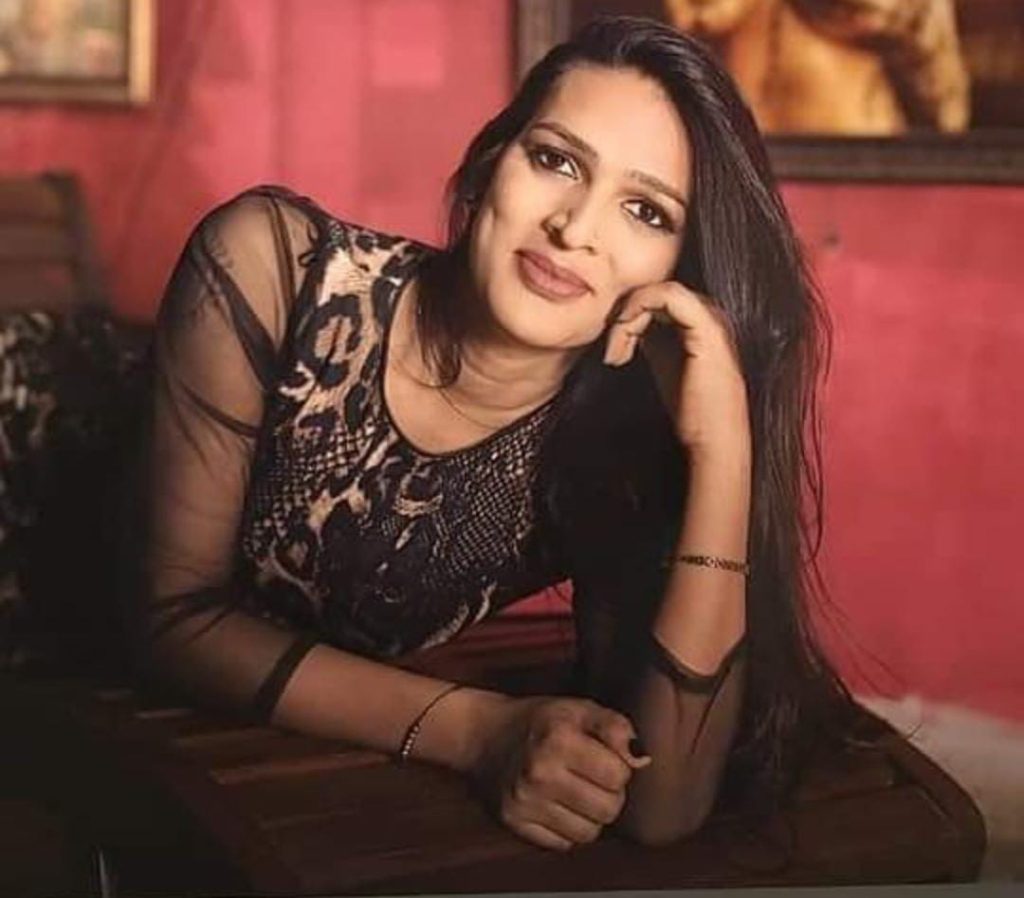
In 2017, her never-say-die attitude saw her participating in a beauty pageant in Patna, where she won the Miss Bihar title. She competed in other beauty pageants too. Society, and also her family, now started valuing her achievements. Though her family, now in touch with her, is able to come around to her choice of living, they still are quiet about it fearing society.
“Abhina Aher inspires me – she is my role model, my mother. Her ability to lead a normal life took me in the same direction,” she informs.
And, what keeps her going? “The taunts and negativity thrown at me. It makes me fight myself and get up every morning to face it all over again and find myself,” she iterates.
VISION FOR THE TRANSGENDER COMMUNITY
As far as the transgender community is concerned, she says many are not able to help each other out. “Each one of us is battling and even if one wants to help there isn’t much to do. There’s a sort of helplessness – for those who need it, and for those who could provide it.” Sometimes, help comes a little too late. The community needs to interact more with society to dispel fears and wrong notions. “Awareness in metro cities is low; let’s not even talk of rural India,” she rues.
MESSAGE FOR THE MAINSTREAM SOCIETY
“Don’t pull down people if you can’t push them up. We might be different physically, but our talents should matter, not our limitations,” she says. “Pride rallies should focus on towns and rural parts to spread awareness – among medical experts, police, and every other citizen.” The major challenge, she notes, is employment and housing. “It is very tough for transgender people to find a house on rent – deposit and rent amount increases multiple times or they are simply denied.” She also hopes the government soon give them parenting rights as well.
FIVE FACTS ABOUT MAHI
She wants to adopt children – a lot of them!
She is keen to join the Bihar Police or join the Army or become an air hostess.
She loves travelling and wants to pursue modelling as a career.
Her choice of music is distinctive – she loves meditative instrumentals and fast-paced numbers.
She loves fish and chicken.