
Mayuri Shivajirao Alvekar
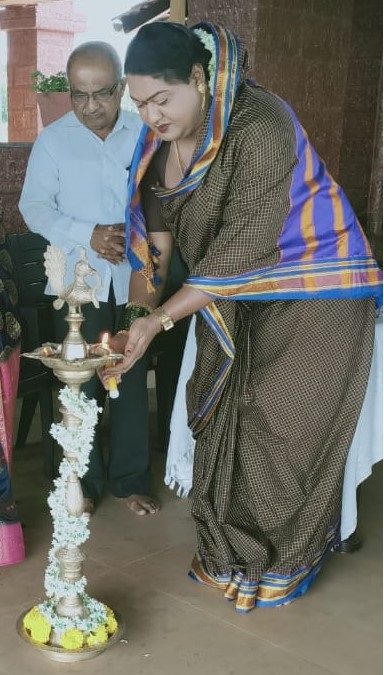
Birthplace:
Kolhapur, Maharashtra
Residence:
Kolhapur, Maharashtra
Qualification:
Class 6
Inspiration:
Sagar Patil
TIME TO DISCARD BIASES
Founder of Maitri Sangathana and a member of the Maharashtra Transgender Welfare Board, she is a selfless woman dedicated to the cause of the rights of the transgender community. Recognised for her outstanding contribution to the community’s welfare at India’s first National Transgender Awards, she has set up a system in Kolhapur that makes getting gender identity cards easy.
The best thing about being a transgender person is that one doesn’t have to pretend to be what one is not, says Mayuri Shivajirao Alvekar, who, right since her childhood, has seen her world crumbling many a time but not once did she give up hope of finding her rightful place in society.
Mayuri had realised very early in her life that she was born in the wrong body. Born as a boy in 1983, she loved doing things that society has labelled feminine – dressing up like her mother, helping her with the household chores, wearing makeup, etc.
Her mother, who was single-handedly managing three children and a home, appreciated the helping hand. However, the neighbours and passersby would point fingers and sneer at her mother for allowing Mayuri to her feminine ways.
“My father passed away when I was only two years old, and my mother was bringing us up all alone. She was often told to mind me and make me a man, make me wear manly clothes etc. But she never gave them an ear. I love and respect her for that – it takes immense courage to do that in our society,” avers Mayuri.
Life moved on like this for some time. And then things came crashing down – her mother left the world one day, suddenly. People, now, more than ever, started judging her. “They rebuked me. Some decided she died because of me,” she says.
As a 17-year-old, she was already a young, timid and confused person, but now she was very scared too. People don’t realise that when they point a finger, three fingers are pointing back at them.
Mayuri clearly understood she couldn’t support her younger siblings in that neighbourhood and decided to move to a different locality. She found support from her uncle and aunt and started working in a hotel.
Peace still eluded her and her hope of finding a secure workplace was jolted as she was physically abused there. She had to keep quiet as she knew nobody would take her version and instead would accuse her of mischief. And one day, she was fired from the job when her colleagues complained against her.
Not one to be disheartened, she continued looking for jobs although in vain. “Who’d want me? I was a walking burden – I had no parents; I had siblings to take care of; and they termed me a hijra without knowing the facts. I was pretty clueless. I’d cry every night,” she says, recollecting the trauma.
Desperately looking for a source of income to take care of her siblings, she was forced to compromise to the extent of giving in to become a sex worker. The path she took wasn’t easy – she was just 19, and she had never imagined that she’d have to resort to it one day. Other than the mental, emotional and physical toll that it takes, it doesn’t have a legal sanction, so she was often arrested.
But as they say, there’s light at the end of every tunnel.
Beginning of a friendship: Maitri
The ray of hope came in the form of Swapnil Patil. “We couldn’t stop thanking God for sending him to us,” says Mayuri.
Although he was among those who visited those streets, he sympathised with them on seeing their plight. “He told us he felt terrible watching our earning modes, lifestyles and the dire straits we lived in, and that he felt some connection. He often sat down to talk to us. With someone talking to us with compassion, we too felt like humans. He would guide and support us in everyday things and often suggested that we group up to help ourselves. And then, he suggested I start an organisation to provide shelter and help to the transgender community.”
The idea was great, but the challenges looked unsurmountable. Mayuri neither had the resources or knowledge nor was she educated enough. Swapnil, however, became her helping hand and with the community support and energy, they established Maitri Sangathana in 2007 with 11 gay, bisexual and lesbian committee members. It provided Mayuri’s life with a purpose.
And then, one day, her siblings came to know of all this – her gender, her job and Maitiri. Though Mayuri was pretty disturbed by this, her siblings understood her. “I still remember their words, ‘A matchbox cannot light a lamp without getting burned’. It was such a relief – I had spent all my life in ridicule and fear of my ‘secret’ coming open. And that day it all melted away. My family was accepting me as I was.”
Society, she points out, wants everything according to it. “There are hybrid fruits, flowers and animals. People’s emotions and mental states too are manipulated as per their use value. Every relationship must have some ‘use’, if not, it is ‘useless’ and disregarded. Whatever happened to love? People invite us to bless them when they need it from us; for the rest of the time we are the most unwanted.”
The Supreme Court’s landmark judgment of 2014, which declared transgender people the ‘third gender’ and affirmed that the fundamental rights granted under the Constitution of India would be equally applicable to them, was meant to change things. “But not much of what should have happened has happened. While some from the younger generation talk, discuss and try to accept us, the community continues to languish,” she rues.
Mayuri, meanwhile, continues to love herself the way she is. “This is what I am; this is my body; if not me, who else will love me? When younger, the challenges made me insolent and stubborn. Now, with age, I believe all that rebuke and discard has only strengthened me. Neither do I need handholding, nor can anyone pull the rug out from under me,” she asserts.
“I didn’t want to sell my body; society forced me to, and then it decided to throw me out. The moral police questioned me for selling my body to feed my family. Why doesn’t it question the people who buy our bodies for their pleasure?”
Mauyri iterates that they should simply stop spreading misconceptions or malice about transgender people and put an end to their ostracism. “If I have a male body but feel like a woman, why should society have an issue with it? The same society doesn’t question those who buy sex. And then, I have to prove myself to be a woman. Why? Is being a human not enough?”
VISION FOR THE TRANSGENDER COMMUNITY
Mayuri doesn’t want the community to be cantankerous. She says some people are not able to muster up the courage to come out, which is okay. They can still support the community. However, even when in the shadows, they need to accept themselves. “We also need to create awareness in the community of the ways the government is trying to ease things for us. There are portals and departments to help us with ID cards and benefits from government schemes.” Education and respectful jobs should be every transgender person’s priority, she says. “Some of us have already reached there, but none of it began from the top – they had to face a lot.” Her advice: “You are what you believe you are.”
MESSAGE FOR THE MAINSTREAM SOCIETY
With Google, one can easily educate oneself about the transgender community instead of believing in age-old superstitions. “Media has already played an immense role, albeit some of it is against us. What we see in movies is not always true is a well-accepted fact, right? So don’t believe everything you see there about transgender people. Entertainment and spice go hand-in-hand.” Age-old concepts of race, caste, colour and gender need to be overcome. Think beyond your limited view of the world – try to know us, give us the space so we can be equal contributors to development. Start teaching school students about the LGBTQ+ community without a bias.”
FIVE FACTS ABOUT MAYURI
She sees herself as a solution and not a problem.
She loves watching Tom and Jerry.
Her favourite song is Bana ke kyun bigada by Lata Mangeshkar.
Wearing her mother’s nightgown for the first time made her happy.
She feels miserable watching parents leave their children behind or not treat them well.