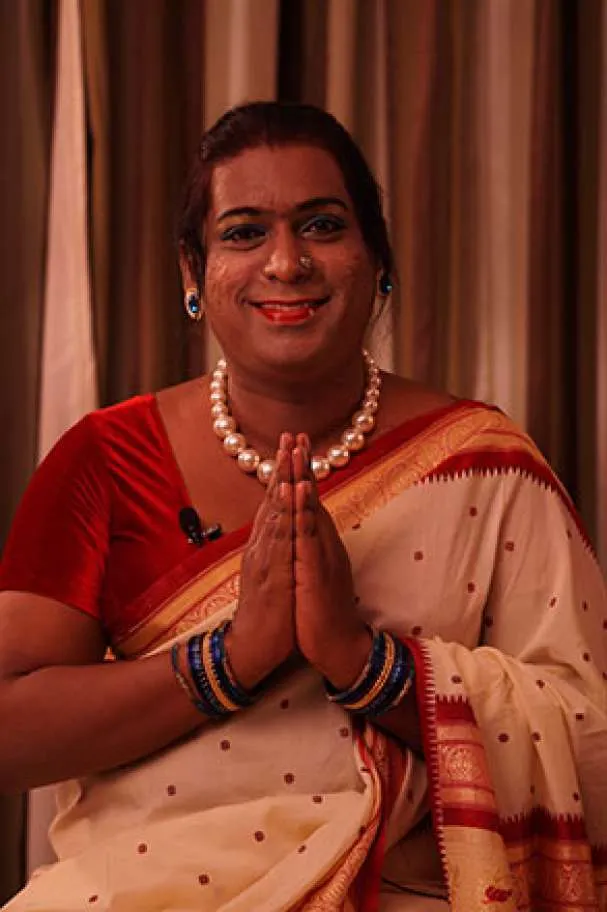
Rachana Mudraboyina
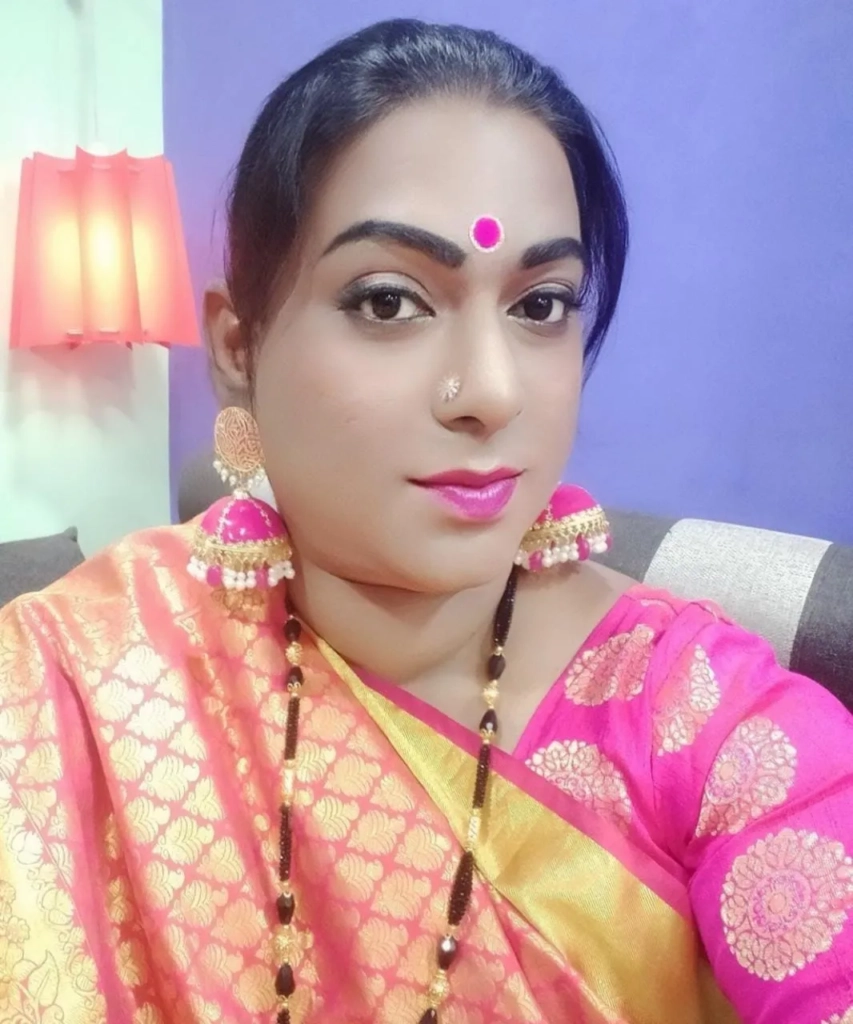
Birthplace:
Rajahmundry, Andhra Pradesh
Residence:
Hyderabad, Telangana
Qualification:
M.Com. and M.A. (Social Work)
Inspiration:
Mother Durga Malleswari, mother-like Laxmi Narayan Tripathi and adopted transgender daughter, Anjali
A MOTHER FIGHTING FOR PARENTING RIGHTS
It was the murder of a transgender woman that triggered Rachana to take up transgender activism. She has been the Acting Director at the Human Rights Law Network and other LGBT groups and is a coordinator at the National Network of Transgender Persons (NNTP), which has played a major role in resolving issues of the transgender community. A member of India UN LGBT Think-Tank, she’s also a board member of Aman Vedika, Bhumika, and a winner of the Women for Secularism, Democracy and Justice Award in 2017, and the Born to Win award in 2019. She’s taken up the cudgels for parenting rights of the transgender community.
It was not an easy choice to make, but coming out in the open as a transgender was one of the best decisions she has ever taken – of course, one of the most difficult ones too to go ahead with.
Born a male on 28 May 1977 in a middle-class family based in Andhra Pradesh, she was named Ram Babu. Sailing through the first six years – the time when gender hardly crops up in discussions – she realised she was different from boys her age by the time she was seven.
“It was difficult,” Rachana says, recalling her ordeal during schooldays. Uncomfortable using either male or female washrooms in school, she used the washroom “either after lunch or before the final school bell.”
The boys’ uniform made her uncomfortable too. “I would rush home after school to peel the uniform off – it felt like a cage. I would feel uncomfortable doing my daily routine in pants,” she says.
College life was more convenient for the choice of clothes. But before long, she was overwhelmed by the notion of the gender binary. “It’s a long path you have to take and quite a tough one. I was really scared of coming out. So, I waited until graduation.”
On 2 July 2009, the day the Delhi High Court declared Article 377 of the Indian Penal Code, which regarded homosexuality as ‘unconstitutional’, she came out in the open. “I announced to the world I’m a transwoman, in the full glare of the media,” she says.
Soon, she left her parents’ home and started living alone. For her, coming out was akin to “removing the first barricade to help me become happier and get to a better place”.
But the better place was a mirage. The stigma and prejudice in society towards transgender people denied her access to employment. “It forced me into sex work for nearly 20 years,” she says. However, that didn’t stop her from completing her education – first M.Com. from Punjab University, distance learning and then an M.A. in Social Work from Nagarjuna University.
She worked with a few NGOs including Pehchan, a Global Fund programme for transgenders, as an advocacy officer. “But after that, I was jobless again and needed to sustain myself. I had to return to what I despised – sex work – once again.”
During her arduous journey of life, she has lost many transgender colleagues – something that still weighs her down. “The community continues to suffer violence everywhere, she says. People throw acid, chilli powder and empty beer bottles on us, and beat us. Some transgender sex workers have been killed too but no one talks about them. Most of us give in to sex work and beg only out of the compulsion of survival. We suffer terrifying violence and abuse. I wonder why we have to suffer so much. It’s not our fault that we were born different,” she rues.
Rachana recalls that in 2015, following the murder of a transwoman sex worker, Pravallika, in Hyderabad, the police detained a few transgender people sex workers for interrogation. “The police stripped them to check their gender which was shocking and brutal.”
“No transgender person chooses sex work on will; they are forced to wander on streets, beg or sell their bodies for a livelihood. Instead of protecting us, police humiliate and abuse us based on our gender.”
Although she contributed her best to establish the Telangana Hijra Intersex Transgender Samiti (THITS) in 2014, it was Pravallika’s murder that triggered Rachana to take up transgender activism. She committed herself to upholding the dignity of the transgender community and started campaigning against the violence and abuse.
“Irrespective of the crime, by transgender people or against them, the police cannot touch their bodies,” she stresses. Years of advocacy have brought some change. I’m encouraged by the police officers who acted the right way.”
Crucial juncture
In 2016, the Supreme Court passed a landmark judgment recognising the third gender. Since 2017, Rachana has been the Acting Director at the Human Rights Law Network and other LGBT groups. She is a coordinator at the National Network of Transgender Persons (NNTP), which has played a major role in resolving issues of the transgender community. She currently is on its advisory board.
She credits Laxmi Narayan Tripathi for playing a key role in uplifting the lives of the LGBTQ and transgender communities in India. “She treated me like a daughter, she treats me like her daughter to date. Though I faced a lot of criticism and backlash as her daughter, I couldn’t be here without her.”
Indian Parliament passed the Transgender Persons (Protection of Rights) Act in 2019. “We appreciate the government for considering our suggestions while introducing the bill.”
Despite the new law, there is still a lot of resistance within the system, she says, citing an example of bureaucratic hurdles. The federal government has set up a portal where transgender people can apply for their identity certificates. The submissions go to the district magistrate who ascertains the applicants’ credentials. People can upload an affidavit declaring their ‘self-perceived’ gender identity, which will be the basis for the identity certificate to be issued by the district magistrate.
“However, many are still unaware of the portal’s existence,” she says, calling on the Ministry of Social Justice and Empowerment to ensure the system’s efficacy as intended. She feels it would take concerted efforts to sensitize every citizen to make things better for the community.
Rachana considers herself blessed as her parents provided her with a good education. “It [education] gives you a better understanding and leverage to effectively communicate your points.”
Transgenders as parents
She thinks transgenders can be the best parents and those aspiring to adopt children should be allowed to do so. Parents invite transgenders to bless newborn babies. Society, culture and tradition have given them this honour.
“So, how can law or policy deny transgender people to be a father and mother of a child? Because we know as children ourselves what we have lost,” she says. She is in complete love with Anjali, her adopted daughter, a transgender child.
She thinks the media has a bigger role to play in this area. “The mainstream media could do much to raise awareness of the LGBTQ community and their welfare. See what happened after Gauri Sawant’s Vicks advertisement!”
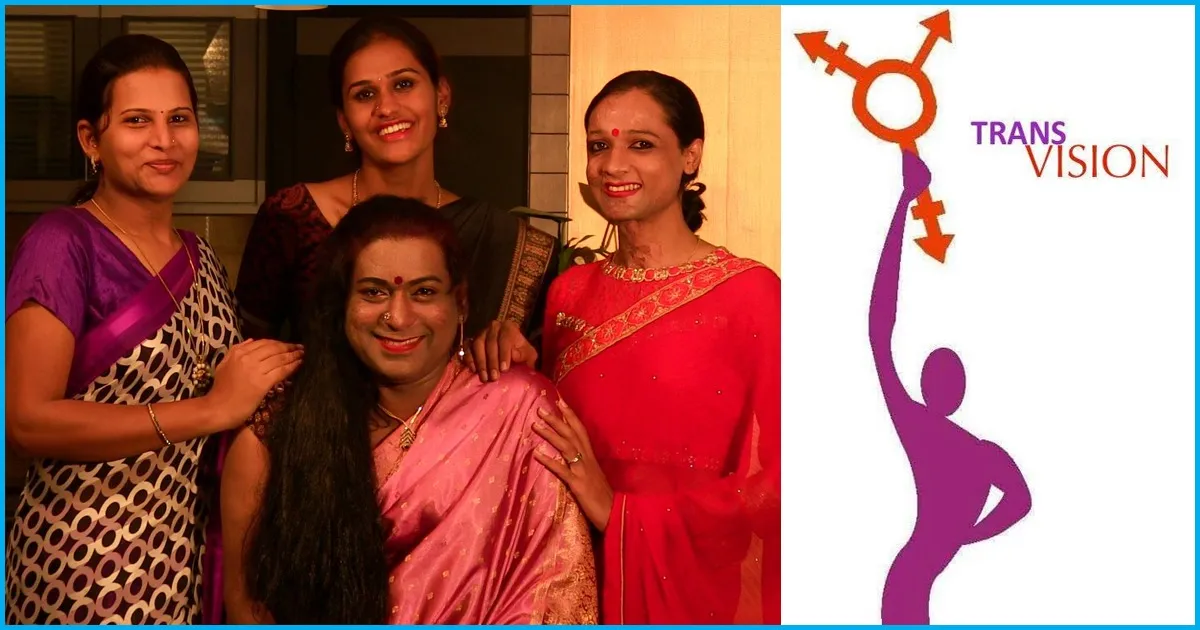
“Society blames us for creating the mess. But it’s the system that is not ready,” she says. She feels the need for a system that allows transgenders to work in corporates. She launched India’s first transgender YouTube channel TransVision in 2017. The channel aims to cut through the stereotypes and portray the positive side of the community. She hopes the channel can add to the work being done to bring the community at par with society: social justice, part of the tax system, beneficiaries of government schemes, insurance and pension plans. Once this happens officially, acceptance will come automatically. “Such inclusion would instil a sense of responsibility among in transgender community,” she says.
VISION FOR THE TRANSGENDER COMMUNITY
“To be an equal part, every transgender person needs to change their mannerisms. Unless we don’t change as a whole community, we can’t expect the whole society to change for us. Some of us are contributing wonderfully to society, true. But well, some of the mainstream society too has accepted us well. For the rest of the society to change, the remaining of us have to change!”
MESSAGE FOR THE MAINSTREAM SOCIETY
She appeals to society to never be judgmental towards a transgender child or transgender person. “What you do to the child, imprints their mind forever – they behave accordingly.” There can be a change and they can perceive the other gender also which is not harmful to society. “Once the family accepts a transgender child, the world accepts the transgender persons. The acceptance should first start at home, from parents,” she concludes.
FIVE FACTS ABOUT RACHANA
She has a deep respect and liking for the inherent motherly feelings in transgender women.
She despises lies.
TransVision, her YouTube channel, is very close to her heart.
She is fond of dancing, music and cooking and has a keen interest in clay modelling and graphic designing.
She has transitioned completely.