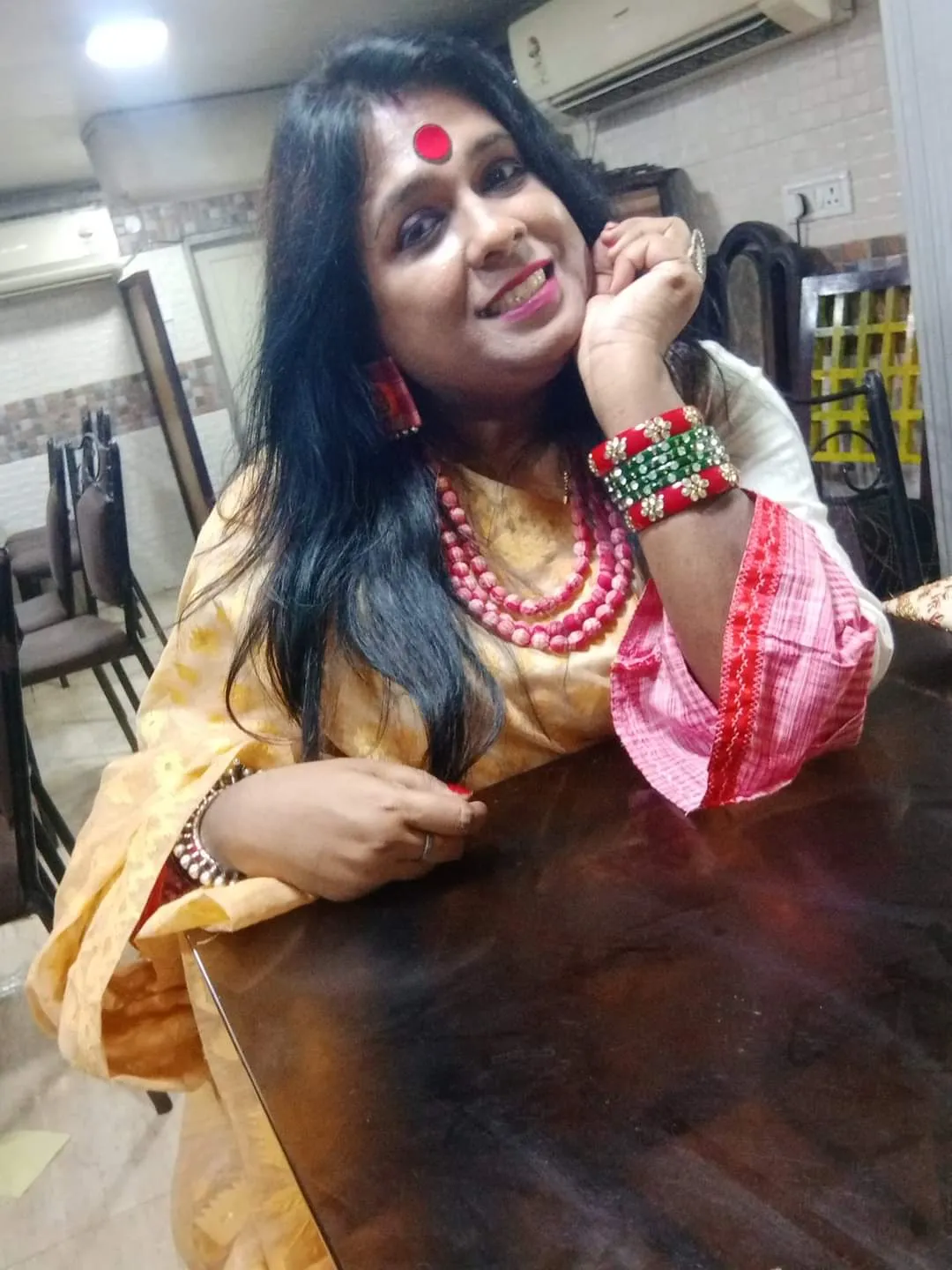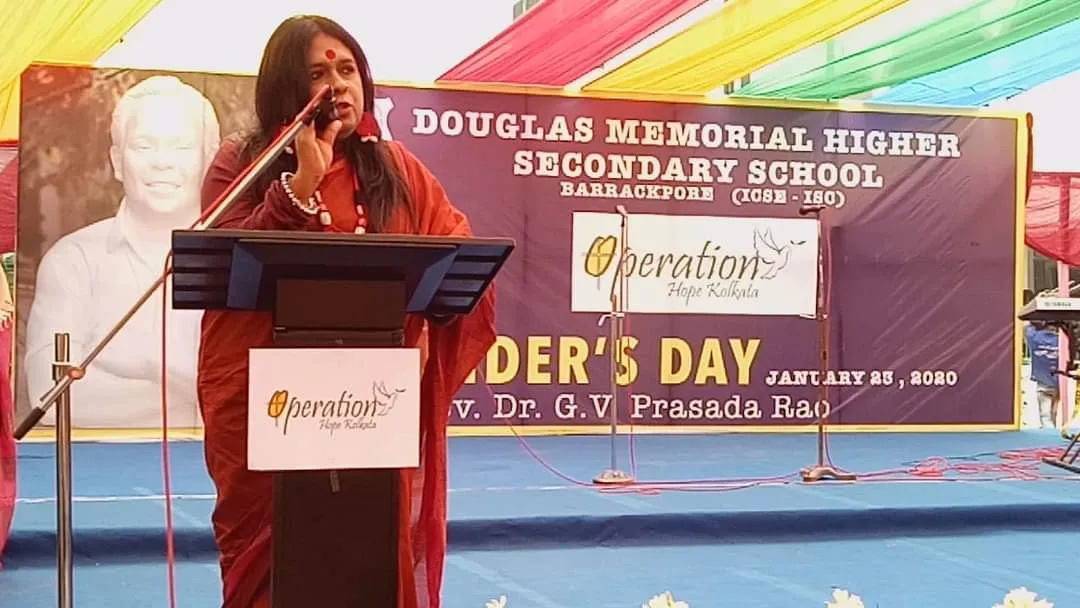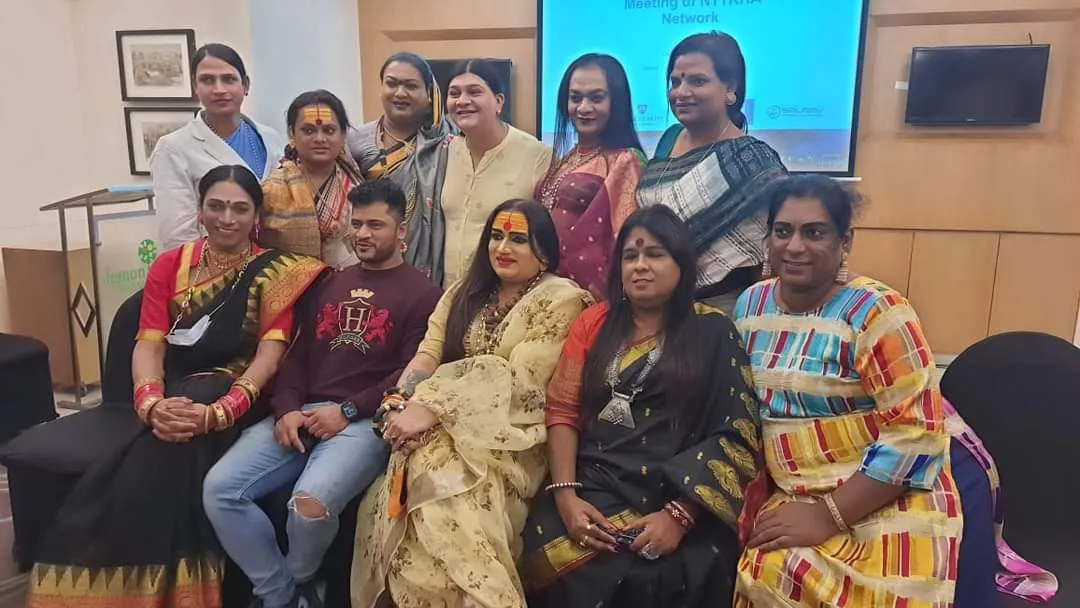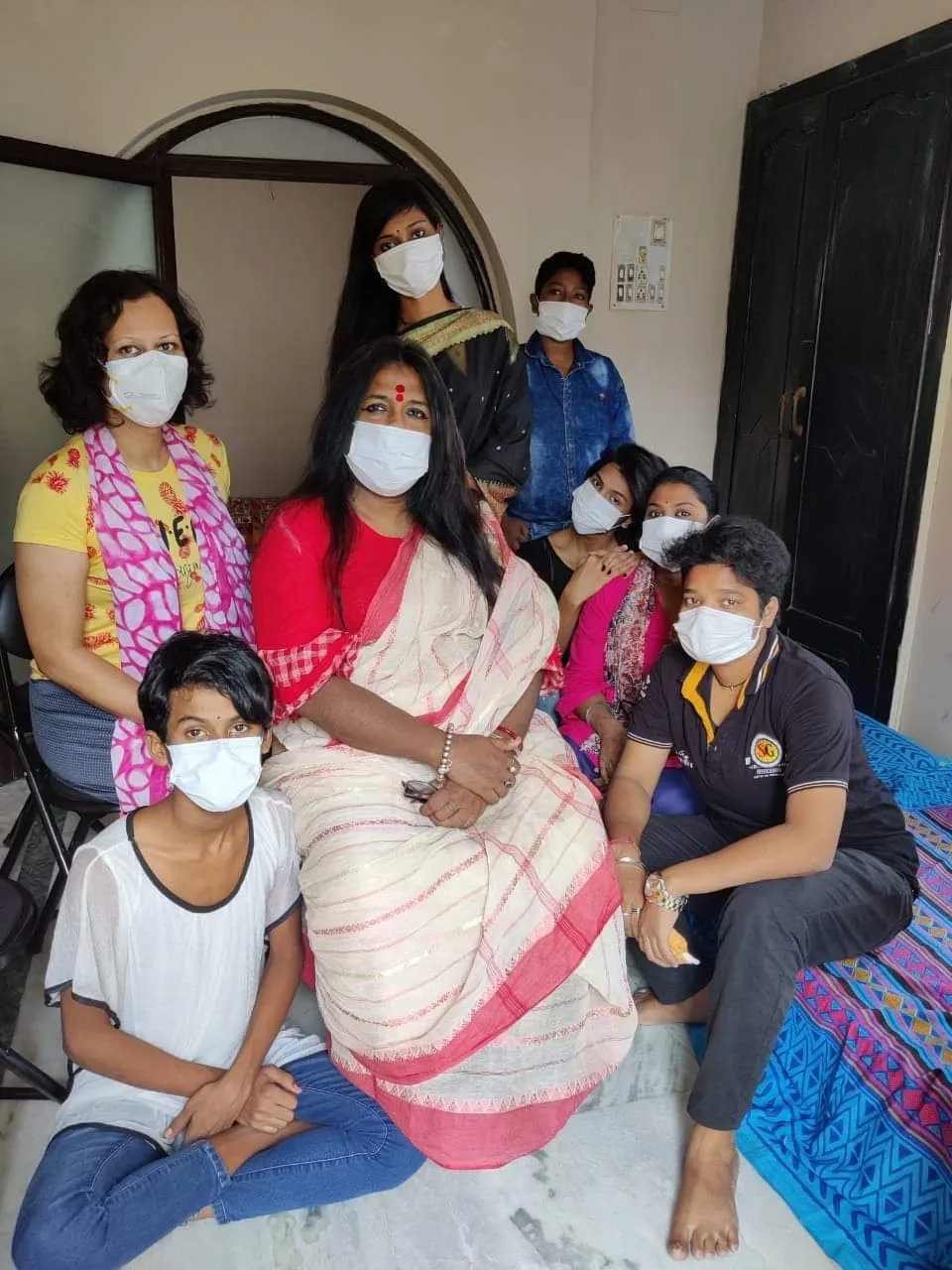
Ranjita Sinha
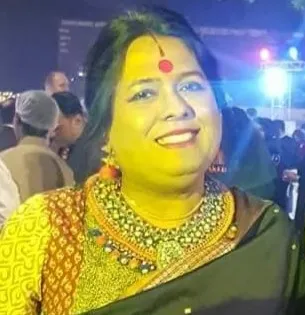
Birthplace:
Kolkata, West Bengal
Residence:
Kolkata, West Bengal
Qualification:
M.A. (Sociology)
Inspiration:
Laxmi Narayan Tripathi, Indira Gandhi and Rani Lakshmi Bai
THE ROYAL BENGAL TIGRESS
She is the founder of India’s first transgender network, the secretary of NNTP, a member of INFOSEM and a co-petitioner to legalise sex work in India. Runs Garima Greh, which brings LGBTQ+ members under safe wings. She has also been associated with NACO, UNDP, HIV Alliance India, WBSAPCS among many other organisations. After 25 years in activism, she has a lot of roar left in her.
When great traits from different lineages combine, they create an awe-inspiring result – she personifies that mix! Personifying that mix, she credits her fighting spirit to her Rajput father and intellectual and artistic leanings to her Bengali mother. She has been fighting tirelessly and fearlessly for transgender rights for nearly 25 years, pioneering and leading the movement in West Bengal.
A born fighter
Born in Kolkata in 1976, she imbibed the best of her parents’ cultures and professions – her father was a police officer and her mother a college professor. Unfortunately, she lost her father at the age of six. She was more inclined towards arts and literature – interests that her mother encouraged. “Sports never appealed to me. As a child, I had a phobia of men, which I could neither understand nor explain.” Even as a student, she was quite outspoken and always stood up against bullying and harassment in school for being effeminate. “I am a born fighter who will not dwell on pain and struggles. My power against discrimination and injustice is my voice and my I stand true to my name – Ranjita, the one who wins battles.”
She graduated in 1995 with a bachelor’s degree in Political Science and later took an M.A. in 1997, both from Ashutosh College (University of Calcutta). It was while she was pursuing hotel management industrial training in Chandigarh that she became aware of community rights movements in northern India. But she realised the absence of focus on the rights of a certain segment of people for whom there was no particular term in India. Transgender as term was coined in 1970 in the western world – the people of this segment were a taboo the world over. As she gradually became associated with the movement, she understood the atrocities, trauma and distress this marginalised community faced. “We are cheated in love, emotionally manipulated, swindled of money and have no one to turn to in difficult times. My pillar was my mother, but others are not as lucky.”
She quit the hotel industry because she refused to dance on anyone’s whims and demands and returned to Kolkata. “It felt like a slur when people told me to act like a man; I was never the one to tolerate such behaviour.” Back home, finding jobs became difficult because of her gender identity preference. But being inspired by dynamic personalities fighting for LGBTQIA+ rights, she continued her activism with full vigour. On 22 February 2002, she formed the CBO, Gokhale Road Bandhan. In 2008, she founded the Association of Transgender and Hijras in West Bengal (ATHB), India’s first transgender network, while working as a researcher for Durbar, Mahila Samanwaya Committee, which fights for rights and dignity of sex workers.
Battle-scarred, but victorious
For Ranjita, the annulment of IPC Section 377 felt like a sweet victory. “Leaders like Laxmi, Ashok Row Kavi, Gauri Sawant and many other luminaries fought on, and inspired others like me. Together, we have a glorious history of being first-generation petitioners. Our battles and sacrifices are weaved into the abolition of Section 377.” Her project, Snehanir, focused on the transgender community empowerment, engaging them in the creation and displaying a collection of handicrafts, jewellery, etc., acting as a dedicated space where they can interact and express themselves creatively.
She is also the first transgender to fight for pension rights. “The fight is not for money but for equal rights. If I win, it will benefit other transgenders too. A National Human Rights Commission report categorises the transgender community as the most backward group. Social security is our right, not a luxury.”
With her Bengali revolutionary spirit, she rightly says, “I am a revolutionary who fights for dalits, transgender community, women, sex workers and animals. It’s strange that these categories have to fight for rights! What makes them any lesser than anyone else is a prodding question.”
VISION FOR THE TRANSGENDER COMMUNITY
Education and capacity-building will pave the way for economic independence for transgender people. “It is the need of the hour for the government to implement policies that facilitate the expansion of our communities’ boundaries… this way we will feel safe and respected in the society and more people will have the courage to come out to their families.”
“The community has no health insurance cover and has to fight for share in family inheritance. We are not eligible for education loans, don’t have reserved hospital beds or jobs.”
She advises the community members to grab every opportunity and empower themselves with skill, knowledge and information. “Prove your worth, break social barriers, raise your voice and live a life of dignity,” is her message to the LGBTQIA+ community.
MESSAGE FOR THE MAINSTREAM SOCIETY
Ranjita has witnessed enough from close quarters to know what needs to change. She wants the mainstream society to stop using violence against them, show humanity and empathy, try to raise their awareness and also sensitise their families. “The false idea of superiority over the community needs to go. We are equal and capable human beings.”
She also hopes for CSR commitment towards the community and more sensitisation among grassroots government officials and policemen. Her exemplary life itself is a message. “I am proud of who I am and wish to be reborn as a transgender person. I get immense joy from caring for people.” She quotes Laxmi Narayan Tripathi’s line, “We have one foot in the door and before long, we will be part of the mainstream society.”
FIVE FACTS ABOUT RANJITA
She is an animal lover.
She has a keen interest in cooking and home decor.
She lives by Rabindranath Tagore’s philosophies.
She loves organising Durga Pooja wherein many transgender people participate along with the mainstream society.
Her community worships Ardhanareshwar, which is a unique depiction of Lord Shiva on one side and Goddess Parvati on the other.