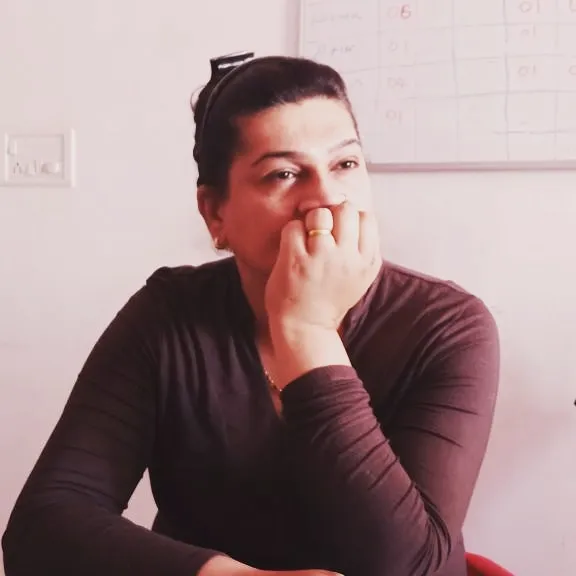
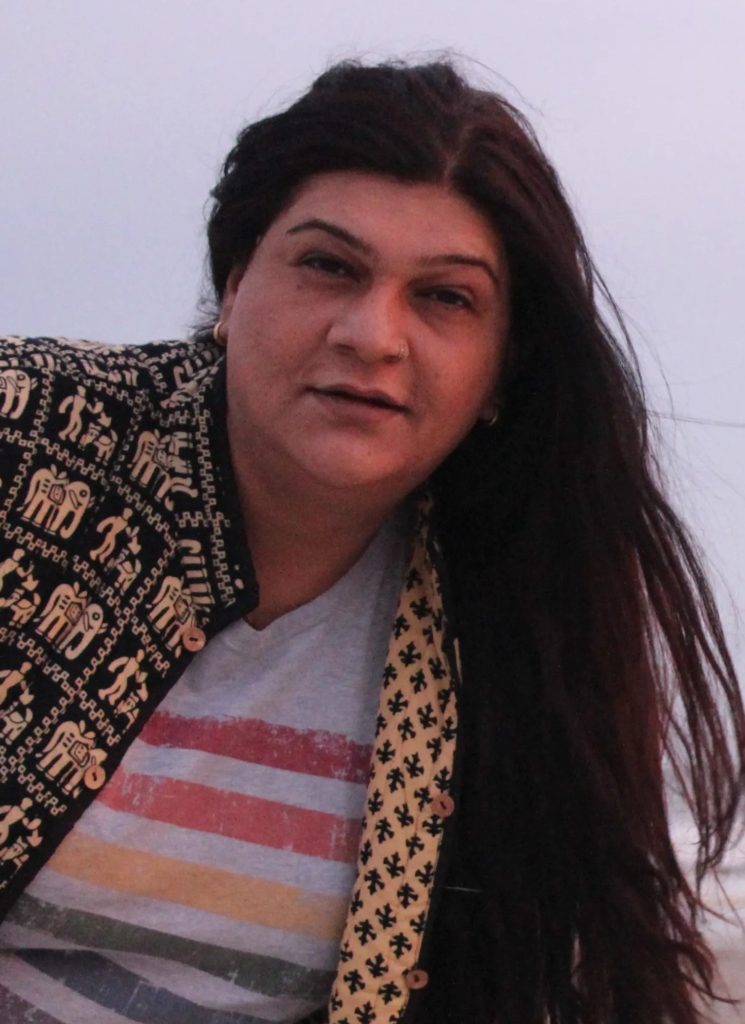
Simran Shaikh Bharucha
Birthplace:
Mumbai, Maharashtra
Residence:
Delhi
Qualification:
M.A. (Social Work)
Inspiration:
The entire hijra community and actor Sushmita Sen
FOR AN EQUAL AND INCLUSIVE SOCIETY
The Director for Transgender Health at ACCELERATE at Johns Hopkins University School of Medicine, she is also the founder of RWS – India’s diverse chamber which promotes LGBTQ+ entrepreneurs to the global market. She is pursuing a Ph.D. in Trans Psychology and has already published several papers for the community.
A transgender rights advocate, she has lived the better part of her life promoting a socially and pecuniary inclusive society in India. It is not a Utopian dream. India is evolving into an inclusive society. This is obvious in the 21st century compared to the previous century. Two to three decades back, life was difficult for transgender people in India because of social stigma and violence.
“There is more awareness now,” says Simran. “Lawmakers have done their part. The federal government has passed laws integrating into the society this victimised group that once lived on the fringes in deprivation and despair.”
She strives for an equal society. Her name reiterates her life philosophy of an inclusive, equitable and a just society. “I could have just changed my first name after going through all my struggles and abuse to rediscover myself,” she says. “I added Shaikh to show inclusiveness and unity. I don’t comply by any one religion. I worship Bahuchara Mata – the Hindu goddess of chastity and fertility who sits on a rooster. I perform the namaz. I go to Parsi Agyari (fire temple). I follow all religions. We belong to an ethnicity of traditional values,” she says.
From extra to leader
After years of rejection, pain and hurt, she now leads a contented life. Her life story is an ordeal of hunger, poverty, begging at traffic lights, working as a bar dancer and sex worker, humiliation, insults and abuse. Not the one to give up, she fearlessly fought and survived in the competitive Mumbai with her status.
“All my life I was an extra player. Now I believe in myself. I believe in working with the system for the community, rather than criticising the system and being out of the system,” she says. She believes the government should ensure gender neutrality and inclusiveness in education, family and social welfare, women’s empowerment, health and labour.
“The government should be fair to all. Its budget, plans and schemes run by various governmental departments should be equitable to all sections,” she says and concedes. “The transgender community is more visible post-2014. The law now ensures their rights as citizens of India. Only the law could ensure our acceptance as human beings.”
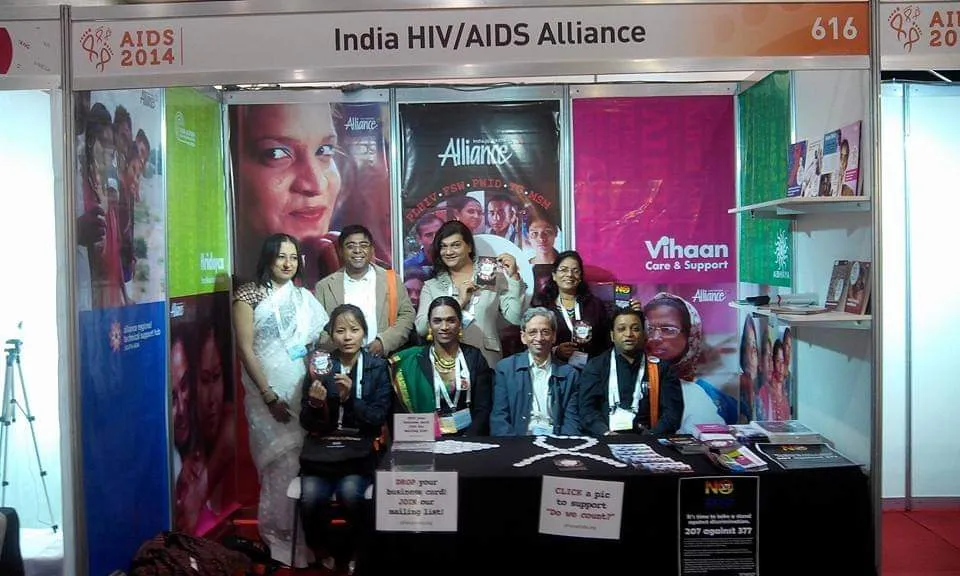
Civil society groups transformed Simran’s despondent life. She lauds their work. “The DAI Welfare Society gave me my identity, while Alliance India gave me wings to fly. The John Hopkins University School of Medicine made me what I am today. Groups like India Network for Sexual Minorities (INFOSEM) and the National Network of Transgender Persons (NNTP) work with trans-people and transform their lives,” she says.
“Many challenges remain still. It is still difficult for transgender people living in rural places to talk frankly with their parents. The lack of awareness persists. The brighter side is that urban India has started accepting us.”
Recalling her trials, she says, “I have mixed, good, bitter, ugly, memorable, recognisable and acceptable experiences. I have seen my life turn around as an activist and advocate.”
She says the real change will come if we sensitise children to the reality of transgender people. “More awareness lessons should come through school textbooks rather than constitutional books. It needs to percolate down. Our educational setup is not that considerate to bring changes in the school syllabus. We should remove these hurdles,” she says. “Society has many conservative people and so patience and dedication are needed to work with them; resources are needed to sensitise police, law enforcement agencies and medical students.”
The beginning
Born on 18 September 1982, Simran was forced to live like her birth gender. “I have two older siblings. I was different. I was effeminate. I remained trapped in the wrong body. Whatever my male friends did, I did exactly the opposite. I played all female games.” It was a visible difference.
“Whenever the neighbourhood boys played cricket, I was always the last man selected. I was always an extra player. This demotivated and suppressed me a lot and I diverted to other pursuits like reading books. I would buy used books from next to Churchgate railway terminus.” Books lent a new perspective to her personality and she gradually became a bookworm and then soon an introvert. “I started as a rebel for the obvious reasons, then suppression came and I became an introvert. As years passed, I became an extrovert after I turned into an activist. Of course, now I’m a peaceful sage – peaceful in a strange way. I don’t worry about the world now, saving the world can go to hell. I care for myself first, the community who needs a voice.”
Her family was not aware of her sexual identity. “They did object and oppose the way I behaved. I loved wearing my sister’s clothes but they didn’t appreciate it. They’d often tell me to behave. At the age of 14, I took the most drastic decision of my life – I walked out of my home. I did not contact my family for 20 years, though we were in the city. They did try to contact me and urged me to return. I did consider it, but my willpower did not allow it.”
She had a mere Rs. 16 in her pocket when she left home and spent three days at Mumbai Central railway station. Later, she met a person who wore a saree and looked masculine. As days passed, she adapted to this person’s identity and followed this person’s rituals. This person belonged to the hijra community.
“This person supported me financially and psychologically; became a father, mother, best friend, elder sibling to me; took care of my needs, providing food, shelter for 16 months. I imbibed the hijra community’s lifestyle and culture. It was the beautiful new dawn of my life. There was no looking back, there were no apprehensions. I just followed the flow; like a river flows and merges with the ocean.” She went on to complete her post-graduation in Social Work in 2003.
A large part of the change in attitude in India came when Simran was featured on ‘Accepting Alternative Sexualities’, an episode of Amir Khan’s TV chat show, Satyamev Jayate in 2014. It did make her an overnight celebrity but her turning point came in 2017 on 18 September, her birthday. She had received a call from my siblings.
“All these years I had considered my biological family villainous. Unknowingly, I was my biggest enemy. I changed my perspective after the conversation with my dad over drinks that evening. It cleared all misunderstanding.” It was a deep conversation, one that made her ponder. “He didn’t say much except for one question. ‘How long did you take to understand yourself and how much time did you give us to understand you?’”
A lot more understanding and calmer person now, she has her hopes high. “Yes. I do hope to find a suitable man!”
VISION FOR THE TRANSGENDER COMMUNITY
She wishes transgender people get parenting rights. “Society should understand any human who can support a child deserves the right of parenting. You don’t have to be a biological parent to be a parent. If one has the resources and ability to nurture children, they should have the rights. Indians need to support vulnerable children.”
Simran, however, agrees that none of the rights will come without acceptance as a fellow human being. “Those who were once begging are today heads of big or small companies. We are no more living in times where age-old biases can work.”
MESSAGE FOR THE MAINSTREAM SOCIETY
She quotes author Floyd McClung, “When God was not ashamed of creating sexes, then why are we afraid of talking about it?”
FIVE FACTS ABOUT SIMRAN
Extremely patient, she can understand matters from different angles.
She has a temperament and is lazy.
She loves to travel.
Her favourite Hindi song is the evergreen, Ajeeb dastan hai yeh.
Her favourite English musicians are Phil Collins, Toni Braxton, George Michael, Celine Dion, Whitney Houston and the band, Guns & Roses.