Zainab Patel
Birthplace:
Mumbai, Maharashtra
Residence:
Mumbai, Maharashtra
Qualification:
MBA, BMM
Inspiration:
“I am my own role model.”
AN EMPOWERING CATHARSIS
A community activist in the corporate sector, a policy specialist and India’s first transgender person to hold the post of a director at an international MNC, she has played multiple roles with elan.
Zainab takes her name from the most powerful female narrator in Islamic history, Zainab bint Mohammed. And it’s befitting. She too possesses the same quality and is using her voice and experiences to shape a better future for the transgender community in India and in the Asia-Pacific region.
She has remained at the forefront of India’s youngest civil rights movement, one among the terrific trio beside Laxmi Narayan Tripathi and Gauri Sawant whose petition to the Supreme Court for LGBTQIA+ rights led to the historic NALSA judgment in 2014.
From crumbling under the weight of extreme emotional trauma caused by everyday harassment, name-calling and abuse, to shattering every binary gender norm and misconception, she has come to personify resilience and exemplify the way self-belief, self-acceptance and self-love can switch life onto a track of empowerment and growth.
But it’s not been easy to build that resilience.
Reimagining the future
The Noronhas were beaming about the birth of a son… finally! Signs hinted towards auspiciousness – a son after two girls, born on Makar Sankranti of 1981. He’d take their family lineage ahead, they knew. But this child grew up yearning to bring out the woman within. The environment, however, was homophobic and transphobic, within the family and in the all-boys’ school.
“I have always identified myself as a girl. As a child, I’d always said I wanted to be a lady pilot upon growing up. To my young mind, the image of a woman in a crisp pilot’s uniform wearing Aviators symbolised empowerment and independence.”
It was in secondary school that she realised there was something fundamentally different in her. The harassment and bullying only exacerbated the conundrum… “so much that I developed a tendency of self-harm. Nothing seemed to help. I was in class 8 when I made yet another attempt at myself – my ninth – this time with a heavier dose of pills”.
Zainab ended up in ICU and had lost control of her peripheral nerves. “Neither could my fingers grip things well nor could I see clearly beyond 10 feet. It took close to eight months of physiotherapy to get back a semblance of control.”
She lost two years of schooling but it led to a new chapter of her life – one written with self-love. “I knew it well there was a woman within me waiting to come out. Although it was blurry at that point in time, I began reimagining my future.”
Family of choice
Life at college was somewhat easier, but the support she sought from her family was missing. She felt one with a group of hijras and knew she would feel at home with them. “My parents told me, ‘If you leave now, there will be no coming back’ – the only thing they had to say to me.”
She left the comforts of her small home the same night to join the community and followed their norm of begging. She earned 50 paisa on her very first day of begging. “But was that my true worth? My guru, none other than Gauri Sawant, told me I was made for bigger things and encouraged me to complete my graduation.”
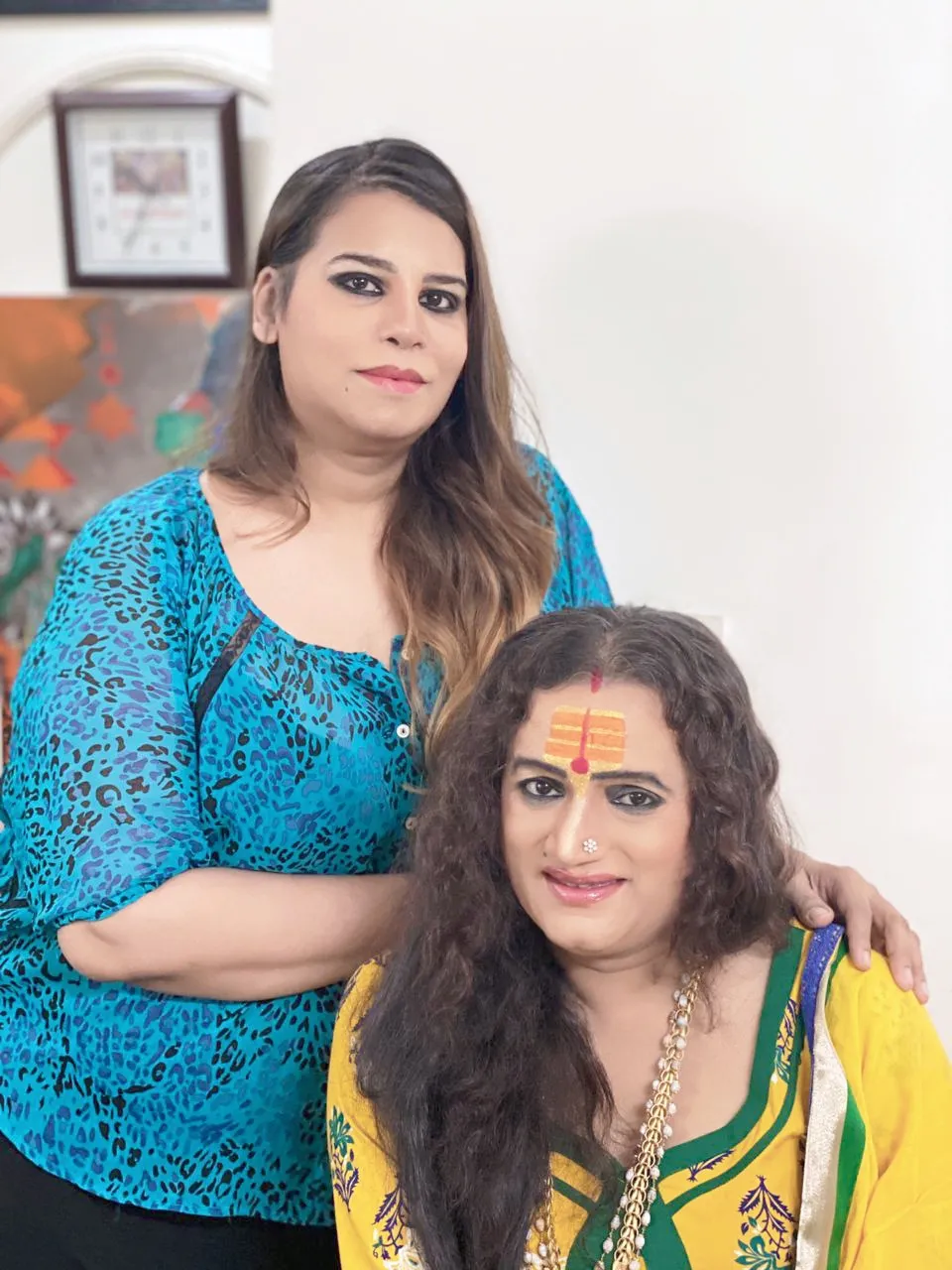
Zainab feels extremely proud to associate herself with this socio-cultural ethnic hijra group, her family of choice that has stood by her in thick and thin. “I learnt immensely from Laxmi Narayan Tripathi, who treats me like her daughter. She taught me that life is about giving, gratitude and fighting adversities.”
She calls herself an accidental MBA. “From begging on the streets to surviving and climbing up the corporate ladder, I have created my ceilings and broken through them all.”
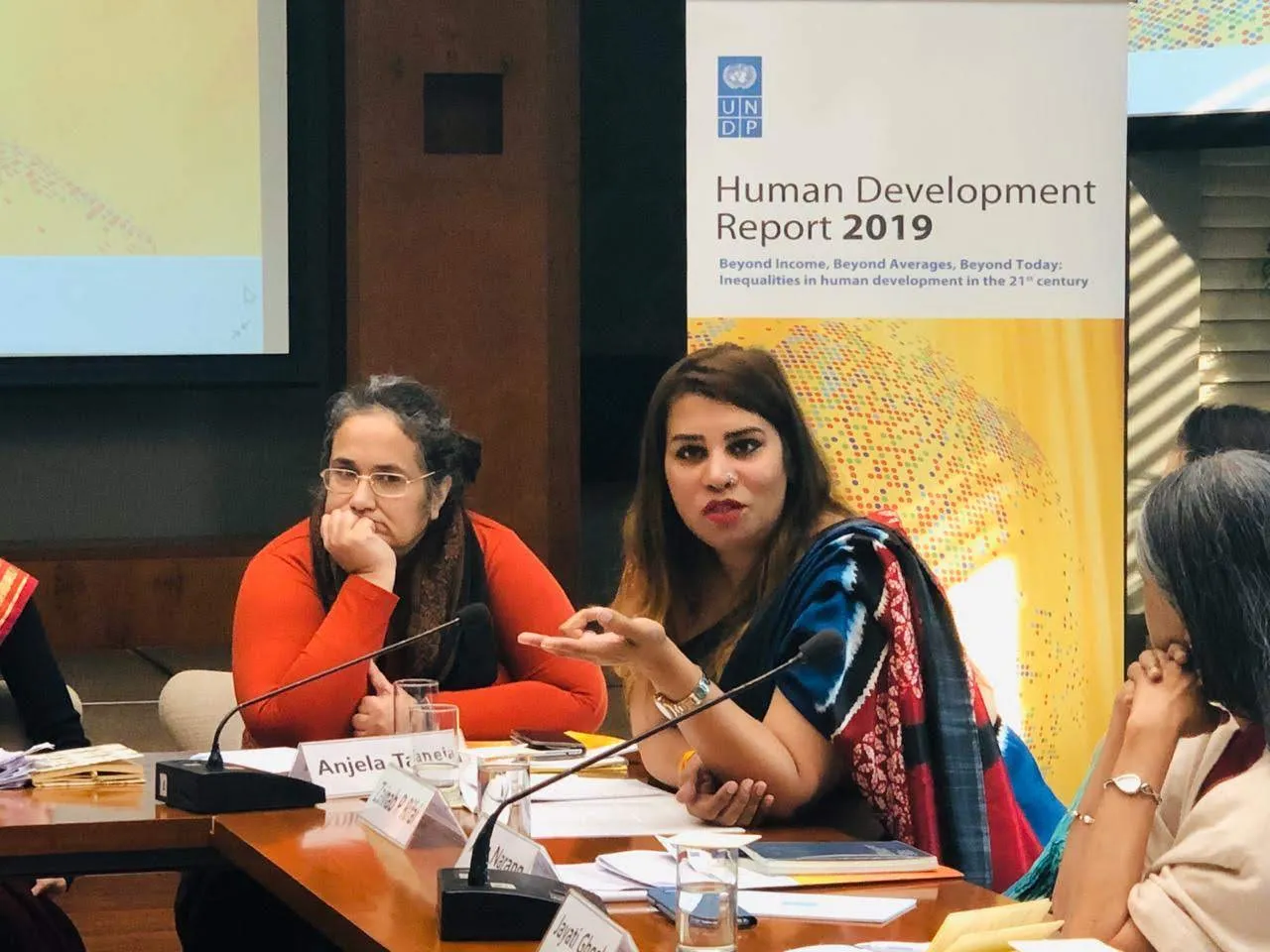
She turned towards activism in around 2000 following the death of her brother-in-law due to HIV. She started with being a Programme Manager for The Humsafar Trust and has since worked her way to become a human rights activist, a policy specialist for the United Nations, an inclusion catalyst and the Western region representative of the National Transgender Council. She has given over 10 years to the United Nations Development Programme (UNDP) working on HIV, health and human rights.
“Working with the UN to create an enabling environment for the transgender community allowed me to attend judicial meetings on the transgender community and the law with NALSA. Seeing the receptiveness of the judiciary to work on transgender empowerment, I requested NALSA to file a social justice litigation. I also impleaded in that case with Gauri Sawant.”
She is also the first transgender person to hold the post of a director in the corporate sector – for Inclusion and Diversity at KPMG. She is currently leading the implementation of inclusive policies at Pernod Ricard.
Zainab has picked up many awards along the way, prominent among them being the Gender Equality Award by Ask Insights, the LGBT Business Ally Award by APCOM, nomination to the 5th Martha Farrell Award for Excellence in Women’s Empowerment and Gender Equality (2021).
The 2014 verdict and its impact
The 2014 judgment came at a time when there was no legal provision across the Asia-Pacific region that allowed transgender people to identify themselves as a man or woman without undergoing medical procedures.
“We sat there in the courtroom crying when the verdict was being read out. It took a while for its true impact to sink in.”
Is Zainab happy with its impact on the community? “The community has not progressed much. Large-scale inclusion is still a dream in pipelines. Although the judgment is a major step forward, let’s not forget that it only upholds the right to marry for those people who self-identify within the gender binary, and who are accordingly deemed to be in heterosexual relationships.”
She thanks the current government for its many interventions to support the rights and empowerment of the transgender community, bringing in the Transgender Persons (Rights to Protection) Act, taking various initiatives including the SMILE scheme for transgender people and several redressal mechanisms. “The government has taken steps to show that it truly believes in sabka saath, sabka vikas, sabka vishwas. I think this government, in the years to come, will only increase its commitment through fiscal, legislative and empowerment measures in general and for the transgender community.”
VISION FOR THE TRANSGENDER COMMUNITY
“India continues to evolve into a society that upholds, respects and protects the diversity, safety, equality and dignity of transgender and gender diverse people. I would like to see better political representation, more Members of Parliament, more bureaucrats, more judiciary members from the transgender community. One day we truly will be able to say that India is Vasudeva Kutumbakam, where we embrace people across diverse groups and not judge them for who they are, what they look like or whom they choose to love.’’
MESSAGE FOR THE MAINSTREAM SOCIETY
Zainab says that the most important facets of a democratic society are inclusion, non-discrimination and equality. “We, as Indian citizens, need to be more aware, tolerant and open about each other. I am reminded of words from the Supreme Court judgment in the Tehseen Poonawalla vs. the Union of India case that said, ‘It needs to be remembered that the unique feature of unity in diversity inculcates in citizens the virtue of respecting the opinion and choices of others’. For me, this is the most important message for every Indian. Look at us with the potential to shape the mainstream society, to contribute to a better nation and ultimately to share and shape a better place to live in.”
FIVE FACTS ABOUT ZAINAB
Her biggest strength is her immense resilience that comes to the fore in the toughest of situations.
She loves reading. She owns over a thousand books picked up during her journeys.
Her weakness is laziness.
She loves simple, home-cooked food. “Dahi kadhi and khichdi”.
Faid Ahmed Faiz and Amrita Pritam are her favourites. She often quotes Faiz’s couplet, “Dil na-umeed to nahin, nakaam hi to hai. Lambi hai gham ki shaam magar shaam hi to hai” inspires her.