
India is extraordinary. Empires have risen, fallen, and been erased from history. But India has survived, thrived, and withstood intruders, internal and external. India is unique in that it has not only absorbed outside influences but has also retained its culture, which has, over the years, become one of the most successful global exports. And a huge part of this culture has been our esoteric and spiritual practices, of which there are countless.
Since September is the month of forgiveness for the Jains, we thought it would be apt to look at how our concepts of forgiveness and apology have set us Indians apart.
Compassion Personified
As a civilisation, we have always practised compassion. We carry Kshama — forgiveness. We carry the spirit of Uttam Kshama and Michhami Dukkadam — the belief that the wrongs done must not bear fruit. We carry the Buddhist ideal of compassion and the Hindu ethos of letting go.
We have imbibed lessons from the Ramayana. Who does not remember the moment when Vibhishana hesitated to perform the last rites for his brother Ravana, and Lord Rama reminded him that enmity ceases with death? In the Mahabharata, Yudhishthira, when urged to show anger, replied that the wise control their wrath, for “anger is the slayer of men.”
Our modern-day leaders like Mahatma Gandhi built a movement on non-violence and forgiveness even as they fought for independence. Even seemingly common people, like Gladys Staines, forgave the militants who killed her husband and two sons — an act that stunned the nation and earned her the Padma Bhushan.
This is what sets Indians apart. We forgive not because we forget, but because we understand that carrying hatred is a heavier burden than carrying hope.
De-Polluting the Mind
In Hindi, the word for pollution is Pradushan, and it is not just about the environment. Our diverse cultures have taught us that de-polluting the mind and soul of bitterness, arrogance, and revenge is the best way to move forward in life. Apology is the cleansing. Forgiveness is the healing. Together, they purify the mind and free the spirit. A leader who cannot apologise carries this pollution.
So, what lessons does one learn from the concepts of apology and forgiveness?
Lesson One: Apology is Strength, Not Weakness
The world teaches leaders to project strength, to never show vulnerability. But the greatest leaders know that admitting a mistake is an act of courage, not cowardice. An apology says: I value this relationship more than my ego. I value growth more than being right.
Leaders like Ratan Tata showed that true strength lies in humility. In 2009, during the Tata Nano launch, he personally apologised to IPS officer Harish Baijal for not acknowledging a cartoon by R.K. Laxman. This small but significant gesture revealed a leader who valued relationships over ego.
Lesson Two: Forgiveness Is Not Surrender
Forgiveness does not mean forgetting. It does not mean allowing repeated harm. It means refusing to let the past hold the future hostage. When a leader forgives, they free their team from fear. They create a culture where mistakes become lessons rather than life sentences.
Nelson Mandela emerged from 27 years in prison not with vengeance but with reconciliation. As he famously said, “As I walked out the door toward the gate that would lead to my freedom, I knew if I didn’t leave my bitterness and hatred behind, I’d still be in prison.”
Lesson Three: Apology & Forgiveness Build Trust
Teams do not follow leaders who hold grudges. They follow leaders who create safety — where honesty is rewarded, not punished. A leader who apologises and forgives builds loyalty that no salary can buy.
President Barack Obama made apologising a hallmark of his leadership. When the Obamacare website crashed in 2013, he immediately apologised and promised swift action. After the Boston Marathon bombing, he apologised without shifting blame. What made his apologies effective was their sincerity and follow-through.
Lesson Four: Forgiveness Is a Strategic Advantage
The world is looking for leaders. But India has always known what a leader looks like. A leader is not the one who dominates. A leader is the one who serves, who listens, who admits mistakes, who forgives, and who moves forward together. And leadership is not just about one person; it is also about community mindsets, as the Bishnoi community of Rajasthan, known for protecting wildlife, demonstrated through institutional forgiveness in the Salman Khan blackbuck case. Community head Devendra Budiya stated, “One of our 29 rules is forgiveness.”
A Timeless Message
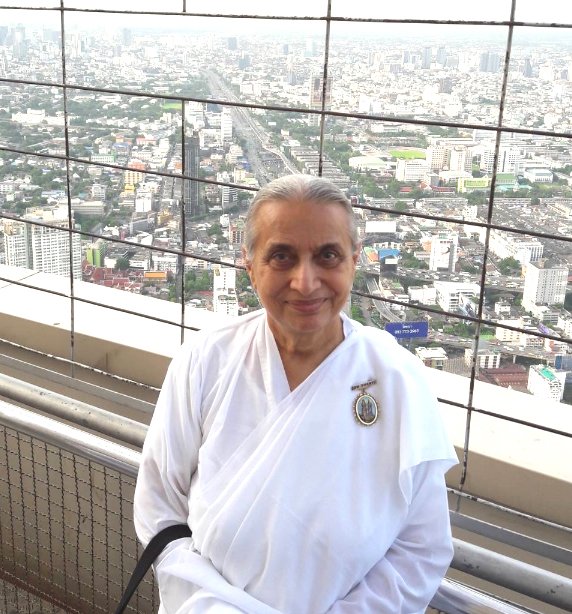
Over three decades, Maneesh Media has been a storyteller; our team has been privileged to speak and meet with living examples of grace. Our most recent interactions for Jewels of India – Bharat Ki Shaan, Bharat Ka Abhimaan left us humbled. We listened to Sister Vedanti, Regional Director of Brahma Kumaris for Africa, as she recalled facing a man who stormed into her centre with a gun and how her calm words transformed the man, who apologised.
This is just one example from the thousands of families and individuals we have met. Each one is the embodiment of the Indian value system — one that balances Karma and Dharma, and keeps us on the straight and narrow as we navigate the Maya (illusion) of this world.
Our beliefs in apology and forgiveness are vital to this balance.
So let us remind ourselves — and the world — that apology is not shameful. Forgiveness is not weakness. They are the foundations of true leadership. They are the reason India stands apart. They are the reason India endures.
Let us forgive. Let us move forward. Let us lead.