
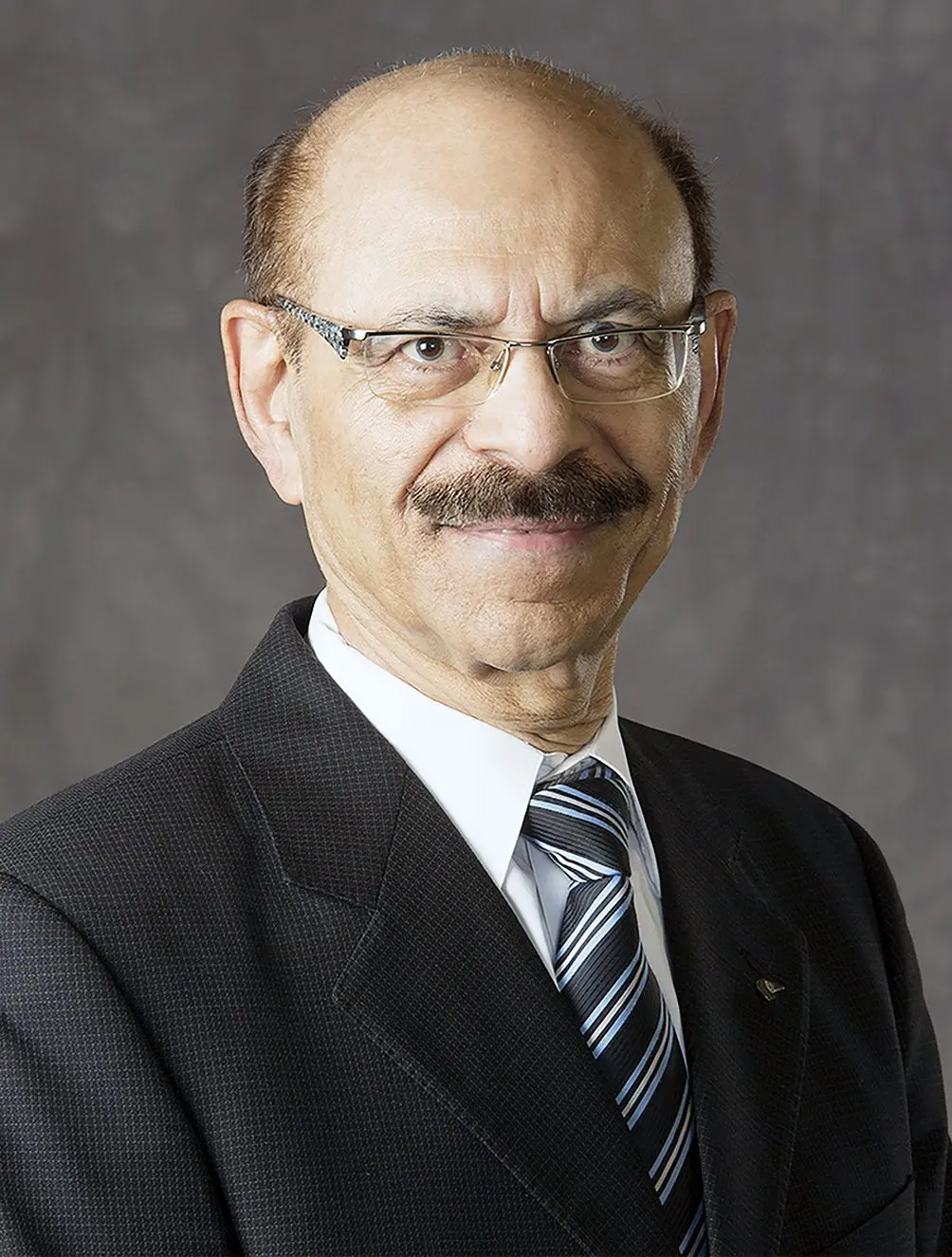
A few months before the mayhem and upheaval of partition erupted over the Indian subcontinent, a family of around 55 members moved from Sargodha (now in Pakistan) to settle in Sri Ganganagar (Rajasthan) on the insistence of Sardar Pardhan Singh Khurana, Amarjit’s maternal grandfather. He had read the signs of the times long before devastation and doom unleashed their wrath.
An elder patriarch, Sardar Tej Singh Arneja, Amarjit’s paternal grandfather, took them all to the safety of Sri Ganganagar in Rajasthan. Amarjit’s father, Sardar Manmohan Singh, was in the British Indian Army and so was able to requisition the use of a couple of Army trucks to transport all their household goods and belongings without any trouble or losses. In this joint family, almost a year before the partition, Amarjit was born on 6 September 1946, the youngest after two elder brothers, Kesar and Jagjit.
Manmohan had joined the Army at the age of 20 and was posted in Cairo during World War II. Though the last three years of his service he was in India, Amarjit’s mother, Bhajan Kaur, took care of their sons and the extended family in the happy hustle and bustle of a joint family. He finally retired in 1948. Amarjit had a rather happy-go-lucky childhood, lavished in love and affection.
All the kids went to the local Khalsa School, where Amarjit studied till grade 11. He seemed to cruise along in his studies in every grade, always maintaining his top ranks. He recalls, “I was my teachers’ favourite and never got into trouble with any of them. I have also represented my school in badminton. And I also loved playing cricket. They called me Amary out of love”. He went to Khalsa College for a year for B.Sc. – then called pre- medical. When he was 18, he had secured admission in medical colleges in Bikaner and Patiala but chose Bikaner because of the proximity to home. He finished his MBBS in 1968 with top marks. He narrates an incident – the reason he chose to study medicine. “I was 13 and still in school when a doctor friend of my father casually asked me what I’d like to be when I grew up. I had no clue, I told him. He smiled and told me to become a doctor. My family, neighbours, teachers, friends, everyone started calling me Doctor. It actually influenced me to become a doctor.”
Although he was keen to pursue higher studies for his specialisation, Amarjit wanted to take a break from academics for a while. So he decided to join the Rajasthan Medical Services in 1970. For the next two years, he worked as a surgeon in the family planning department. He earned a great name and reputation organising sterlisation camps, performing vasectomies and tubal ligations in a small town, Ghamoorwali.
The basis of life!
But suddenly his life seemed to move into a fast-forward mode. In 1972, his marriage was arranged with Jagmit Kaur. Her Indore-based family was in the lumber business. In a beautiful coincidence, she had also completed her MBBS and wanted to pursue obstetrics and gynaecology. It also turned out that she was a national table-tennis champion during high-school (1962). She also lived in a large joint family.
Dr. Arneja looks back with a smile and remarks, “Well, you know in a sense we are both ‘racquet-wallahs’, she with her table-tennis racquet and I with my badminton racquet. We often play a table-tennis match; she wins most of the time. To be true, we are best friends”. In 1973, he moved to Winnipeg, Canada. Jagmit went on a sponsorship from her brother, Dr. Ajit Singh, who has retired as a senior scientist from the Atomic Energy of Canada in 1998, and she in turn sponsored Amarjit. Amarjit still remembers his first step in the new country, “It was late January and freezing cold, with temperatures down to –30 degrees. It was tough but we had a dream to live ahead of us”. The first thing he did in Canada was to focus on acquiring the necessary academic expertise to become a competent doctor. It didn’t take him too long to successfully complete his fellowship. He quickly finished his residency in internal medicine, physical medicine and rehabilitation. In 1979, he completed his fellowship. It was his work that soon made him known as Mr. Rehab!
Life too was moving at its own pace. They welcomed their first son, Jugpal, in 1974 and Shalinder in 1978. Both have followed their parents’ footsteps: they have played hockey, badminton, tennis and were keen swimmers. In fact, they have represented their school, Saint John’s Ravenscourt School, in various sports and have studied medicine at the prestigious University of Manitoba. “Now we are a family of keen golfers and tennis players and never miss a chance to play together,” says Amarjit.
He also had an immense interest in music, though he didn’t pursue it to concentrate on his career but organised several concerts in the 1980s and 90sin Winnipeg featuring leading musicians from India.
In the meantime, Jagmit retired in 2018 after working for 41 years as an obstetrician and gynaecologist. He estimates that during her tenure, she must have delivered over 5000 babies.
As two very committed doctors, they ensured their kids grew up in an Indian environment. And to support them were Jagmit’s parents, who Dr. Arneja says, “moved to Canada in 1978 and lived with us, so the children were able to absorb all the cultural, religious and moral values from them. Then my father also came and lived with us for two years, from 1993 to 1995. Living with grandparents ensures the kids learn the base of a culture. After all these years, I still love all Indian cuisines. Okra with arhar (pigeon pea) dal fry and chapati are, however, my favourite”.
Jugpal, who trained as a plastic surgeon, took sub-specialisation in paediatric plastic surgery as helping kids was his heartfelt desire. Today, he is one of the leading plastic surgeons in British Columbia. He is the first Asian to be on the board of the American Academy of Paediatrics Section on Plastic Surgery. He lives and works in Vancouver on faculty at the UBC. Shalinder, following his father’s dream, became a specialist in orthopaedic surgery and has sub-specialised in orthopaedic sports injuries after completing a fellowship in sports medicine at the prestigious Cleveland Clinic.
Jagmit and Amarjit have their pride in their children and joy in grandkids.
A work of heart
Amarjit talks of Bollywood and medicine, all the same. As he talks of his love for the movie, Guide, he also shares that he has been directly involved in training over 50 specialists and has published over 65 research papers in peer review and journals and several chapters in books and e-medicine. He says that for the past 25 years he has been on the admission committee of the University of Manitoba.
As a fund-raiser, Dr. Arneja successfully raised a huge sum as a donation for the Canadian Human Rights Museum, United Way and India Canada Cultural and Heritage Association which was started on his initiative. With help and support from Jagmit and other physicians, he launched the Manitoba Association of Asian Physicians (MAAP) in 1985. He has also worked tremendously to bring recognition to Indian culture. A result of his efforts as the president of India Canada Culture & Heritage Association (ICCHA) is the Mahatma Gandhi statue at the museum.
For his deep involvement with the academic life and progress of hospitals and medical institutions in India, he has been felicitated with awards and accolades by almost all the prestigious institutions in that country, including All India Institute of Medical Science (AIIMS) and Indian Medical Association (Rajasthan). Amarjit remembers, “one of the proudest moments in my life was when I was presented the Queen Elizabeth Diamond Jubilee award for outstanding services to the country in 2013”. In 2018, he was awarded the highest honour, Distinguished Service Award by the Doctors of Manitoba, a 150-year-old association. He retired from the University of Manitoba in September 2019.
Looking back on his half a century of stay in Canada, Dr. Arneja says, “I have been truly blessed to have had this wonderful opportunity to serve humanity in my capacity as a doctor. I think I have more than justified the nickname Doctor given to me in my childhood”.