
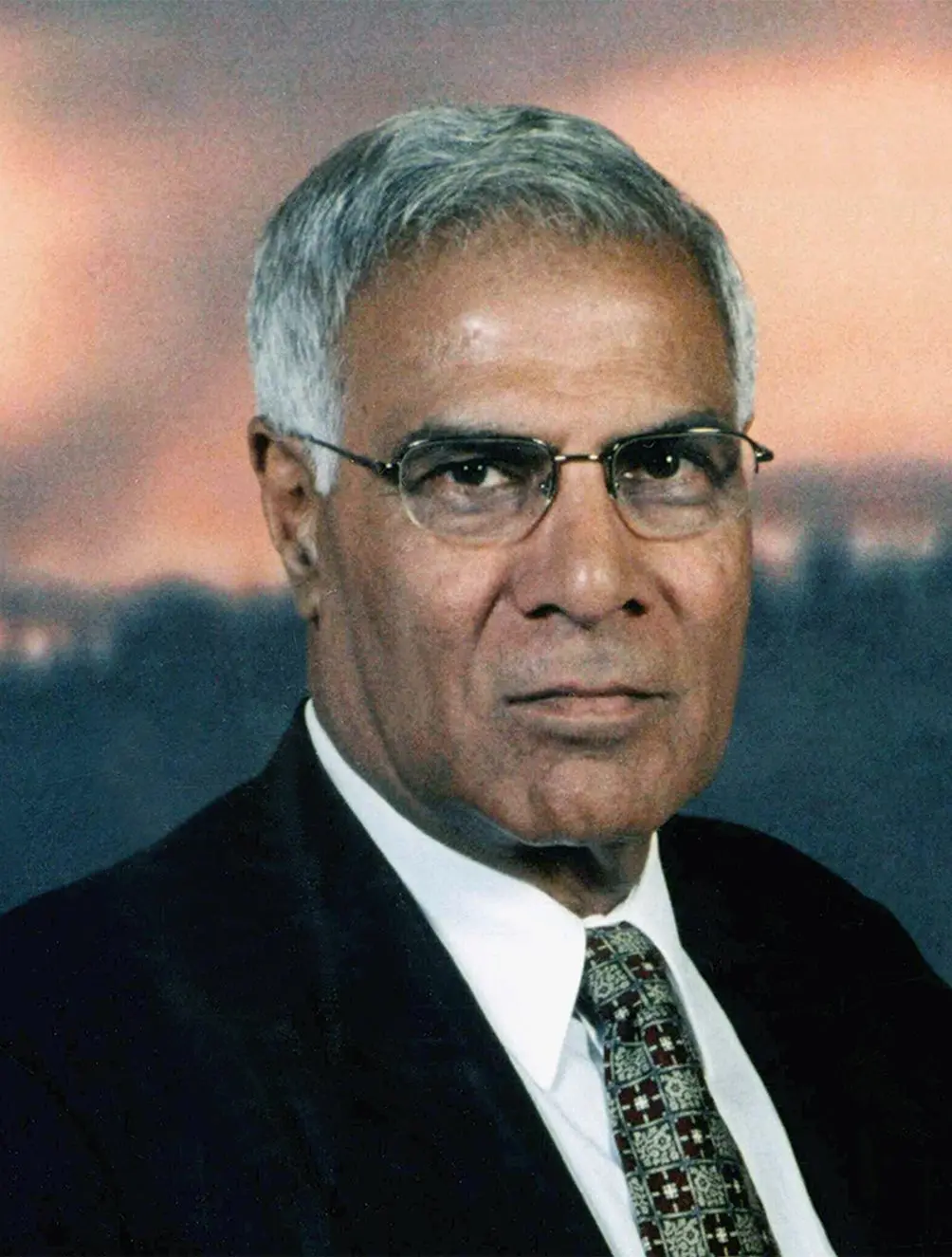
Never forget who you are and where you come from. It’s an important part of you that will help you find strength and peace. Here’s a practical, peace-loving, a transparent and true patriot. Though his janmabhoomi is extremely close to his heart, yet it took him years to revolutionise it.
Struggle teaches you great things
Born in a small village, Kharoudi, in 1931 to Gurbachan Kaur and Dilbag Singh, young Gurdev left his village at the tender age of 17 to find success on foreign land. He set on a journey to the USA, where his grandfather, Ganga Singh, already was making a living since 1895. He flew to Hong Kong to board a steamship to San Francisco. He had to stay in a gurudwara for 15 days before boarding his first ship! First stop was Shanghai for a day before the ship sailed for Yokohama in Japan. Next day, China was conquered by communists. Harbour in Yokohama was still filled with sunken ships from WWII.
Next stop was Hawaii, USA, which had just been rampaged by a horrific typhoon. The ship stayed there for four days. “Honolulu was a small city at that time and I along with five other Indian students thoroughly enjoyed our stay,” remembers Gill with a smile. “Next and the final stop was San Francisco where I was picked up by my grandfather who took me to Santa Ana, California. He had immigrated to the USA in 1895 and I had never seen him before. I spent a month knowing him and it was pretty enjoyable.” Final journey was by a train to Seattle followed by a short trip by a ferry to Victoria “where I met my father for the first time in my memorable age”.
Dilbag Singh, Gurdev’s father, left their native place in 1920 to fend for his family when Gurdev was only three. He had seen his father only in pictures. His family belonged to the Gadar Party of America that participated in the freedom of India. He was ecstatic – happy and numb – at the same time to see his father for the first time. He drove him to Duncan where he had a house. He attended high school for a year before enrolling in University of British Columbia (UBC). It was several years later that the university recognised him with an honorary degree of science.
Gurdev reached British Columbia in 1949 and calls himself ‘fortuitous’ to be at the right place at the right time. Until 1948, Indians didn’t have any civil rights unless a Canadian citizen’s entry in any profession was forbidden. With civil rights in place, Gill became the first Indian practising medical professional in Canada. Childhood fascination towards his father’s homoeopathy books encouraged him to pursue medicine. “I used to read his books and tried finding someone to test my knowledge. So once, one of my nieces caught scabies. I picked her up from her deceased mother’s village and drove six miles to my village and experimented with sulphur treatment. It was a success. You can’t even begin to imagine my excitement!” It ensured he studied medicine.
While pursuing pre-medical studies at the UBC, he studied hard for three years and applied at both UBC and McGill and was accepted at both. Studying further at the UBC, he graduated in 1957. Despite pacing ahead in life, he never forgot his roots. He shares an incident from his college days, “Some friends and I went out for a movie; one among us had a pagdi. To enter, he was asked to remove the ‘hat’. We explained that it’s a valuable asset of our culture. As much as we tried, they didn’t budge. We too decided against watching the movie and got a refund for our tickets”. He further quips, “Such incidents rarely happened on the campus. Inside the campus, we were international students and given celebrity treatment and had our own association”.
After interning a year at Emanuel Hospital, Portland, he got multiple opportunities from the USA but he grabbed the one at New Westminster in British Columbia in 1958 as it gave him ‘homely’ vibes.
Changing challenges into chances
In 1958, soon after finding himself a good job, he visited India after nine long years. And he met the woman of his life – Narender Kaur – through a common relative and their marriage was fixed. Calling her the biggest support system of his life, he shares, “She was my backbone and stood by me in every thick and thin. She raised our children with the utmost Indian values, but destiny had some different plans which weren’t in my favour. I lost her to a heart attack in 1985.” Fate tested him for a long time but finally, things changed. He had a chance to meet Jasinder. Both were lonely at their own places and found solace and support for life in each other. They got married in 1988 at the age of 61. She was earlier married to an Indian General and had been on her own ever since he breathed his last. Gurdev is now equally attached to her children, Manveen and Simran, both of whom are currently based in India.
There was a time when many denied him renting their houses because of his origin but as he grew by discovering opportunities, he bought the entire apartment block which was once denied to him. Isn’t that the irony of life?
As Gurdev grew in his profession, Narender and he ensured his son, Sanjeev, and daughter, Jasmine, got the best education. Today, both of them are graduates of the UBC. Sanjeev is a retired Sergeant from RCMP whereas Jasmine teaches deaf children. “Jasinder and I have our happiness in our grandkids, Iqroop, Imran, Rahul and Javed,” he smiles.
Serving the motherland
Following the footsteps of his father who spent his post-retirement time in India, uplifting their village, Gurdev too puts in his efforts in it. Though he has spent most of his life in Canada, his heart still beats for India. He has always wanted to do anything and everything possible to see the prestige of the country rising.
In 1976, he founded the Indo-Canadian Friendship Society of British Columbia, a charitable society. He has been actively involved in philanthropy in Greater Vancouver and devoted his energies to international rural development in Punjab too. He has finished 27 eco-friendly and sustainable comprehensive village projects. Dr. Gill personally looks over all aspects of the development of these projects.
It was when he visited India in 2001 and asked the deputy commissioner of his ancestral village about the sewer lines, he had the opportunity to provide better sanitation to his village. It was a step towards development and it was just the beginning. He took it forward with underground sewage, concrete streets, crematorium, computers in school, solar lighting and water treatment plant, gurudwara, community centre and wastewater treatment plant. With all this, his bond with his country strengthened to no end!
Having found the true meaning of life, Gurdev finds peace in revisiting his childhood memories back in India. Yet some horrible memories of the India– Pakistan partition haunt him still. Going back into the memory lane, he says, “After the British left the country, things on both sides of the border were harsh. Relocation killed. Those who survived couldn’t survive the situation – new place, the dearness, the lack facilities, lack of jobs, no land, hunger, violence, deaths! Was this the freedom that was fought for? People begged or robbed for simple things such as a charpai* or a blanket.”
However, he is quite happy about all his experiences – good or bad. While the good obviously made him happy, he learned something from the bad. After retirement in 1996, he now prefers spending time between India and Canada. Gardening, sailing, reading and watching Indian art movies on Netflix are his favourite things to do. And yes, the best part is he learned to play golf post-retirement because... age is just a number!
*Hindi for a handwoven (of jute) single-bed