
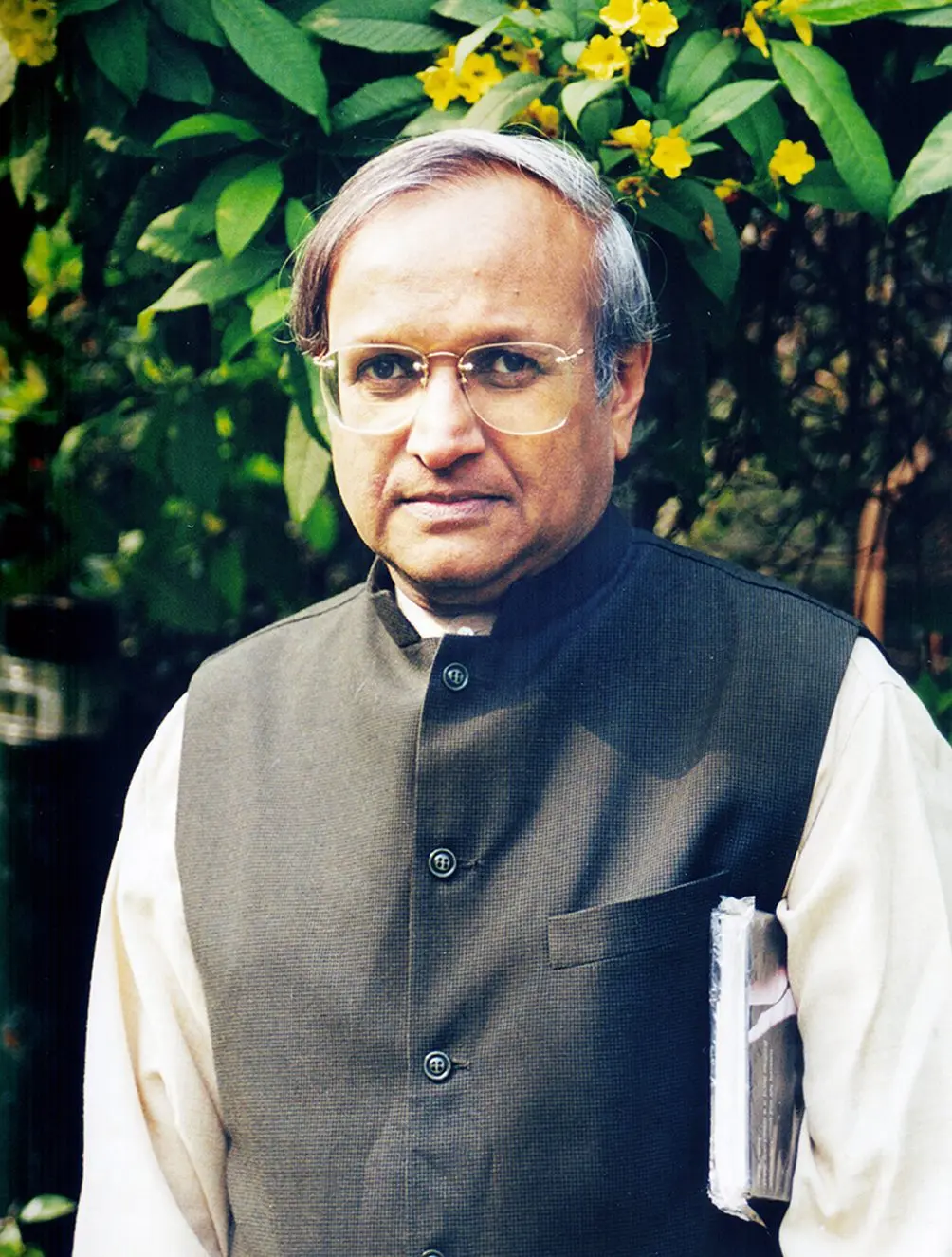
Being a scientist and a philosopher, he says, “is not contradictory, rather is complementary to each other”. In his work as a physician, he combines both the state of the art of medical practice and old fashioned care and concern for his patients. This physician also teaches Indian aesthetics at Carleton University.
Harsha started his schooling in Dharwad (Karnataka) and then went to Pune (Maharashtra) and completed grade 12 from St. Xavier’s School, Mumbai. He studied science at Elphinstone College. In 1956, he joined the GS Medical College, where he won gold medals in all seven subjects. It was here that he met Sudha as one of his classmates. Something struck between the two and brought them together for life. They did their residencies at the King Edward Memorial Hospital, Mumbai: Harsha in Internal Medicine and Sudha in Paediatrics. In 1965, they moved to England, where he did a residency in Chest Medicine and also became a member of the Royal College of Physicians, both of London and Glasgow, by examination. Sudha passed the Diploma of Child Health from the University of London. He then went to train in Chest Medicine at Bellevue Hospital, New York (USA) and Sudha got the fellowship of the American Paediatric Society by examination.
Prioritising education as a family value
Harsha’s father, Venilal, had lost his mother when he was just two. His grandfather was a teacher in Dahej (Gujarat) and had a modest earning. This was the reason why Venilal became independent early in life. He studied hard and joined Wilson College in Mumbai to become a Mathematician, topping the University. He was picked by the Tata group and given a scholarship to study Mathematics at the Imperial College, London. He topped there as well. Clearing the Indian Civil Services examination, he became the first Indian Home Secretary of Bombay Presidency in 1946, followed by Finance Secretary of Maharashtra, then Finance Secretary of India and ended up as the Chairman of the State Bank of India.
Harsha’s mother, Tarunica Kaji, too was ahead of her time. Her father was a Professor of Geography at Sydenham College in Mumbai. She was the first woman in her community to join college; in fact, she went on to complete MA in Economics. She became a Justice of the Peace and was a senator at the SNDT University, Mumbai, the first women’s university in India. She enjoyed sports and in her later life, she took to painting.
Sudha too was backed by a strong family, especially her mother. Her grandfather was a zamindar and an Ayurveda doctor who never charged a penny. Her father, Sadashiv, was only 13 when he lost his parents and started working to take responsibility for his younger brothers. Her mother, Indumati, was “immensely strong and ambitious in her childhood. She could study till grade 3. She restarted school along with me – and studied hard enough to become a Marathi-medium teacher and then an English-medium teacher too,” tells Sudha. She adds, “She guided and helped other women to establish themselves. She was a reformer: promoted women’s education, widow remarriage, raising and educating children”.
It was only natural for Sudha and Harsha to come together and fight every difficult situation that came their way. They married each other in 1964.
The comeback and re-establishing
In 1968, the two returned to Mumbai and tried to start their practice: Harsha in Internal Medicine and Chest Disease, Sudha in Paediatrics. Because of a number of reasons, they were not able to successfully establish themselves. “Our first son, Vivek, was born in Mumbai. It was getting difficult for us to manage it all. And at that time,” says Harsha, “I took the decision of migrating to Canada. Had I persisted for a few more years, or if we had a godfather in the world of Medicine, we would have succeeded in a matter of years. A number of our colleagues who stayed in India are top practitioners in Mumbai.” Once in Canada, he successfully completed by examination the fellowship of the Royal College of Physicians in Canada and started his own practice in 1971 in Internal Medicine, specialising in Asthma and Allergic Disease. Sudha did her certification in Medicine and a couple of years of residency. She also cleared the very difficult examination of the Fellowship of the Royal College of Physicians and started her medical practice in Paediatrics.
The two kept busy and built themselves an extremely successful practice. But at the same time, Harsha also found his interest in a very different field— philosophy and Indian art, particularly in Lord Krishna’s shringar rasa as in the Bhagavad Purana.
Sudha and Harsha have endowed a gallery of Krishna art at the Chhatrapati Shivaji Maharaj Vastu Sangrahalaya in Mumbai, through which they conduct exhibitions, arrange lectures and dance performances.
There is yet another side to his career and personality – his love for broadcasting. As a child, he, like several other Indians, was often glued to Amin Sayani’s programme on All India Radio. So, when Harsha found an opportunity to create a student radio station at Carleton University, he got together with a few students and successfully got a license and so started Radio Carlton in 1973. Dehejia became the first President there. Since then, he has been continuously broadcasting a one-hour programme, Indian Morning, in which he plays a variety of music and delves into various Indian arts – visual, literary, stage arts, paintings, etc. What is the driving force for him? “My main aim is to look after my family – Sudha, Vivek and Rajeev. But it is simply my interest in Indian art, not historically, sociologically or anthropologically, but in the artistic creativity behind it.”
The couple now divide their time between India and Canada, the former is their dharmabhoomi* and the latter his karmabhoomi*. He strongly believes that to remain a true Indian, visiting India as frequently as possible is a must. They have made it a point to visit India every single year as early as 1975. “There were times when I couldn’t afford tickets for all of us, but I would borrow money and fly,” remembers Dehejia.
What he wants for many Indians is quite inculcated in his sons – Vivek and Rajeev. It was a happy Indian immigrant family – all intellectuals in their own sense. Other than their yearly one-month trip to India, they took small vacations to Disneyland, Bahamas, etc. Vivek always had a deep interest in Western classical music; Rajiv in Western literature and arts. “Every dinner conversation, holiday, Sunday evening, we would organise our very own, very personal, ‘fire-side chat’. Each of us would bring something and speak about it. It brought us together as we learned from each other. When they were young, the boys spoke Hindi, Marathi and Gujarati fluently. They were both toppers of their schools. Both studied at Carleton University, Ottawa, majoring in economics,” says Dehejia. Vivek did his Ph.D. from Columbia University under very notable economists like Jagdish Bhagwati and Nobel laureate, Robert Mundell. Rajiv did his Ph.D. from Harvard University under none other than the Nobel laureate, Amartya Sen Both became professors: Vivek at Carleton University and Rajeev at New York University.
Vivek is married to Rupa, who too has studied economics and international affairs. Rajiv is married to Tiffany, a German who got an MBA degree from Yale Universitfy and prefers to spend her time raising and nurturing their son, Manu.
Harsha has been very active in Canada and would still like to do more, however, he says that his “tenure here is coming to an end. I have enjoyed my time here. The climate, the atmosphere, the love... It’s been amazing here. But my country is India, and I have to go back there.” Life, he says, has given him different colours till now and he plans to add more to it.
*Sanskrit term meaning the land of divine law.
*Sanskrit term meaning the land of action.