
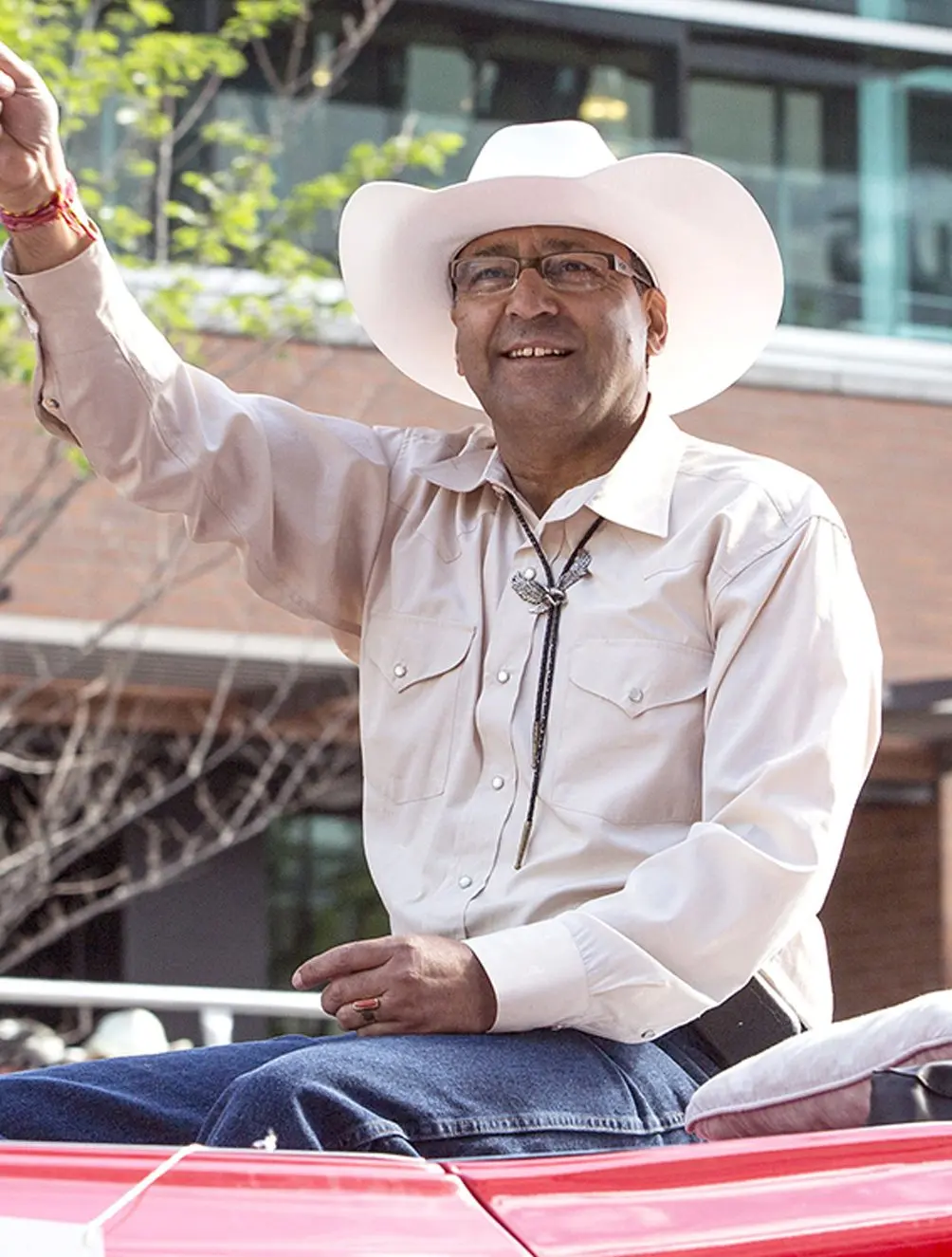
He is a full embodiment of his father, Bindra Ban Shory, and is proud of it. “My father is my inspiration and role model. Like my father, I am also a straight shooter and believe in hard work. I loved being a farmer,” he says in appreciation of what his father means to him. His entry into public service as a politician in Canada is also something he inherited from his father, who was a well-respected freedom fighter before independence and also served as a civic body representative.
This small-town boy was sure to make success, though it was a fact unknown back then. Born on 3 August 1958, he was the seventh of eight siblings. He is thankful for his father’s insistence on getting a good education. Devinder graduated with a major in economics and political science. He later earned a law degree from Punjabi University, Patiala, in 1980. Education is a top priority in his family; his wife, Neetu, also pursued higher education and graduated from the University of Delhi. Their children have also inherited these qualities – sons, Jatin and Chetan are lawyers; daughter, Arisha has a bachelors’ degree in commerce and intends to pursue higher education. Jatin’s wife, Grace, and Chetan’s wife, Jasmine, are both lawyers too.
Period of uncertainty in Punjab
Devinder was an active member of the Bar Association of Barnala from 1980 to 1989. It was also a period of great uncertainty because the turbulent political climate in Punjab. He admits surviving the violence and targeted killings became his priority over focusing on a career in law. Quite apart from all the violence, there was another incident that almost distracted him from pursuing a career in law in Barnala.
“Once in the courthouse, I saw a senior lawyer bargaining with his client, quoting a high fee and finally agreeing to a very low fee. That broke my heart – people should have some sense of dignity for any profession. I started some business on the side and also got involved in our family transport business; I also took time out for some politics and social life.”
He remembers that the violence and unrest of those days had many people stressed out; his family was no different. It was decided that he along with one of his brothers should move out of Punjab, hence they moved to Faridabad in Haryana and started a brick kiln. A terrorism act that occurred early in the morning during their outdoor exercise shook him – it had killed 11 people. He personally helped in retrieving the bullet-ridden dead bodies of the victims of terrorist attacks, as well as encouraged and helped some misguided youth to remorse and restart their lives with a positive attitude. The incident of such brutality left a lasting impression on him and shaped his political ideology of zero tolerance for any kind of terrorism. “It still sends a shiver down my spine.”
A new beginning in Canada
All’s well that ends well.
As the situation in Punjab went through the vicious cycle of violence, Devinder decided to move out of India for a better life. He became the first in his family to immigrate to Canada – this happened in 1989. Things were changing for good – he got married to Neetu and together they settled in Montreal, Quebec, where they were blessed with their first son, Jatin, in 1991. Devinder tried to learn the French language but realised that he won’t achieve the required proficiency. He, therefore, decided to move to Surrey in British Columbia in 1991. Thereafter, it was the typical immigrant story of grit and determination to succeed in an alien environment.
“I am the kind of person who sticks to the commitment. I remember my illiterate mother’s saying, ‘If your word-of-mouth works, you are as rich as a farmer cultivating with seven tractors’. Yeah, it’s not easy; I went through everything that an immigrant has to. I quickly realised that foreign credentials recognition is an issue in Canada,” he explained. “I upgraded my legal education and became a lawyer 1998. This wasn’t easy either, I alone moved to Calgary in 1997 to upgrade my legal education while Neetu stayed in British Columbia. I have to credit her as she stood by me through thick and thin. Just imagine, I was almost 40 and she single-handedly was taking care of our three young children and parents, while working full time. When I became a qualified lawyer in Alberta in 1998, my family joined me to settle in Calgary. I am very thankful to God. Luckily, I was the first one from Barnala who became a practicing lawyer in Canada,” he shares. “Of course, my father supported us. Even though he retired a few years back, his encouragement, inspiration and financial support have been precious to us. I was very fortunate to be born in a great family and to be in a good country. Very blessed and thankful,” he adds.
Devinder confesses that they are not a typical Bollywood-like couple but they often watch movies together. “Neetu is fond of movies, and we also occasionally watch different genres from different countries. Bollywood hits, Hum Saath Saath Hain and Sholay are my favorites. Movies like Invictus (based on Nelson Mandela’s life) and the Iron Lady (based upon Margrett Thatcher’s life) inspired me quite a lot.”
He recalls that right after he earned his Canadian law degree in 1998, he had to choose between working for a wage and being self-employed. He says, “None of us three brothers or my father ever worked for anyone. So, I took the hindsight from day one and opened my law firm, Shory Law Office, which became a well-established firm before I was elected as a Member of Parliament. Incidentally, I also became the first Indo-Canadian to be nominated and elected to the House of Commons from the riding of Calgary Northeast. Moving forward, the credit goes to Jatin. After becoming a lawyer, he joined our law firm and where Shory Law stands today is his vision and hard work. He practices solely in immigration area but brought other next-generation lawyers on board, practicing in different areas of law.”
Traversing new paths
“Like my father, I am also a firm follower of Hanuman ji. I strongly believe that the four pillars of His qualities – selflessness, commitment, loyalty and mastering management – have a lot to learn from. I am always desperate to learn more about Him,” says Devinder.
As a first-generation immigrant in the Canadian parliament, Devinder was a member of the immigration as well as international trade committee and was also active on different Parliamentary Friendship Groups. He also co-chaired the India-Canada Parliamentary Friendship Group and served as the vice-chair of the Commonwealth Parliamentary Association (CPA). He candidly says that he was deeply involved in promoting what he believed was his immigration point of view and as an Indo-Canadian MP, he also worked hard to promote strong positive relations between Canada and India. “During my time, I travelled twice with the then Prime Minister of Canada, Harper, and numerous times with other leaders and met both the then Prime Minister, Manmohan Singh, and later the current Prime Minister, Narendra Modi, and others leaders”, says Devinder.
He is particularly proud of being instrumental in bringing up the idea of a law called Bill C24 that says that anyone convicted of terrorism with five years prison must be stripped off of Canadian citizenship, anyone who serves the Canadian armed forces for two years should be given one year credit towards their Canadian citizenship and if anyone who attacks and/or fights against the Canadian forces should also be stripped off from Canadian citizenship as long as that person does not become stateless.
However, he says, “some self-interested people did not like it and termed it rather anti-immigrants. I steadfastly promoted my idea without caring about losing the election and am still proud of it and it’s becoming a law in Canada. Unfortunately, the current government stripped the law”.
Besides numerous community recognitions and awards, Devinder is also a recipient of the Alberta Centennial Medal and Queen Elizabeth II Diamond Jubilee Medal.