
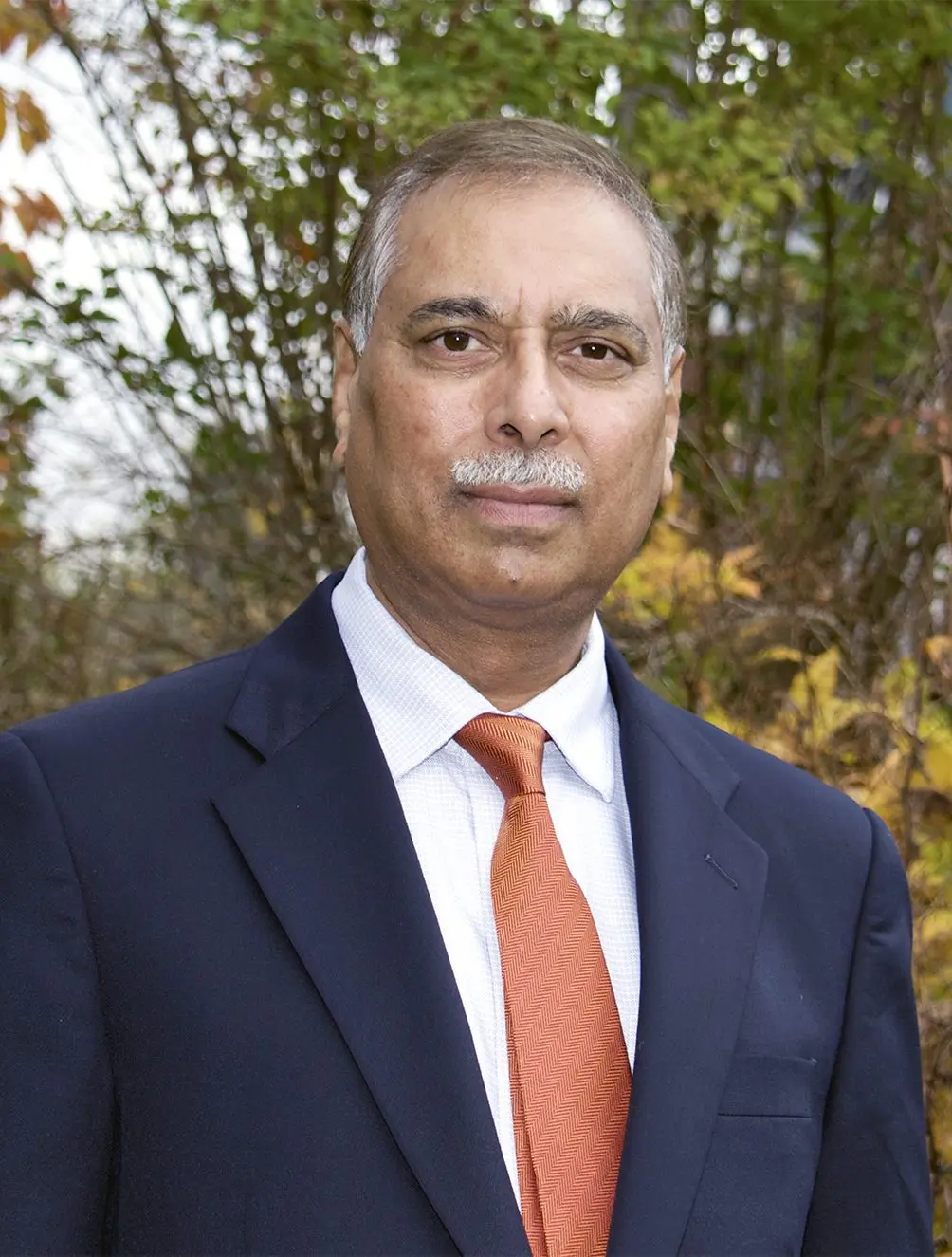
A professor at the University of Guelph in Ontario since 1991, he is internationally known in the field of Immunology. His education and professional experience is spread across three continents, Asia, Europe and North America, specifically India, France, Switzerland, Canada and the USA. His research has advanced knowledge on antibody genetics in health and disease relevant to disease prevention remarkable for several patents, two books and over 100 research articles.
His first book, Molecular Immunobiology of Self-Reactivity (1992), is a key to understanding systemic autoimmune diseases at the interface of patho-physiology. The second one, Comparative Immunoglobulin Genetics (2014), highlights his discoveries on unique cattle antibodies not yet seen in other species. The book describes the development of novel anti-viral and anti-cancer drugs originating from cow antibodies. His seminal research on cow antibodies has opened doors to the development of novel kind of drugs and vaccines for preventing diseases in humans and other species. He is a consultant to many international organizations and serves on the editorial board of several Immunology journals.
In 1998, Azad held the Esther Z. Greenberg Honours Chair in Biomedical Research as a Visiting Professor at the Oklahoma Medical Research Foundation, USA. He graduated in veterinary science (1976) with a master’s degree in 1978 from the Faculty of Veterinary Science in Hisar, Haryana. In 1987, he was awarded Docteur es Science with a mention Tres Honorable from the Pasteur Institute, Paris (University of Paris VII). He further obtained advanced training at US institutions like Lawrence National Laboratory, Berkeley, Cold Spring Harbor Laboratory and Albert Einstein College of Medicine in New York.
Denial of opportunities in India despite the highest level of education and scholarly accomplishments, Azad was left with no choice but to settle in Canada in 1991, a country that recognized merit.
“India’s contribution to world thought is unparalleled in the history of humankind,” says Azad. His father, Dr. Rajendra K. Sharma, son of Dr. Prem K. Sharma and Mishri Devi of New Delhi, was Professor and Head of Extension Education at the Haryana Agricultural University at Hisar. He had, in fact, contributed to the creation of the university and helped develop the concept of ‘Krishi Gyan Kendra’ in Haryana, adopted nationally as ‘Krishi Vigyan Kendra’ that led to green revolution in India. His mother, Kaushalya Sharma, daughter of Pandit Laxmi Narayan Sharma and Chameli Devi Sharma of Ballabgarh, was educated as ‘Prabhakar’ in Hindi literature. She ensured quality cultural education to her children, Azad, Madhu, Anil, Sunil and Seema. The Kaushik family roots in academia and agriculture together with the freedom to travel, learn and excel provided the strength and an environment that nourished growth. Azad had his education in Ballabgarh and Hisar, but his ‘passion for science’ was deeply engrained during doctoral studies at the Pasteur Institute, Paris, France.
Azad was married to Archana, daughter of Raja Ram and Santosh Sharma of Meerut, in 1982 in a traditional family arranged system. Archana had a Master’s in child psychology followed by teacher’s training (B.Ed.). A school teacher in India, she continued teaching while in Switzerland. She did not think twice in sacrificing her career in Canada to raise their only son, Manu. The sacrifice bore fruit as Manu grew with family values (Sanskars) and graduated with honours in Biomedical Science (2005) followed by an M.D. (2009). After having practiced Medicine over two years in the USA, Dr. Manu Kaushik has been practicing as a Family Physician at Guelph since 2015. In 2016, he got married with Dr. Pooja Sharma, B.Sc. (Honours, 2009), M.Sc. (2012), M.D. (2016), a Family Physician born in the family of Verinder and Veena Sharma of London, Ontario. The physician couple practice Family Medicine in Guelph and are developing Morriston Medical Centre in Morriston that will start providing evidence-based healthcare in 2022. “My biggest joy is Anush from whom I learn every moment I am with him,” says Azad, while mentioning his 11-month-old grandson.
Azad is an avid reader, widely travelled across continents and is an original thinker. The holy scriptures of India, especially the Vedas, have led him to self-realization towards sublime heights where each one illuminates the other and distinction between self and non-self disappears. His passion for trekking and climbing led him to trek approximately 6000 kilometres in the Himalayas and successfully summiting Mount Ladhaki (18,600 ft.) near Beas Kund, Manali, and Mount Thailoo, near Gaumukh, Gangotri (20,000 ft.). During one of the treks, he had the good fortune of meeting with His Holiness Dalai Lama in 1979 in Manali that proved to be a life-transforming experience. During his college days, Azad wrote articles for youth magazines and newspapers and participated in discussions on All India Radio. The Kaushik family often visits India, which allows them to stay in touch with their roots and culture.
Discovery by chance!
Azad’s research focuses on basic and functional aspects of antibody genetics and engineering. When he joined the University of Guelph, he took the opportunity to develop research on a species other than humans and experimental animals. One day, while in a thinking mode, he saw a cow grazing outside the office window. He immediately looked into how much the world knew about cow antibody genetics. To his surprise, there was little knowledge about it at that time.
Azad assigned a Ph.D. Commonwealth scholar from Punjab, Dr. Surinder Singh Saini, to decipher the structure of cattle antibodies. These arduous studies led to discovery of a new kind of large-sized antibody with a distinct molecular shape, yet to be seen in other species.
His early research had led to identification of novel genetic elements encoding autoantibody and broke the the dogma of the time that autoantibody-specific genes existed. Studies on construction of the immune system across species led Azad to focus on the immune system of cows. His laboratory showed that limited germ line diversity in bovine species necessitated alternate strategies to enhance antibody-based immunity.
Azad’s lifelong research on antibody genetics has culminated in a new start-up company, ImmVacca, in 2020 which uses the cow-antibody platform to develop the next generation of drugs and vaccines. Several biotechnology companies are in a race to use his research to generate new kinds of antibody-based drugs and vaccines.
Strengthening the Indo-Canadians
Azad says, “Being a pure academic and fortunate enough to have lived a purposeful life, it is important to be out of ivory tower and give back to the community.” The unfortunate double murders of his sister and her son in India in 1997 provided the inner resolve to selflessly serve serve the community to help make a better world.
Azad, together with like-minded members of the community, founded the National Alliance of Indo-Canadians (NAIC), a 2015-incorporated non-profit organization of the Indo-Canadian community. It promotes the relationship between Canada and India through business, art and culture. The organization acts as a think-tank of mature, wise and experienced Indo-Canadians for the benefit of the community-at-large and the people of India. It has helped him strengthen social bonds with Canadians, reflecting upon unity and brotherhood. His activism with the NAIC played a major role in bringing Indian PM Narendra Modi to Canada in 2015, a bilateral visit of an Indian PM after a long gap of 42 years. The visit energized the Indo-Canadian community and enhanced the bilateral friendly relations between the two nations.
Given the difficulties experienced by students from the Hindu community while studying at the universities, far from their homes, Azad founded the World Brahman Federation (WBF) Canada in 2004 as a spiritual and educational resource of Sanatan Dharma. The federation is a cultural, social, educational, charitable and religious organization that brings together people of Indian origin in Canada and abroad. It incorporates the values of the Vedic civilization and Dharma to endorse and enhance the level of human consciousness in day-to-day life.
Azad has developed a very simple triangular model of Dharma (God), Sanskriti (Culture) and Prakriti (Nature) for the youth to imbibe and practice to develop inner strength to overcome all kinds of difficulties. Today, this method is making a difference not only in Canada but also around the world.
All that Azad has done and continues to do, there is a dash of integrity and faith that he seemingly holds so close, the reason behind his success.