
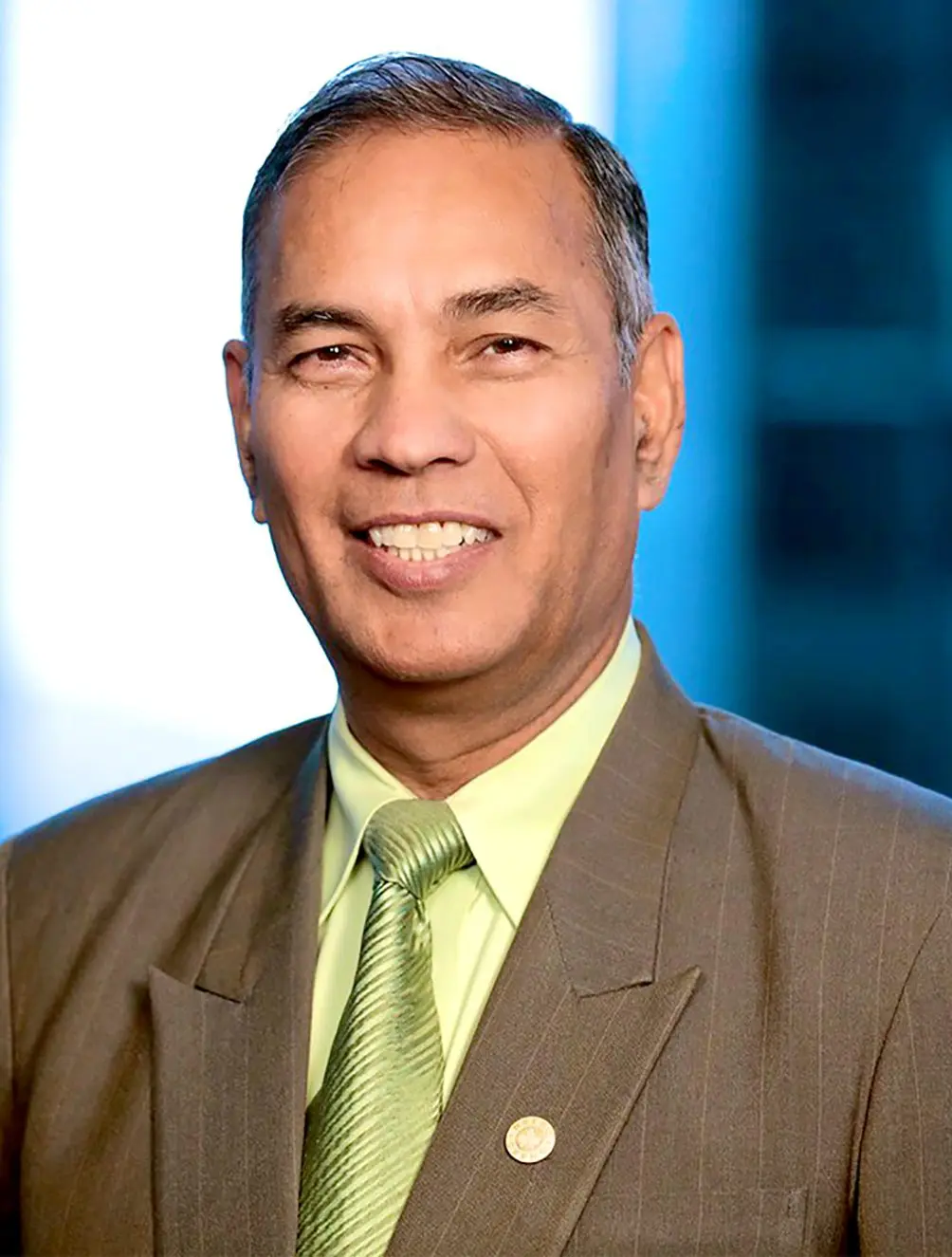
It would be far more appropriate to call him the son of his grandparents. The eldest of seven siblings – five brothers and two sisters – Digvir, born on 10 January 1958, preferred to live with his paternal grandparents, Bhagwati Devi and Maan Singh. So deep was his attachment with them and country life that only after clearing his grade 12 exams could he think of moving out of his ancestral village of Mant in Mathura. He was happy to give up moving around with his parents, Krishna Devi and Hukam Singh.
As a central government employee in the Posts and Telegraphs Department, Hukam Singh’s job was transferrable. Every three years, he had to move to a new location with his entire family. The family loved the experience of new places and the adventure that came along with it. Digvir was too content to spend a stable and peaceful life at his grandparents’ home in the village. He loved the unhurried, simple and gentle rhythm and flow of the peaceful, idyllic life of the rural countryside, far from the din and hub-bub of the city along with their warmth and love.
Digvir was a great admirer of his grandfather and his earthy, rustic wisdom. It used to give him no end of pleasure to hover around him and listen to all the things he would say as he sat along with other village elders smoking his hookah.
Among all the things he loved to hear the most was his poetry. He still has fond memories of those times and recalls, “My grandfather was very good at composing and reciting his own extempore poetry. But he never wrote anything down. So there is no written trace of this great gift of his anywhere. He had a great knack of mixing poetry with numbers”.
Jayas says he only remembers the gist of two such poems. One was about the incident in the Ramayana where Ravana abducts Sita. Another one was about Lord Krishna after he left Mathura for Dwarka. These highly entertaining poetic puzzles sharpened Digvir’s intellect and developed within him a keen love for mathematics.
At school his teachers loved him because he could mentally solve math problems. In grade 3, he was asked by his teacher to teach the rest of the class how he was able to solve arithmetic problems with much ease and quickly. Soon he became the most popular boy in his class and the talk of the entire school. He has been teaching ever since. Digvir was a good student and always scored outstanding grades all through his schooldays. His innate love for poetry was nurtured by his Hindi teacher, Dr. Shivraj Singh. “He was the only teacher of our school with a Ph.D. We got along very well and he really taught me how to appreciate the meaning and value of Hindi poetry. Even after coming to Canada, I always kept in touch with him. He was the author of many books.”
Talking about his interests in sports and games, Digvir says he wasn’t much in serious sports like athletics and other such activities, but he was a keen badminton player and was the captain of the school cricket team. But his interest for cricket never went beyond the playing field. “I have never been the kind to spend hours in front of a TV watching cricket matches”, he asserts.
Additionally, Digvir was a regular participant in the Ram Leela play every year in the village and played the part of Lakshman for two years. He was also an active participant in student politics. In grades 11 and 12, he was elected as the president of the students’ union.
Securing first division in grade 12, Digvir easily got admission in the B.Tech. in agricultural engineering, G.B. Pant University of Agriculture and Technology, Pantnagar. The transition did not pose too much of a problem to him and the young man quickly adapted well to his new environment and was soon doing just as well.
Abroad, but never away!
After graduation, Digvir took up a job in Chandigarh with HMT Ltd. But destiny has a strange way of changing the course of your life. Looking for accommodation in Chandigarh proved to be an impossible task. No one wanted to rent out their place to a bachelor. He also knew that staying in a hotel indefinitely wasn’t practical; he quit his new-found job and decided to go abroad and do his masters.
Without much trouble, Digvir got admission in M.Sc. agricultural engineering in the University of Manitoba, Winnipeg, and completed it in 1982. Soon afterwards, he went back to India to get married, keeping the promise he’d made to his grandfather. The old gentleman feared his grandson would marry someone of his choice, perhaps a foreigner. But Digvir made a solemn promise to his grandfather that he would marry a girl of their choice.
True to his word, Digvir went back. On 15 June 1982, his marriage was solemnised with Manju, an MA in political science from the University of Rajasthan, Jaipur. The responsibilities of a married man were clear to him which made him firmer on his bigger goals. He went to Canada again and took admission for his Ph.D. (from 1982 to 1985) in University of Saskatchewan and completed it in three years.
He says that his work basically concerns the drying, handling and storing of cereal grains, oilseeds and pulses. “Now I’ve spent around 40 years in this line of work in Canada”. In appreciation of his significant work he has been made a Fellow of the Indian Society of Agricultural Engineers, Fellow of the National Academy of Agricultural Sciences and Fellow of the National Academy of Sciences and has received over 50 other provincial, national and international awards. He has also been inducted into the Order of Canada in 2018 as an officer for advancements to agricultural practices worldwide, and for promotion of academic and scientific research in Canada. He has also held several prestigious positions at the provincial and national levels in Canada. “I was the president of Canadian Society for Agricultural Engineering, Canadian Institute of Food Science and Technology, Agricultural Institute of Canada, Engineers Canada, Manitoba Institute of Agrologists and Association of Professional Engineers and Geoscientists of Manitoba.”
The lifeline
Manju is the lifeline of the Jayas family. Not only did she introduce and expose their three sons to Indian culture and traditions, but also held the whole family together. All of them are multiculturalist, respect all religions and Gods and celebrate all Indian festivals. The eldest, Rajat, was born in 1983. A practicing psychiatrist, he is married to Sarah, a qualified nurse. They have two children, Priya and Rohan. Their second, Ravi, is a paediatric ICU physician and is married to Samantha, a qualified nurse. They have three children, Isabella, Gabriel and Leon. The youngest, Rahul, is also an MD and is completing residency in psychiatry. All three of them have graduated from the University of Manitoba.
Talk to him of his bond with his parents and siblings and he begins with speaking about his grandparents. “It was lovely staying with them. I know it was what I saw, learned and experienced there with them that I still am in love with. It eventually became an inspiration behind what I am doing now!” Digvir loves visiting India and its charm.
Whenever free, he devotes his time to writing books. Jayas has co-authored several books, like Grains: Engineering Fundamentals of Drying and Storage (2021), Nanoscience and Nanotechnology in Foods and Beverages (2019), Bio-Imaging: Principles, Techniques, and Applications (2016), Insect Pests of Stored Products: A Global Scenario (2003), Grain Drying: Theory and Practice (1998) and Stored-Grain Ecosystems (1995). He frequently spends time in teaching the basics of grain storage, and how to develop business around safe storage, drying and quality monitoring processes for grains in several countries including India. For the past almost 20 years, Digvir has been sharing and spreading his knowledge and expertise around the world and particularly with China, Ukraine, Canada, India and the USA to help them save grains against storage-incurred losses. “With collective knowledge, even if I have contributed only 2% to loss reduction, then around 64 million tonnes of grain is saved annually. This quantity of food grains can feed several more millions of people. Isn’t that one of the basic requirements of the world now?”