
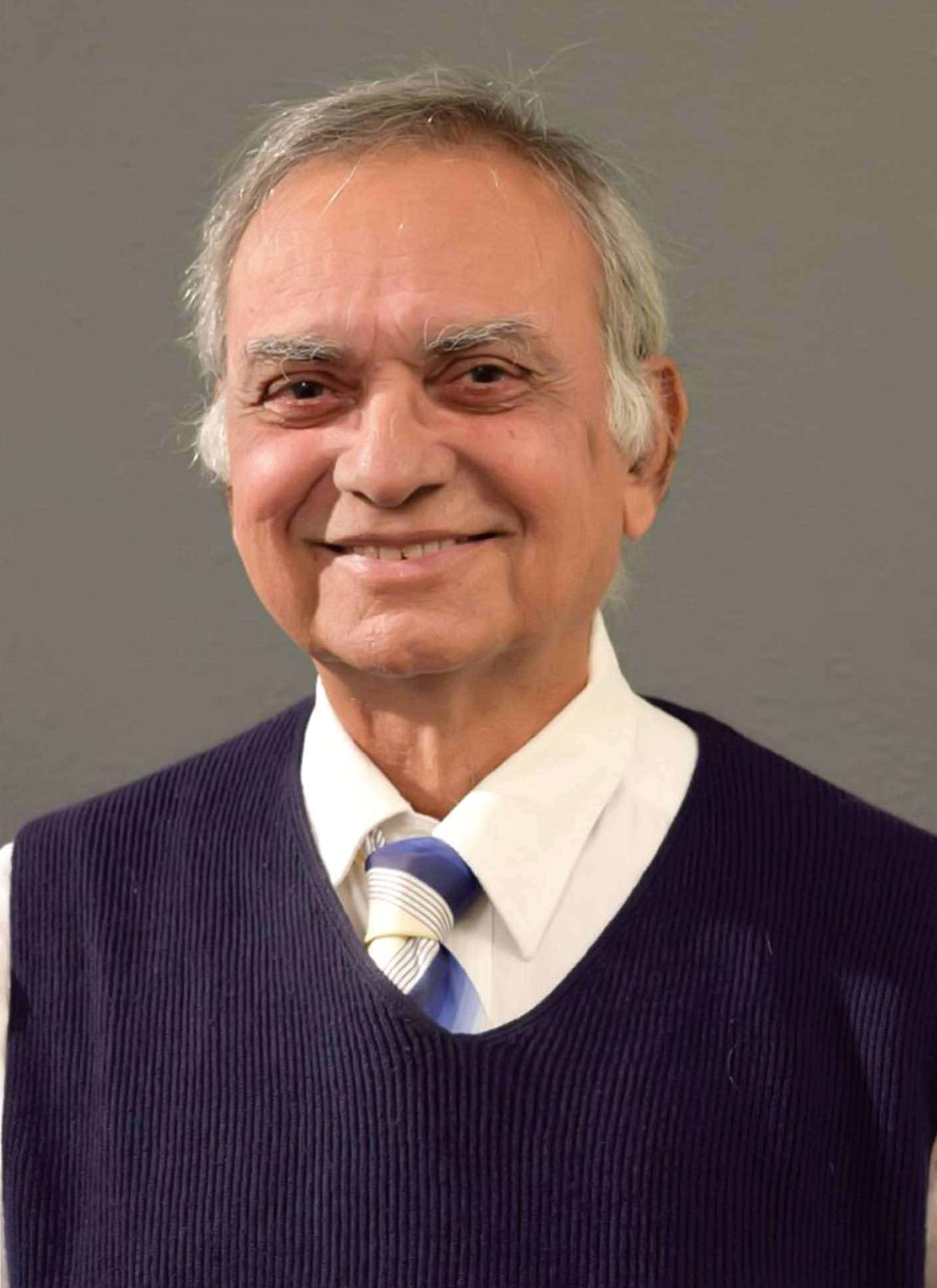
He pioneered the Perfusion Balloon – the ‘Sahota Perfusion Balloon’ – in the 1980s. His story stimulates motivational enzymes; it is one that emulates on the path to success. The mighty Balloon is now used in angioplasty surgeries all over the world. A small, hollow and flexible tube with a balloon near its end, this device is placed in the heart arteries to lift partial blood blockage.
In 1985, Harvinder ‘Harry’ became the first cardiologist in the US from the Indian subcontinent to have a patent under his belt and, over the years, has gathered at least 24 more, including the red laser light for prevention of restenosis, multi-lobe balloon, fibrin-coated stent, hemostat to stop bleeding from ruptured artery during the procedure, etc. He holds a license to promote a drug-coated stent. He performed the first coronary angioplasty in many hospitals around the world including India, Mexico, Russia, Ukraine and the US.
He believes staying connected to his roots is essential to our existence. “Today’s youth are influenced by the western culture and are losing touch of their Indian traditions. When they should be proud of their rich and exotic culture, they are emulating the west.”
There are reasons, emotional and factual,
that the medical world knows him as the
Father of Angioplasty.
Miracles Happen to Believers
It’s quite evident that young Harvinder was destined to go places and cut out for bigger things. His father, Sardar Lachman Singh, was an Indian Railways official who would get posted at different stations in Punjab. And his mother, Sardarni Dhan Kaur, was a devoted lady and his number one supporter. He was born as Iqbal on April 15, 1941, in a small village of Ferozepur Cantonment and spent his early years in Garhdiwala, and later in Jalandhar and Pathankot among other places in Punjab, the land of great warriors.
The festive mood in the house on the birth of a son was cruelly dispelled as the couple mourned his corpse. “You see, I was as good as dead within two weeks of my birth. I was diagnosed with pneumonia and was declared dead shortly after. Preparations to bury me began and suddenly the doctor said that he could feel a heartbeat.” The revival had his mother believe it was God’s grace, making them believe in destiny, stars and divine power. Lachman Singh had quietly vowed to make his son a doctor, if at all he lived. People around would soon start referring to the child as ‘doctor’.
When he was five, his parents changed his name from Iqbal to Harvinder – they thought a new name wasn’t a bad idea to commemorate a new lease of life. He had a beautiful and memorable childhood growing up in a British-India railway colony and attending the local school, with his four siblings and friends from the community. But he was a frail child.
During his teens, he would quite voraciously read The Tribune, a popular English newspaper in the Punjab. Transfers were common in his father’s job. Despite occasional moves and the horrors of the partition in 1947, changing of schools didn’t affect Harvinder’s interests. He was a studious boy, hungry to learn increasingly more. Besides topping his class every year, he developed a reading habit that fed his ever-curious mind.
He had his second brush with death, at the age of 11. His father had been re-transferred to Ferozepur. “Malaria in 1952 was no good news; it was worst for my family – they once again feared for my life.” Fighting death twice didn’t stop him from being a dreamer. He was found swooning over pretty Indian filmstars. His favorites were actresses, Madhubala and Vyjayanthimala – he decided to escape to Mumbai to try his luck in movies.
His friend, Daya Singh Arora, who was to meet him at the railway station to together take a train from Amritsar to Jalandhar, never turned up – Daya had landed himself a job. His father then reminded the so-called doctor to religiously study to be an actual doctor, a good doctor. He enrolled for the pre-medical course (FSc) at the DAV College, Jalandhar, and dived deep into his books.
Once a Fighter, Always a Fighter
“The road to medical school requires high grades, high entrance exam scores, volunteering and other quality extracurricular experiences. Reading an extra bit will do no harm as only textbook knowledge will help you understand things but other experiences will help you implement the theoretical knowledge practically,” advises the ‘heart’ man.
Keeping up his record of good marks, he cleared his FSc with distinction. He then went to Government Medical College, Patiala, in 1959.
Admission was easy but the onslaught of ragging wasn’t. “Senior students would ask first-year students to do certain things. I couldn’t oblige to some things they asked for; I simply refused for my dignit. But there were few seniors I could rely on and they helped me through.” After attaining his MBBS from the University of Punjab in 1965, he did an internship at the Punjab Medical College. In 1967, he went to England to do further residency and specialization in medicine.
Things were changing for the better.
In July 1967, with £8 in his pocket, he landed where most Punjabis land – in London’s Southall. Working at Bromsgrove Hospital at Kidderminster for his residency, he prescribed typhoid medicine to a patient. “Only later did I realize that England didn’t have typhoid. I also found this place didn’t have rabies too!”
For further specialization, Harvinder enrolled as a postgraduate student at the University of Liverpool to study Tropical Medicine and Pulmonary.
In 1971, he postgraduated in Chest Medicine from the University of Cardiff. Now that life was good, he decided to take the step of life. Asha, born in Punjab, had completed her MBBS from Patna Medical College, Bihar, an underdeveloped state then, where her father, Niranjan Singh Claire, was a mining engineer and worked with a British company, Bird & Co. She then joined the Indian Army and served as a Captain in Delhi. Her father arranged a meeting and he flew to India to meet her. Harvinder accompanied Asha’s father to meet her at an officers’ mess in Delhi. No clue of obvious match matching and unaware of what was brewing, she saw him as another acquaintance of her father. She took her own sweet time to decide whether or not to marry him, unlike him, who fell in love at first sight.
Asha: The Hope of His Life
“I was struck by her beauty, such beauty her eyes held! I decided to spend my life with her.” December 16, 1972, they tied the knot and moved to the US in 1974. Asha proved to be the strong pillar in Harvinder’s success. Initially, she continued her practice in England as an obstetrician-gynecologist. “I told her that if she wants to be a doctor, I can stay at home and take care of the household but she quit her promising career so that she could bring up our two sons, Neil and Eric.” Neil Sahota is a Master Inventor at IBM, United Nations (UN) Artificial Intelligence (AI) Advisor, author of the best-seller, Own the AI Revolution, and also a professor in University of California Irvine. Eric is a forensic scientist and is currently trying to set up his own private business.
He did his fellowship in cardiology at the University of Rochester in New York. Then he went to Regina, Saskatchewan, to complete his chief residency. In 1977, he moved back to the USA and joined Loyola Marymount University, to do another fellowship in cardiology. Later he started his practice in cardiology at St Vincent Medical Center in Los Angeles, California, in 1978. He holds licenses to practice cardiology in India, the US and the UK.
Harvinder, staying out of India since 1967, still feels strongly for India. Asha and he both talk about the Sikh values in the US. In the name of his mother, he recently formed the Dhan Kaur Sahota Presidential Chair in Sikh Studies at University of California, Irvine. He has also initiated Sikh studies in two universities in both the legs of Claremont, Lincoln University, and others in Los Angeles and San Diego. In 2012, he was honored by the American Heart Association for his cardiovascular science and medicine research and his significant contribution to interventional cardiology. The same year, he was also awarded the Golden Orange Award by the World Affairs Council of Orange County.
He has served as the Vice Chair and Chairman of Orange County Emergency Medicine Commission in California and Research Director and Advisory Board members of the Metro Hospital Heart Institute in New Delhi, India, and Tbilisi, Republic of Georgia. Currently, he serves on the Board of Directors of Claremont Lincoln University.
A doctor who not just mends hearts, but wins it – Dr Harvinder Singh Sahota!