
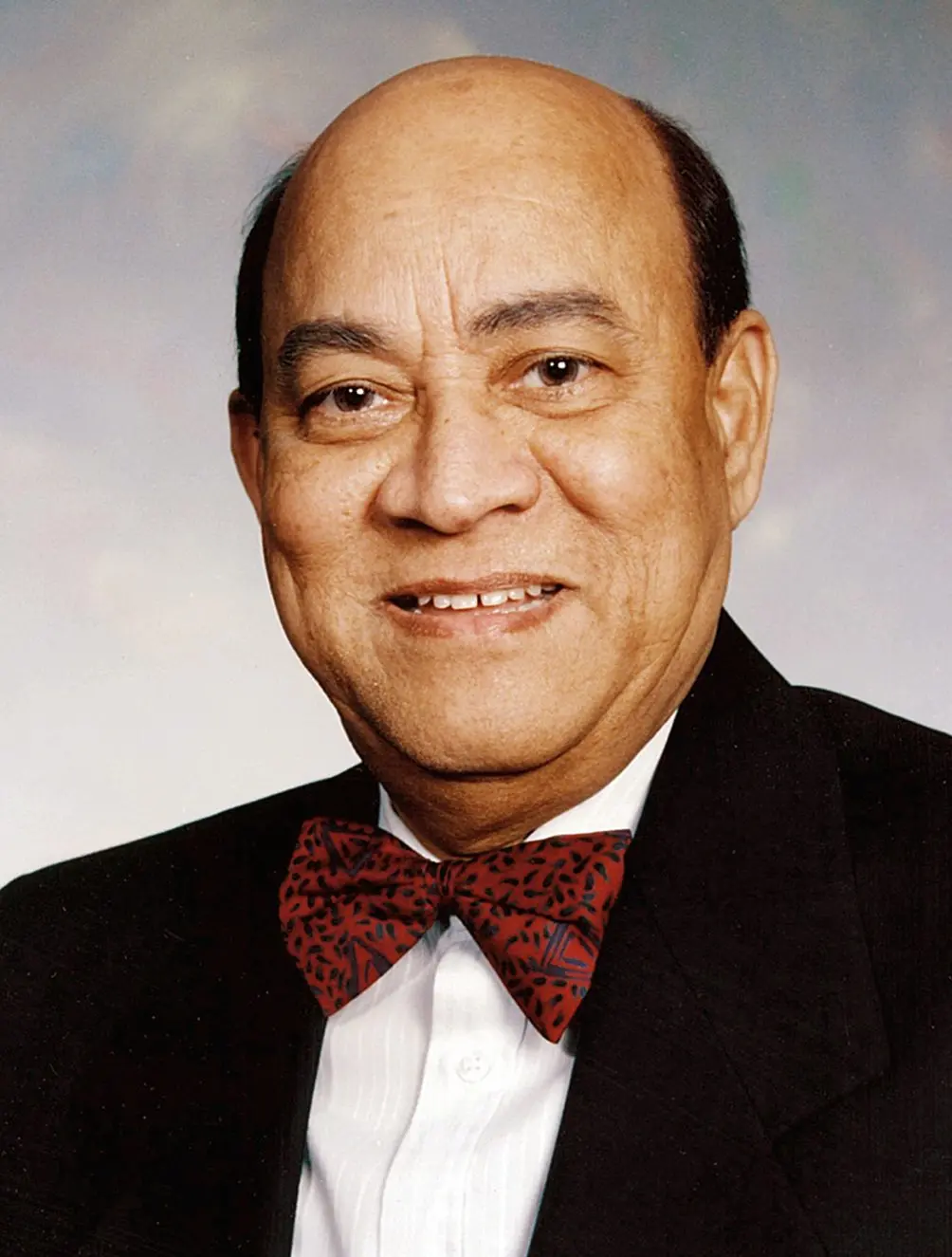
Unlike other children, Dakshinamurti couldn’t go to school, as he had a frail constitution after a series of injuries. His parents thought it better to home-school him. And the little boy also thoroughly enjoyed it. He loved reading and voraciously devoured everything he could lay his hands on. His favourite were biographies, travelogues and histories, especially the works of Shakespeare and John Gunther. He’d discuss his readings with his father, who would be surprised with his quick grasp and ability to assimilate all that he read. He would guide him on what to read next. This was at a time before radio broadcasts in India; Dakshinamurti would listen to Western and Indian classical music on gramophone and connect with the wider world through his readings and discussions.
As he gained good health, he started going to school. “Initially social sciences – history, geography and current international affairs –interested me. But during my first year of college vacation, I spent a lot of time at my elder brother, Dr. K. Ramamurti’s laboratory. He was a research scholar at the University Biochemical Laboratories, Madras. It totally changed my orientation and I became a chemistry enthusiast.” In 1946, Dakshinamurti topped the final exam for B.Sc. (chemistry) at St. Joseph’s College, Trichy.
An unforgettable meeting with Gandhi ji
He had “the most unforgettable experience of life” during college. “As members of the student Congress, we were planning a demonstration as a part of the Quit India Movement. Mahatma Gandhi happened to visit Trichy at that time, and we, the student leaders, had a chance to meet with him. He warned us that if it wouldn’t be peaceful, he would disown our movement. Fortunately, our demonstration was very successful, without any untoward incident.”
Dakshinamurti worked as a lab demonstrator in Vellore Junior College for about four years, while still pursuing political activism. But Ramamurti, who by then had joined Birla Institute of Technology and Science (BITS-Pilani), advised him to return to science. Dakshinamurti completed his M.Sc. (biochemistry) from BITS and joined Christian Medical College, Vellore, as a biochemistry lecturer. He simultaneously completed his Ph.D. in 1956 on Experimental Liver Injury at the University of Rajasthan. “Dr. Charles Best, co-discoverer of insulin, and Dr. Charles Glen King, co-discoverer of vitamin C, were among my thesis examiners”, shares a pleased Dakshinamurti.
The quest for more!
He spent summers at the library of the Indian Institute of Sciences in Bangalore. “As a scientist probing for answers and seeking solutions, I didn’t want to stop now.” The young scientist applied for the post of post-doctoral research associate at the University of Illinois, USA, in 1957 and easily got an appointment.
Starting at this university, Dakshinamurti established his core area of research in the epigenetics of vitamins. In the late 1950s, he was a pioneer in the use of radioisotopes in biological research and medicine. He says, “I was selected by the Radiocarbon Laboratory – one of the very few centres in the USA for advanced research – to use their restricted facility. My publications from the university were among the earliest to use Carbon-14 isotopes in biological research”.
The high acclaim he received for his work earned him an invitation to join the Massachusetts Institute of Technology (MIT) as a senior research associate in 1962. Later he moved to the St. Joseph Hospital (Lancaster, PA) as an associate director of research.
In 1965, he received an invitation from the University of Manitoba for the position of associate professor of biochemistry in the faculty of medicine. His research includes work on the biochemistry, physiology and pharmacology of vitamins (particularly biotin and vitamin B6), childhood epilepsy, vitamin-dependency syndromes, diabetes and metabolic syndrome diseases.
Thereafter, Dakshinamurti has won several national and international recognitions and awards, like the Borden Award of the Canadian Federation of Biological Societies (1973). He has lectured at several universities and research centres around the world upon invitation, like at the Rockefeller University, New York. Through the 1980s, he was involved with the Nobel Prize committee, nominating eminent scientists for consideration. He also organised prestigious conferences at the New York Academy of Sciences.
He has authored over 200 peer-reviewed research publications and 6 books in his field and is well-known for his encyclopedic knowledge of scientific pathways. Ganga, his wife, would later call him her ‘walking encyclopedia’!
After retirement from the University of Manitoba in 1997, Dakshinamurti became an emeritus professor of the faculty of medicine and a senior advisor of the St. Boniface Hospital Research Centre, Winnipeg. Subsequently, he was elected to the Fellowship of the Royal Society of Medicine, London. Holding several leading positions in many organisations and institutions, he was recognised as one of the outstanding scientists of the 21st century in the Cambridge University Press Publication of Biographies in 2002. Her Honour Janice Filmon, the Lt. Governor of Manitoba, appointed him a Member of the Order of Manitoba in 2020.
The power of life
Dakshinamurti was born in 1928 to Kamakshi Ammal, a homemaker in a joint family, and S.V. Krishnamurti. Kamakshi was quite involved in civic and community affairs; many people would seek her help and nonjudgmental advice. Krishnamurti, a graduate of Madras Christian College, was a commissioned officer in the British Indian Army and served in Iraq during World War I. He resigned from the army after the Jallianwala Bagh massacre, vowing to never again work for the British and became a school headmaster in Vellore. Dakshinamurti’s grandfather, P.S. Venkataswami Iyer, was the village munsif. An ardent follower of Gandhi ji, he had earned the title of ‘village Gandhi’.
Ganga and Dak got married on 28 August 1961. Ganga had a masters degree in Sanskrit and Indian philosophy; later she postgraduated in library science in the USA and earned Ph.D. in education at the University of Manitoba. She first served as Technical Services and Systems Librarian, then as Library Science Instructor at the Red River Community College. Professionally active, she has devoted her life to the promotion of Indian culture, particularly through music, dance and drama. Trained in Bharatanatyam, she has performed in various cultural centres in the USA and Winnipeg. She, along with a few others, founded the India School of Dance, Music and Theatre and in 1993, became Coordinator of Manohar Performing Arts of Canada, a Winnipeg-based classical dance theatre company.
Ganga has been awarded the Manitoba Library Association’s Librarian of the Year Award (2001), University of Manitoba Outreach Award (2012), Queen Elizabeth Golden Jubilee Service Award of the Government of Manitoba (2013) and the Asian Women of Winnipeg’s Award (2018).
Their daughters, Shyamala Dakshinamurti (1967), married to Stanley Whyte, and Sowmya Dakshinamurti (1969), married to Douglas Eyolfson, also have learned Carnatic music and Bharatanatyam since childhood. They were presented by their guru’s guru, Guru Kittappa Pillai, in a public performance in Chennai, India, in 1987. In 1993, they helped establish the Manohar Performing Arts of Canada which performs across Canada and the USA. The two performed Bharatanatyam at the Taj Mahotsav Mela in Agra, India, in 2007. Their play, The Game, a retelling from the Mahabharata, was featured in 2018 at the FemFest theatre festival in Winnipeg.
Shyamala is a professor of neonatology and physiology at the University of Manitoba and a well-recognised researcher in the biology of breathing. Stanley is an emergency physician at the Seven Oaks General Hospital, Winnipeg. Sowmya is an anesthesiologist at the Victoria General Hospital, Winnipeg. Douglas is an emergency physician; he was elected a Member of the Canadian Parliament.
“Whatever I wanted to accomplish – be it giving a dance or veena performance, pursue my academics, career – he has always encouraged me, participated along with me even after we became parents. He has helped me identify the problem and solution both and helped me juggle with responsibilities. Our daughters and I cannot be where and what we are today without his loving care and support,” says Ganga.
As one of the first Indian immigrants to central Canada, Dakshinamurti was involved in the founding of various cultural and religious organisations of Indo-Canadians in Winnipeg, like the India Association of Manitoba and the India School of Dance, Music and Theatre. He was the Trustee and Treasurer of the Hindu Society of Manitoba Trust Board. In 1967, he was a Member of the Centennial Committee of Winnipeg.
The couple supports victims of natural calamities around the world. “We raised funds for relief operations in Pakistan, India (Gujarat, Tamil Nadu), etc.” They have donated generously to set-up The Dakshinamurti Academy of Hindu Studies at the Hindu Temple in Winnipeg. They have established the Mahatma Gandhi Scholarship in Human Rights at the University of Manitoba, for students who pursue graduate studies in this area. In 2002, together with Hon. Steve Ashton, then a Senior Cabinet Minister of Manitoba, Dakshinamurti established the Mahatma Gandhi Centre of Canada to promote the ideals and teachings of Mahatma Gandhi and recognize leaders working towards peace.