
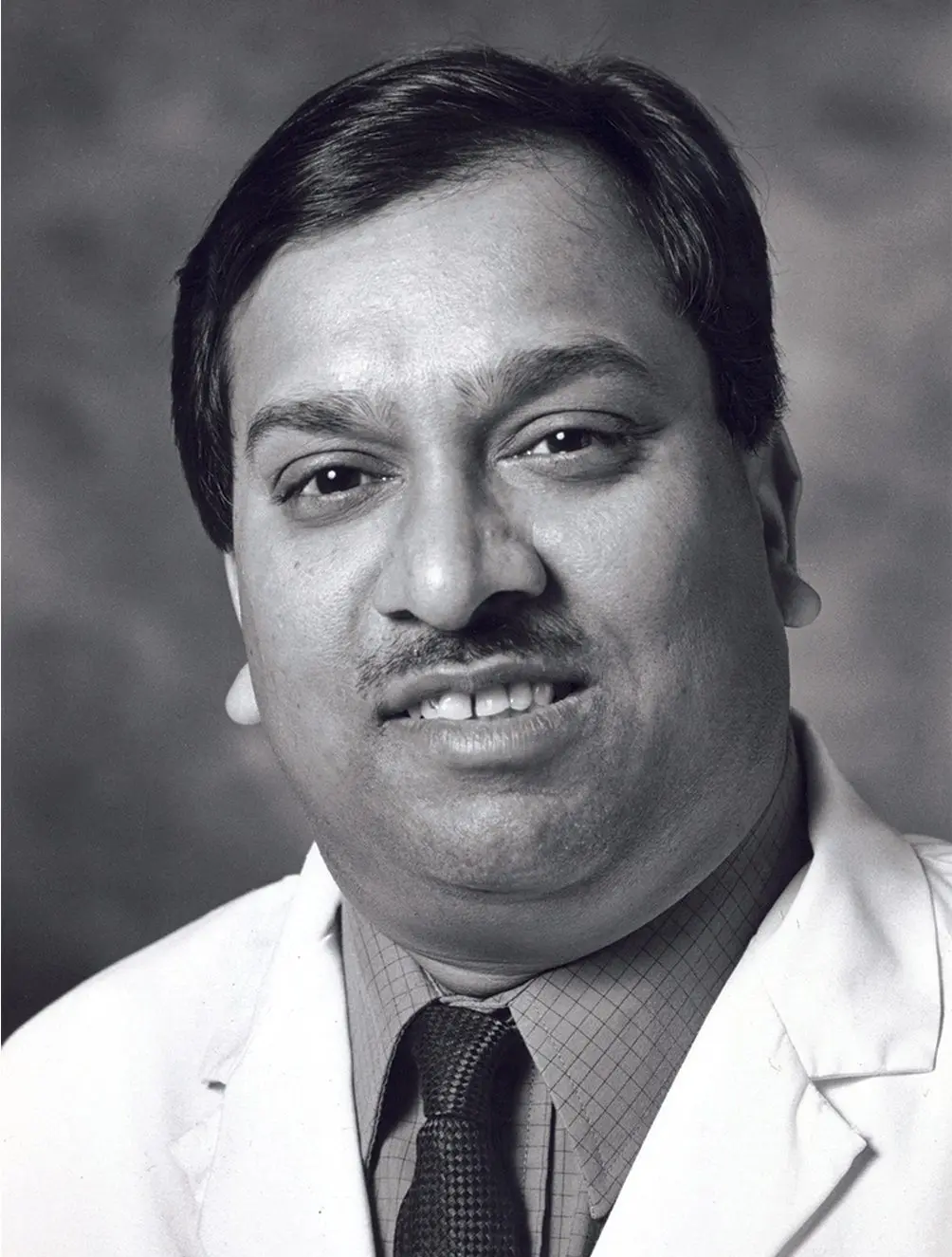
Born in 1959, he comes from a family of a small town named Barhya in Azamgarh district of Uttar Pradesh. His family background traces back to the era of Ramayana and his lineage goes back to 500 BC where they were the gurus. His grandfather, Shri Satya Deo Dhar Dwivedi, kept the tradition alive. He was a guru who taught religious texts and mantras of Hinduism. In return, he used to receive one-tenth of the agricultural produce of his disciples’ families. That’s how his grandfather fulfilled the needs of his family. The generation of Shivendra’s father was the first to actually work outside of being a guru. His father, Tryambkeshwar Dhar Dwivedi, was brilliant in studies. Shivendra’s mother, Mithilesh, has been a devoted housewife as was the custom back then. She has always been supportive of her husband in his highs and lows of life. From a humble background, she has hosted guests like Prime Minister Atal Bihari Vajpayee, Lal Krishna Advani and late veteran actor Sanjeev Kumar at her home and yet remained just as humble. Till date, she is busy taking care of her children and grandchildren.
Shivendra’s life is influenced by his father who did B.Sc. in mathematics from Banaras Hindu University and his M.Sc. in mathematics from Gorakhpur University. It was destiny’s play for his father as he came to Canada to pursue M.Sc. with full scholarship from the University of Ottawa in 1962. Prof. R.S. Mishra, well-known in the field of pure mathematics, helped him reach abroad. During the 1960s, Canada was attracting students from all over the world for its higher education programme.
As Tryambkeshwar came from a weak economic background, his only aim was to get a job as soon as possible. He got his first job as a lecturer at the University of Ottawa and found one with the Sir George Williams University, now known Concordia University. In 1965, he had his family, Mithilesh and sons, Shivendra and Mahendra, join him in Canada. Later they gave birth to two daughters, Veena and Sudha.
Later, he did his Ph.D. from Clarkson University, Potsdam, New York, and never looked back. Prof. Tryambkeshwar published a number of research papers, the most popular one was widely known as Dwivedi’s Theorem. He travelled around the world covering 40–50 countries as a visiting lecturer.
The family is so inclined to their culture and roots that even today they live as a joint family in Canada. Shivendra speaks fondly of his beloved wife, Neelam, who has completely dedicated herself to the well-being of their family and home. They have two daughters, Sushma and Supriya, and three grandchildren. Mahendra has two sons, Ajay and Vijay. Veena has a son and a daughter, Ravi Shankar and Maya. Sudha has two sons, Sanjay and Sunil.
To help the poor is the real religion
Tryambkeshwar was the president of Hindi Literature Society of Canada, which took him to interact with many well-known professors, scientists, doctors and political leaders. He widened his circle that later motivated him to open a two-room, all-girls school in Barhya (Azamgarh) in the name of Shivendra’s grandmother. Over 15,000 students have received their high-school diplomas from Devi Sringarmati Inter College. The Freedom from Poverty Foundation pays all expenses ensuring access to free education for the students.
From 1988 till his death in 2008, Tryambkeshwar spent all that he earned on charity. He also opened a non-profit factory for the people of Lucknow. This motivated Shivendra to give back to the community. He recalls the time when his father struggled to arrange $400 to deposit for a student visa. He also realises that it was luck and hard work that he could migrate to Canada. Watching him, Shivendra too was motivated to help anyone and everyone in need.
In 1991, Shivendra did his first charity medical camp in India. One of his close friends, Dr. Didier Fay, and he did seven free medical camps in 1991. He visits India, accompanied by other doctors, twice every year to organise free medical camps since 1991. Till date, his foundation has treated more than 2,50,000 patients for free. The foundation has conducted over 2000 free surgeries. He motivates his team by saying that good deeds always pay good rewards. Currently, he is the president of Sahyog Canada, which is actively giving free sessions and assistance to curb the cases of suicides by Indian students in Canada. Along with Emeritus Prof. Amresh Shrivastava of the University of Western Ontario, he recently did three webinars where 300–400 Indian students attended sessions for free. In one such webinar, Sahyog educated counselors from 20 to 30 Canadian colleges about the cultural differences of the youth of India and Canada, highlighting the challenges faced by a student of Indian origin. He takes pride in the work his family has done so far. As the national president of the Canada India Global Forum (CIGF), Dr. Dwivedi has been a prominent Indo-Canadian voice for improving the trade and political relations between the two countries.
He strongly believes successful and capable people must extend their knowledge and resources in the service of the poor. It pains him to see the modern generation extremely focused on monetary benefits and luxuries while the majority of mankind suffers from hunger and poverty. Doing their bit, Neelam and Shivendra have ensured that their children grew up into good citizens and do their part in the overall welfare of the human race.
What goes around, comes around
You never know how crucial that help can turn out to be in changing someone’s life. At the time when his father left India, a person was outcast from their village if they went to a foreign country. This came from the fear of food mixed with cow meat and liquor. He recalls the progressive mindset of his grandfather, who belonged to traditional brahmin culture. Yet, he allowed his son, Shivendra’s father, to study abroad. He suggested that he would cleanse him with the holy water of the river Ganges on his return from Canada.
Shivendra was a child prodigy in his early years of life. He was the topper of the province of Québec in his high-school days. He finished high school at the age of 14 when others usually finished at 16. By age 16, he was a medical scholar at McGill University. In intermediate, he used to work 18 hours a day without fail. He achieved 99% in the MCAT exams and was one of the toppers of the USA and Canada combined. He earned his MD degree at the age of 21. At the age of 26, he went on to become the youngest head of the department of anaesthesia throughout North America. Ten years later, in 1998, he became the HOD and Director of Santa Cabrini Hospital at Montréal, Québec, and has been there ever since. In 2020, he received the Dr. Albert Chiricosta Prize as a lifetime achievement award for his clinical and administrative contributions to Santa Cabrini Hospital.
Recently, Shivendra survived a serious heart attack. He believes that it was his karma and good deeds that saved him in spite of all odds. The Dwivedi family has succeeded very well. If you are inclined to act good and promote good, nothing can stop you from reaching the zenith of success. The support of his culture and country towards his success is of highest value to him. His success and ability to help others succeed is a result of the support he received from communities of both India and Canada.