
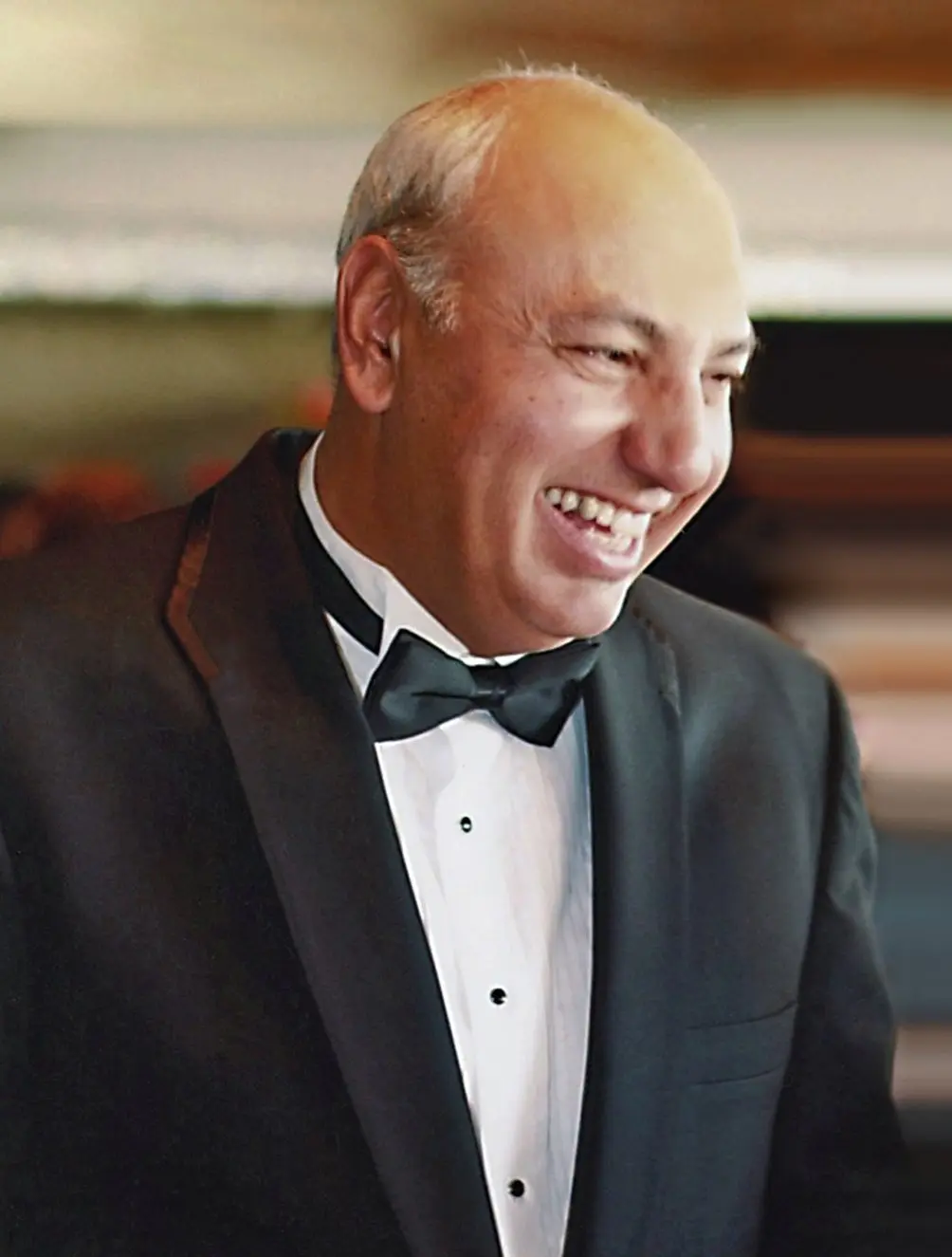
He was born in 1952 into a Sikh agriculture-prime family in Punjab. His paternal grandfather, Dharm Singh, had gone to Russia in 1906 in search of a better future, from where he journeyed to Canada in 1908 and did manual labour at several Vancouver sawmills. Herb shares, “I think my grandfather’s life in Western Canada – then quite unreceptive to bearded, turbaned men like him – was more endurance than fulfilment”. His Canadian interludes were never permanent. He returned to India four times until 1955.
Herb’s paternal grandmother, Bhagwant Kaur Jawanda, was a traditional housewife. They arranged for their eldest son, Harchand, to marry Tej Kaur Olak when the two were still kids. Because the Canadian government in 1947 altered its citizenship policy, Harchand qualified to enter Canada. Once his son settled down in Vancouver, Dharm returned to India for good. Harchand quickly acclimatised, and found work at a sawmill in Marpole district. Following a pattern that characterised his working life, Harchand often worked overtime to save enough to bring his wife and first-born son from India to join him. However, he later was forced into retirement upon losing his eyesight at the young age of 42.
Herb first arrived in Vancouver with his mother on his sixth birthday – welcomed by a snowstorm. What followed thereafter was an increasingly comfortable and eventful life, despite some challenges early on. Since then, he has never been shy about his immigrant status, and always resisted any instances of racial intolerance.
By the time he was a teenager, as his parents backed immigration for numerous relatives, Herb had the language facility and critical grasp about the process to help their settlement in Canada. Close familial culture defined his upbringing, later motivating him to apply his people skills, leadership capacity and social animation focus to the political world.
The go-getter!
After graduating from John Oliver Senior Secondary in 1971 following which he completed freshman year at Langara College, Herb finished his B.Com. at the University of British Columbia in 1977 while being involved with student government and different team games. He recalls playing volleyball, badminton, soccer and basketball as a teenager, while he also was a huge New York Yankees fan and idolised baseball heroes Roger Marris and Mickey Mantle.
The eldest among six siblings, Herb always helped at home assisting his mother with the daily chores and joining his father in maintaining the garden and exterior of their house. He addressed his responsibilities without complaint – like a well-behaved, obliging son. To this day, he has the same ‘can-do’ attitude that defined his approach to life growing up. Deeply influenced by the tenets of his faith, he developed a social activist outlook and made selfless efforts for the Indo-Canadian community’s welfare.
Although the family struggled, Herb never felt deprived. Early on, he demonstrated initiative, coming up with different ways to help financially. He was only 11 when he started selling soft drinks to thirsty golfers at Langara Golf Course. He then delivered newspapers, and at 15, he worked as a service station gas-jockey.
Growing up, he always enjoyed listening to music – The Beatles, The Rolling Stones and The Supremes. He equally enjoyed Hindi pop and bhangra. Still in touch with his closest friends from school days, he remembers, “In grade 11, Walter Janzen and Wilfrid Zemke became my closest pals, and we still have those ties”.
In 1973, he joined hands with his cousin Mukhtar ‘Mike’ Singh Olak in founding a janitorial business. During the 1980s, Herb considerably extended its operation beyond building maintenance to include transportation, especially by the acquisition of a luxury-car fleet, in addition to the construction of many multi-unit commercial and residential properties.
A serendipitous political climb
“I have done my public duty. I thrived as an MP, and joining the Cabinet was my very best job ever – a job whose opportunities to make a difference gave me considerable contentment,” he says. After 1993, when elected to the House of Commons the first of three times as a Liberal Party standard bearer, he became a national political personality serving in three cabinet portfolios: National Revenue, Fisheries & Oceans, and Natural Resources/Senior Minister for British Columbia Province – retiring from politics in 2004.
“In the 1970s, PM Pierre Trudeau inspired me”, shares Herb. “Subsequently, I helped organise 1984 and 1990 leadership bids for Jean Chretien, forging strong political links with the eventual 20th prime minister of Canada. My personal connection with him, often over our mutual fondness for golf, endures to this day. Ultimately, Chretien’s support fuelled phenomenal political opportunities for me. His generosity in recognising my potential led to promotions from the backbench to a series of Cabinet assignments at increasingly senior frontbench levels.” Although now there are numerous Indo-Canadians in the Parliament and Cabinet, 29 years back Herb was one of the only three, first-ever naturalised Canadian South Asian Sikhs elected to the House of Commons.
In Ottawa, Herb championed greater political inclusion for South Asians, persistently advocating improved recognition for visible minorities across Canadian government and politics. He fought bureaucratic resistance successfully to fulfill an undertaking to his ethnic/ faith community, persuading the Prime Minister to open a Consulate-General in Chandigarh to make visa processing easier for Punjabi applicants. This was one of his finest achievements during Herb’s ministerial tenure. He also interceded effectively to arrange for a 1997 postage stamp celebrating Sikhs’ Centennial in Canada, as well as for the naming in 2003 of the Abbotsford Gurdwara – the first Sikh Temple anywhere in the country – as a national historic site. Altogether, these results from his government positioning reflect the measure of his pioneering leadership in the National Capital spotlight so worthy of recognition for his determined work towards Indo-Canadian community advancement.
Throughout his career, Herb strived to make a difference as a leader in both his own ethnic community as well as in mainstream Canadian groups. Luxury and wealth for its own sake never attracted him: “I believe money alone cannot provide true satisfaction or success. What our business earned, we put part towards some good causes. The realisation of being able to create the positive change we all talk of... that’s what has satisfied me the most.” He never hesitated to share good fortune with the needy, not least for Indo-Canadian community betterment. He volunteered for OASIS – a major immigrant settlement and acculturation services organisation, overseeing fund-raising drives as its President from 1990 to 1992, and was a Founding Member of the India Cultural Centre of Canada in Richmond.
In 1988, Herb joined the Board of the Laurier Institution, a think-tank supporting multiculturalism. From 1991, he served as Board Vice-chairman of the leading provincial Crown Agency, the British Columbia Hydro and Power Authority, and worked on corporate social responsibility inside the United Way of B.C. Campaign Cabinet. In addition, he contributed fund-raising expertise to the Canadian National Institute for the Blind (CNIB) and to Rotary International in its fight against polio globally. One especially noteworthy initiative saw Herb singlehandedly motivate a major Canadian Red Cross funding drive in 1991 to deliver the much-needed support to Kurdish refugees in Northern Iraq. He was recognised for his leadership towards this noble cause.
With son, Justin, in 2014 he took a bold initiative to enter the early development stage of a fledgling, new industry – the processing and sale of medical marijuana. National Green Biomed Ltd. resulted; it now plays a pivotal role in supporting the medical sector for the research and cultivation of cannabis.
While Herb holds no achievement higher than his God-gifted ability to help people, since 1997 he has held a lifetime appointment to the Queen’s Privy Council for Canada. In 2002, he received an honorary Doctor of Laws degree from Chandigarh University. He was named special prime ministerial envoy to India in 2004, and in 2015 he was awarded the Outstanding Alumni Award from Langara College in Vancouver.