
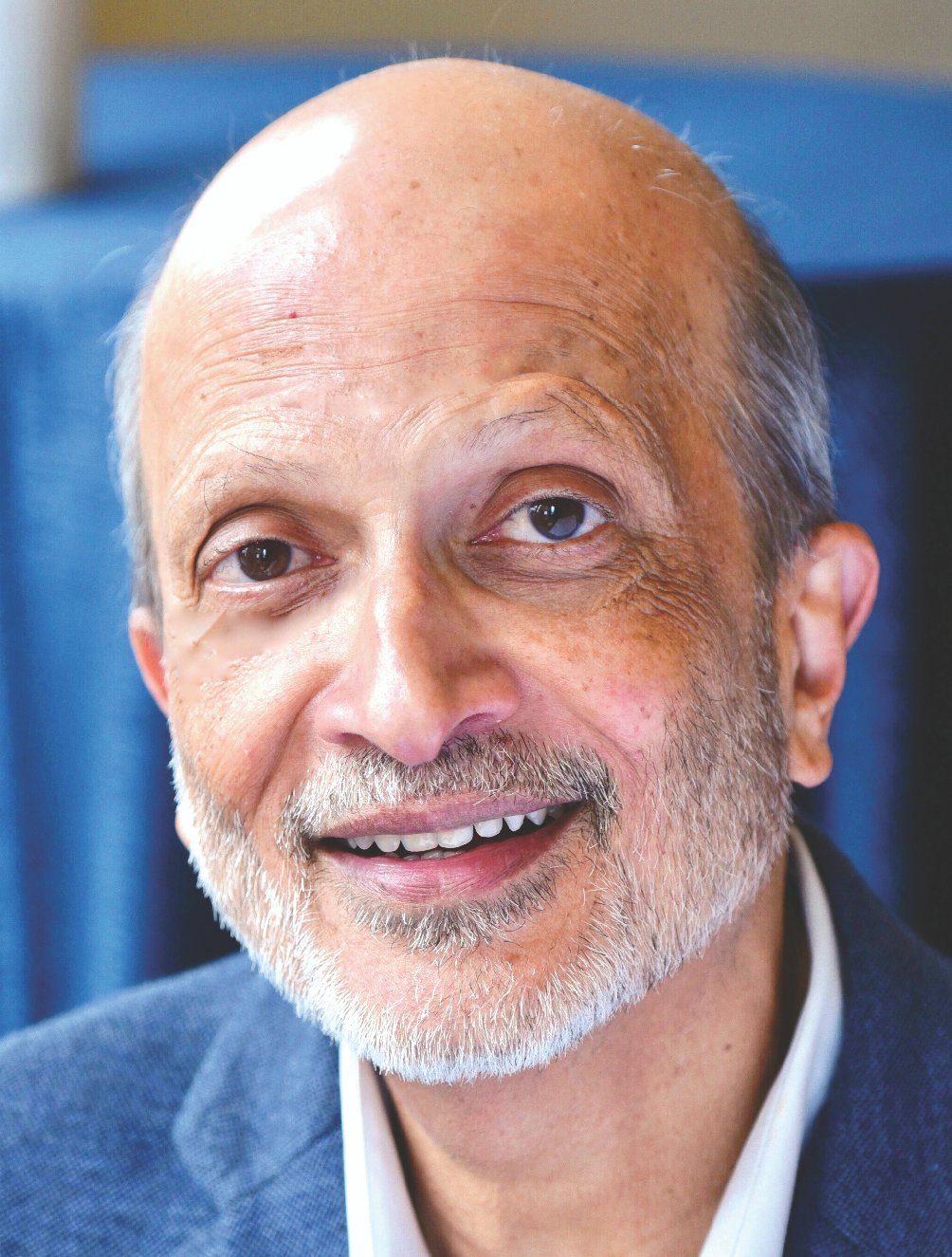
Born and raised in a middle-class family in Chennai, he did his schooling from Don Bosco and graduated with a BCom degree at Loyola College in 1974. Having lost his father, Rangaswami, when he was 10, he was brought up by his mother, Rajalakshmi. “My mother was a homemaker, extremely smart; she took care of the family all on her own when my father passed away. Everybody tells me that if she had the opportunity to go to college and have had a career, she would have been a CEO.”
Not quite sure about the route he wanted his life to take, he enrolled in Madras Law College. While in his second year of studies, his brother, Mukundan, settled in the US, had suggested he move there. “He called it a land of opportunities, and I decided to explore my horizons there. Having given six years to commerce, accounting and law, I knew I didn’t like it. I decided to do an MBA and joined Kent State University, Ohio.” He still was unsure of the route forward but was armed with an MBA degree.
A recession had just begun in the US and there were no jobs. MR had to move to Texas where he found a job in manufacturing in the oil industry, which he did for the next three years.
The Change Happened
An on-job training stint provided a spark that would change the course of his life. “I was at a training session and the trainer wanted to know my occupation. I told him I used computers and had an MBA. He said I should be in Silicon Valley.”
MR found it an interesting option but back then, there was no data on Silicon Valley. So he went through the entire library, browsing through all the newspapers to grab any piece of information. Finding some company names there, he wrote to a bunch of them. “One was crazy enough to call me,” he chuckles. “They called me on the phone, did an interview and liked me. So they flew me out to California and did another set of interviews, and finally offered me a job.” He joined Madic, a small startup, in 1982. Those were not the days when everyone knew the term startups. It was a new and whirlwind of an experience for him. “At that time there were only 10,000 Indians in Silicon Valley and most of them were engineers.”
In 1986, he joined Deloitte, a management consulting firm where he helped implement software; and in 1988, moved to Oracle, a small organization back then. MR rose up quickly in the organization and in no time was made the Vice President. “I launched Oracle’s first set of applications.”
“For four years, I did quite well but I still had the urge to go back to being a startup – it’s an extremely wholesome feeling to work at startups. You do all kinds of things and you make a bigger impact. The one I next joined went bankrupt three years later – that’s a general problem with most startups.”
It was at that time he was invited into the management of a company that was about to do an Initial Public Offering (IPO). “I was brought in to help with the share offering and to do a roadshow – which meant traveling and pitching the organization to investors. I ended up as the Chief Marketing Officer of this organization, Baan, in 1995. It went on to be a very successful IPO.”
The Turning Point
While it was a success, it also gave a sense of direction to MR’s aspirations. “I used to travel all the time, about 300,000 miles a year, and never had time for myself – it all was becoming a bit tiring for me. I wanted to have a home and raise a family. So, I quit my job, not knowing what I was going to do next. All I knew was I wanted to do something different. I thought of working out of home, something new at that time.”
One of his friends joined him and suggested, “Why don’t we start investing in startups?” And that changed his world.
“I started helping small startups by investing in them. Back then, I had no clue that I was pioneering what is now called ‘angel’ investment.”
The Wall Street Magic
And then the Wall Street Journal article happened. A reporter from New York spent a couple of days traveling with him and he suddenly found himself on the front page of the Wall Street Journal! “That’s when I realized the power of the media. I think I got over 1,000 phone calls in the first week. There were people calling to give me money because they thought it would be a great investor and people wanted money. So it was kind of surreal… people are willing to give you millions, and people want to get millions.”
But investing wasn’t the only thing he wanted to do. “My real passion was to build communities or networks that make an impact.”
All these years, he met many people and had around 4,000 business cards, wondering the best way to utilize them all. “My friends suggested I keep in touch with everyone. There was no LinkedIn, no Facebook then. So, how?” He thought of a conference for CEOs but there were lots and lots of conferences already. To make it different, on the spur of the moment he decided to give all the profits from the conference to non-profits and charities. “It was a hit, super successful. It was called The Enterprise Conference, and I still run it today.”
Twenty-five years on, he has now helped give away millions of dollars to non-profits. “That was my first step toward becoming a philanthropist without knowing it. Most of the things that have happened in my life have been accidents. I think what happened when I got into giving was satisfaction.”
He started his second network, Corporate Eco Forum (CEF), in 2007. CEF is an invitation-only network of 75 of the world’s largest companies like Apple, Amazon, Microsoft, Disney, General Motors, etc, who together work on sustainability and climate change. CEF members represent $5 trillion in combined revenues and what they do can have a profound impact on the world.
Family Time
MR married Krisanthy, a Greek American, in 1992. She is a western classical cellist and is a breath of fresh air who has brought music and arts to their lives. They have two daughters, Xenia, a postgraduate student of climate science and wildlife; and Anjali, a researcher in gender issues who is on a Fulbright Scholarship in Mumbai.
“Since I have grown up without fatherly love, I wanted to give a lot of time to my kids. My family has been a big part of my life. Now that they are grown up I travel a lot more. The kids are out of the home and we are empty nesters.”
In 2012, he founded Indiaspora, a non-profit community of powerful global Indian leaders committed to inspiring the diaspora to be a force for good. It aims to unite the diaspora and to transform their success into a meaningful impact in India and on the global stage. In September 2012, its inaugural forum hosted 100 Indo-American leaders from different constituencies, including CEOs, activists, academics, journalists, financiers and diplomats. It energized the community to be a catalyst of transformation. “I do feel good to see the way Indiaspora is shaping up and uniting the professionally, geographically and religiously diverse Indian community toward a collective action.” Indiaspora is now celebrating its 10th anniversary.
He is a board member of the Kailash Satyarthi Children’s Foundation, The Nudge Foundation and the WISH Foundation.