
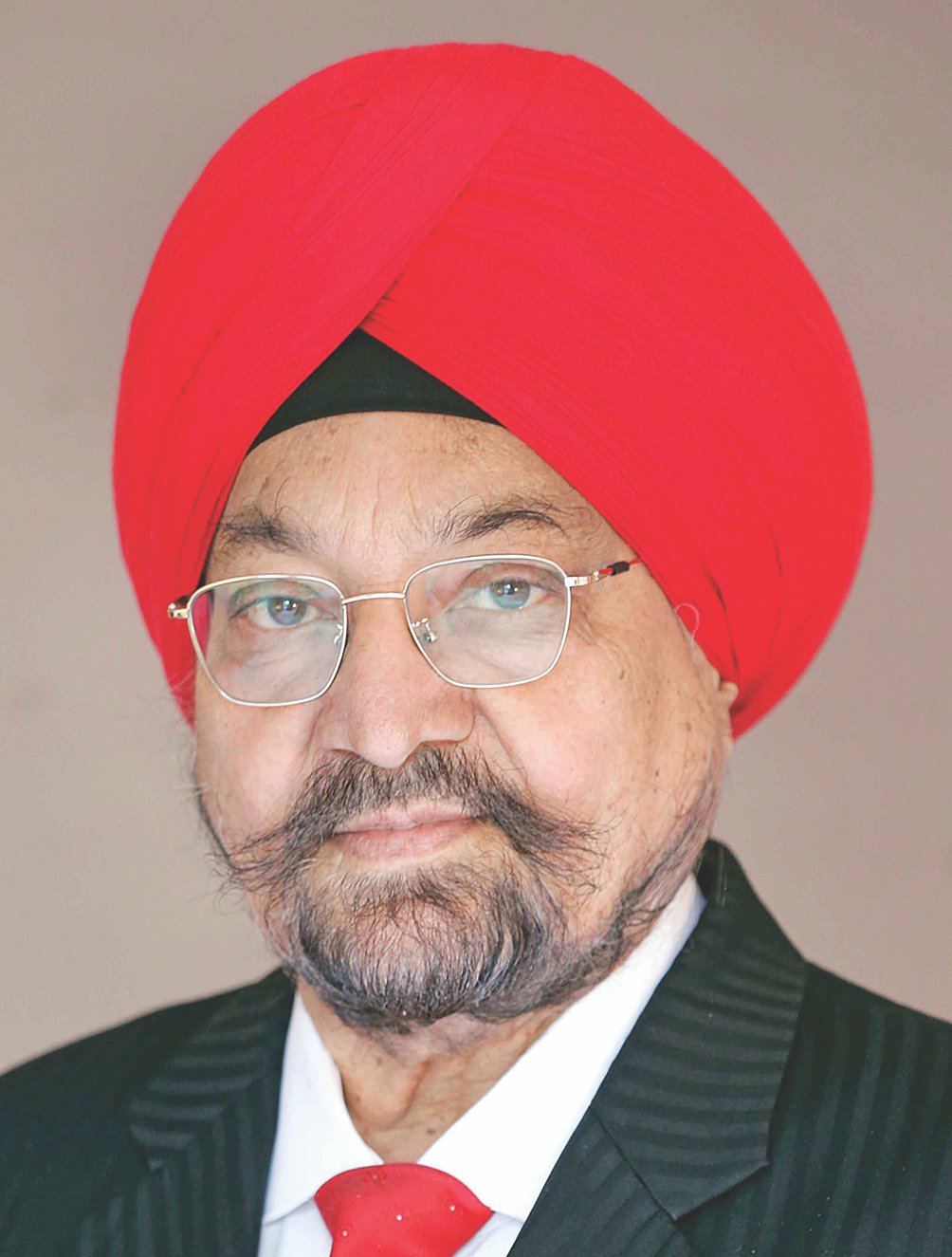
A publisher by vocation, he is a man of many talents. He is a writer, scholar, journalist and a social activist. His acumen is highlighted by the work he has done for the Indian community in the US by starting The Indian Panorama, published from New York and Dallas.
Indrajit moved to the US in 2003, to start his new stint in newspaper publishing after a long successful career in education. He started four Punjabi newspapers for the readers in New York: Shane-e-Punjab (2004), Punjabi Duniya (2004), Apna Punjab (2005) and Punjabi Patrika (2007). He was the Editor of South Asian Insider and has been a well-known anchor on Ravi Punjabi TV, Jus Punjabi, Just One and ITV channels. He has also covered events from New York for news focused channel, Aaj Tak, and worked for Doordarshan. He is the Founder Editor of the Hindi weekly newspaper, Hum Hindustani, which was launched on the occasion of India’s independence day in August 2011. He contributed regularly to newspapers and magazines, including The Tribune and The Indian Express, published from Chandigarh.
Indrajit played the role of a Sardar ji in an English language film, On Golden Years, by the Emmy-nominated director, Tirlok Malik. In fact, he has always been drawn to theater and acting, with some memorable performances during his school and college days.
Remarkably adroit and determined editor and a good journalist, regularly attending and covering all major community events in the Tristate area, he has also grown into the role of an indefatigable community builder, forging a bridge between the Indian and the mainstream American community.
Right from the Start
Indrajit comes from a family of businessmen. He was born in Giridih, Bihar (now Jharkhand) on February 24, 1944, in the family of nine – seven siblings and parents, Mohinder Kaur and Tarlok Singh. Indrajit was second in line among siblings. His maternal grandfather, Budh Singh, was a successful businessman. He owned several businesses starting from mica mines, to transportation, to money lending. A modern man, he raised his kids, two sons and the only daughter, with care and elegance. “My mother was raised like a princess. A beautiful person, inside out, she was always taking care of everyone around her – very loving, very giving, she had a pure aura. Loved by all, she was no less than any goddess. I feel lucky to have been raised by such an amazing lady.”
His father was a businessman. He was into money lending business and operated in Aligarh and Hardoi in UP even before the partition. “He was a strict man and had rigid opinions and ideas. I remember getting beaten up for visiting the RSS branches.”
Active on the playground, he enjoyed playing kho-kho, badminton, wrestling and volleyball. He was in the badminton and volleyball teams of Christ Church College, Kanpur, Uttar Pradesh. He enjoyed reading and made books his best friends. He spent most of his childhood in Varanasi, Uttar Pradesh.
“After schooling started all the familial issues. My father wanted me to join his business; I didn’t. I wanted to study further. I went to stay with my uncle in Madhya Pradesh, who out of my father’s fear didn’t support me but thankfully fetched me a teaching job at a school in a nearby tribal area. That changed my perspective and life. It was a single teacher school and for the six months I was there. I studied life and culture of Bhil and Bhilala tribes. And so, I had a newfound interest: Sociology and social activism.”
He worked for the people of the village and helped them get rid of money lenders who took advantage of their vulnerability and cheat them. He stopped the theft of timber from the area by risking his life. He swore to serve the community and protect the people as long as he was there. “That changed my attitude toward life. I could see the way the poor were exploited and their tough lives. And I was filled with rage for the system which allowed the exploitation. The rage that I experienced then against exploitation and injustice, stayed with me all my life. It was a part of me when I was a teachers’ union leader; it was a part of me when I raised my voice against the brutality of both the militants and the police in Punjab; and it is a part of me here as editor of a newspaper.”
Working His Way Up!
As for education, Indrajit studied at Banaras Hindu University, and then at Christ Church College, Kanpur, well-known for its department of English, from where he postgraduated in english literature. He took the job of a teacher of english language and literature to graduate and postgraduate students at YD Postgraduate College, Lakhimpur-Kheri in 1966. For a few years he worked in different institutions in Uttar Pradesh and Haryana, and in 1973, joined Arya College, Ludhiana (Punjab) from where he retired in 2003.
While at the Arya College, from 1995 to 1999, he started and edited a monthly magazine, Punjab Beat, which competed with the best regional magazines like Sunday and The Week. The contributors included some of the big names in the field of journalism. AN Dar, Prem Kumar, Suraj Saraf, KR Wadhwaney, Dr SS Dossanj, Pushp Saraf and many other eminent journalists.
He was instrumental in organizing the cultural programs at Punjab state sports meet in 1986 and later at the rural sports meet in 1991. An active leader, he also led the Ludhiana Youth Center which regularly organized activities to help community, whether through blood donation campaigns or by raising voice against militancy in Punjab. The Youth Welfare department came out extremely vibrant during his tenure as the youth coordinator at Arya College. He was extensively recognized in the State of Punjab and by the Punjab Red Cross Society for his commendable work, in 1991, the Prime Minister of India, Chandra Shekhar nominated him to the National Youth Council of India for a term of two years. “I was one of the three to be nominated from Punjab,” recalls Indrajit with a smile.
The Kickstart in the US!
In 1998, he traveled to different parts of the world to promote Punjab Beat. He went to Canada, the UK and the US. In New York, some people convinced him to start a Punjabi language newspaper there. Settling down things for a new phase of his life, Indrajit, after retirement in 2003, flew to the US.
He turned his talents to penning what would become his chef d’oeuvre, The Indian Panorama, in 2006.
He holds a number of positions in various professional and social institutions and organizations. He is closely associated with the Eye Foundation of America and often helps raise funds for the organization, the founder of which Dr VK Raju, an eminent ophthalmologist, based in West Virginia, US, dreams of a world without childhood blindness, just as once the Rotary dreamed of having a world without Polio, and they did succeed. “I hope I would live to see Dr Raju’s dream realized”, said Indrajit.
Gurdarshan Kaur, nicknamed Nanhi, was the love of his life. She was affectionate and amicable and was always on her toes to help others. A postgraduate in political science, she had dreams to achieve something big. The school she started, Little Roses, was one of the best known in Ludhiana. “I had fallen in love with her at first sight. We built a home full of love and warmth. We were the happiest family with our three children. We lost Nanhi to ill health in 2006. Since then, I feel a part of me is missing.”
Their son, Ashish Pal, is married to Madhu, and they both work in New York. They have a son, Viraj. Daughter, Jaskiran, works for a real-estate company and has a son, Kabir. Son, Chitagam, the youngest, too works in real estate.