
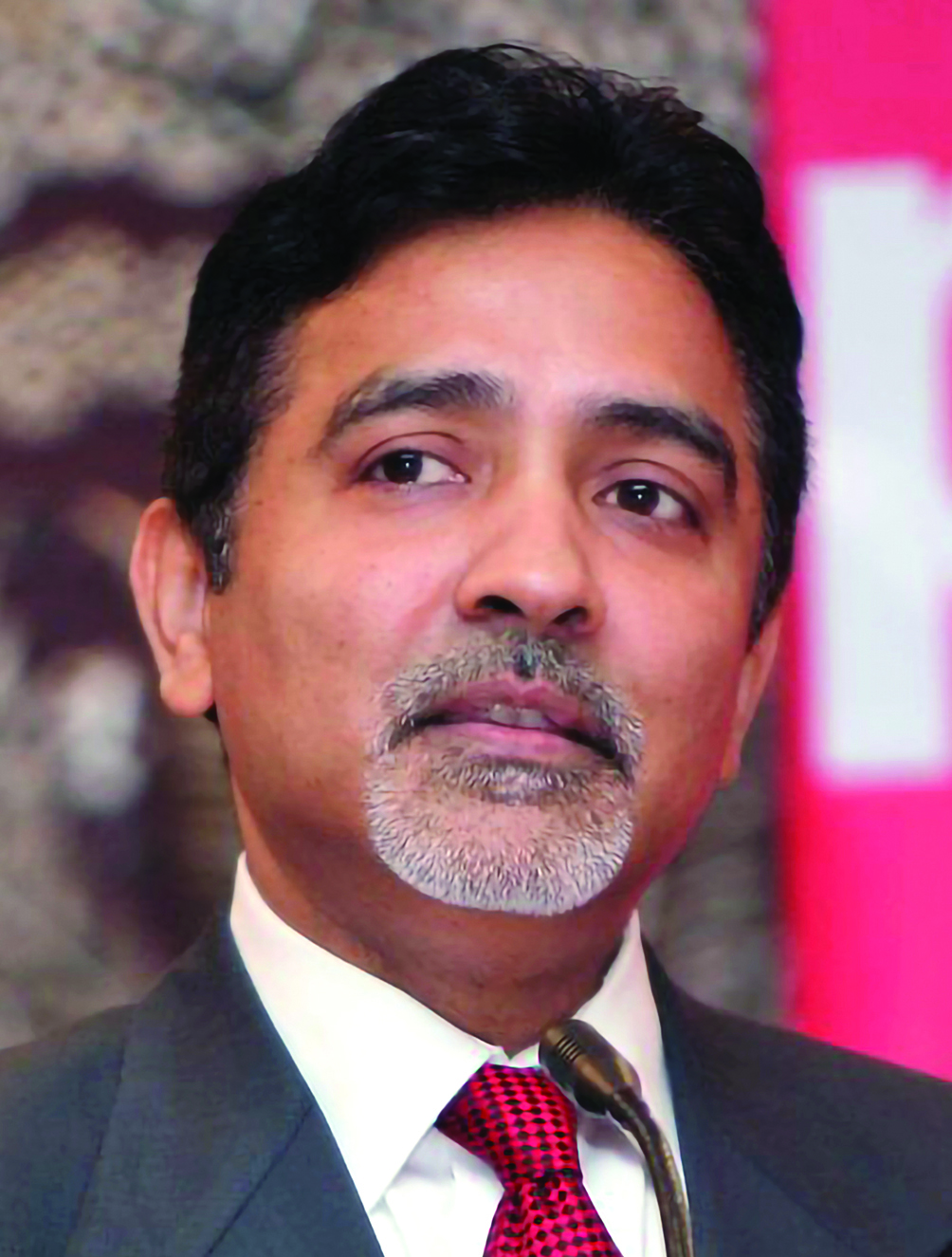
“Being born in a Marwari family has its own merits in not just the business acumen one gains but also the care and inspiration one gets in a close-knit extended family,” says a proud Raj Asava. “My upbringing gave me the strong foundation and unwavering confidence, which I credit for my life achievements.”
Born to homemaker and an epitome of love and simplicity, Parvati Bai, and Hyderabad-based businessman, Radha Krishna, Raj was the fourth of eight children. Radha Krishna ran a thriving sourcing business that supported a large extended family. He had tremendous foresight and ensured his children received the best possible education to prepare them for the myriad of opportunities the world had to offer. Raj fondly remembers spending many evenings with his father at the American Cultural Center – perhaps the reason behind his fascination with everything American at an early age. Parvati Bai was the epitome of love and simplicity.
An outstanding student, a prodigy, Raj was promoted from grade 1 to 3, and a year later, from grade 3 to 6! He kept up academically; however, it meant he was disadvantaged in sports, something he sorely regrets. When he was in grade 10, typhoid struck him. A subsequent relapse kept him confined to bed-rest for over a year, and his ambition of becoming an engineer was shattered. Back then, the Indian education system offered extremely limited and structured tracks, not allowing for any deviations. Discouraged, he joined a commerce programme and opted for an unpaid apprenticeship at his uncle’s business to learn business fundamentals. He did not enjoy the experience since there was no structured way of learning and no one took the time to teach him. He recalls feeling despair and low morale due to looming uncertainty.
After Darkness Comes Light!
Things changed when his eldest sister, Pushpa Rani, who was already in the US, suggested he move to the US too. Raj jumped at the opportunity for a fresh start. In July 1974, he secured a “fly-now-pay-later” ticket and took his first-ever flight to what would soon become his karmabhoomi. His elder brother, Raja Govind, who had arrived in the US just a few months ahead of him, had secured a dishwashing job for him at the Glen Eden Hospital in Warren, Michigan. Working in a kitchen for a detail-oriented boss, tough challenges, taught him lessons that would last him a lifetime. As soon as he paid off his airline ticket debt, he cut back on his work hours and restarted his education by attending the local community college.
His proficiency in computers, early in his college days, earned him a job as a student coach. He started working two jobs while attending school in the evenings. He was sleeping around five hours a night but excelled both at work and at school. He enrolled in the Industrial Management Programme at the Central Michigan University, a college that offered off-campus classes, allowing him to continue with his multiple jobs.
Season of Changes, Happiness and Togetherness
Raj had set goals for himself to complete his undergraduate degree and build his own house before considering marriage. He achieved both the goals by 1981. On June 10, 1982, Aradhana and Raj got married in a traditional arranged Indian set-up in Rajahmundry, Andhra Pradesh. In August 1982, Aradhana joined him in the US to start their new life together. With four siblings already in the US by then, Raj sponsored the rest of his family to the US. He became the primary provider for his parents, wife and three younger siblings. The only breadwinner among seven people, he juggled his responsibilities effectively – no doubt, he was looked up as an ideal son, caring brother, a loving husband and an affectionate father to his sons, Vijay and Vivek.
He advanced in his career rapidly, and in the late 1980s, switched from a technical track to a management track. In 1994, he designed a strategy for Electronic Data Systems (EDS), the company he worked for, to enter India.
EDS India turned out to be a highly successful entrepreneurial opportunity that brought his family and him to New Delhi for over two years on an expatriate assignment. By this time, Aradhana was also at EDS and an integral part of this international endeavor. After successfully establishing the EDS India Solution Center, the couple repatriated to Plano, Texas, towards the end of 1998. The global experience invigorated Raj, and during the dotcom days, he decided to leave EDS after 15+ years to pursue entrepreneurship.
In 2002, upon Aradhana’s insistence, Raj took a sabbatical of nine months for introspection and self-discovery. He attended Vipassana meditation and found it to be life-changing. He also discovered there was a poet in him. “As the PowerPoint slides faded away in my head, poems started pouring out,” he says. During his sabbatical, he wrote over 100 poems in Hindi and English.
Re-energised, he jumped back into the professional world, eventually working his way up to becoming the Chief Strategy Officer of Perot Systems; for a man he respected tremendously, H Ross Perot – creator of the IT services industry. In 2010, after Perot Systems was sold to Dell Computers, he decided to leave the corporate world and join Aradhana in retirement – who had retired a year earlier from HP/EDS.
The two filled their retirement years focusing on three areas of importance to them: spending time with aging parents and family members, traveling, and giving back to society. They served as hands-on volunteers and active members on boards of non-profit organizations in India and the US, addressing issues like food insecurity, education and children’s safety. Today, Raj is a sought-after mentor for graduates and entrepreneurs alike, and always ready to share his resources and experiences with the next generation. Their kids are married and well-settled: Vijay and Heena with Niam (9) and Aanya (6) live in Irving, Texas; and Vivek and Ruchi with Myra (4) and Miraya (1) live in San Francisco, California.
HungerMitao and the Spirit of ‘Give where You Live’
When Aradhana and Raj learned that millions of people across the US are food-challenged, they moved to action. In 2017, they founded HungerMitao (meaning wipeout hunger), a grassroots movement focusing on raising awareness about hunger in the US and engaging the Indo-American community in the fight against hunger. Over the last five years, the movement has enabled 50+ million meals for food challenged children, seniors, veterans and families in need.
The couple shared this successful communitydriven model with the Chinese American community in 2021 and mentored them to launch their own movement called NiHao. The Hispanic/Latino community too launched their version of HungerMitao in October, 2022 called SinHambre!
Hunger impacts every community across the US, and due to the pandemic, run-away inflation and broken supply chains, the need continues to grow. Business leaders turned philanthropists Aradhana and Raj personally pledged to provide over 10 million nutritious meals to Feeding America and their network of 200+ food banks during the heart of the COVID-19 pandemic.
In Summer of 2021, the couple was recognized as one of the top 100 philanthropists of Indian origin from across the globe in Indiaspora’s 2021 Philanthropy Leaders List. Recently, US President Joe Biden recognized them with the Lifetime Achievement Award for their community impacting work through the HungerMitao movement.
In 2022, the HungerMitao movement was recognized as the ‘Community Partner of the Year’ by the North Texas Food Bank. They also received the ‘2022 TAL Hero Award’ given by the Touch-A-Life-Foundation and are the recipient of the ‘Outstanding Community Service Award’ given at the 2022 International Maheshwari Rajasthani Convention.
“Our mission is HungerMitao, and HungerMitao is as much about eradicating hunger as it is about unifying the fragmented efforts of the Indian American community and focusing it on the humanitarian cause of hunger.”