
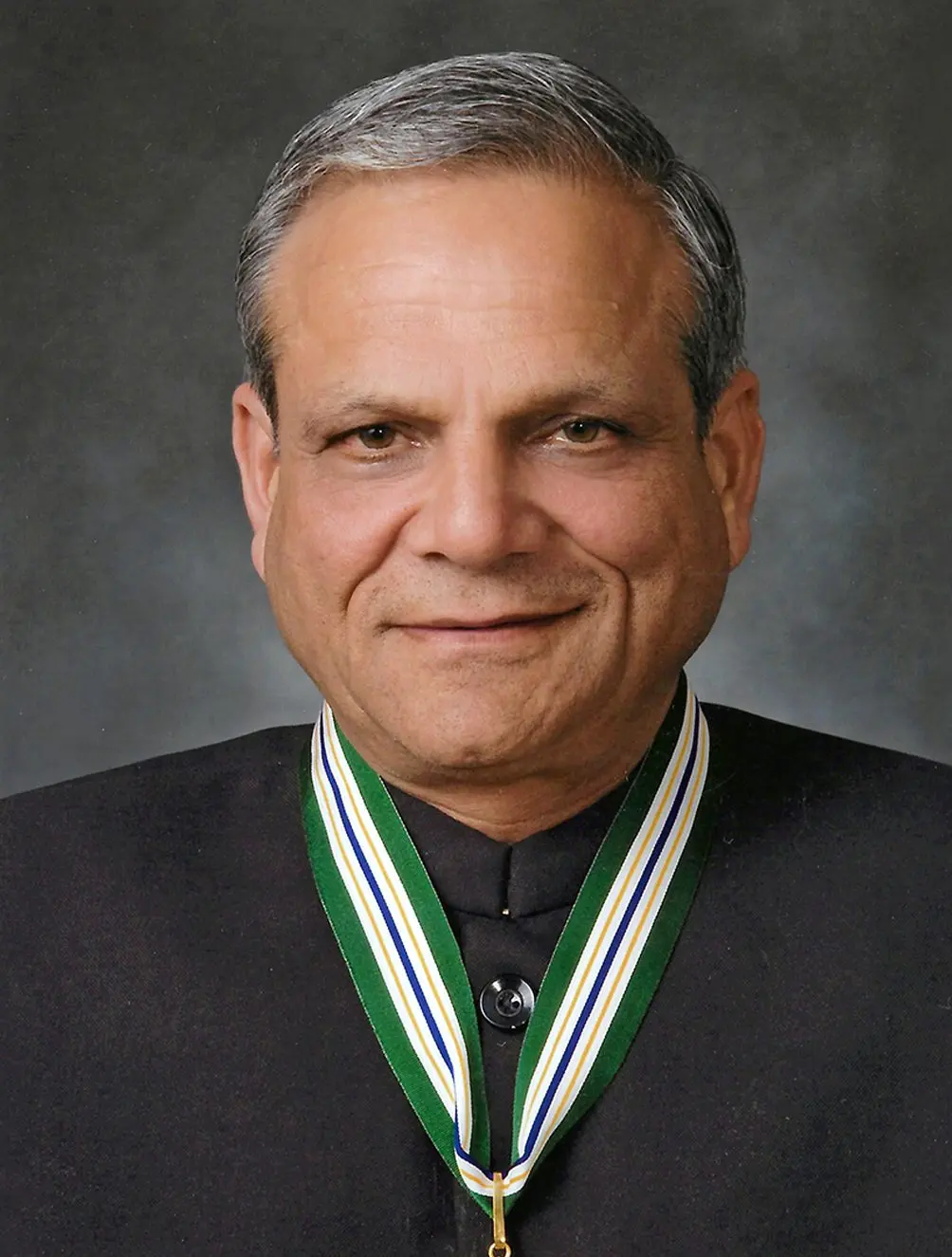
It began in Lambra, a small town in Jalandhar, on 6 September 1944, when he was born to Gurra and Harikishan, fourth among five siblings. Harikishan was a prominent milk contractor and sarpanch and Gurra was a dedicated homemaker.
A very naughty child, he was often reprimanded by Harikishan. Sudarshan remembers, “I was a notorious kid. I remember I once pulled the chair of our headmaster, Joginder Singh, during the Republic Day celebration in our school. All of us students found him very shrewd. But the matter escalated and went to the police but fortunately at my father’s request, they furloughed me. But my father thrashed me terribly.”
As a child, he was least interested in studies. All his attention was on mischiefs and sport. Kabaddi and soccer were his favourites. Unable to clear his grade 10 examination, he joined his father’s milk business and started learning the nuances. It seemed like he had the knack of earning even at that age. What was remarkable was that this child knew the right way to spend the money he earned: in helping the destitute.
The idea of settling abroad first came to his mind when his closest friend, Makhan Singh Thethi, who lived in the same village, shifted to Africa. He too hoped of living in vilayat* one odd day! Time elapsed. The child grew up into a fine young man and tied the knot with Rajkumari, an Indo-Canadian lady. She happened to be his lucky charm. He was the first person in his village to settle down in Canada.
“I had taken to what then was known as ‘bad things’ – drinking and smoking. Once, in a bar, I picked up a fight with a stranger and a certain young man, almost my age, witnessed it. And then, one day, a family came over to our home with the proposal of their daughter, Rajkumari, for me. The same young man too had come and we instantly recognised each other. He was Husanlal, Rajkumari’s cousin. Rajkumari and I tied the nuptial knot on 17 September 1966 and we flew to Williams Lake, Canada, in July 1967. I always wondered why he didn’t ever tell my in-laws the truth of my habits! In fact, that day, he had praised me. Three years later, on our trip to India, I especially went to meet him. Unfortunately, he had succumbed to injuries during a road accident on the same day. The secret died with him.”
It is what’s inside that counts!
Once in Canada, he often had to impugn as his in-laws weren’t well off and he wasn’t well-versed. He started working as small-time labour in a sawmill; he knew it was a tough way ahead and took double shifts to earn better. He brought his younger brother to Canada too. They together purchased and managed a blueberry farm till 2010.
The couple was blessed with five daughters: Kanchan, Suman, Renu, Jyoti and Meenu. He is quick to credit Rajkumari for single-handedly raising the girls, making them read spiritual books on Hinduism and infusing charity and karma in them. Kanchan is based in Delta and has two children, Ishan and Anish. Suman is based in Vancouver and manages Lux Jewels. Jyoti, her dentist husband, Arvind, and daughters, Nishika and Sanchi, are based in Scotland. Renu works in media and is based in Vancouver. Meenu is based in Delta and manages And Beyond.
Bakshi swells with pride as he says, “My daughters are no less than a son! The day Meenu got a job, she asked me to resign and relax. But I wanted to work for three more years. Perhaps destiny played its part and I had to resign the very next month”.
He had certain things in mind and heart to do before he retired. In 1988, he established the Janta Sewak Society, an NGO to uplift needy children and families in Canada, India and other countries. Browsing through a newspaper, he saw an advertisement. It showcased a group that conducted marriages for a minimal charge of `500. It gave him the idea of a cross-border method of upliftment of the needy. And thus, the Janta Sewak Society helped in conducting Indian marriages at very low costs.
He also built some temples in 1984 in Canada. He shares, “I was more into gurudwaras than temples. But after the 1984 anti-Sikh riots, Sikhs had started violence against Hindus here as well, which is when four Hindu leaders approached and requested me to visit temples. And I did. Seeing the circumstances and realising that temples were not built properly, for the next 15 years I dedicated myself for their upliftment.”
All through his life, Sudarshan has continually identified new causes and new fundraising ideas in India, Canada, Sri Lanka and other countries. He is the founding member of the Five Rivers Community Services Society, a part of the DeathCare Services Industry of Canada. For his spectacular work of over 30 years in uplifting the Canadians, Indians and Indo-Canadians, he was awarded the Order of British Columbia in 2007, Queen Elizabeth II Diamond Jubilee Medal in 2013, Hind Rattan Award in 2000, Rashtriya Rattan Award in 1999, among several others.
While his world outside was growing and developing, the world inside was crumbling. Sudarshan was trying to keep the pieces intact as Rajkumari had fallen prey to liver cancer and succumbed to it in 2010. But before breathing her last, she called her friend, Balbir Kaur, who was still unmarried. She asked her to marry Sudarshan – her way to ensure that her husband led a comfortable life after she left for heaven.
Speaking about Balbir, he says, “I feel I am too lucky to have found love twice in my life. She isn’t much educated but is tech-savvy, takes care of me like a child and is a philanthropist at heart. We’d really become kids during the COVID-19 period. We watched Indian shows together. Every day was a gala. The last 10 years have been blissful; I have changed as a person and now I approach life very differently.”
Struggling through his life – professionally and personally – has taught him to be strong, but then he has learned to smile in tough times. Bakshi is a true personification of ‘adversities of life are unavoidable but one has to endure them all as a part of destiny’.
*Hindi for foreign country