
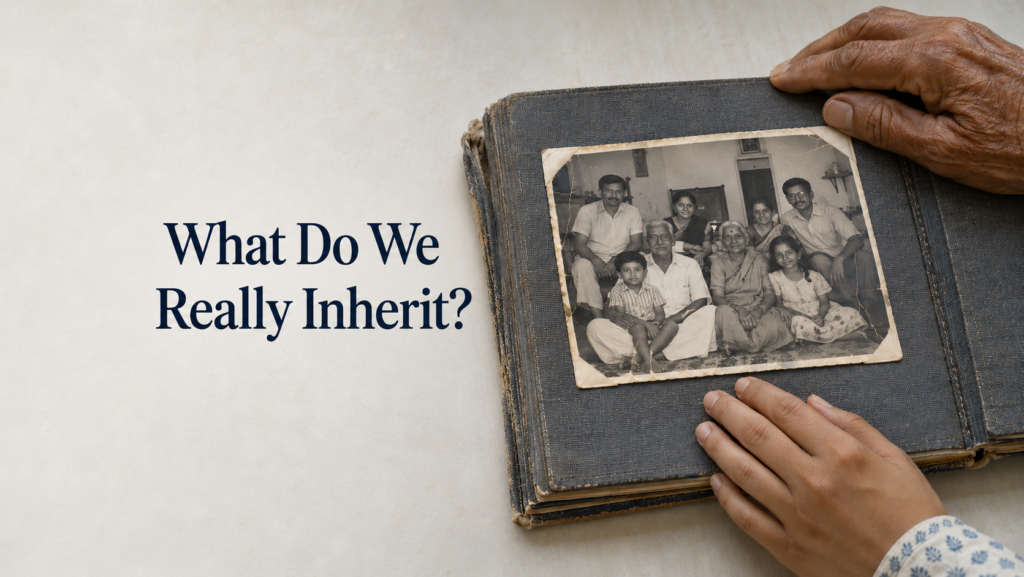
A business can be inherited. So can property, investments and a famous surname. But what about judgement? Trust? The instinct to put family before ego—or principle before profit? Those assets do not come with transfer deeds.
Across nearly three decades of documenting extraordinary Indian families and entrepreneurs, Maneesh Media has encountered a fascinating paradox. Fortunes may take generations to build, yet the values that created them can disappear remarkably quickly. And sometimes, the greatest inheritance has nothing to do with money.
The families featured in our publications offer compelling lessons on how legacies survive, evolve and occasionally reinvent themselves.
The Succession Paradox
According to PwC’s 12th Family Business Survey, released in February 2026, 91% of surveyed Indian family-business leaders expected growth over the next two years, compared with 73% globally. Yet 36% had no clear succession plan, 21% had delayed leadership transitions, and 52% identified resistance from the senior generation as a major obstacle to preparing successors.
The survey included approximately 40 Indian business leaders, making its findings indicative rather than representative of every family enterprise.
The contradiction is striking. Businesses are planning their next phase of expansion while some families have yet to decide who will lead it.
But among the families Maneesh Media has featured, there are valuable examples of what continuity can look like.
The Ved Family: ₹200 and Four Generations of Trust
What can ₹200 borrowed in 1904 become? For the Ved family in Oman, it became the foundation of Lakhoo’s Group, a diversified enterprise spanning money exchange, textiles and trading. When Rajendra Meghji Ved joined the family business in 1976, he was building upon the foundations established by his grandfather, Laxmidas Tharia Ved, and strengthened by successive generations. Today, the enterprise has reached its fourth generation. But its longevity tells us something more interesting than a story of commercial expansion. Rajendra credits the family’s unity for helping it navigate financial losses, economic uncertainties and the pandemic. As younger family members assumed responsibilities, he remained a mentor rather than insisting on retaining control. His advice to them was straightforward: “Expand if you wish, but remember our values.”
The lesson: Succession does not mean preserving everything exactly as it was. It means allowing the next generation to grow while ensuring that the principles behind the enterprise remain recognisable.
The Gandhi Family: When Memories Become an Inheritance
A family may build a fortune over decades. But how does it ensure that the next generation inherits the story behind it?
For the Gandhi family, whose journey Maneesh Media documented in Memoirs of The Gandhi Family, preserving the past became an important part of celebrating the family’s legacy. At the heart of that journey is Suresh Gandhi, who arrived in Dubai in 1976 with modest means, shared accommodation, worked odd jobs and eventually established successful electrical businesses. His story reflects the perseverance, honesty and determination that helped shape the family’s fortunes. But a family legacy extends beyond the achievements of its most prominent members. It also encompasses the relationships, experiences, sacrifices and values that connect generations.
By bringing the family’s journey together in a dedicated publication, Memoirs of The Gandhi Family offers something that financial inheritance alone cannot: an opportunity for future generations to understand the circumstances from which their family emerged and the principles that shaped its progress.
After all, descendants may inherit the rewards of an earlier generation’s hard work without ever experiencing the struggles that made those rewards possible.
The lesson: Wealth may secure a family’s future, but preserving its collective memories helps future generations understand the past that made that future possible.
The Banga Family: Knowing When to Pass the Baton
For many founders, building a business is easier than stepping away from its day-to-day leadership. Dr Harry S. Banga, whose journey Maneesh Media featured in Jewels of Punjab, offers an example of a planned transition. His son, Angad Banga, assumed the position of Group Chief Executive Officer of The Caravel Group, taking responsibility for its maritime, resources and asset-management businesses. Dr Banga continues as Founder and Executive Chairman, providing strategic guidance.
The arrangement reflects an important distinction between ownership, leadership and stewardship. A founder’s experience remains valuable, but the next generation must have the authority to make decisions and shape the organisation’s future.
The lesson: A legacy becomes stronger when the founder’s experience and the successor’s independence complement each other. This is particularly relevant when 52% of Indian respondents in PwC’s survey identify senior-generation resistance as an obstacle to succession.
The Dhaliwal Family: When Service Becomes the Family Business
Not every inheritance is measured in commercial success. In Meher – Dhaliwals: Serving the Divine in Others, Maneesh Media documented a family whose legacy is rooted in the Sikh principles of honesty, faith, generosity and service.
The values of the late Subedar Kartar Singh, affectionately known as Bapuji, and Jaswant Kaur, known as Bebeji, travelled through their sons Darshan, Surjit and Charanjeet, finding expression in different ways.
Darshan, an entrepreneur based in Milwaukee, has supported education, disaster relief and interfaith initiatives. Surjit devoted himself to grassroots development through public service in Punjab, while Charanjeet contributed to the family’s global business.
Different paths. Different responsibilities. A shared inheritance.
Their story challenges a familiar assumption about generational wealth: that children must necessarily continue their parents’ professional journeys.
Sometimes, what passes between generations is not an occupation or an enterprise, but a philosophy that guides entirely different lives.
The lesson: Continuity does not demand conformity. A family’s values can endure even when its members choose different ways of expressing them.
The Modi–Sanghvi Family: Four Generations, More Than 100 Stories
What happens when a family spreads across countries, cultures and continents?
Successive generations may retain the surname but gradually lose the stories behind it.
This was among the questions explored in Maneesh Media’s The Renaissance – The Life & Times of the Modis, documenting four generations and more than 100 members of the Modi and Sanghvi families.
Centred on the journey of Dr Jaswant Modi and his family, the book captured far more than professional accomplishments. It brought together memories of modest beginnings, migration, perseverance, Jain values, relationships and philanthropy.
The family’s story demonstrates that cultural identity need not disappear as families establish themselves in new countries.
But preserving that identity requires intention.
Future generations may inherit successful careers and comfortable lives without knowing the difficulties their ancestors faced or the values that shaped their decisions.
The lesson: A family history is more than nostalgia. It gives descendants a sense of belonging and helps them understand why certain principles deserve to survive.
The Kansagra Family: The Woman Behind Five Generations
Consider another form of inheritance, one that rarely appears on a balance sheet.
Kamlaben Shantilal Kansagra, affectionately known as Baa, stood at the centre of a family whose story extended across five generations.
Maneesh Media documented her extraordinary journey in The Leading Lady – Into the Life of Kamlaben Shantilal Kansagra, created to celebrate her 100th birthday.
The book was not simply about one woman’s achievements. It explored the lives she had shaped, the relationships she sustained and the values that continued through her descendants.
Her story is particularly relevant to another finding from PwC’s 2026 survey: 42% of the Indian family businesses surveyed reported having no women on their boards.
Board representation and family influence are different measures, but the contrast raises an important question.
How often do we recognise the women who helped create and preserve a family’s foundations, even when they held no formal position in its business?
The lesson: Leadership is not always accompanied by a designation. Some of the most enduring legacies are created by people whose influence is felt across generations rather than recorded in corporate histories.
The Kejriwal Family: Fifty Years of Enterprise. What Comes Next?
An anniversary celebrates how far an organisation has travelled. A legacy asks where it will go next.
When Supra Group approached Maneesh Media to commemorate its 50th anniversary, the project evolved into something more meaningful.
The Supra Group – A Tribute to P. R. Kejriwal became an exploration of the founder, the enterprise and the family behind five decades of achievement.
Photographs, family memories, business milestones and personal experiences were brought together to explain not simply what had been built, but how and why.
The result was more than a corporate retrospective.
It created a record that future generations could revisit, question and build upon as the enterprise continued to evolve.
The lesson: Business continuity requires institutional memory. Understanding the decisions, relationships and principles behind earlier achievements can help future leaders make more informed choices.
The Next Generation Will Inherit a Different World
The lessons from these families become particularly relevant when viewed alongside the changes confronting Indian family enterprises.
PwC’s 2026 survey found that 39% of Indian respondents prioritised digital transformation and artificial intelligence, compared with 24% globally. Yet 52% lacked cross-industry representation on their boards, while 42% reported having no women directors. A separate Grant Thornton Bharat study, reported in October 2026, found that approximately 42% of participating business families had broad agreement on succession without formalising it, while 36% had documented succession plans.
The direction of change is becoming clearer.
Family enterprises are likely to face increasing pressure to professionalise governance, incorporate independent expertise, adopt new technologies and clarify the responsibilities of family members.
PwC’s forward-looking analysis anticipates a movement towards professionally supported leadership, stronger governance structures and family values translated into formal decision-making frameworks. These are directional expectations, not guaranteed outcomes.
But the families featured by Maneesh Media demonstrate why succession cannot be reduced to a legal transaction or a change in leadership.
The Ved family illustrates the importance of preserving founding values. Suresh Gandhi demonstrates how enterprise can create opportunities far beyond one’s immediate family. The Bangas offer an example of planned leadership transition, while the Dhaliwals show how service can connect generations. The Modi–Sanghvi family highlights cultural continuity, the Kansagras remind us of the influence that lies beyond formal authority, and the Kejriwal story reveals the importance of preserving institutional memory.
Seven stories. Seven different lessons. One compelling truth: the greatest legacies are not merely passed down. They are carried forward.