
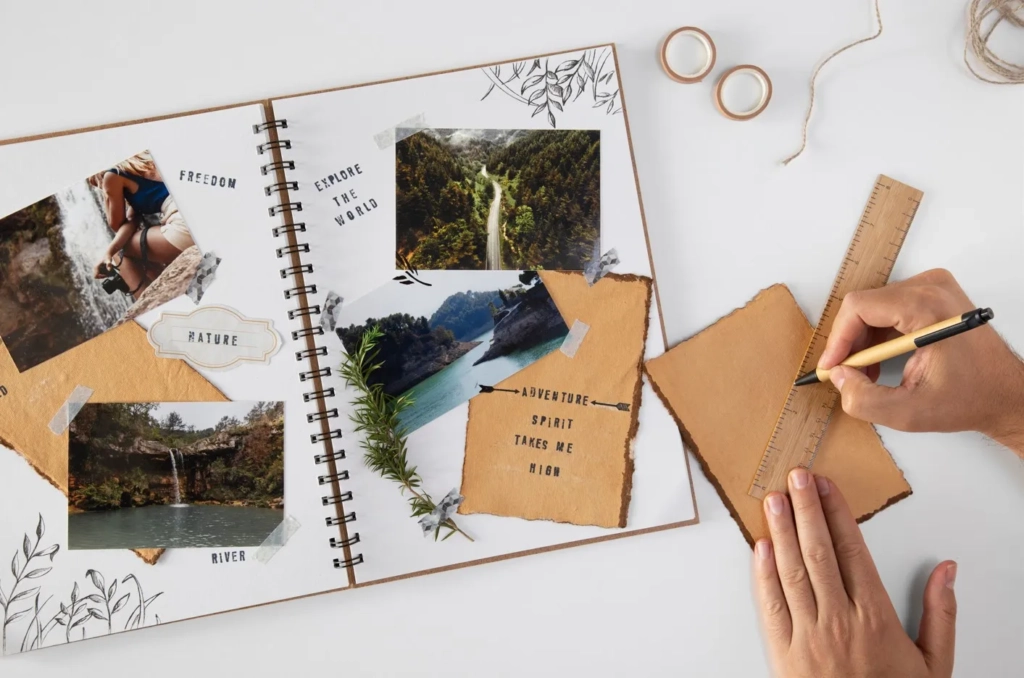
Even though our phones are filled with plethora of photos on the cloud and social media, it is easier than ever to lose sight of the moments that matter. With a camera in everyone’s pocket, we capture more memories than ever daily. Yet, we revisit them less often. A thoughtfully designed memory books changes that. Instead of leaving meaningful experiences scattered, it compiles them into something that can be held, shared and treasured for generations.
Be it a wedding, a child’s first years, a milestone event, family vacation, anniversaries or daily moments, a photo memory book transforms those ordinary photographs into unique narratives. This way, they preserve not only images but also the emotions and personal stories behind them.
In this article, we will explore why a keepsake memory book are so powerful, the psychology and importance of preserving memories, its benefits and some common mistakes to avoid so that your memories stand the test of time.
What Are Memory Books?
Memory books are not just photos. Its careful curation also includes written memories, milestones, documents, artwork, and detailed personal stories. These are what separate them from a simple photo collection or an album as it focuses purely on preservation of emotions and experiences.
A memory book may include:
- Family photographs
- Personal stories
- Letters and messages
- Children’s artwork
- Travel memories
- Ticket stubs and souvenirs
- Mixed media elements
- Certificates and achievements
- Quotes and reflections
- Milestone timelines
Modern technology allows memory books to be designed and printed in a way that matches museum grade archival. At Maneesh Media, India’s leading diaspora publishing house, we have cemented stories of over 2.5k families through physical and digital books, in a way that captures their honest journeys for the next generation.
Why Are Memory Books So Powerful?
They Preserve More Than Photos
Photos capture a single moment. Stories capture everything that led to that moment.
People don’t recall the artistic taste or composition when they look at old family pictures. Instead, they recall the emotions and conversations around that image. This experience alone makes them far more valuable than digital images and photo albums.
They Help Strengthen Emotional Connections
Going through memory books encourages meaningful conversations across generations, and hence strengthens emotional connections. Don’t just take our word for it.
Chatbooks and HP conducted multiple researches that revealed that majority of families claimed that looking at a memory album together helped everyone feel closer as it actively ignites conversation, curiosity and connection.
They Support Memory
Extensive research has confirmed that photo memory books actively support cognitive health and memory recall. It is observed that visual cues improve autobiographical memory and improve overall emotional well-being by helping the brain fill in contextual gaps and triggering past experiences.
Neuroethics states that they also assist patients with cognitive decline in terms of mood, memory and well-being. This is because a memory scrapbook usually blends elements like:
- Visual memory
- Emotional memory
- Personal identity
- Family history
- Shared experiences
Types of Memory Books
There is no single format that fits everyone when it comes to memory preservation books. The theme, method, content and presentation depends entirely on type of book and the story that it tells. Some popular options include:
Anniversary Journal
Wedding photos showcase all the perfect moments from a couple’s one of the most important days. However, that is not what weddings are. Contrary to what photos generally suggest, they are filled with random moments of hilarity, confusion, desperate organizational decisions and more.
An anniversary memory book memory book allows the couple and their families to revisit all of these personal moments together. You can include:
- How and where the couple met
- Details about the proposal
- Wedding days in chronological order
- Relationship milestones
- Travel Logs
- Habits and Rituals
Family History Book
Grandparents and other elders hold the keys to a family’s history and stories. They possess tales from the eras that have gone by, lessons that the family’s individuals learned through hardships and other ancestral memories. A family heritage book captures all that.
You can include:
- Ancestry charts
- Short individual and group stories
- Summarise a festival across the years or decades
- Maps, photos, achievements
- Habits and similarities that reemerged across generations
At Maneesh Media, we have generated a seamless process of crafting family legacy books over our experience of nearly three decades.
It starts with a set of gentle and open-ended prompts to guide a grandparent and other family members through recording their childhood memories. It also enquires about their parenting journey, philosophies, life lessons and other personal questions.
Family’s Adventure Archive
It is a dedicated collection of memories, mementos, stories and media celebrating a family’s explorations, travel trips and other outings. It balances elements of scrapbooking, photos, tangible souvenirs and personal storytelling.
You can include:
- Candid, landscape and family portraits
- First-hand journal accounts by different members
- Boarding passes, train tickets and maps
- Restaurant menus, brochures and receipts
- Elements of nature like leaves and flowers
A Childhood Portfolio
A home is always flowing with overflowing creativity with children in it. Drawing books, blank journals, newspapers and even walls, everything has a potential of becoming an archive. Childhood portfolio memory books takes all of these art projects and compiles them into an editorial grade art book.
You can include:
- First scribbles
- Drawings of parents over the years
- Cards and letters
- Dedicated artist statement section
- Artwork over different surfaces (fridge, walls, pillow, etc.)
Maneesh Media had the privilege of covering a very unique childhood memory coffee table book, showcasing the creative pursuits of Vansh and Naisha Chaudhary in the collection book Imagination In Myriad Hues. It is filled with colourful doodles, handmade drawings and personal cards, capturing the spontaneity of child-like imagination.
Memoir Book
Memoir books or self-written biography books are a blend of personal reflection, observation and a focused narrative around a specific theme or a transformative experience in someone’s life. It is a first person perspective narration with core themes revolving around overcoming hardships and self-discovery which include vivid elaborations, dialogue-driven scenes, and a balance between personal and universal lessons.
You can include:
- Thematic turning points
- Strong transitions and hooks
- Vivid scenes
- Vulnerability and self-reflection
- Through process across different situations
Common Mistakes People Make When Creating Memory Books
Unless one has an academic background or professional experience, it is easier to find oneself in the curation, designing and creative pitfalls when creating memory books. Here is a list of common mistakes that can hinder your creative zeal, ambition and timeline during your preservation journey:
- Including too many photos
- Forgetting captions, names and descriptions
- Only focusing on events and not daily life
- Not maximising the center fold
- Lacking narrative flow
- Using low-resolution images
- Overlooking paper and binding quality
- Not including other family members on the project
Conclusion
Life is a collection of countless moments – some extraordinary and others beautifully ordinary. But over time, even the most cherished and personal memories can fade, especially if they aren’t preserved in a way that demands a callback.
Memory books offer more than just a space to store photographs. They are a lasting record of emotions, relationships, personal stories and of everything that define who a person or a family is.
So, whether you’re creating a photo memory book for your child’s early years, a milestone celebration, family traditions, or something else, personalized memory book makes for a timeless keepsake that future generations can hold, revisit, and cherish.
Frequently Asked Questions
What is the purpose of a memory book?
Alongside photographs, memory book preserve stories, milestones and meaningful experiences in a structured format that future generations can refer and learn from.
Are memory books and photo albums the same?
No, while both provide a sense of nostalgia, they differ in the matter that they possess. Traditional photo albums primarily organize pictures alongside other pictures. Whereas, memory books combine photographs with stories, personal reflections, captions, stories and other memorabilia to form a complete narrative.
Are printed memory books still valuable?
Yes, due to their tangibility and distraction free experience, printed books remain highly valuable within the younger generation.
How often should you update a memory album?
Updating a memory book once a year is a common practice in many families. Some prefer to update it after an auspicious event.