Old photographs in a cupboard. A parent’s stories that nobody has recorded. A company milestone approaching. Years of work, relationships and memories, waiting to be brought together.
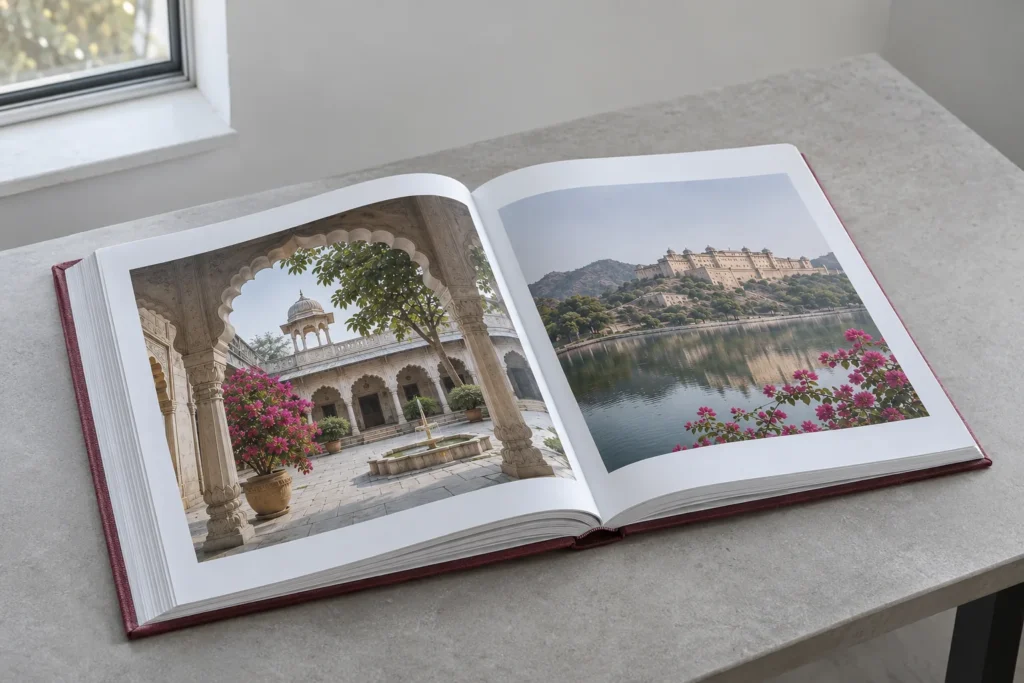
A coffee table book can give these materials a shared home. Photographs draw readers in; interviews, research and writing explain the people and events behind them. Thoughtful design makes the story inviting to explore.
You do not need a finished manuscript to begin. You need a subject that matters, an idea of who the book is for, and a willingness to gather what is available.
This guide explains what coffee table books are, how personal and corporate projects differ, and what to consider about content, photographs, interviews, design, printing, costs and timelines.
What Is a Coffee Table Book?
A coffee table book is a visually led book designed to be displayed, browsed and enjoyed. It usually combines prominent photographs or illustrations with supporting text, careful page design and quality print production. Many are large-format hardbacks, although no single size, binding or page count defines the category.
Subjects can include art, architecture, travel and photography, as well as family histories, founders, businesses and institutions. Some books use very little text. Others contain substantial interviews, essays and historical narratives.
For a personal or organisational story, the aim is to help readers understand what they are seeing: who the people were, what happened, and why it mattered.
How Is It Different from a Photo Album or Biography?
A photo album often centres on a collection of images. A coffee table book can give those images a broader editorial structure through chapter introductions, captions, timelines and researched stories. The formats overlap; a carefully made photo book can also tell a rich story.
A conventional biography usually develops a life through sustained prose. A coffee table biography gives photographs, documents and page composition a larger role. Choose the format according to how you want readers to experience the material.
Personal and Corporate Coffee Table Books: Which Fits Your Story?
Personal and Family Books
Personal coffee table books can celebrate a parent, document a family’s journey, preserve traditions or mark a birthday, retirement or reunion. Their audience may be a small circle of relatives and friends.
The most revealing material is often ordinary: a recipe annotated by a grandmother, a photograph outside an early family home, or a letter describing the first months in a new country. These details help younger readers understand lives they know only through scattered anecdotes.
Maneesh Media’s family legacy books bring material from different generations into a structured visual narrative.
Corporate and Institutional Books
A corporate coffee table book can document a founder’s journey, a company anniversary, a major transformation or the people who built an organisation. Schools, colleges, hospitals, foundations and community organisations can use the format to record their histories too.
The strongest stories connect milestones with decisions and human experience. An early employee’s recollection, an original product photograph or an account of a difficult transition can explain more than a sequence of achievement statements.
Maneesh Media’s occasion books include corporate milestones and personal celebrations, where a specific event provides the starting point for a larger story.
| Planning question | Personal or family book | Corporate or institutional book |
|---|---|---|
| Who will read it? | Relatives, friends and future generations | Employees, alumni, partners, supporters or clients |
| What material matters? | Family photographs, letters, traditions and memories | Archives, projects, milestones and people’s accounts |
| Who approves it? | An agreed family coordinator and relevant contributors | An editorial owner and designated subject reviewers |
| What needs particular care? | Personal boundaries and differing recollections | Factual claims, confidentiality and consistent approvals |
When the Two Stories Meet: A Maneesh Media Example
Business and family histories often overlap. Maneesh Media’s account of Supra Group – A Tribute to P. R. Kejriwal describes a project that began with the company’s 50th anniversary and developed into a story connecting its founder, enterprise and family.
Family memories, photographs and documents helped shape the material, while questions and editorial development connected the pieces. The example shows why the initial brief should leave room for discovery: the most meaningful theme may emerge through conversation.
Explore the story behind the Supra Group book to see how a milestone can open up a wider narrative.
Do You Need a Finished Manuscript to Begin?
No. A manuscript is one possible starting point. Interviews, photographs, letters and other records can also provide the foundations for a book when the project includes research and writing.
Start with a manageable collection:
- Photographs and albums, including any names or dates already recorded.
- Letters, diaries, certificates, brochures or newspaper cuttings.
- A rough list of important people, places and events.
- Names of relatives, colleagues or others who could contribute.
- Notes about the book’s purpose, intended readers and occasion.
You do not have to organise a lifetime of material before speaking to a publisher. A first review can establish what exists, what is missing and which people may help fill the gaps.
Be clear about the support you need. Printing supplied pages is a different assignment from researching and writing a book from interviews. Maneesh Media’s writing and editing services cover content development, ghostwriting, editing and proofreading; the agreed scope should identify the work your project requires.
What Goes Into a Coffee Table Book?
A Clear Story and Chapter Structure
Begin with one sentence: “This book will help these readers understand this story.” It becomes a useful test for every proposed chapter and photograph.
A chronological structure follows a journey through time. A thematic structure organises material around subjects such as family, enterprise, service or culture. A combined approach might use a short timeline for orientation, followed by chapters exploring the major themes.
For example, an imagined family book might move through “Our First Home,” “Moving Away,” “Building New Lives” and “Traditions We Carry.” A company history might follow origins, turning points, people, projects and the next generation. These are illustrative structures, to be adapted to the actual material.
Research That Supports the Story
Memories bring personality; records help establish details. Check significant dates, names, locations and achievements against available documents. For an organisation, identify who can verify each technical or historical claim.
Keep a simple source log while researching. Record where a fact came from, who supplied an image and which questions remain unresolved. This working record does not have to become a formal reference section in the finished book.
If two people remember an event differently, explore the difference. When certainty is unavailable, describe a recollection as a recollection or use an honestly approximate date. Confident writing should not conceal uncertainty.
Writing That Gives Images Context
Chapter openings, short essays, captions, quotations and timelines do different jobs. An opening establishes the theme; a caption identifies a moment; an interview extract reveals a person’s voice.
Consider an illustrative caption: “The family outside their first Jaipur home, around 1978.” That gives a later reader more useful information than “Happy memories.” If there is a verified story behind the move, a nearby paragraph can explain it.
Good editing also removes repetition. A founder’s values become more convincing through a specific decision and its consequences than through the same complimentary adjectives on every page.
How Do Interviews Turn Memories into a Story?
Interviews are particularly useful when photographs survive but their context does not. A conversation can reveal who took a photograph, why an event mattered or what happened beyond the frame.
Choose contributors for the perspective they bring. A founder may explain an early decision; an employee may remember how it affected the team; a family member may describe its personal cost. A school history can include teachers, alumni and staff across different periods.
Useful questions include:
- What do you remember most clearly about the beginning?
- Which decision changed the direction of the journey?
- Who helped at a difficult moment, and what did they do?
- What is happening in this photograph?
- Which everyday tradition deserves to be remembered?
- What would you like the next generation to understand?
Invite specific scenes and examples, then follow up on missing details. Explain how the conversation will be used and agree on recording, attribution and any private material before proceeding. Let contributors review the extracts attributed to them within an agreed schedule.
A book can preserve several voices while maintaining one coherent narrative. The editor’s role is to make their contributions understandable without making everyone sound identical.
Choosing and Preparing Photographs and Archives
Select Images for Meaning as Well as Appearance
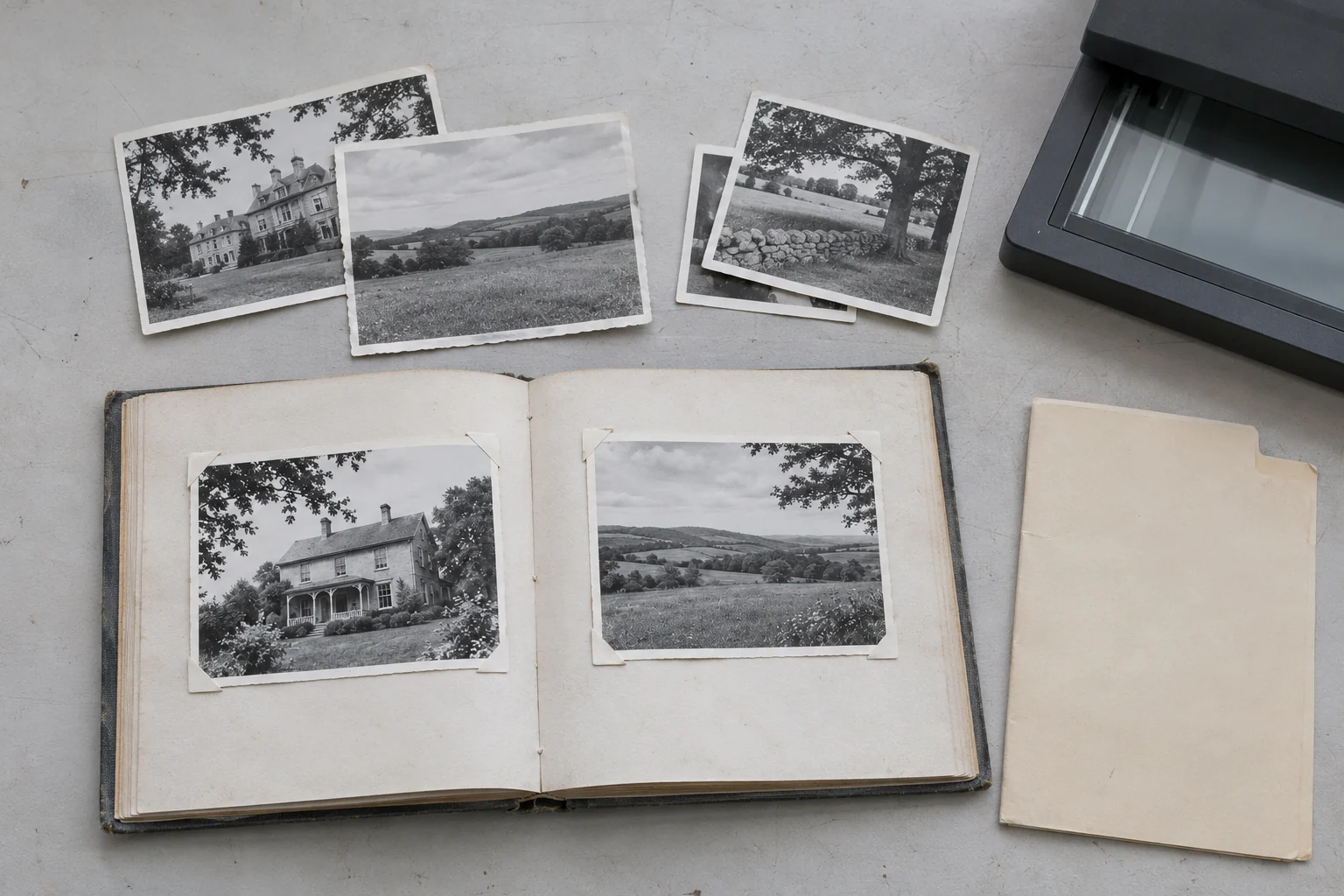
An imperfect photograph may be the only record of an important place or person. Include it when it adds something essential, and design the page around its limitations.
Look for variety: portraits, workplaces, homes, celebrations, objects, handwritten pages and wider scenes. A book made entirely of formal group photographs can miss the details that make its subjects recognisable.
Give each chosen item an identifier. Record the people shown, location, date or estimated period, contributor, credit and permission status. Mark unknown details as unknown until they can be checked.
Understand Image Resolution at Print Size
A photograph that looks clear on a phone may not reproduce well across a large printed page. The relevant question is how many usable pixels it has at the size where it will appear.
For example, a 3,600-pixel-wide image placed 12 inches wide has 300 pixels per inch. Placed 18 inches wide, it has 200. The calculation explains why the same file may suit a smaller image but struggle as a large spread. Confirm the actual requirement with the designer and printer.
Request original digital files where possible. For physical photographs, scan with the intended reproduction size in mind and retain an unedited master. Repeatedly forwarded or compressed copies may have lost useful detail.
Handle fragile photographs and albums carefully; do not force damaged bindings flat for scanning.
Restore Carefully and Record Permissions
Restoration can improve fading, dust and some damage, but cannot guarantee recovery of missing detail. Keep original scans separately. Any reconstruction or colourisation should be identified rather than presented as untouched historical evidence.
Record who owns or supplied each photograph and what use has been agreed. Possessing a print or finding an image online does not automatically establish permission to publish it. Resolve unclear permissions before layout approval, especially for commercial photographs, artwork and previously published material.
Coffee Table Book Design: Making the Story Easy to Explore
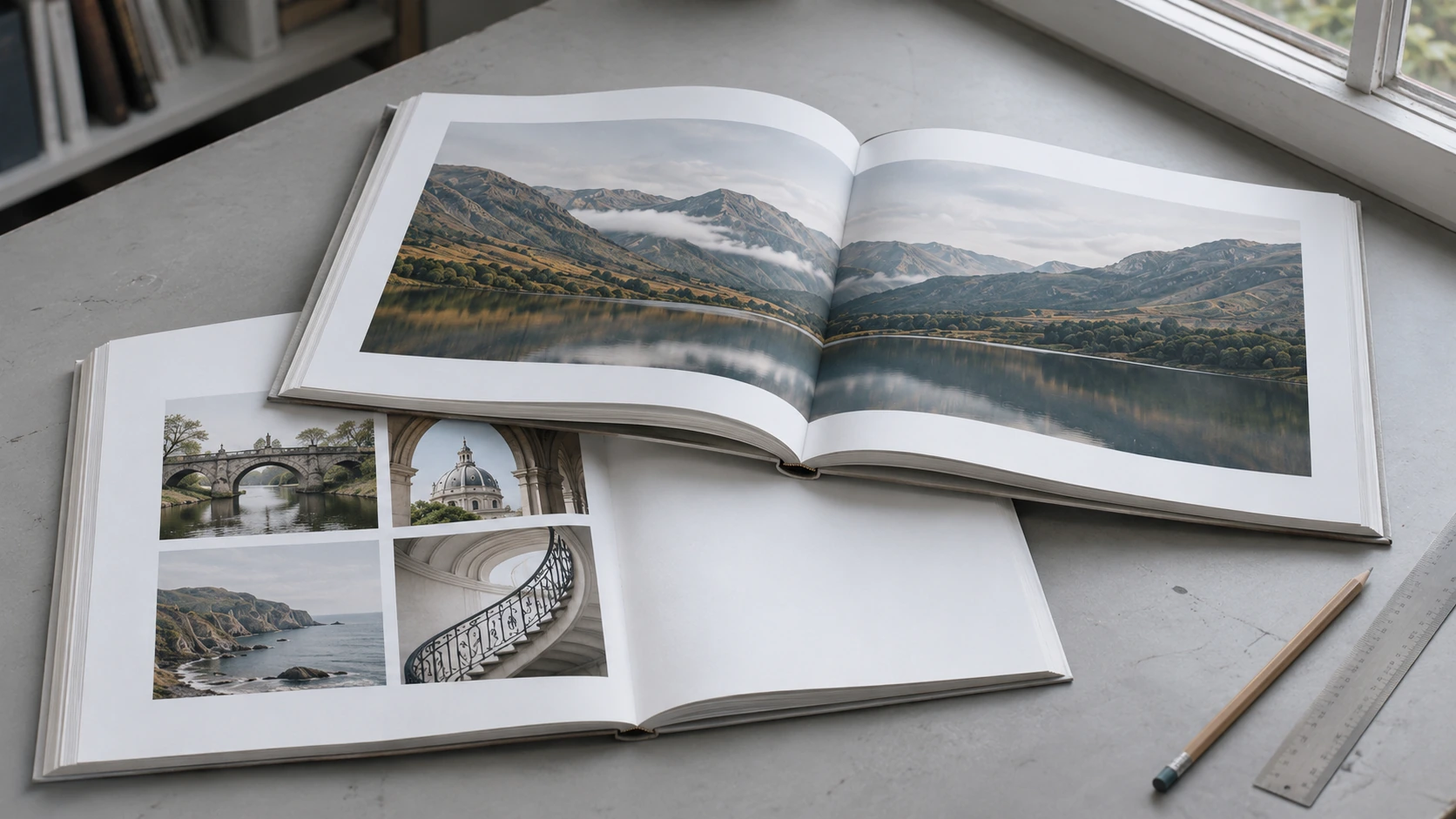
Design determines how readers move through the book. A strong image may introduce a chapter; a quiet page of text may explain a turning point; a sequence of smaller photographs may show change over time.
The format should suit the material. A landscape shape may work well for panoramic photographs, while portrait pages may suit people and documents. A square format can accommodate varied images, but every choice involves cropping, handling and production considerations.
Ask to review a small set of representative sample pages before the whole book is laid out. Include a chapter opener, a text-heavy page, an archive page and a photographic spread. These reveal whether the design works across the actual content.
Check that captions are comfortable to read, text contrasts clearly with its background, and important faces or words do not disappear into the centre of a spread. If older relatives are a key audience, test the text at its intended printed size.
Consistency matters too. Names, dates, quotation styles and image credits should follow agreed conventions. White space can give an important image room to be noticed; every available area does not need to be filled.
Maneesh Media’s professional book design includes covers and interior layouts, helping the visual presentation support the content.
Printing a Coffee Table Book: Paper, Binding and Proofs
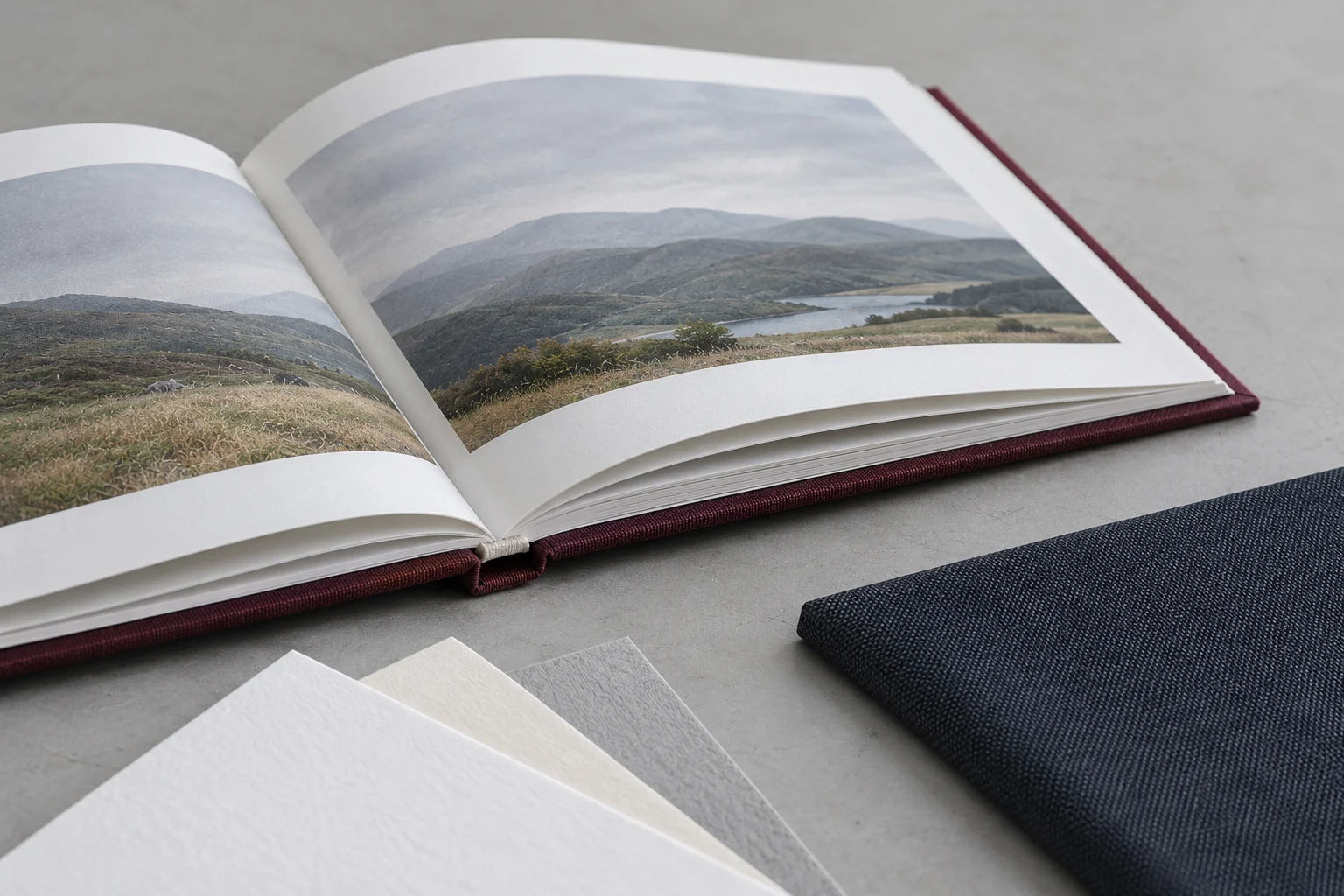
Choose Materials You Can Assess
Paper affects colour, texture, weight and the way pages turn. Gloss, silk, matte and uncoated options produce different experiences; terminology and available stocks can vary between printers. Compare samples containing photographs and text similar to your own material.
Paper weight alone does not establish quality. Consider opacity, surface, the thickness of the finished book and whether the selected binding handles the page count comfortably.
A hardcover can provide a substantial presentation, while the construction determines how the book opens. Ask to handle a sample with comparable paper and binding. Confirm any lay-flat requirement explicitly, particularly when images cross the centre.
Match the Print Method to the Project
Digital printing may suit smaller quantities; offset printing can become economical for larger runs. The right choice depends on the specification and supplier, so compare quotations for the same size, paper, binding and quantity.
Special finishes, jackets, slipcases and presentation boxes are additional decisions. Choose them for their contribution to the book and its use. A carefully edited, readable volume should remain the priority.
Approve the Right Kind of Proof
A screen PDF helps check wording, sequence and layout. It cannot fully show the feel of paper, binding or printed colour. Ask which physical samples and colour proofs are available, and what each can accurately represent. A complete finished advance copy is not available for every production method.
Before approving production, check:
- Names, dates, captions, credits and page order.
- Image sharpness, cropping and details near the binding.
- Colour on representative photographs, especially faces and dark areas.
- Cover wording, spine details and the agreed finishing specification.
- Quantity, packaging, delivery addresses and approval responsibility.
Explore Maneesh Media’s design and print services when discussing how the approved pages will become finished copies.
How to Create a Coffee Table Book: The Complete Process
1. Define the Purpose and Audience
Agree on the story, readers, occasion, approximate budget and intended circulation. Decide whether the book is for private sharing, corporate gifting or wider distribution. These choices shape later decisions.
2. Review the Available Material
Collect a representative selection of photographs, documents and existing writing. Identify missing periods, weak image files and people who should be interviewed. Establish a shared system for organising material.
3. Build the Outline and Gather the Story
Develop the chapter plan, interview contributors and research key facts. The outline may change as new material appears, but it should remain focused on the book’s purpose.
4. Write, Edit and Verify
Prepare the narrative, captions, timelines and quotations. Review structure and tone, then verify names, dates and factual claims. Agree on who can approve each part and consolidate feedback.
5. Design the Pages and Cover
Approve the visual direction using representative sample pages. Develop the complete layout with the selected images and edited text. Check that the balance of words and pictures works across the whole book.
6. Review the Designed Book
Read the complete layout carefully. Text can acquire errors during revisions, and captions can become separated from their intended images. Proofread after substantial changes and confirm that agreed corrections have been applied.
7. Approve Production and Deliver
Confirm print specifications, available proofs, quantity and delivery arrangements. Give written approval of the final files and production choices. Keep the agreed final files and organise the supporting archive for future use.
Some stages overlap. A difficult archive search may continue while other chapters are drafted. A well-managed project makes these dependencies visible and avoids sending unresolved material into final production.
How Long Does a Coffee Table Book Take?
There is no universal timetable. A book with approved text and organised photography is a different project from one requiring interviews across countries, archive research and several layers of review.
The main variables are the quantity and condition of the material, interview availability, writing requirements, design complexity, approvals, printing and delivery.
Ask for a schedule with milestones and named responsibilities. It should show when you must supply material, when reviewers must respond and when content becomes final. Reserve time for corrections and delivery before an important event.
If an anniversary date is fixed, share it at the first discussion. Request a feasibility assessment before committing to a page count or elaborate finish. A smaller, well-resolved book may serve the occasion better than a larger project rushed through its final checks.
How Much Does a Coffee Table Book Cost?
The cost includes creative development and physical production. A per-copy printing figure does not describe the full investment when a project also needs research, interviews, writing, photography or restoration.
Ask for a quotation that separates editorial work, design, image preparation, printing, finishing and delivery. Confirm the number of review rounds, what counts as a change in scope, and which final files you will receive.
Page count, dimensions, paper, binding, copies, packaging and delivery locations all affect the production budget. Compare like-for-like specifications and ask whether taxes and shipping are included.
When setting priorities, protect the work that makes the story accurate and readable. An elaborate presentation box cannot compensate for missing captions or an unedited narrative.
For a closer look at evaluating partners, read Maneesh Media’s guide to choosing a coffee table book publisher.
Why Create a Printed Book When Everything Can Be Digital?
A printed book offers a deliberate reading experience. It can sit in a home or reception area, become a gift, and invite conversation without anyone needing to find a folder or sign in.
Digital records remain valuable. They can preserve full interviews, alternative photographs, searchable documents and material that did not fit the printed edition. Keep original files, organised backups and clear ownership records alongside the book.
Think of the finished volume as a carefully selected story within a larger archive. Careful storage and handling will help protect both the printed copies and the original material.
Is Your Story Right for a Coffee Table Book?
Ask yourself three questions: Who would value this story? What photographs, records or people can help tell it? What would you regret leaving undocumented?
You do not need public fame or a remarkable event on every page. A family’s migration, a founder’s first difficult years, a community’s service or a school’s changing campus can provide a meaningful subject when there is a clear audience and enough material to explore.
Before the first conversation with a publishing team, write a short brief covering the subject, intended readers, available material, contributors, occasion, desired copies and budget range. Unknown answers can be discussed; they need not prevent you from starting.
The useful first step is often modest: identify the people whose memories should be recorded and gather a small selection of material that shows the story’s possibilities.
Frequently Asked Questions About Coffee Table Books
Can a Business or Institution Create a Coffee Table Book?
Yes. Companies, schools, colleges, hospitals, foundations and other institutions can use the format to document their journeys. The content can bring together people, milestones, projects and archival photographs, with a clear purpose and defined readers.
Can I Begin If My Material Is Disorganised?
Yes. Start by identifying where photographs and records are stored and who holds useful material. Organising the collection can be included in the project scope. Avoid discarding duplicates or altering originals before the material has been assessed.
Can Old or Damaged Photographs Be Used?
Often, yes. Suitability depends on the surviving detail, condition and intended reproduction size. Scanning and careful restoration may improve usability, while a smaller placement can preserve an important image. Ask for an assessment before assuming every photograph can fill a page.
How Many Pages and Photographs Do I Need?
There is no fixed requirement. Plan the chapters and select meaningful material before agreeing on length. The designer and printer can advise on practical page counts for the chosen format and binding. Repeated images and filler text rarely improve the result.
What If I Have Very Few Photographs?
Consider relevant letters, drawings, maps, objects and new photography, where suitable and permitted. Review the available material before deciding whether a visually led book is the best format. Missing historical images should not be replaced with invented scenes presented as fact.
Does Every Coffee Table Book Need Interviews?
No. An art or photographic collection may already have sufficient context. Interviews are especially valuable when a book depends on personal memories, undocumented events or different perspectives. Their usefulness should follow the subject and the gaps in the available material.
Can Several People Contribute?
Yes. Give contributors clear requests and deadlines, and appoint one coordinator to gather feedback. Keep attribution and approvals organised. This allows different voices to enrich the book while maintaining a consistent structure and avoiding contradictory instructions.
Can the Book Be Private or Printed in a Small Quantity?
Yes, a project can be planned for private circulation. Confirm the minimum quantity and available specifications with the publisher or printer. Also agree on who can access drafts and whether any pages or photographs may be used publicly to promote the project.
Can Interviews Take Place in Different Languages?
They can, if the project includes the necessary language expertise. Agree on transcription, translation and review responsibilities. Proper names, cultural expressions and family terms need particular attention so that the published version remains faithful to the contributor’s meaning.
Can a Coffee Table Book Have a Digital Edition?
Yes, if included in the agreed scope. Discuss how it will be read, distributed and protected, and whether the print layout needs adaptation for screens. Confirm that permissions for photographs and other contributed material cover the intended digital use.
How Do I Choose the Right Publishing Partner?
Look at relevant finished books and ask how research, writing, design and printing are managed. Discuss review stages, image permissions, file delivery, costs and scheduling. A useful proposal explains responsibilities and deliverables clearly enough for you to compare options.
Begin with the Story You Want to Preserve
A coffee table book brings together what people remember, what photographs reveal and what records can establish. With a clear purpose and careful editorial work, those pieces can become a book that people enjoy reading, sharing and returning to.
Maneesh Media brings together publishing, writing, design and print services for personal and organisational stories. Discuss your coffee table book with Maneesh Media by sharing your idea, the material you already have and any occasion you are working towards.
Save this guide for your planning conversations, or ask the team your coffee table book question. Your first conversation can begin with a photograph, a memory or an idea.